Search results
Query: ft 1900
Links: 2 | Categories: 0
-
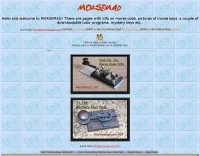 Operating Morse code (CW) relies on a diverse array of **telegraph keys**, each with unique characteristics and historical significance. This resource presents a personal collection of such keys, offering visual documentation and details on various models. It features early Marconi keys from the 1900s, including specific models like the Marconi Air Ministry Key and Marconi Coastal Station Keys, alongside **Vibroplex** bugs and JRC keys. The collection also highlights rare items such as the Brown Brothers Magnetic Twin Paddle Key, the Eddystone Bug Key, and Swedish SRA Ericsson Keys. Enthusiasts can view examples of GPO Double Current & Single Current Keys, Navy NATO Keys, and specialized aircraft and maritime keys. The site includes information on historical training devices like the OMNIGRAPH and a Morse Inker from 1900, providing context for the evolution of telegraphy equipment. Additionally, the resource showcases unique items like the B2 Spy Set SOE Agents Key and a WW2 Junker U-BOAT KEY, illustrating the varied applications of Morse keys throughout history. The author, G0RDO, also shares details on a home-made paddle key and invites inquiries for acquiring interesting Morse keys.
 -
 Over 1900 ARISS school events have been conducted since 2000, facilitating amateur radio contacts between students and ISS crew members. This resource details the Amateur Radio on the International Space Station (ARISS) program, outlining scheduled contacts, operational procedures, and application processes for educational institutions worldwide. It lists specific upcoming contacts, such as those with Lewis Center for Educational Research in California and Vauban, Ecole et Lycée français de Luxembourg, typically operating on a 145.800 MHz downlink frequency. The content also provides crucial guidelines for radio amateurs, emphasizing the importance of not interfering with scheduled school contacts and utilizing the crossband repeater for general QSOs when available. It clarifies crew availability for casual contacts, noting that astronauts are usually free during personal time, approximately one hour after waking and one hour before sleeping, and often on weekends. Constraints on scheduling, such as avoiding EVA weeks and specific crew rest periods, are also detailed. Furthermore, the resource includes historical statistics on direct versus telebridge contacts, QSL information, and links to related ARISS, AMSAT, ARRL, and NASA websites. It also provides information on applying to host an ARISS contact for schools and youth organizations in various regions, including the United States, Europe, Africa, the Middle East, Canada, Central and South America, Asia, and Australia.