Search results
Query: ipa contest
Links: 104 | Categories: 1
Categories
-
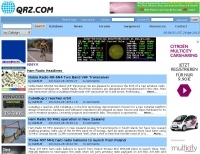 QRZ.com provides a comprehensive online **callbook** service, enabling amateur radio operators to look up detailed information for over 2 million licensed stations worldwide. Each entry typically includes the licensee's name, address, QSL route, and often a personal biography with station details, antenna configurations, and operating interests. The platform integrates various features such as a **Logbook of the World (LoTW)** interface, allowing users to confirm QSOs directly, and a robust search engine for rapid call sign resolution. The resource also features dynamic content, including real-time solar-terrestrial data from N0NBH, an active online swapmeet for buying and selling amateur radio gear, and a news section with articles covering current events, contest results, and special event station announcements. Recent news items highlight topics like the 'Five Two Simplex Challenge' and the '9th HamSCI Workshop,' indicating a focus on active operating and scientific engagement within the amateur community. Furthermore, QRZ.com supports various amateur radio awards, such as the new 'USA250 Award,' encouraging participation in specific operating programs.
 -
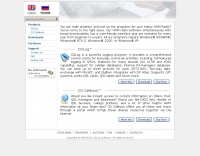 CQLog, a Windows-based logging program, provides a comprehensive control center for everyday on-the-air activities, including full-featured QSO logging and statistics for numerous awards, with support for _LoTW_ and _eQSL_ capabilities. It integrates with callsign databases like QRZ, RAC, and GOLIST, and facilitates two-way data exchange with digital mode software such as MixW2 and DigiPan. The software also supports saving up to three pictures per SSTV-QSO and integrates with DX Atlas. This logging utility offers a dedicated "contest-mode" and supports CAT systems for popular transceivers from YAESU, ICOM, KENWOOD, and Ten-Tec. Users can print QSL cards, QSL labels, and address envelopes directly from the program. Its features streamline the logging process and provide tools for award tracking, making it a practical solution for hams managing their station activities and DXing pursuits.
 -
 A large jpeg DX World map that include ITU Zones, grid squares and prefixes. This high-resolution DX World Map is an essential tool for amateur radio operators. It clearly displays ITU zones, CQ zones, grid squares (Maidenhead Locator), and DXCC prefixes, helping you to plan QSOs, track propagation paths, and participate in global contests. Whether you are a seasoned DXer or a beginner, this map provides a clear, detailed view of the radio world, improving your station's efficiency and geographic awareness. Available in JPEG format, it's perfect for display
 -
 RTTY by WF1B integrates terminal program functionalities with contest logging features, a design choice that proved highly effective in the author's field operations. It specifically supports a range of popular TNCs, including the AEA PK-900, MFJ-1278, AMT-1, and the HAM PCI4000/4100/3000 series, among others. This broad compatibility allows operators to leverage existing hardware investments while engaging in **RTTY** contesting. The software's dual nature streamlines the workflow for digital mode enthusiasts, eliminating the need to switch between separate applications for basic communication and contest participation. This integration is particularly beneficial during high-intensity **contests** where rapid logging and message exchange are critical. WF1B's creation addresses the practical needs of amateur radio operators seeking a dedicated solution for RTTY digital mode activities.
 -
 The Deutscher Amateur Radio Club (DARC) invites radio amateurs world wide to participate in the annual WAE-DX-Contest. CW SSB and RTTY Contests
 -
 Demonstrates a comprehensive logging and contest program for Windows, _UCXLog_, designed to assist amateur radio operators in managing their QSO records and participating in competitive events. It integrates essential features such as transceiver control for single-operator two-radio (_SO2R_) setups, CW keying via COM/LPT ports, and SSB/RTTY operation through soundcard interfaces. The software also provides DX cluster connectivity via packet, internet, or Telnet, alongside robust statistics tracking for awards like _DXCC_ and _IOTA_, locator management, and greyline map display. Enables operators to efficiently handle log import/export functions, print QSL cards, and maintain detailed records of their contacts. The program's network capability facilitates multi-operator environments, while its support for various digital modes and rig control protocols enhances operational flexibility. Regular updates, including beta versions, are provided, ensuring ongoing development and feature enhancements for the amateur radio community.
 -
 PA3FWM's software defined radio (SDR) page documents his extensive hardware and software development efforts between 2004 and 2009. Initial experiments utilized a direct conversion receiver with 90-degree phase difference, feeding a PC soundcard at 48 kHz sample rate, covering 24 kHz of spectrum around a 7080.5 kHz local oscillator. This setup, similar to AC50G's QEX 2002 article, allowed for basic I/Q signal processing to distinguish signals above and below the LO frequency. Limitations included fixed crystal frequencies, 16-bit dynamic range, and narrow bandwidth. Subsequent hardware iterations aimed for enhanced performance, incorporating external 24-bit ADCs with 192 kHz sample rates, connected via 10 Mbit/s Ethernet. A **MC145170-based PLL** and programmable octave divider provided a 58 kHz to 30 MHz tuning range. The **Tayloe mixer** was employed, with differential outputs feeding a PCM1804 ADC. An ATmega32 microcontroller handled serial data conversion to Ethernet frames, though without CRC calculation due to processing constraints. Later designs integrated AD7760 2.5 Msamples/second ADCs and a Xilinx Spartan-3 FPGA, enabling direct reception of 0-1 MHz spectrum and eventually 2.5 MHz bandwidth across the shortwave spectrum. Software was refactored to use an initial 8192 non-windowed FFT for efficient high-bandwidth processing. The project culminated in a two-way QSO on 21 MHz using the developed hardware and software, demonstrating transmit capabilities with a D/A converter. The system exhibited a 2.5 MHz wide spectrum display and a zoomed 19 kHz display, capturing signals like ionospheric chirp sounders and RTTY contest activity. Challenges included noise leakage from digital circuitry and cooling for high-power dissipation components.
 -
 Illustrates the global distribution of **DX-Cluster** nodes through an interactive map interface, enabling radio amateurs to visualize and access real-time DX spots. The resource provides direct TELNET and HYPER links for each node, facilitating immediate connection to various clusters for up-to-the-minute propagation information and station activity. This visual approach simplifies the process of locating and connecting to a suitable DX-Cluster, whether for local or international DXing. Amateurs can use this tool to quickly identify active clusters in different geographic regions, which is particularly useful for **DXpedition** planning or contest operations. The direct links streamline access, bypassing manual configuration for many cluster types. It serves as a practical aid for operators seeking to monitor band conditions, find rare DX, or participate in competitive operating events by leveraging aggregated spotting data.
 -
 The **ARRL Contest Calendar** presents a detailed schedule of upcoming amateur radio competitions, encompassing both ARRL-sponsored events and significant non-ARRL contests. It provides essential operational details for each entry, such as specific operating periods, eligible bands, and permitted modes, enabling contesters to plan their participation effectively. The resource also links to official rules, soapbox reports, and QST results, offering a comprehensive overview of past and future contest activity. Users can navigate through monthly listings to identify contests of interest, with direct access to detailed information pages for each event. The calendar serves as a central hub for contest operators seeking to confirm dates, understand exchange requirements, and review post-contest analyses. Its utility extends to both seasoned contesters and those new to competitive operating, providing a structured approach to contest participation. The platform integrates various contest-related resources, including links to **Contest Corral** entries for non-ARRL events, ensuring a broad scope of coverage. This aggregation of information streamlines the process of finding contest schedules and associated documentation, making it a practical tool for the amateur radio contesting community.
 -
 The Deutscher Amateur-Radio-Club (DARC) e.V. serves as the largest association for radio amateurs in Germany and Europe, structured into 24 districts and approximately 960 local chapters nationwide. Its core mission involves fostering amateur radio and establishing favorable conditions for the Amateur Radio Service. The DARC actively participates in international affairs as a member of the **International Amateur Radio Union (IARU)**, ensuring German interests are represented on a global scale. Recent activities include the announcement of the FUNK.TAG in Kassel for April 25, 2026, and the HAMCamp at **HAM RADIO** in Friedrichshafen from June 26-28, 2026, offering discounted participation for young operators up to 27 years old. The club also supports special events, such as a short-term award and special callsign DB15ØWG to commemorate the 150th anniversary of the Weimar–Gera railway line, active from April 1 to June 30. Regular updates, like the Deutschland-Rundspruch 11/2026, cover topics from the status of 70 MHz band permissions to satellite deployments like Ten-Koh 2, and contest results such as the WWA YL event. Propagation forecasts, including Kp indices and solar flux values, are provided by Hartmut Büttig, DL1VDL, offering insights into HF conditions and Gray-Line DX opportunities. The DARC also reports on district elections and space-related events like the Bochumer Weltraumtag, highlighting the diverse engagement of its members.
 -
 Alfa Tango DX is a premier resource for operators on the 11 meters band, providing a searchable database that includes news, cluster information, and discussion boards. This platform serves as a hub for DXers and contesters, offering valuable insights into activations, dx-peditions, contests, and meetings worldwide. The site features a variety of resources, including event calendars, award programs, and tools for logging contacts. Members can access exclusive content and participate in contests like the AT Women's Day Contest and the Eleven World Wide Contest. With a focus on community engagement, Alfa Tango DX fosters connections among operators and promotes the spirit of amateur radio. Whether you are a seasoned DXer or a newcomer to the 11m band, Alfa Tango DX provides essential information and support for enhancing your amateur radio experience. From QSL services to event participation, this resource is designed to meet the needs of all operators interested in the 11 meters band.
 -
 Presents the amateur radio activities and interests of Kote, operating as 4L4KW. The page features a collection of external links relevant to the ham radio community, including references to other callsigns such as 4L1BR, 4L1W, 4L4MM, and 4L/ZL1RS, indicating potential connections or shared interests within the Georgian amateur radio scene. It also lists several well-known ham radio resources like QRZ.com, DXzone.com, and Contesting.com, suggesting an active engagement with DXing and contesting. The resource includes links to major amateur radio equipment manufacturers such as Icom, Yaesu, and Kenwood, which implies an interest in modern transceivers and station setup. The mention of DX-Summit and "fixed activity on Ham bands" further reinforces a focus on making contacts and participating in on-air operations. The page serves as a digital hub for 4L4KW's ham radio presence.
 -
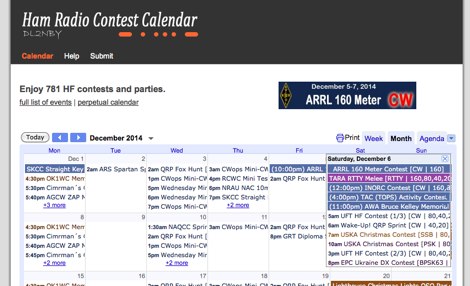 The DL2NBY Contest Calendar, leveraging the Google Calendar system, presents approximately 400 **HF amateur radio contests**, detailing their dates and rules. It covers a broad spectrum of operating modes, including CW, SSB, and various digital modes like RTTY. The calendar integrates contest information from major organizations such as ARRL and DARC, providing a centralized repository for contest operators. This resource offers the capability to integrate contest events directly into a user's personal Google Calendar, streamlining contest planning. It functions as a comprehensive schedule, allowing operators to review upcoming events and prepare for participation across different bands and modes. The calendar's structure facilitates quick access to contest specifics, aiding in strategic contest operation.
 -
 The Japanese Amateur Radio Teleprinter Society (JARTS) serves as a central hub for RTTY and PSK31 enthusiasts in Japan, providing essential information regarding its annual JARTS RTTY Contest. The resource outlines contest rules, exchange parameters, and scoring specifics, enabling participants to prepare effectively for the event. It also offers insights into the club's broader activities and its role in promoting digital mode operations within the amateur radio community. The site details the contest's operational periods and categories, which typically include single-operator, multi-operator, and SWL entries, often with power output classifications. Participants can find guidelines for log submission and result publication, ensuring adherence to the contest's administrative requirements. The JARTS RTTY Contest is a significant event for digital mode operators, drawing participation from across Asia and beyond. Beyond contest specifics, the resource provides historical context for JARTS, highlighting its foundational role in Japanese amateur radio digital communications. It serves as a primary point of contact for members and prospective participants, fostering engagement in RTTY and PSK31 modes.
 -
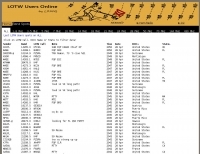 Operating a specialized DX cluster, this service provides real-time DX spots exclusively from stations confirmed to be _Log of The World_ (LoTW) users. This unique filtering mechanism allows DXers to prioritize contacts with stations that are highly likely to upload their logs to LoTW, streamlining the process of achieving confirmed DXCC or other awards. The cluster aggregates data from various sources, presenting a focused view of active LoTW participants across multiple bands. By narrowing the scope to LoTW-active stations, the platform significantly reduces the effort required for QSL management, as users can confidently pursue contacts knowing a digital confirmation is probable. This targeted approach is particularly beneficial for contesters and DXpedition chasers aiming for rapid award qualification, offering a strategic advantage in identifying viable contacts. The service supports both web-based access and traditional telnet connections, ensuring broad compatibility for amateur radio operators. It processes thousands of spots daily, with a focus on delivering accurate and timely information relevant to LoTW users, facilitating more efficient and productive operating sessions.
 -
 Approximately 800 x 600 resolution is recommended for optimal viewing of the _Connecticut Radio Society_ (W1CRS) website, which serves as a hub for active amateur radio operators. The site encourages participation in club activities, particularly emphasizing operating events and contests. It provides a digital presence for members and prospective members interested in local ham radio engagement. The society's focus includes general amateur radio operation and competitive contesting, aligning with its classification as a contest club. The resource is designed to foster community among hams in Connecticut, offering a point of contact for those seeking to engage with fellow operators and participate in organized radio events. The club's callsign, W1CRS, is prominently featured, signifying its identity within the amateur radio community.
 -
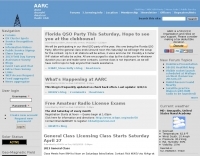 Operating an amateur radio station often involves community engagement, and the Anne Arundel Amateur Radio Club (AARC) exemplifies this with a focus on public service and emergency communications. The club maintains repeaters, provides an Elmer program for new hams, and conducts training and testing sessions, fostering skill development across various age groups and experience levels. Members participate in activities ranging from contesting to kit building, promoting technical proficiency and camaraderie within the local ham radio community. The AARC hosts regular meetings on the first and third Thursday evenings, creating opportunities for fellowship and knowledge exchange. Their commitment extends to programs designed for kids, YLs, OMs, and both new and experienced operators, ensuring a broad appeal. This club's structure supports continuous learning and practical application of amateur radio principles, aligning with the core values of the hobby. Their emphasis on emergency preparedness highlights a critical aspect of amateur radio's public service mission.
 -
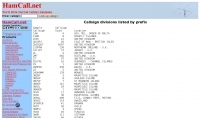 The HamCall.net database offers a detailed listing of amateur radio callsign divisions, organized by prefix, which is crucial for DXers and contesters to quickly identify the geographical origin of a station. Each entry includes a specific callsign prefix, the total count of callsigns registered under that prefix, and the associated DXCC country or entity, such as "AL9Z 43203 USA" or "3AOH9MM 237 MONACO." This structured data allows operators to rapidly ascertain the DXCC entity for a given callsign, aiding in QSL verification and award tracking. This information is particularly useful for confirming rare DX entities during contests or for logging contacts for awards like DXCC. For example, an operator hearing a "3Y0C" callsign can immediately identify it as Bouvet Island, a highly sought-after entity. The inclusion of callsign counts provides a sense of the activity level within each prefix, which can be helpful for anticipating pile-ups or assessing the likelihood of making a contact. The data presented reflects a snapshot of the HamCall database, offering practical insights into global amateur radio demographics.
 -
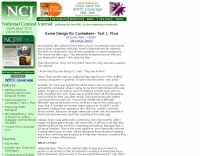 The _National Contest Journal_ (NCJ) serves as a dedicated resource for amateur radio contesters, providing in-depth articles, operational strategies, and technical insights. Published bimonthly by the ARRL, it covers a wide array of contesting topics, including antenna systems, station optimization, operating techniques, and rule interpretations for major events like the NA Sprint and various QSO Parties. The journal aims to enhance the competitive edge of participants across all skill levels, from casual operators to serious multi-operator teams, by sharing experiences and data from high-scoring stations. NCJ content frequently includes detailed analyses of contest results, offering breakdowns of scores, participant statistics, and comparisons of operating strategies. Readers can find practical advice on improving their contest performance, such as optimizing logging software usage or maximizing **run rates**. The journal also features columns on specific contest modes like RTTY and provides updates on rule changes and upcoming events, helping contesters prepare for future competitions and achieve better results, often leading to **top 10** finishes in their respective categories.
 -
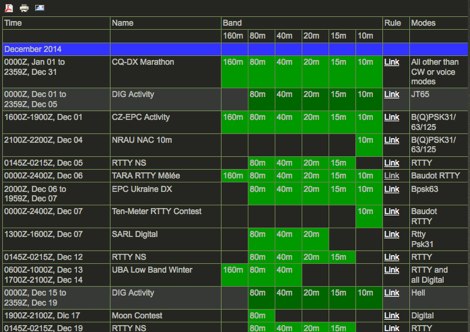 The _HF Digital Contest Calendar_ provides a monthly schedule of amateur radio contests specifically for digital modes on HF bands. It lists various RTTY contests and other digital mode events, offering a structured overview for contesters. The calendar includes details relevant to participation in events such as those organized by ARRL and DARC. This resource assists operators in planning their contest activities, focusing on the digital segment of the HF spectrum. It serves as a quick reference for upcoming digital mode competitions, facilitating preparation for these operating events. The calendar aims to consolidate information on digital contests, which often feature specific exchange requirements and scoring methodologies.
 -
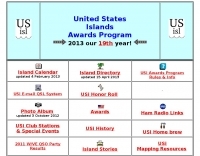 The **United States Islands (USI) Awards Program** is an amateur radio operating activity centered on activating and chasing islands located within the fifty states of the United States, its territories, and protectorates. These islands encompass coastal shores, lakes, rivers, ponds, and streams, offering a diverse range of operating environments. The program provides numerous achievement awards for both island activators and island chasers, encouraging portable operations and mini-DXpeditions. Participants engage in year-round activities, including the **One-Day-Getaway (1DG)**, a casual portable operation held on the second Saturday of May, and the U.S. Islands QSO Party (IQP), a 15-hour contest occurring on the last full weekend of August. USI encourages hams to discover and operate from islands in their local areas, providing an alternative to traditional Field Day operations for outdoor radio enjoyment. The program supports various operating styles, including portable, walk-on, paddle-to, motor-to, mobile, and drive-on activations. Recent activities include AC1RH activating MA064R Eagle Island daily, aiming for over 100 activations using 600 watts, and KD9ZAB and KD5YZY qualifying MO021R Tower Rock, which is also a POTA US-10147 location. The USI program maintains a clear distinction from the Islands On The Air (IOTA) awards program.
 -
 The ÖVSV website provides extensive resources for Austrian radio amateurs, including details on its nine **Landesverbände** (regional sections) and the Austrian Military Radio Society (AMRS). It features information on licensing, legal frameworks, and **band plans** for both HF and VHF/UHF operations. The site also covers various amateur radio activities such as contests (HF, VHF/Microwave, Alpe-Adria, SOTA, ARDF), technical projects like WRAN, and educational content explaining what amateur radio is and how to become a licensed operator. Recent news items highlight events like the "Laa Funk '26" exhibition, the "OE5XLM" club station's participation in the CQ WW Contest, and the "International Marconi Day 2026" activation by "OE26M" from Küniglberg. The site lists upcoming events, including a 160m OE-Aktivitätsrunde, a seminar on Baluns/Ununs, and various club meetings and flea markets. Membership is facilitated through regional sections, and the site emphasizes amateur radio's role in independent communication during crises.
 -
 Local amateur radio clubs often serve as vital hubs for hams to connect, share knowledge, and participate in group activities. The Orleans County Amateur Radio Club (OCARC), operating under the callsign WA2DQL, provides a focal point for amateur radio operators in Albion, New York, and the surrounding Orleans County area. These organizations frequently host events, offer technical assistance, and foster camaraderie among members, supporting various aspects of the hobby from contesting to emergency communications. OCARC's activities include discussions on proposed Technician class privileges for **80, 40, and 15 meters**, indicating an interest in regulatory changes affecting entry-level licensees. The club also promotes the use of online tools like _Radio Mobile Online_ for antenna pattern analysis and _VOACAP Online_ for propagation predictions, aiding members in optimizing their station performance. Furthermore, OCARC highlights participation in _Parks On The Air_ (POTA) events, such as the Erie Canal Bicentennial Celebration in 2025, encouraging outdoor operations and public engagement with amateur radio.
 -
 Established around 1968, the Wichita Amateur Radio Society (W.A.R.S.) N5WF provides a central hub for amateur radio operators in the Wichita Falls, Texas area. The society actively supports local ham radio interests, fostering community engagement and technical development among its members. W.A.R.S. is known for its commitment to public service communications and promoting the amateur radio hobby through various activities and educational initiatives. The society's activities often include field operations, technical presentations, and participation in emergency communications drills, which align with its mission to support the amateur radio community. Members frequently engage in _DXing_ and _contesting_, sharing their experiences and knowledge to help others improve their operating skills. The club also maintains local repeaters, providing essential infrastructure for regional communications.
 -
 Presents the Scranton Pocono Amateur Radio Club (SPARK), K3CSG, highlighting its status as one of Pennsylvania's most senior ARRL-affiliated clubs. The club, also known as the Abington Amateur Radio Club, maintains a consistent presence in the local amateur radio community. It provides a platform for radio enthusiasts to engage in various aspects of the hobby, including operating events and technical discussions. The resource details the club's historical background and its ongoing commitment to fostering amateur radio interest and skill development among its members. The club's activities often encompass participation in field days, local nets, and support for emergency communications. Members frequently operate on HF and VHF/UHF bands, utilizing various modes for local and DX contacts. The club's callsign, K3CSG, is regularly active during club events and contests, representing its collective efforts in amateur radio.
 -
 Operating as a local amateur radio club, the Wireless Association of South Hills (WASH) provides a community hub for hams in the Pittsburgh, PA area, identified by the N3SH callsign. The club engages in a range of activities including the Annual Field Day, the PA QSO Party, and a 2 Meter Contest, fostering participation in various aspects of the hobby. WASH also supports local ARES/RACES efforts, highlighting the critical role of amateur radio in emergency communications during disasters, and facilitates ARRL/VEC exam sessions for new licensees. Beyond contests and emergency preparedness, WASH hosts club picnics and an annual hamfest, promoting social interaction among members. The club maintains VHF/UHF repeaters, which are essential for local communication and extending range for members. Regular activities include a Monday evening WASH NET at 8:00 PM, providing a consistent on-air gathering point. The club's focus on both recreational and public service aspects of amateur radio, from making new friends to providing vital disaster communications, underscores its comprehensive approach to the hobby.
 -
 The Araucaria DX Group, based in Brazil, functions as an amateur radio club specializing in **DXpeditions**, **contesting**, and organizing various related events. The group actively sponsors contests and provides resources for DX enthusiasts. Its primary focus is on facilitating and participating in long-distance radio contacts and competitive operating events, contributing to the global amateur radio community. The group's activities include coordinating expeditions to rare DX entities, participating in major international contests, and fostering skill development among its members. By sponsoring events, the Araucaria DX Group supports the growth of amateur radio in South America, encouraging participation in competitive operating and promoting the pursuit of DX. The group's initiatives aim to enhance operational proficiency and expand the reach of amateur radio communications.
 -
 The ARRL Contest Results Database serves as a centralized repository for official scores and detailed breakdowns from numerous ARRL-sanctioned operating events. This resource typically features comprehensive listings of participants, their submitted logs, and final standings across different categories, modes, and bands. It allows hams to review their performance, compare results with other operators, and analyze contest trends over time, providing valuable insights into competitive amateur radio. Historically, the database has showcased the efforts of thousands of contesters, from single-operator entries to multi-operator, multi-transmitter stations. While the current status indicates scores are not immediately available, the database's primary function is to archive and present the outcomes of events like the ARRL DX Contest, Sweepstakes, and Field Day. This historical data is crucial for tracking individual progress, identifying top performers, and understanding the competitive landscape within the amateur radio community.
 -
 OBARC is an active organization participating in field day, various operating events, special events and contests
 -
 Rules of CQ World Wide RTTY Contest. The CQ World Wide RTTY DX Contest take place last full week-end of September, inviting amateur radio operators globally to connect across various CQ zones and countries. Participants will operate on five designated bands: 3.5, 7, 14, 21, and 28 MHz, exchanging RST reports and zone numbers. Scoring is based on QSO points multiplied by zone, country, and QTH multipliers. The contest encourages innovation in operating strategies while adhering to established rules to ensure fair competition among entrants.
 -
 Over 15 years of operational notes are documented on the AA6E Station Log, covering diverse amateur radio topics. The blog presents detailed accounts of station setup, antenna experiments, and digital mode operations, often featuring specific equipment like the _Ten-Tec Orion_ transceiver. It includes practical discussions on **station grounding techniques** and insights into PSK31 Morse code communication. The resource provides a chronological record of Martin Ewing's amateur radio activities, offering firsthand perspectives on equipment performance and operational challenges. Content often includes technical observations and solutions developed through practical experience, such as optimizing antenna systems for various bands. Specific entries detail contest participation and DX chasing, providing context for operational decisions and results.
 -
 After a year of preparation, 150 students and 11 professors participated in 10 hours of intense Contesting instruction covering some 22 topics, with over 400 pages of text
 -
 Over 70 distinct contest rules are cataloged, including major events like the _ARRL DX Contest_, _CQWW DX Contest_, and numerous state QSO Parties, providing direct access to official guidelines. The resource also compiles contest calendars from sources such as _WA7BNM_, ARRL, and _LA9HW_, offering a centralized hub for upcoming operating activities. Historical contest records are detailed for various events, including _ARRL 10 Meter Records_ for W/VE and DX, _CQWW DX Records_, and _ARRL Sweepstakes_ results by K5KA. This compilation allows operators to review past performance and understand competitive benchmarks across different bands and modes, aiding in strategic planning for future contests. The resource serves as a practical reference for both casual participants and serious contesters.
 -
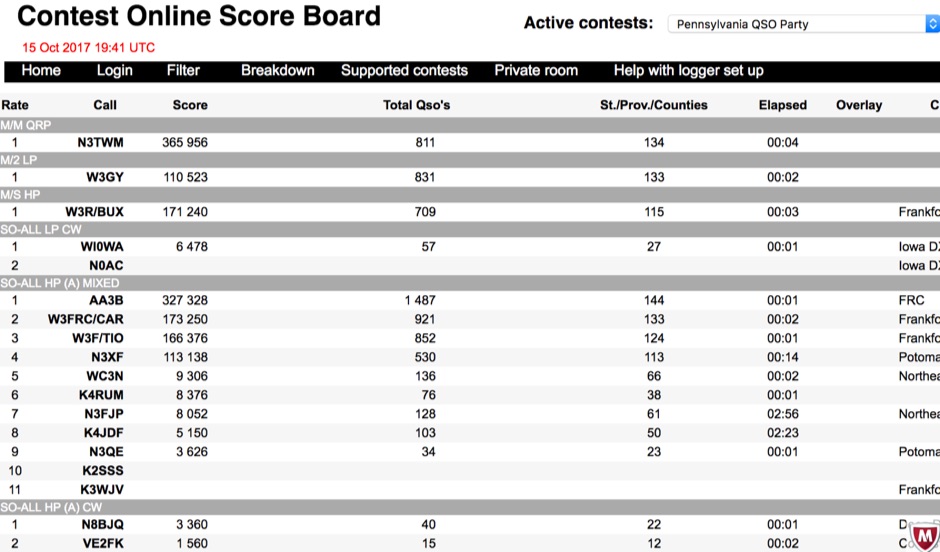 Aggregating real-time contest scores, this online scoreboard serves as a central hub for participants and spectators to monitor live progress during amateur radio competitions. It directly interfaces with widely used contest logging programs, collecting score data as operators make contacts. The platform then processes and displays these scores on dedicated contest pages, offering an immediate overview of standings. Supporting a diverse range of **DX contests**, the system accommodates various operating modes and rulesets. It facilitates score tracking for events like the YB DX RTTY, RSGB Commonwealth (BERU), EA PSK63, and the South America 10 Meter contest, among others. This functionality allows contesters to gauge their performance against competitors instantaneously, fostering dynamic participation. The scoreboard's integration with multiple contest log software applications ensures broad compatibility, making it accessible to a significant portion of the contesting community. It provides a crucial service by centralizing score visibility, enhancing the competitive experience for **amateur radio operators** worldwide.
 -
 The MMMonVHF database, curated by DL8EBW, currently lists 63,455 entries for VHF operators, providing a searchable resource for locating stations active on 144 MHz and higher bands. Operators can register their callsigns to be included, with specific criteria such as participation in _MS_ (Meteor Scatter), _WSJT_ modes, or _EME_ (Earth-Moon-Earth) operations required for inclusion in the `call3.txt` file. This resource facilitates VHF DX expeditions and contest planning by allowing users to identify potential contacts within a geographical area. The database supports various VHF/UHF operating modes, including those focused on weak signal propagation. Statistical data regarding the database entries is also presented, offering insights into the distribution of registered VHF activity.
 -
 The Lakeshore Repeater Association (KR9RK) operates a **VHF** 2-meter repeater on 147.270 MHz, utilizing a +600 kHz offset and a 100 Hz PL tone, serving the Raymond, Wisconsin area. The organization provides access to monthly newsletters, with recent editions including March 2026, February 2026, and January 2026, detailing club activities and operational updates. A Google Docs link is provided for newsletters with functional embedded links, addressing issues with PDF versions. The association's Megacycle Group is actively constructing a **DX Contest** level HF network, designed for remote accessibility. This initiative aims to provide members with a competitive edge in global DX hunts by enabling worldwide access to the station's radios. Additionally, the Lakeshore Radio Association is commemorating its 50th anniversary with a special event station, K5O, inviting all members to participate in on-air operations.
 -
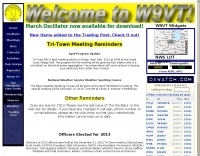 Presents the W9VT Tri-Town Radio Club, an ARRL-affiliated organization serving the Illinois amateur radio community. The club maintains a 2-meter repeater on 147.180 MHz (+600 kHz offset, 107.2 Hz CTCSS) and a 70-centimeter repeater on 444.825 MHz (+5 MHz offset, 107.2 Hz CTCSS), both located in Woodridge, IL. Regular meetings are held on the second Tuesday of each month at 7:00 PM at the Woodridge Public Library, focusing on technical discussions, operating practices, and community service. The club participates in Field Day, supports local public service events, and offers licensing classes for Technician, General, and Extra class examinations. Members engage in various amateur radio activities, including DXing, contesting, and digital modes, fostering skill development among hams. The club's repeater infrastructure provides reliable local communication for members and supports emergency preparedness efforts within DuPage County. Participation in ARRL-sponsored events like the Simulated Emergency Test (SET) and various operating awards promotes active engagement and technical proficiency. The club provides a platform for mentorship, allowing experienced operators to guide newer hams through licensing and operational aspects.
 -
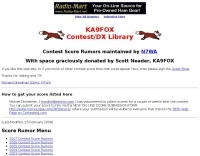 This resource compiles claimed scores, often referred to as "rumor scores," for numerous amateur radio contests, providing a historical snapshot of competitive activity from 1993 through 2007. It lists entries for prominent events such as _CQWW CW_, _ARRL Sweepstakes_, _IOTA Contest_, and various _NAQP_ events, categorized by year and contest. Each entry typically includes the contest name and the month/year of operation, allowing users to quickly navigate to specific contest periods. The site also references the _3830 Web Page_ on Contesting.com as the primary submission portal for these claimed scores. The collection offers a unique perspective on contest participation and performance trends over more than a decade, preceding the widespread adoption of real-time score reporting systems. While not official results, these rumor scores provided early indications of top performers and overall activity levels for a wide array of HF and some VHF contests, including _ARRL 10M_ and _CQWW VHF_. The historical data can be useful for analyzing past contest popularity, identifying consistently strong operators, or simply reminiscing about earlier competitive eras in amateur radio.
 -
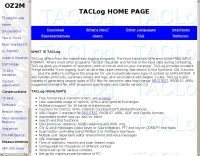 TACLog offers a distinct approach to contest logging for **VHF/UHF/SHF** operations, diverging from the rigid input formats often found in other logging applications. This software prioritizes operational freedom, allowing contesters to input data in a sequence that suits their workflow during a fast-paced event, rather than being constrained by predefined field orders. It's particularly tailored for those participating in contests governed by **Region 1 rules**, ensuring compliance with established regulations. The program's design focuses on practicality for serious contesters, providing a robust platform for managing contacts. Its support for the EDI format is a significant advantage, streamlining the process of submitting logs to contest committees and facilitating data exchange within the amateur radio community. My experience with various logging tools confirms that flexibility in data entry can dramatically improve efficiency during multi-operator or high-rate single-operator contests, where every second counts.
 -
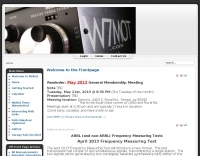 Twenty-four repeaters, including D-STAR and Fusion systems, are maintained and operated by MARCA Inc., primarily located on Arizona mountaintops and around the Phoenix metropolitan area. The organization, holding the callsign _W7MOT_, facilitates a wide range of amateur radio activities, such as ARRL Field Day events near Forest Lakes, Arizona, and participation in ARRL FMT contests. Members engage in antenna experimentation, construction, and maintenance trips to repeater sites. The club's interests span diverse topics, including HF voice, digital modes like _WSPR_, _WSJT-X_ (FT8, FT4), and CW, alongside DXing, MESH networking, and EOC operations. It supports technologies from SDR radio building to antique radio restoration and computer-based operations like Echolink, fostering a Single Board Computer (SBC) and Raspberry Pi group. Monthly meetings, held on the third Tuesday, feature business discussions and guest presentations, with informal summer gatherings and an annual holiday dinner in December. Monthly VE testing sessions for Technician, General, and Extra Class licenses are conducted by Ray Vasquez, K4RMV. Post-meeting discussions often cover specialized interests such as repeater operations, technical topics, D-STAR, SDR, APRS, Fusion, and Raspberry Pi projects.
 -
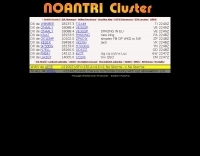 The Noantri WebCLX presents real-time DX spots, including frequency, DX callsign, country, and comments, facilitating active DXing and contesting. It operates as a web-based cluster, offering an alternative to traditional Telnet clusters for accessing spotting data. The interface displays current UTC, allowing operators to track propagation and activity across various amateur bands. This service is maintained by the _Noantri DX Group ARI Roma_, indicating its origin within the Italian amateur radio community. It supports the dynamic exchange of DX information, crucial for operators seeking new entities or participating in competitive events. Key features include the display of spots for modes like FT8, and it functions as a DXSpider-based system, providing a robust platform for **DX spotting** and **propagation analysis**.
 -
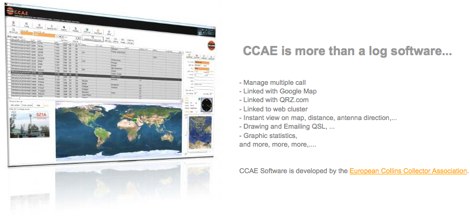 CCAE Software Log provides a dedicated platform for amateur radio operators to manage their QSO records, offering functionalities beyond basic logging. This application supports various operational aspects, including contest participation and general DXing activities, catering to the needs of radio enthusiasts who utilize classic equipment such as Collins radios. The software integrates features for efficient data entry and retrieval, allowing users to maintain a detailed history of their contacts. It is designed to be intuitive for operators focused on collecting and preserving their radio communication logs. The program's development by the European Collins Collector Association (F6HOY) suggests a focus on reliability and specific utility for vintage radio enthusiasts. Its core function is to serve as a robust **logbook software**, facilitating organized record-keeping for ham radio operations.
 -
 The Club Radio Amateur de Québec (CRAQ) is a prominent amateur radio club based in Québec, Canada, dedicated to fostering interest and participation in amateur radio. It provides a platform for local hams to connect, share knowledge, and engage in various radio-related activities, including **DXing**, contesting, and technical experimentation. The club supports its members through regular meetings, technical presentations, and organized operating events, aiming to enhance their skills and enjoyment of the hobby. CRAQ also plays a role in public service communications, often collaborating with local authorities for emergency preparedness and response. CRAQ's activities include operating club stations, organizing **field day** events, and offering training sessions for new licensees. Members frequently participate in provincial and national contests, contributing to the club's competitive standing. The club maintains a network of repeaters, providing reliable local communication infrastructure for its members and the broader amateur radio community in the Québec area. These resources facilitate daily QSO traffic and serve as critical links during community service operations.
 -
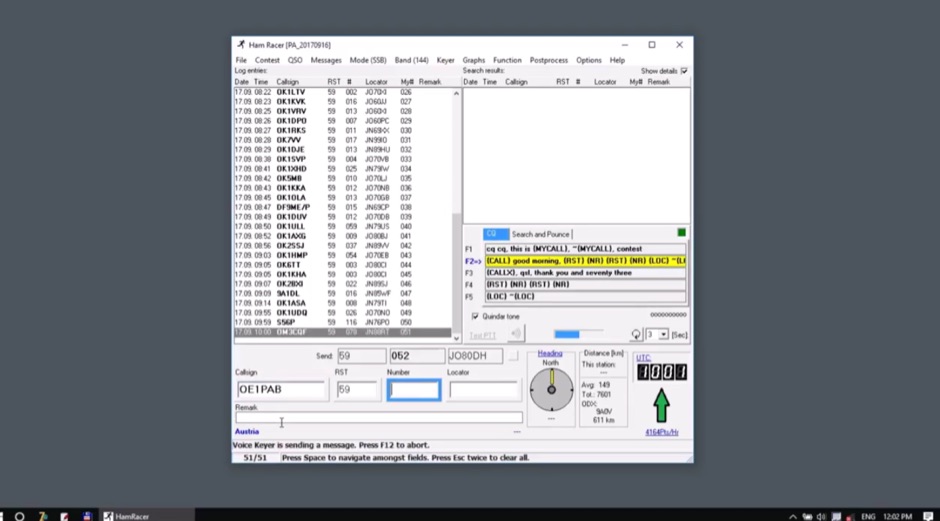 The **HamRacer** voice keyer, a Windows-based application, is showcased in this video, illustrating its utility for radio amateurs participating in SSB contests. It functions as a synthesized PC-based voice keyer, specifically designed for HF and VHF SSB contest operations, allowing operators to transmit pre-recorded or text-to-speech generated messages during rapid-fire exchanges. The demonstration includes actual recorded QSO examples from a contest, featuring contacts with stations such as SP6OWA, S57O, OK1IEI, 9A1DL, OE1PAB, OK1GTH, and 9A1E. These examples highlight the software's practical application in a live contesting environment, demonstrating how it facilitates contest participation for operators who might otherwise face challenges with traditional voice keying. The resource provides a direct look at the software in action, emphasizing its role in promoting inclusivity within the amateur radio contesting community. It details the use of Windows SAPI for speech synthesis, a core component of HamRacer's functionality.
 -
 IZ5CML, Enrico Giannerini, obtained his amateur radio license in 1998, achieving DXCC contacts with all entities over 18 years of activity. His station, located in Empoli, Tuscany, Italy, focuses on HF and 50 MHz operations, primarily using SSB, CW, and some RTTY. He emphasizes direct radio communication, preferring "human modes" over digital modes like FT8/4, which he views as detaching the operator from the signal. Enrico's operating interests include DXing, IOTA activations, and major HF contests, where he has participated both individually and with teams like IQ5LV and IO5O. Notable activations include Sao Miguel and Flores (CU8, EU-089) in the Azores in 2005, and Antiparos and Paros (EU-067) in Greece in 2006 and 2014. He also contributes to the Hamradioweb forum, promoting good operating practices and publishing the monthly "Dxschedule" for upcoming DX and contest activities. The website includes a blog with articles on DX, ionospheric propagation, and antennas, reflecting his long-standing passion for radio, sparked by the 1980s film "La Tenda Rossa" and years as an SWL.
 -
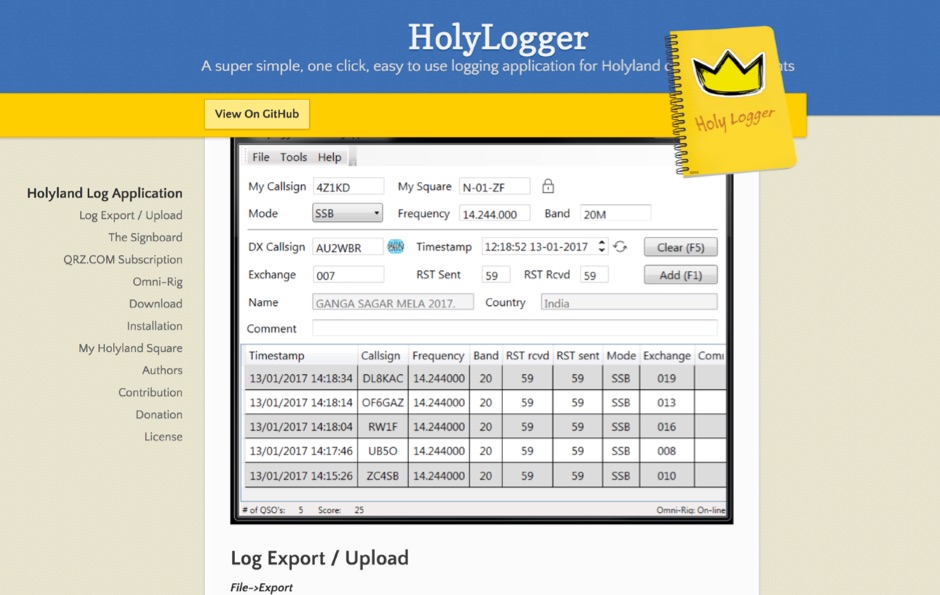 Holyland Log Application, a super simple, one click, easy to use logging application for Holyland contest participants.
 -
 Participating in state QSO parties offers a focused opportunity for amateur radio operators to make contacts within a specific geographic area, often aiming to work all counties or administrative divisions. The Michigan QSO Party (MiQP) serves as an annual event where hams worldwide can connect with stations located in Michigan, contributing to county totals and overall scores. This resource provides the official rules, historical results, and information on planned operations, enabling participants to prepare effectively for the contest. Contesters can access details on scoring, exchange requirements, and various operating categories, ensuring compliance with the _Mad River Radio Club_ (MRRC) sponsored event. The site also offers downloadable Michigan county maps, a crucial tool for those pursuing county hunting awards or planning their operating strategy to maximize **multipliers**. Beyond the contest specifics, the platform facilitates community engagement through a link to the official groups.io mailing list, fostering interaction among participants and organizers. It also directs newcomers to the _ARRL_ for general amateur radio licensing information.
 -
 J49I operated from Crete Island (EU-015, KM25PH) during the 2008 _CQ WW DX CW Contest_, focusing on multi-operator category participation. The station's activity centered on maximizing contacts and multiplier acquisition across various HF bands during the competitive event. Operators aimed to achieve a high score by leveraging the island's DXCC entity status. The team, comprising Greek and Italian amateur radio operators, utilized the J49I callsign for this specific contest operation. Their efforts contributed to the overall contest results for the 2008 CW segment, with logs submitted reflecting their performance from the European continent.
 -
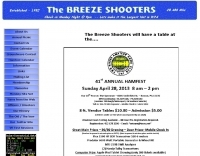 The Breeze Shooters is an amateur radio organization based in Western Pennsylvania, established in 1937 by a group of local hams. The club's initial focus was on fostering camaraderie and promoting amateur radio activities among its members. Over the decades, its membership has grown significantly, at one point exceeding 1,800 individuals, making it one of the larger regional ham radio clubs. The organization maintains a casual operational structure, emphasizing member participation in various aspects of the hobby rather than strict formal governance. The club actively supports and organizes events such as the annual Breeze Shooters Hamfest, a significant gathering for the amateur radio community in the region. Members frequently engage in contesting, DXing, and local emergency communications support. The club's history includes a strong tradition of mentoring new hams and providing a platform for experienced operators to share knowledge and resources. Its enduring presence in Western Pennsylvania underscores its role in sustaining local amateur radio interest and activity.
 -
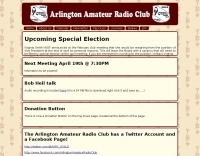 The **Arlington Amateur Radio Club** (K5SLD) website details club activities, including a weekly Taco Tuesday net on their 147.140 MHz repeater with a 110.9 Hz PL tone. The club, organized in July 1955 by 22 hams, also hosts monthly dining events and promotes Community Emergency Response Team (CERT) training through the Arlington Fire Department. Membership renewal information for 2026 dues is prominently featured, with an online payment option and a donation button available on the "Pay Dues" page. Club communications extend to a dedicated Facebook page for members and the wider amateur radio community. The site lists upcoming contests and encourages participation in local events. The 2-meter repeater net is open to all, fostering local camaraderie and technical exchange among hams in the Arlington, Texas area, regardless of club affiliation.