Search results
Query: morse mac
Links: 24 | Categories: 0
-
 Source code for morse training program and a ready-to-use compiled application morse.exe
 -
 morse code machine to learn cw transmission
 -
 RSCW demonstrates a Linux/Unix command-line utility engineered for **Morse code** decoding via a computer's sound card. It specifically targets the extraction of weak CW signals from noise, operating on 8-bit, 8000 samples/second audio input, typically from `/dev/dsp`. The program outputs decoded characters to `stdout`, supporting user-specified speeds in words per minute (WPM) and carrier frequencies. While effective for machine-sent signals, it exhibits a 2-second decoding lag and requires manual speed input, making it less suitable for general-purpose, real-time contest operation. The resource details the program's components, including `rscw` (the main decoder), `rscwx` (an X11 graphical auxiliary for spectrum and internal signal visualization), `rs12tlmdec` (a specialized decoder for RS-12 amateur radio satellite telemetry), and `noisycw` (a utility for generating noisy Morse signals for testing). Installation instructions involve downloading a `.tgz` file, compiling with `Make`, and requiring the FFTW library (and GTK 2.0 for `rscwx`). Performance is illustrated with a .wav file example of a 12 WPM, 800 Hz CW signal at 12 dB Eb/N0, showcasing RSCW's near-error-free decoding of a test message. The site provides command-line examples utilizing `sox` for audio conversion and `noisycw` for signal generation, inviting comparisons with other decoding software and human operators, particularly for weak signal conditions.
 -
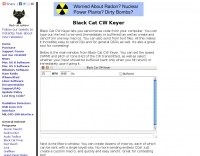 The **Black Cat CW Keyer** is a macOS application designed for amateur radio operators to transmit Morse code directly from their computer. It provides functionality for typing text to be sent, either immediately or buffered, and allows for the creation and transmission of pre-defined messages via single-key shortcuts. This software addresses the need for a flexible and accessible CW keying solution, particularly for Mac users who might find fewer dedicated ham radio applications compared to other operating systems. It integrates basic text-to-CW conversion, offering a straightforward interface for generating Morse code signals. Operators can utilize the Black Cat CW Keyer for various CW activities, including casual QSOs, contesting, or beacon operation. Its ability to buffer text allows for smoother transmission, while the single-key macro feature streamlines repetitive message sending, such as CQ calls or contest exchanges. While specific comparisons to other CW keying software are not detailed, its macOS focus provides a niche solution for Apple users. The program's utility lies in its direct approach to computer-based CW transmission, making it a practical tool for those seeking a dedicated **CW keyer** on the Macintosh platform.
 -
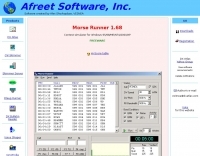 Simulates a **CW** contest environment, presenting operators with realistic scenarios for improving their receiving and sending proficiency under pressure. The software generates varying signal-to-noise ratios, QRM, and QRN, replicating conditions encountered during actual **DX** contests. Users practice copying callsigns, exchange information, and manage pileups, with customizable parameters for speed and difficulty. The program provides immediate feedback on accuracy and speed, allowing for targeted skill development in a controlled setting. It supports various Windows operating systems, from Windows 95 through Windows 10, and can also run on macOS using Wine.
 -
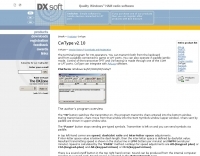 CwType v2.35 provides a dedicated terminal interface for **CW operators**, facilitating Morse code transmission from a Windows PC. Users can input characters via the keyboard or a connected paddle, supporting iambic keying. The software manages transceiver control, including PTT and CW keying, through COM or LPT ports. It offers adjustable speed, dash/dot ratio, and inter-letter spacing, with real-time speed display in LPM and WPM calculated by the "PARIS" method. The program includes features like MOX mode for automatic TX on/off, configurable weighting to compensate for transceiver element clipping, and programmable F-key macros for sending predefined text or special sequences. CwType can integrate with logging software such as AALog (V1.0.3 and later) for data transfer, and supports various character sets including English, Russian, and Swedish. A beacon mode is also available, executing the Alt-F12 macro periodically at a user-defined interval. Audio output for monitoring can be routed through the internal PC speaker or a sound card, with options for sine waveform and smooth envelope generation for SSB transmitters. The software is compatible with **Windows XP/Vista/7/8/10** and is distributed as freeware.
 -
 Macintosh morse code software, Fast Morse will convert any text you enter into the original Morse code equivalent, and play it on your speakers. The speed can be adjusted to anything from 1 to 35 words per minute if your computer can keep up, allowing you to send Morse signals at a rate your friends and fellow Morse enthusiasts can follow!
 -
 MorseMaker is an up-to-date replacement for the Morse Machine shown further down this page. It has been re-written using a different programming language and is now entirely 'stand-alone' requiring no run-time support files. This version also works with Windows XP and can use the soundcard but please note that, unlike its predecessor, it does not split the alphabet into smaller 'learning' blocks and does not incorporate the Morse reader.
 -
-
 Morse Machine is a tool for learning to read Morse at a good speed, based on the Koch Method
 -
 The purpose of this article is to describe in detail the Morse code keys made by the Brown Brothers Machine Company (BBMC), to aid the serious key collector in identifying each model made by this fine company.
 -
 An online morse game that can be used both to learn receivind and trasmitting morse code
 -
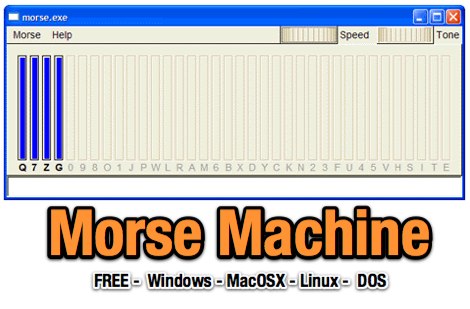 Learn morse code with morse machine, A Fully Automatic Morse Code Teaching Machine first described in a May 1977 QST. Free for Windows MacOS Linux and DOS
 -
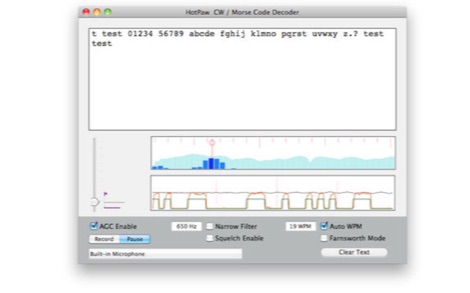 The HotPaw Morse Code Decoder application for macOS processes audio input to transcribe Morse code characters into text. It presents both an audio spectrum graph and a tone amplitude graph, which aid in configuring a narrow band audio filter. Operators can set the audio filter for tone frequencies between 400 and 1600 Hz, optimizing reception for various CW signals. The software offers user-configurable settings, including WPM dot/dash speed detection, a noise threshold level, and the option to use Farnsworth timing for inter-character spacing. The Morse code WPM detection automatically adapts from approximately 8 to 40 WPM, with a lock feature for the estimated speed. A High Speed WPM Mode is available for code speeds ranging from 40 to 80 WPM, catering to faster CW operators. The application's decoding performance is influenced by signal level, signal-to-noise ratio, frequency and WPM stability, keying quality, and proper configuration, with an initial learning phase required for WPM estimation to stabilize. An external microphone or line-in may be necessary for optimal performance on some MacBook models to mitigate fan noise or room reverberations. Version 1.4.4, updated on November 11, 2021, includes compatibility improvements for newer macOS releases. The developer, Ronald Nicholson of HotPaw Productions, does not collect any user data from the application.
 -
 KComm, a logging and communication program, was specifically engineered for Elecraft K2, K3, and KX3 transceivers, leveraging the Lazarus cross-platform development tool. It operates natively on Windows XP and can be compiled for Linux, with potential for macOS, prioritizing low resource usage for casual DXers and contest participants. The software integrates with external applications like Fldigi for diverse digital modes and CW Skimmer for advanced Morse decoding, enhancing its functionality beyond basic logging. The design philosophy of KComm emphasizes utilizing the physical radio controls for operational adjustments, rather than replacing the transceiver's front panel. It facilitates keyboard CW operation via the Elecraft serial protocol and capitalizes on the K3 and KX3's built-in decoders for RTTY and PSK31. Additionally, KComm supports PSK31, PSK63, and PSK125 through the AE4JY PSK Core DLL on Windows and integrates with PSKReporter.info for spotting. While not a dedicated contest logging or award tracking program, KComm supports ADIF and Cabrillo export for casual use, allowing logs to be imported into other software. The author, G4ILO, ceased all software development, providing KComm "as is" without further support or updates; however, the source code is available under the GNU GPL for community continuation.
 -
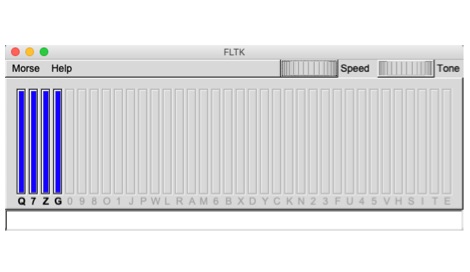 This free program teaches you to receive Morse code. It starts with a few letters and adds more when it sees that you are ready. Based on A Fully Automatic Morse Code Teaching Machine, it is a small application and it runs even on recent MacOSX versions.
 -
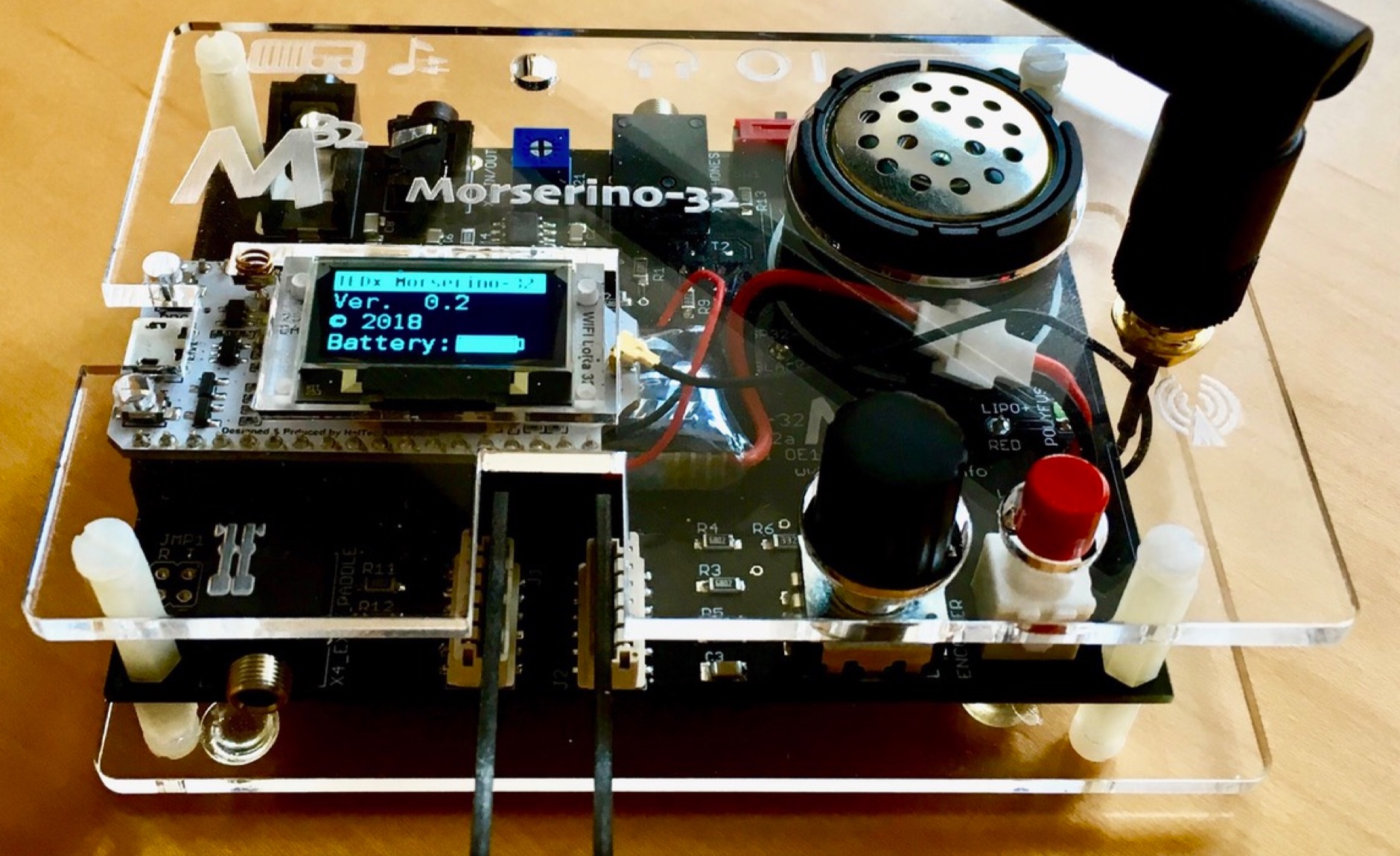 Successor to the Metamorserino, this is a multi-functional Morse code machine (Keyer, Generator, Trainer) that includes also a transceiver using LoRa on the 70cm band.
 -
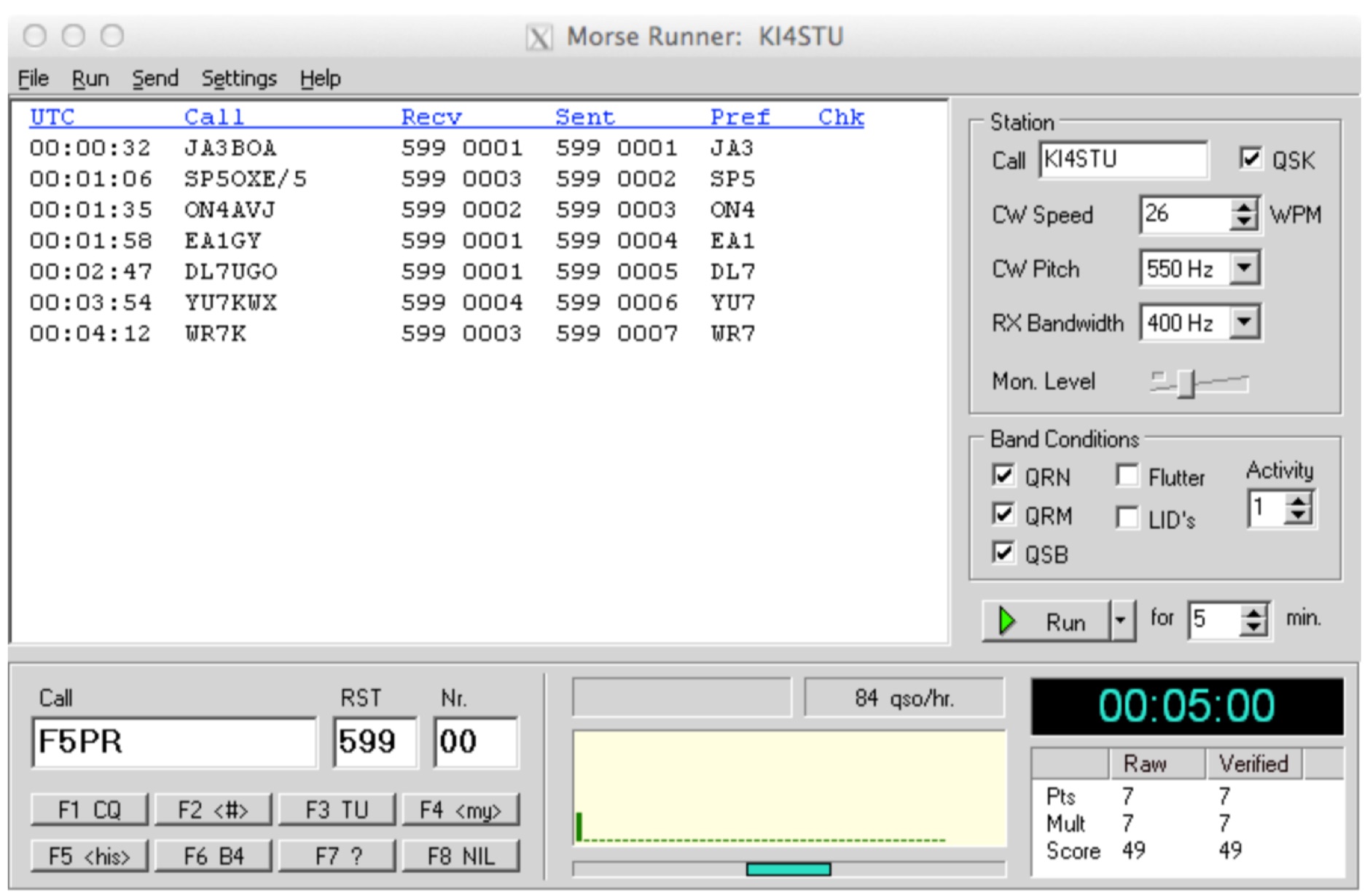 Run Morse Runner on Apple MacOSX computers using Wineskin. Morse Runner is a popular MS Windows morse code contest simulator. You can do this by yourself or just download the ready-made dmg and use it on your apple mac.
 -
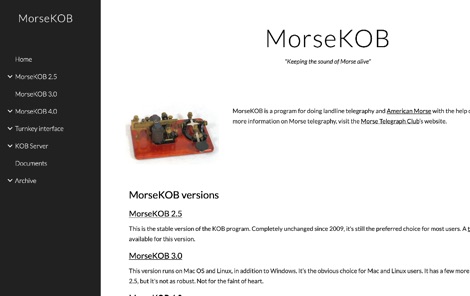 MorseKOB is a program for doing landline telegraphy and American Morse with the help of a computer. Can run on Mac OS and Linux, in addition to Windows.
 -
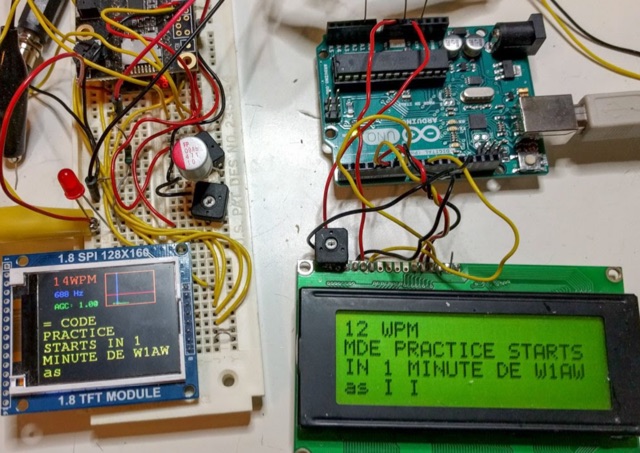 Two easy to build microcontroller projects for machine recognition of hand-sent morse code
 -
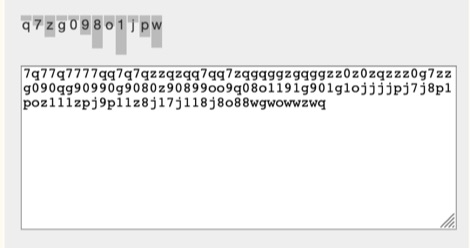 Learn morse code with this online version of the popular morse machine. This version is currently working on Chrome browser only. This program teaches you to receive Morse code. It starts with a few letters and adds more when it sees that you are ready.
 -
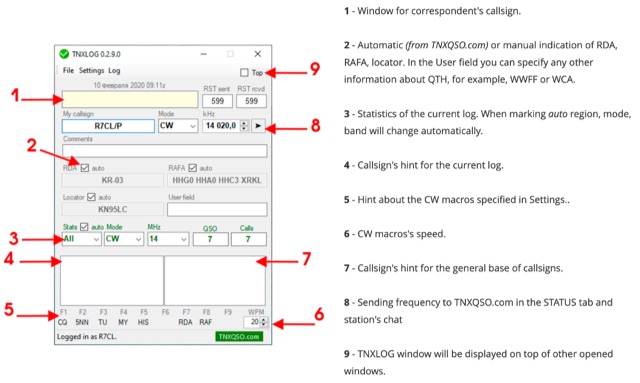 TNXLOG is a specialized logging application designed to complement the TNXQSO.com online service, focusing on real-time data exchange rather than serving as a standalone general-purpose logbook. The software facilitates the transmission of current **QSOs** to the TNXQSO.com server and simultaneously retrieves relevant geographical data such as RDA, Locator, and RAFA from the same server. It maintains real-time QSO statistics, providing operators with immediate feedback on their activity. Additionally, the application supports working with **CW macros** via a COM port, streamlining Morse code operations during contacts. This utility is specifically tailored for users of the TNXQSO.com service, enhancing their operational experience by automating data synchronization and providing instant access to location-specific information. Its design prioritizes integration with the online platform, making it a companion tool for those engaged in specific award programs or regional operating activities that benefit from real-time data exchange and statistics. The software's functionality is distinct from traditional logbook programs, emphasizing its role in a connected operating environment.
 -
 This is a contest keyer for the AEA MM-3 Morse Machine. It integrates with OmniRig for your radio's frequency. It has a built in logbook as well as a keyboard keyer. You can also export your log as an .adi or cabrillo format for contest submission. Please find my contact details on QRZ.COM for any suggestions or help 73 ZS6WAR
 -
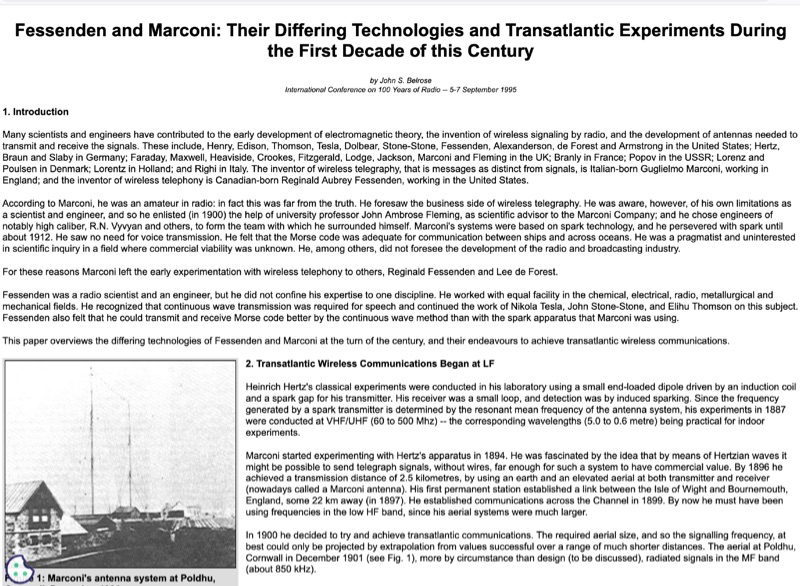 Early 20th-century transatlantic wireless communication efforts involved distinct technical approaches by Reginald Fessenden and Guglielmo Marconi. Marconi's systems, operational until approximately 1912, primarily utilized _spark technology_ for wireless telegraphy, facilitating Morse code communication between ships and across oceans. His Poldhu station in December 1901 radiated signals in the MF band around 850 kHz, later evolving to 272 kHz in October 1902, and eventually 45 kHz by late 1907 with increasingly larger antenna structures like the pyramidal monopole and capacitive top-loaded arrays. Fessenden, conversely, focused on _continuous wave transmission_ for wireless telephony, recognizing its necessity for speech. His transatlantic experiments in 1906 employed synchronous rotary-spark-gap transmitters and 420-foot umbrella top-loaded antennas at Brant Rock, MA, and Machrihanish, Scotland, tuned to approximately 80 kHz. Fessenden later utilized the _Alexanderson HF alternator_ at 75 kHz by late 1906 for pure CW transmission, integrating a carbon microphone for amplitude modulation. Receiver technology also differed, with Marconi initially relying on untuned coherer-type detectors, later developing the magnetic detector in 1902, while Fessenden's CW approach necessitated more advanced detection methods.