Search results
Query: p code
Links: 553 | Categories: 26
Categories
- Software > Decoders
- Operating Modes > Morse code > Learning Morse Code
- Operating Modes > Morse code
- Technical Reference > Arduino > Morse Code
- Technical Reference > Morse Code Decoder
- Software > Morse Code Decoders
- Technical Reference > Morse Code Oscillator
- Operating Modes > Morse code > Morse Code Practice Audio Files
- Software > Morse Code Training
- Operating Aids > Phonetics and codes
- Software > Android
- Operating Modes > Morse code > Clubs
- Radio Equipment > Contest Hardware
- Software > Developer Resources
- Software > Digital Voice
- Software > DSP
- Operating Modes > Morse code > High Speed CW
- Manufacturers > Memory Keyers
- Operating Modes > Morse code > Morse Key Collections
- Technical Reference > Morse Keys
- Operating Modes > Morse code > Morse operating guides
- Software > Legacy Systems > MS DOS
- Software > Legacy Systems > PalmOS
- Software > Legacy Systems > Pocket PC
- Radio Scanning > Police Scanning
- Operating Modes > QRSS
-
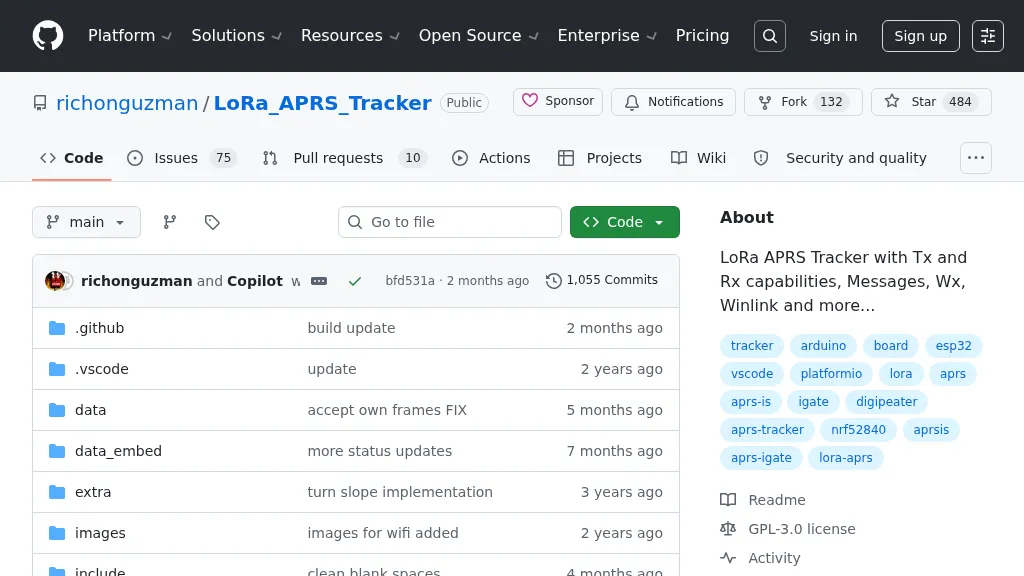 Demonstrates a LoRa APRS Tracker project featuring a comprehensive menu system for message management, weather requests, and monitoring nearby trackers. The device supports adjustable display eco mode and screen brightness, optimizing power consumption by dynamically changing processor speed from 240MHz to 80MHz. GPS beacons are encoded for efficient RF transmission, and an OLED screen displays altitude, speed, course, _BME280_ weather data, or new message counts, along with recently heard stations. Bluetooth connectivity enables operation as a TNC with Android (APRSdroid) or iPhone (APRS.fi app), providing LED and sound notifications for transmissions and received messages. The integrated BME280 module facilitates weather data display and transmission, with Winlink mail support via _APRSLink_. The tracker can switch between **three major LoRa APRS frequencies** worldwide, offering versatile global operation.
 -
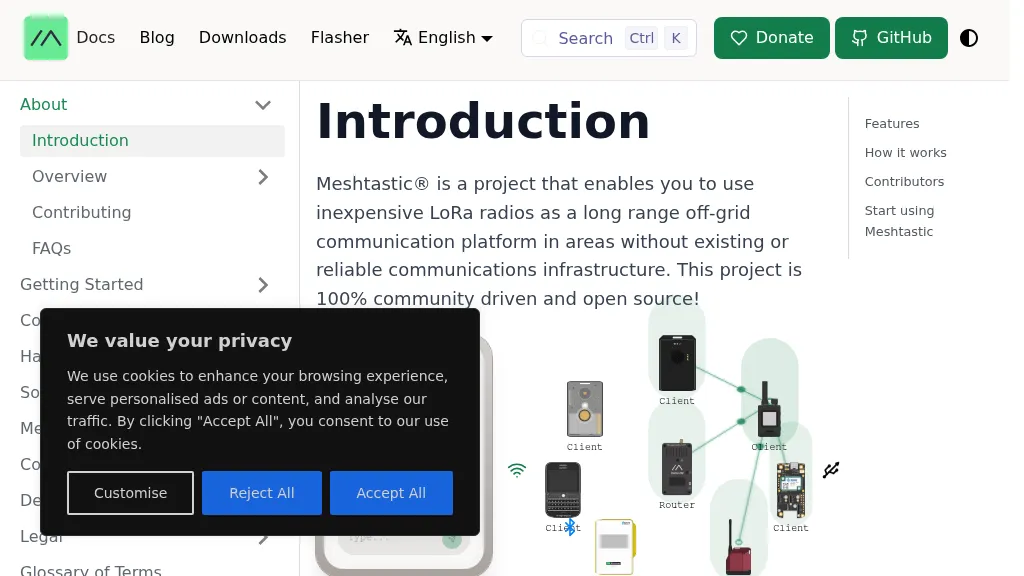 Meshtastic utilizes _LoRa_ radio protocol for long-range, off-grid communication, functioning as a decentralized mesh network. The system allows users to send and receive text messages without reliance on existing infrastructure or a phone for mesh communication, leveraging inexpensive LoRa radios. Key features include encrypted communication, excellent battery life, and optional GPS-based location services, with radios designed to rebroadcast messages to ensure all group members receive them. The project has achieved a record range of **331km** and is 100% community-driven and open source, with its codebase available on GitHub. Unlike traditional ham radio, Meshtastic operates on LoRa, which is generally accessible without additional licenses. Each Meshtastic radio can be paired with one phone at a time for message exchange, and support is entirely volunteer-based.
 -
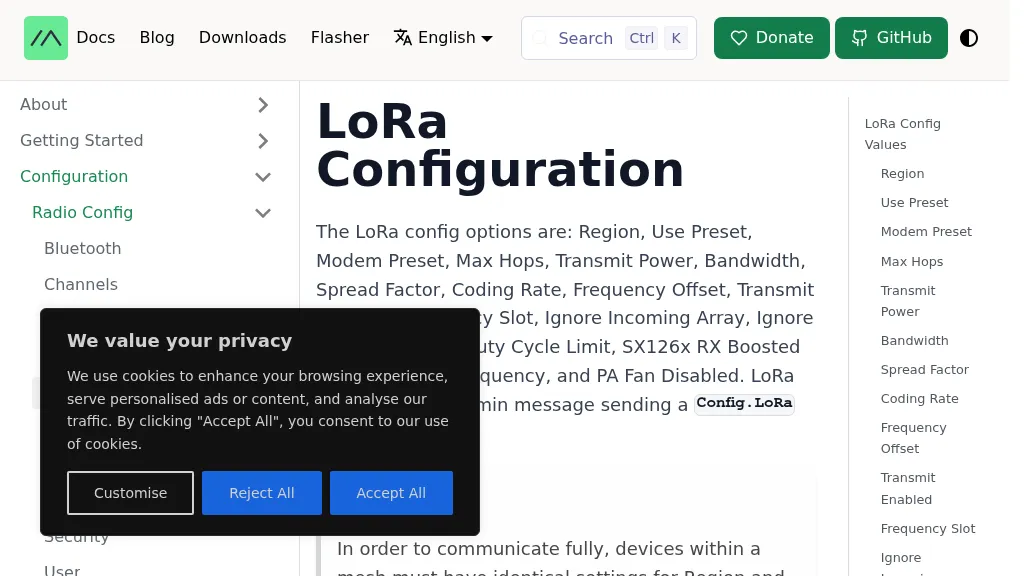 The Meshtastic documentation outlines critical LoRa configuration parameters for node operation, emphasizing regulatory compliance. It details settings such as Region, Modem Preset, Max Hops, Transmit Power, Bandwidth, Spread Factor, Coding Rate, and Frequency Offset. A comprehensive table provides region codes, frequency ranges (e.g., US **902.0 - 928.0 MHz**), duty cycles, and power limits (e.g., EU_433 **12 dBm**) for numerous countries, including the US, EU, China, and Japan, alongside a 2.4 GHz band option. It explicitly states that devices within a mesh must share identical _Region_ and _Modem Preset_ settings for full communication. Modem Presets, like _LONG_FAST_ (the default), optimize for either speed or range, directly impacting network congestion and message delivery delay. For instance, SHORT_TURBO offers the fastest speed and shortest range, while VERY_LONG_SLOW provides the longest range but is less reliable for mesh formation. The document also highlights specific duty cycle limitations, such as the 10% hourly limit for EU_433 and EU_868 regions, and provides command-line interface (CLI) examples for configuring these parameters.