Search results
Query: ft morse
Links: 79 | Categories: 7
-
 Over 15 years of operational notes are documented on the AA6E Station Log, covering diverse amateur radio topics. The blog presents detailed accounts of station setup, antenna experiments, and digital mode operations, often featuring specific equipment like the _Ten-Tec Orion_ transceiver. It includes practical discussions on **station grounding techniques** and insights into PSK31 Morse code communication. The resource provides a chronological record of Martin Ewing's amateur radio activities, offering firsthand perspectives on equipment performance and operational challenges. Content often includes technical observations and solutions developed through practical experience, such as optimizing antenna systems for various bands. Specific entries detail contest participation and DX chasing, providing context for operational decisions and results.
 -
 As FT8, JT65 and JT9 are a time synchronized protocol, one soon discovers that an accurate PC clock is very important. If your workstation time is off it can cause you to send when no one is listening, or to listen when no one is sending.
 -
 GW6ITJ articles on morse code, learning techniques, clubs and organizations and a custom learning software.
 -
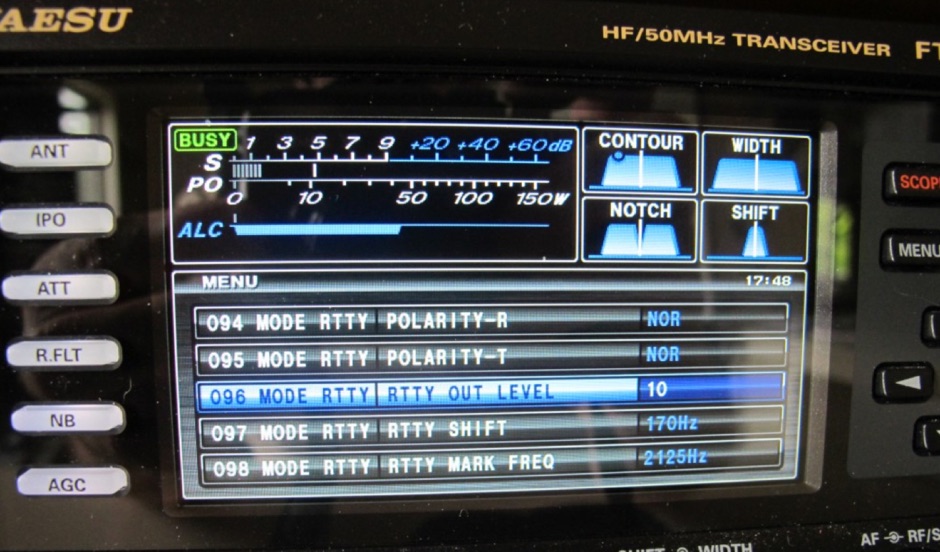 How to configure the Yaesu FTDX 3000 with HRD DM 780 for RTTY operations
 -
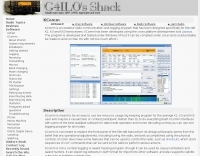 KComm, a logging and communication program, was specifically engineered for Elecraft K2, K3, and KX3 transceivers, leveraging the Lazarus cross-platform development tool. It operates natively on Windows XP and can be compiled for Linux, with potential for macOS, prioritizing low resource usage for casual DXers and contest participants. The software integrates with external applications like Fldigi for diverse digital modes and CW Skimmer for advanced Morse decoding, enhancing its functionality beyond basic logging. The design philosophy of KComm emphasizes utilizing the physical radio controls for operational adjustments, rather than replacing the transceiver's front panel. It facilitates keyboard CW operation via the Elecraft serial protocol and capitalizes on the K3 and KX3's built-in decoders for RTTY and PSK31. Additionally, KComm supports PSK31, PSK63, and PSK125 through the AE4JY PSK Core DLL on Windows and integrates with PSKReporter.info for spotting. While not a dedicated contest logging or award tracking program, KComm supports ADIF and Cabrillo export for casual use, allowing logs to be imported into other software. The author, G4ILO, ceased all software development, providing KComm "as is" without further support or updates; however, the source code is available under the GNU GPL for community continuation.
 -
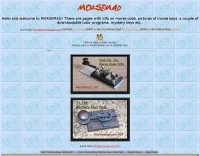 Operating Morse code (CW) relies on a diverse array of **telegraph keys**, each with unique characteristics and historical significance. This resource presents a personal collection of such keys, offering visual documentation and details on various models. It features early Marconi keys from the 1900s, including specific models like the Marconi Air Ministry Key and Marconi Coastal Station Keys, alongside **Vibroplex** bugs and JRC keys. The collection also highlights rare items such as the Brown Brothers Magnetic Twin Paddle Key, the Eddystone Bug Key, and Swedish SRA Ericsson Keys. Enthusiasts can view examples of GPO Double Current & Single Current Keys, Navy NATO Keys, and specialized aircraft and maritime keys. The site includes information on historical training devices like the OMNIGRAPH and a Morse Inker from 1900, providing context for the evolution of telegraphy equipment. Additionally, the resource showcases unique items like the B2 Spy Set SOE Agents Key and a WW2 Junker U-BOAT KEY, illustrating the varied applications of Morse keys throughout history. The author, G0RDO, also shares details on a home-made paddle key and invites inquiries for acquiring interesting Morse keys.
 -
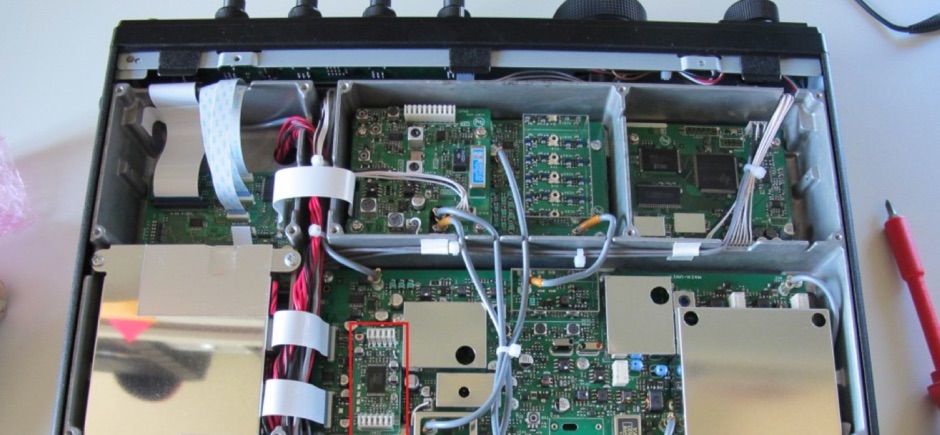 Instructions on how to install the Yaesu DVS 6 option module into a Yaesu FTDX 3000
 -
 PilotMORSE is a great home solution for private pilots or aspiring professionals who want to hone their Morse code skills used to identify VORTACs, localizers, and marker beacons. PilotMORSE takes you through the alphabet with an advanced neural network algorithm that adjusts the pace of presentation based on your responses.
 -
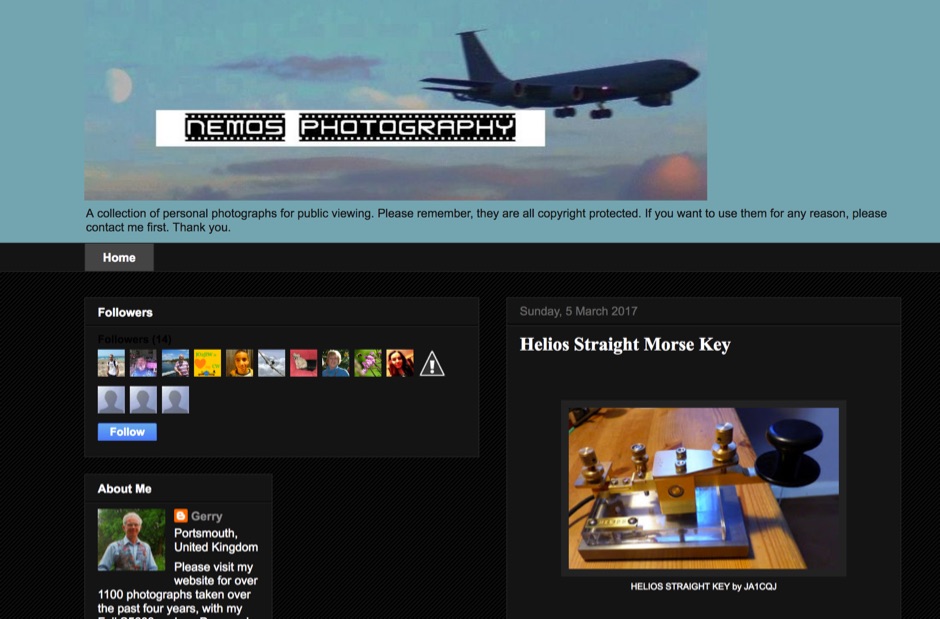 The _Nemos Photography_ blog presents a curated visual gallery focusing on _Morse keys_, offering a detailed photographic exploration of various telegraphy instruments. Each entry typically features high-resolution images of specific keys, highlighting their design, construction, and historical context. The content serves as a visual reference for collectors and enthusiasts interested in the aesthetics and mechanics of CW sending devices, often including close-ups of key components and unique features. This resource allows for comparative study of different key types, from vintage straight keys to modern paddles, without delving into technical specifications or operational performance. The emphasis is purely on the visual documentation of these artifacts, providing a unique perspective on the evolution and diversity of Morse key designs. It is a specialized collection for those who appreciate the craftsmanship and historical significance of telegraphy hardware.
 -
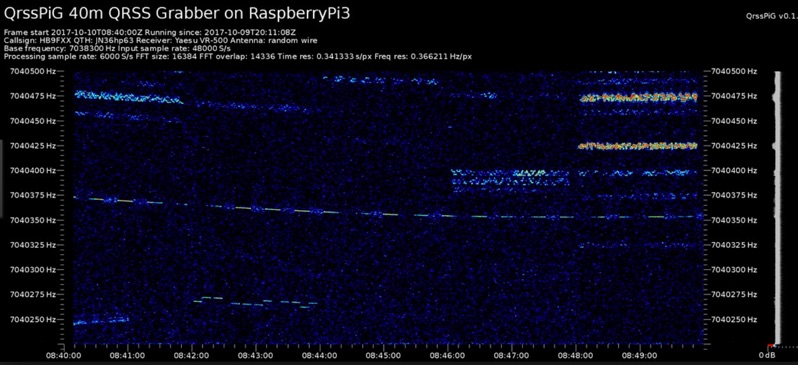 Monitoring extremely weak signals in the QRSS (Very Slow Morse) mode requires specialized receiving and processing capabilities to extract information below the typical noise floor. This project provides a software solution, _QrssPiG_, designed to run on a Raspberry Pi, enabling it to function as a dedicated QRSS grabber. It interfaces with various Software Defined Radio (SDR) devices, including the popular _rtl-sdr_ dongles and _HackRF_ units, to acquire raw I/Q data streams. The software then performs the necessary signal processing to visualize and decode these faint, long-duration CW transmissions, often operating with milliwatts of power. The system leverages the computational power of the Raspberry Pi for real-time signal analysis, allowing hams to participate in QRSS experiments and monitor distant beacons. It supports different SDR hardware, offering flexibility in setup and deployment for home stations or remote monitoring sites. The project includes detailed instructions for installation and configuration, making it accessible for those familiar with Linux environments. This grabber is particularly useful for tracking propagation on the LF and HF bands where QRSS activity is common, providing a visual representation of signal presence over extended periods.
 -
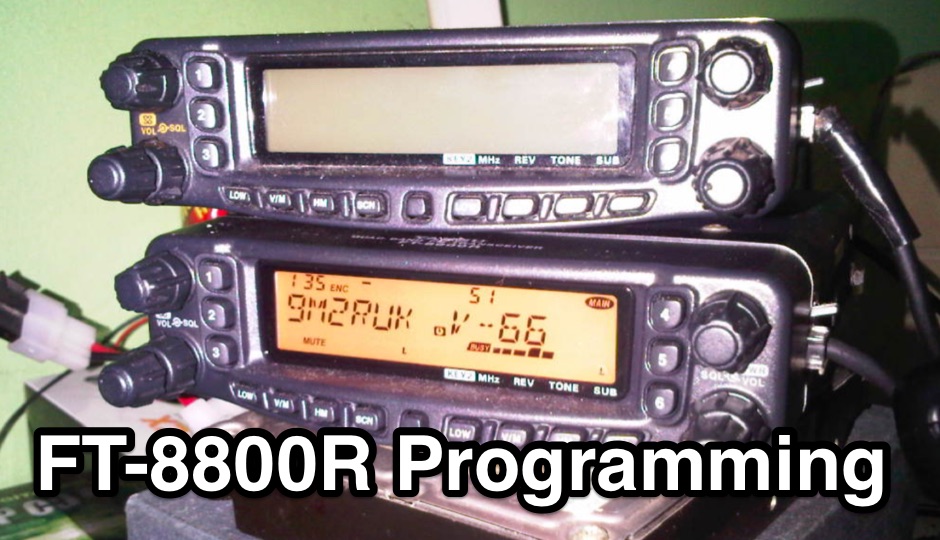 Programming the FT-8800R via the front panel and microphone keypad is not extremely difficult. Already having a list of local repeaters in CHIRP, the addition of a USB cable would allow you to coordinate the memory layout across multiple radios with ease.
 -
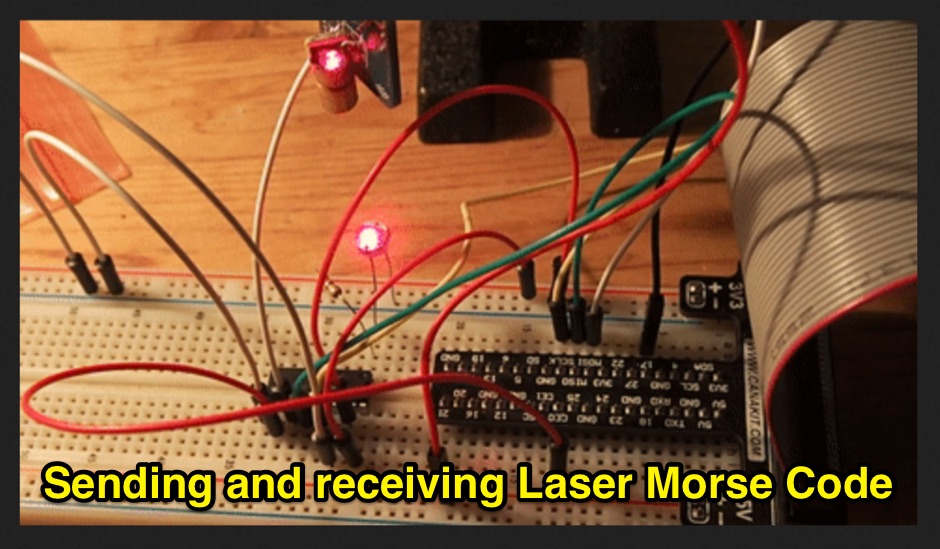 Sending and receiving text with Morse code light pulses across the room is a fun and cheap project you can do on a Raspberry Pi or Arduino or any other microcontroller. This post explains how I did it, and how you can do it too.
 -
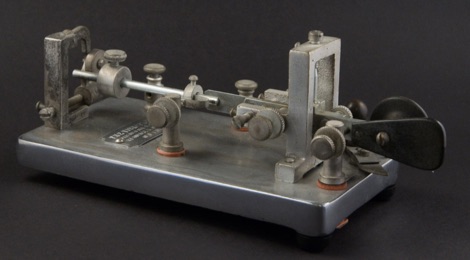 The Vibroplex Collector’s Page details the history and identification of Vibroplex semi-automatic telegraph keys, commonly known as "bugs." It traces the evolution from Horace G. Martin's 1902 Autoplex, which required a battery, to the fully mechanical Vibroplex patented in 1904. The resource explains how these keys generate automatic dots and manual dashes, helping telegraphers mitigate Repetitive Motion Disorder (RMD) and increase sending speed, thus improving their earnings. The site also covers the initial design by Alfred Vail in 1844, Jesse Bunnell's 1881 "Triumph Key," and William O. Coffe's 1904 "Mecograph." This page assists owners in identifying their Vibroplex models and determining their manufacturing dates, providing insights into the company's long history and notable figures like J. E. Albright. It notes that approximately 300,000 Vibroplexes have been produced since 1904, with the Original model still in production after more than 90 years. The resource also touches upon various Vibroplex models, including unusual, scarce, and common types, alongside legal and illegal clones from other manufacturers.
 -
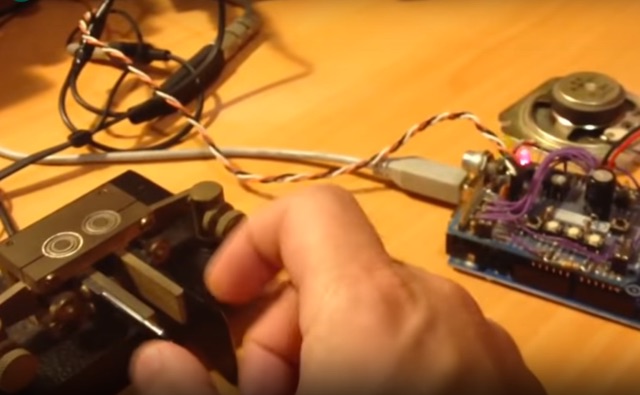 The K3NG Keyer is an open source Arduino based CW (Morse Code) keyer with a lot of features and flexibility, rivaling commercial keyers which often cost significantly more.
 -
 Yaesu FT-8800R programming with FTB8800 by G4HFG
 -
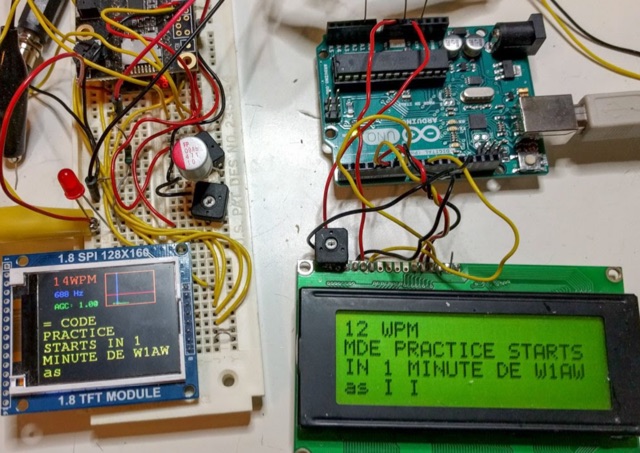 Two easy to build microcontroller projects for machine recognition of hand-sent morse code
 -
 Web site and blog that reviews equipment, goes over safety, and display projects being built. Includes Yaesu FT-891 and Ameritron RCS-10 Review, a 555 Morse Code Practice Oscillator, and and arduino based Morse Code Practice Oscillator
 -
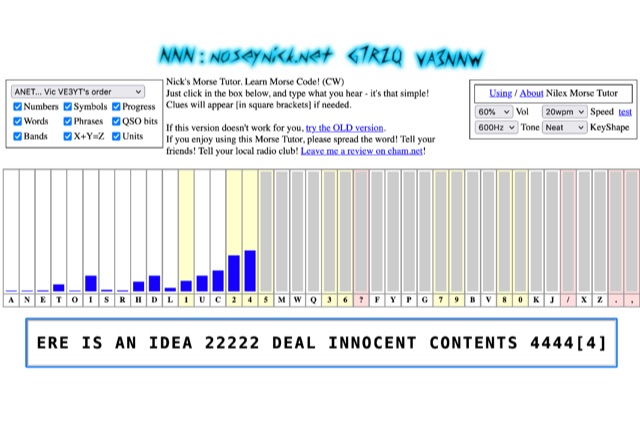 The **Nilex Morse Tutor** is an HTML5 web application designed to teach Morse code reception, adapting to user proficiency by adding new characters as readiness is detected. It prioritizes practice on less familiar letters, numbers, symbols, words, and phrases, while minimizing repetition of already mastered elements. The program offers multiple learning orders, including "Q7ZG..." (Ward/Jim's), "KMRS..." (PU5EPX/Koch), "KMUR..." (lcwo.net), "AENT..." (CWops CW Academy), "TEAN..." (Stephen C Phillips), "ANET..." (Vic VE3YT), and "ETI5..." (Ham Whisperer), alongside an alphabetical option. Users can customize the learning experience by enabling or disabling automatic progression, and selecting specific content categories such as numbers, symbols, words, phrases, QSO bits, Ham Radio Bands, X+Y=Z math, and units. Audio settings are adjustable for volume, speed (WPM), tone frequency, and keyshape/keying envelope, allowing for a personalized auditory environment. The interface provides visual feedback with blue bars indicating practice emphasis and gray bars for reserved characters, with clickable bars for manual character selection. Developed by "Nosey" Nick Waterman, VA3NNW, this tutor is based on earlier versions by Jim Wilson and a 1977 QST article. A significant October 2019 rewrite incorporated a new WebAudio sound library by AwesomeAidenW, improving offline functionality and mobile support. The content library was expanded to include 3000 top Google words, 2284+ General Service List words, ISO country codes, capital cities, US states, Canadian provinces, UK counties, common names, periodic table elements, quotes, Q-codes, electronic components, ham abbreviations, and example call signs. The software is distributed under the GNU GPL V2 license.
 -
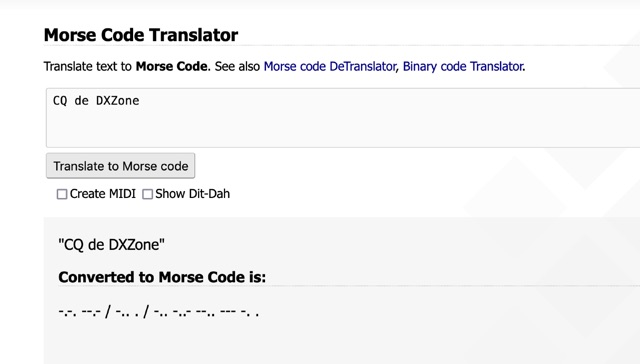 One primary function of this online utility is to convert plain text into _Morse code_, presenting the output in either a visual dit-dah sequence or as a downloadable MIDI file for auditory practice. The tool also provides the reverse capability, allowing operators to input Morse code and receive a decoded text translation. This bidirectional functionality supports both encoding messages for transmission practice and decoding received signals for improved copy. Operators can utilize the web interface for quick translations, making it accessible without software installation. The resource focuses on the fundamental aspects of CW communication, aiding in both learning and practical application of the code. Its design emphasizes simplicity and direct utility for amateur radio enthusiasts working with CW.
 -
 CW_Player is a freeware Morse code training program designed for aspiring and experienced radio amateurs. It generates Morse characters, Q codes, abbreviations, and random text, offering 20 customizable lessons for learning Morse code. The software includes a quiz for knowledge testing, CW signal monitoring to decode morse code live, and the ability to create personalized local characters. It generates .wav files for playback, supports Windows features like copy-paste, and integrates easily with transceivers for on-air training. Ideal for beginners, instructors, and hobbyists, CW_Player boosts confidence in CW operations.
 -
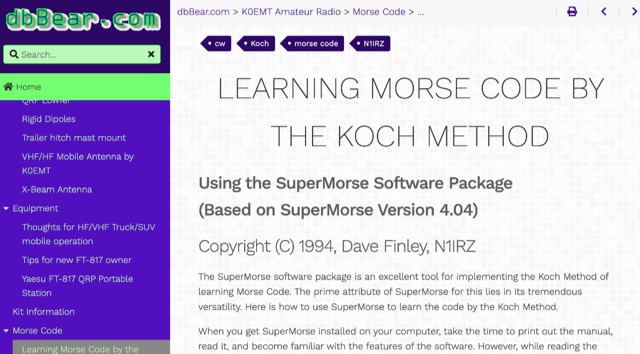 Learning CW using the SuperMorse Software Package, an excellent tool for implementing the Koch Method of learning Morse Code. Configuring the software, learning all characters, tips and tricks on choosing the right order.
 -
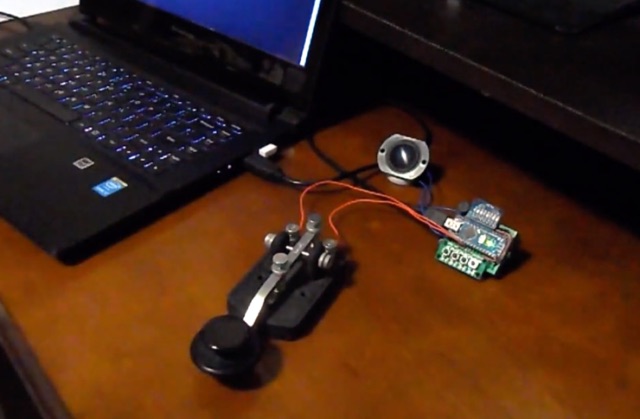
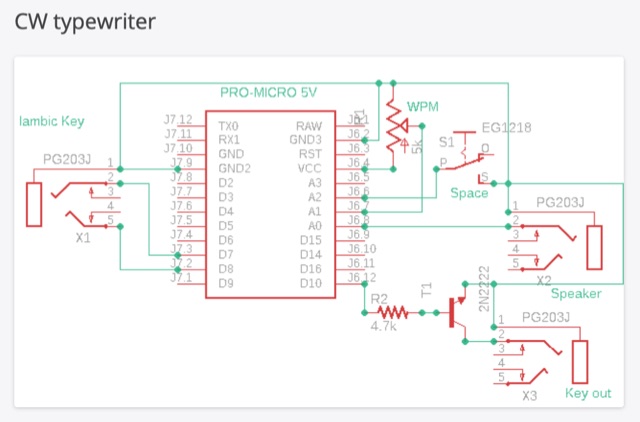 The CW typewriter is a compact adapter board that transforms Morse code into ASCII characters using an Iambic key. It connects to a computer via USB, emulating the keyboard. The device features inputs for Iambic keying and a WPM speed potentiometer, and outputs for a key and a speaker for side tone. The device can be used with various software and online typing games for practice, offering a unique and interactive way to learn and use Morse code.
 -
 The Trainer is based on a simple modular built STEM/game platform, plus newly developed interactive software,it contains six training routines, easy to advance, and consists of various learning aids. You select them from a menu. Feedback for menu selection is given audibly and through an LED display and serial monitor.
 -
 Morse Walker is a web-based tool for amateur radio operators to practice CW skills. Inspired by Morse Runner by VE3NEA, it simulates pileup scenarios and contest formats like POTA, CWT, and SST. Modes include single-caller exchanges and basic contests, offering realistic experiences to improve speed, accuracy, and QSO handling. Ideal for contest preparation or honing activation skills, Morse Walker helps operators enhance proficiency in CW communication. Start your training today at MorseWalker.com
 -
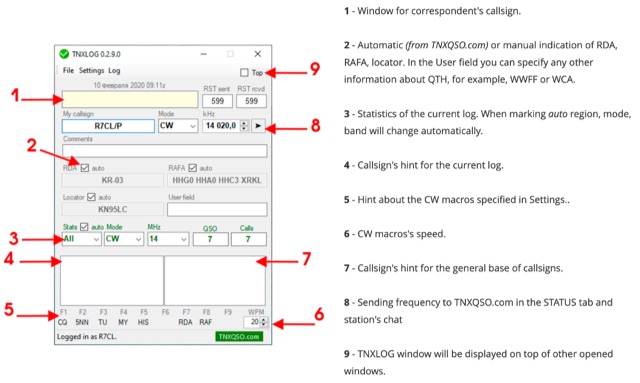 TNXLOG is a specialized logging application designed to complement the TNXQSO.com online service, focusing on real-time data exchange rather than serving as a standalone general-purpose logbook. The software facilitates the transmission of current **QSOs** to the TNXQSO.com server and simultaneously retrieves relevant geographical data such as RDA, Locator, and RAFA from the same server. It maintains real-time QSO statistics, providing operators with immediate feedback on their activity. Additionally, the application supports working with **CW macros** via a COM port, streamlining Morse code operations during contacts. This utility is specifically tailored for users of the TNXQSO.com service, enhancing their operational experience by automating data synchronization and providing instant access to location-specific information. Its design prioritizes integration with the online platform, making it a companion tool for those engaged in specific award programs or regional operating activities that benefit from real-time data exchange and statistics. The software's functionality is distinct from traditional logbook programs, emphasizing its role in a connected operating environment.
 -
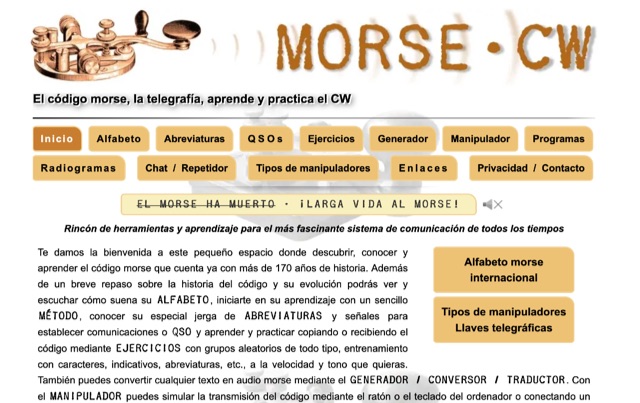 Morse code resource in spanish. Morse training exercises, cw training notes, morse code software, and cw keys
 -
 CWoip (CW over internet protocol) Full Duplex morse code audio with high fidelity sound. Allow to conduct morse code CW over the internet. Fast, Full Break-in Qsk, due to low latency, free software. With the ability to conduct an audio CW QSO between 2 to 100 iCW OPS
 -
 Moto-QRP setups offer compact, weatherproof QRP transceivers for portable ham radio use, ideal for motorcycle and backpack operations. The YouKits HB1A MKII, a 5W CW rig, is paired with a lightweight long-wire antenna and an Elecraft T1 tuner for efficient field communication. This setup fits in panniers, enabling operators to explore parks and remote locations. Accessories include a durable Morse paddle, FCC documentation, and essential logging tools, making it a perfect choice for adventurous QRP enthusiasts.
 -
 This is a contest keyer for the AEA MM-3 Morse Machine. It integrates with OmniRig for your radio's frequency. It has a built in logbook as well as a keyboard keyer. You can also export your log as an .adi or cabrillo format for contest submission. Please find my contact details on QRZ.COM for any suggestions or help 73 ZS6WAR