Search results
Query: freq
Links: 154 | Categories: 57
This query is too generic. Please try adding an additional term to focus your research.
Categories
- Ham Radio > Band Plans > Frequency coordination
- Manufacturers > Test Equipment > Frequency Counter
- Technical Reference > Frequency Counter
- Software > Low Frequency
- Radio Scanning > Scanner Frequencies
- Technical Reference > Radio Frequency Interference
- DX Resources > Beacons > 10 GHz Beacons
- Radio Scanning > Aeronautical
- Manufacturers > Antenna Analyzers
- Radio Scanning > Regional > Australia
- Technical Reference > Calculators
- Software > Databases
- Ham Radio > Regional > Denmark
- Manufacturers > Antennas > VHF UHF Microwave > Discone Antennas
- Technical Reference > DTMF
- Technical Reference > Duplexers
- Radio Equipment > HF Transceivers > Elecraft K3
- Radio Scanning > Regional > Europe
- Antennas > Receiving > EWE
- Manufacturers > Antennas > VHF UHF Microwave > Ground Plane Antennas
- Operating Modes > Hellschreiber
- Operating Modes > HF Operations
- Antennas > Horn
- Antennas > Longwave
- Radio Scanning > Maritime
- Operating Modes > Microwave
- Manufacturers > Antennas > VHF UHF Microwave > Microwave antennas
- Radio Scanning > Military
- Propagation > MUF Indicators
- Radio Scanning > Nature
-
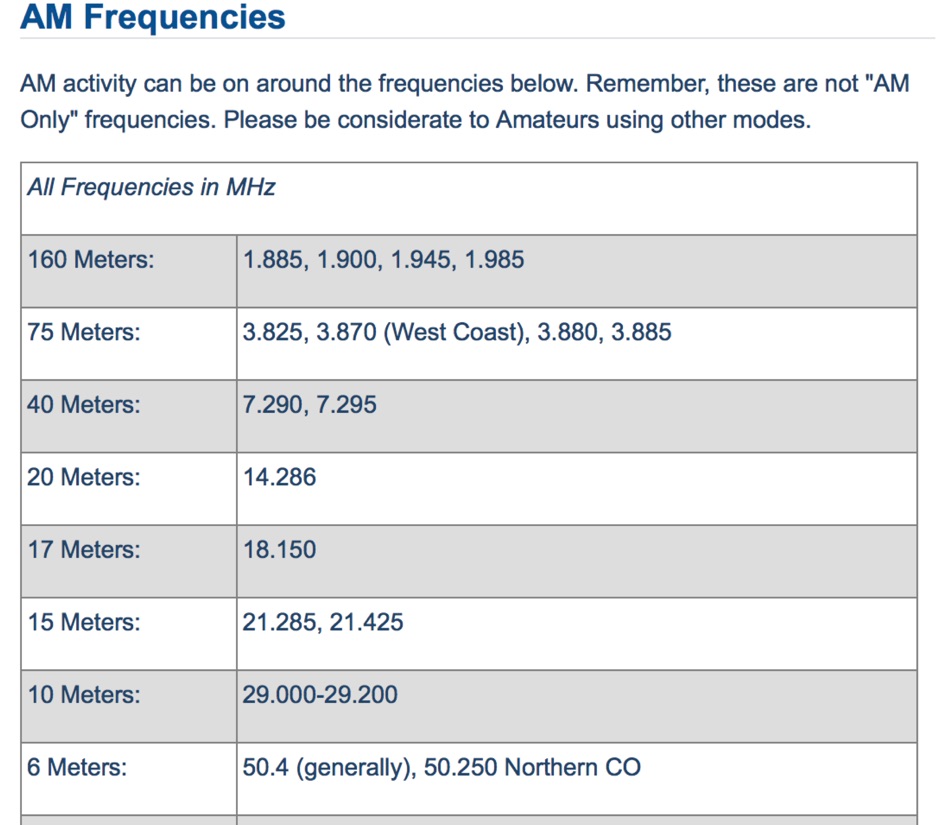 A reference table of frequencies where you may find AM operations activity
 -
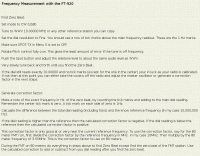 KC5M frequency measurement with yaesu ft-920
 -
 National communications Family Radio Service frequencies divided in 14 channels
 -
 Airband Frequencies collection in french PDF files by SWL FE10262
 -
 A tutorial on using RF frequency counter, how a digital frequency counter works, includes frequency counter specifications and best practices in setting counter accuracy and resolution
 -
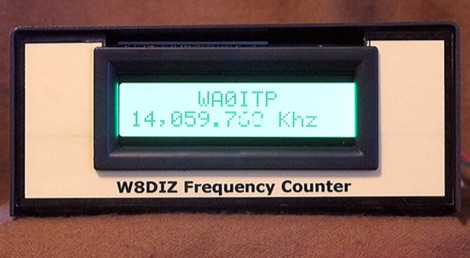 This Frequency Counter Development Kit is fully functional with the included pre-programmed microprocessor
 -
 FMI provides superior solutions in the design and manufacture of frequency control devices including Voltage Controlled Temperature Compensated Crystal Oscillators (VCTCXO), voltage controlled crystal oscillator (VCXO), Temperature Compensated Crystal Oscillators (TCXO), crystal clock oscillators, high temperature oscillators, surface mount and crystal oscillator products, phase locked sources and more.
 -
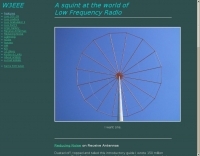 A squint at the world of LF This website was initially thrown together to provide ready availability to data being collected from the measurement of a transatlantic LF (Low Frequency) path.
 -
 Homebew a frequency marker by 7N3WVM
 -
 The 2200-meter band (135.7-137.8 kHz) presents unique challenges for amateur radio operators due to its narrow 2.1 kHz bandwidth, low signal levels, and high noise. W1TAG explores various transmission modes suited for this demanding environment, highlighting that traditional voice modes like SSB and AM are impractical. Plain old CW serves as the baseline, demonstrating effectiveness across different modes, though signal-to-noise ratio (SNR) significantly limits practical speeds. The article notes that reducing CW speed below 5 WPM can improve copy, especially with computer-aided spectrum analysis software capable of decoding signals too weak for human ear reception. QRSS, or "CW sent slowly enough that speeds are best expressed in seconds per dot," is a key mode for LF work, with examples ranging from 3 seconds/dot to extreme 240 seconds/dot transmissions. _Argo_ by I2PHD is mentioned as a simple program for QRSS, enabling reception of signals like BRO, a Part 15 beacon, at a distance of **1100 miles**. Other modes discussed include Dual Frequency CW (DFCW), which uses frequency shifts to distinguish dots and dashes, and Binary Phase Shift Keying (BPSK), a phase modulation technique employing 0 to 180-degree phase flips. WOLF (Weak-signal Operation on Low Frequency), a specialized BPSK form by KK7KA, encodes 15-character messages into 960-bit packages, taking 96 seconds to transmit, and has demonstrated successful reception over **672 seconds** for a message from a 1-watt beacon. Further modes include PSK, FSK variations like JASON and MSK, and graphical modes such as Hellschreiber and Chirped Hell. The article concludes with a practical chart comparing the time required to send a simple message like "WD2XES FN42CH " across these diverse LF modes, offering valuable insights for operators planning contacts on the low bands.
 -
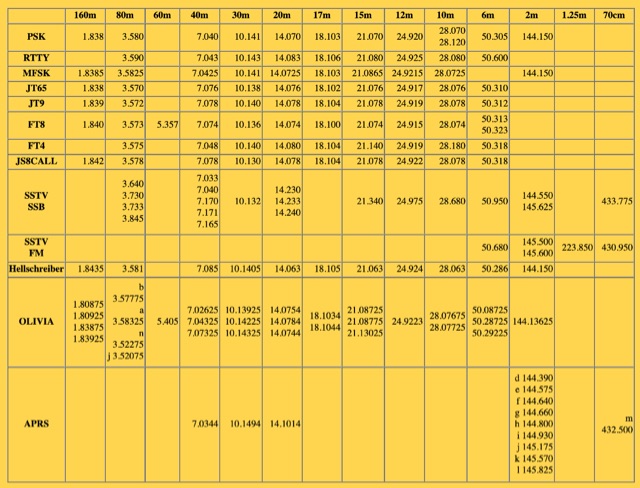 A summary of common calling frequency for each digital mode on that band.
 -
 An exaustive document on frequency multipliers with a particular attention on ways to generate high frequency signals for microwave
 -
 A Scientific endeavor aimed at studying the properties and behavior of the ionosphere.
 -
 US National Communications Sports Frequencies
 -
 Wondering whether human body could be used as an antenna.
 -
 WA1MBA article on RF connectors for microwave
 -
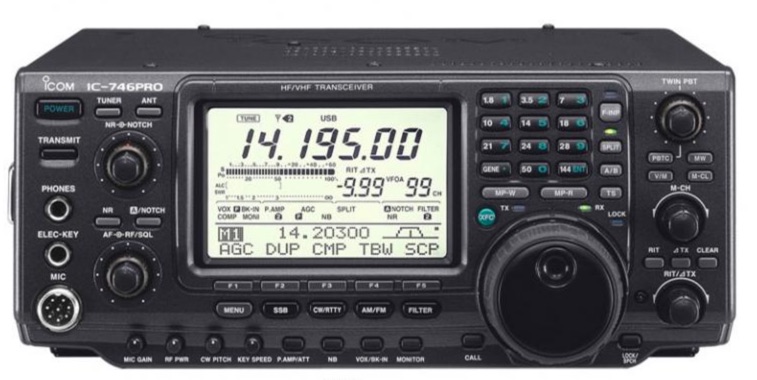 Frequency calibration is a user adjustment on the rear panel. Learn how to calibrate the IC-746 Pro.
 -
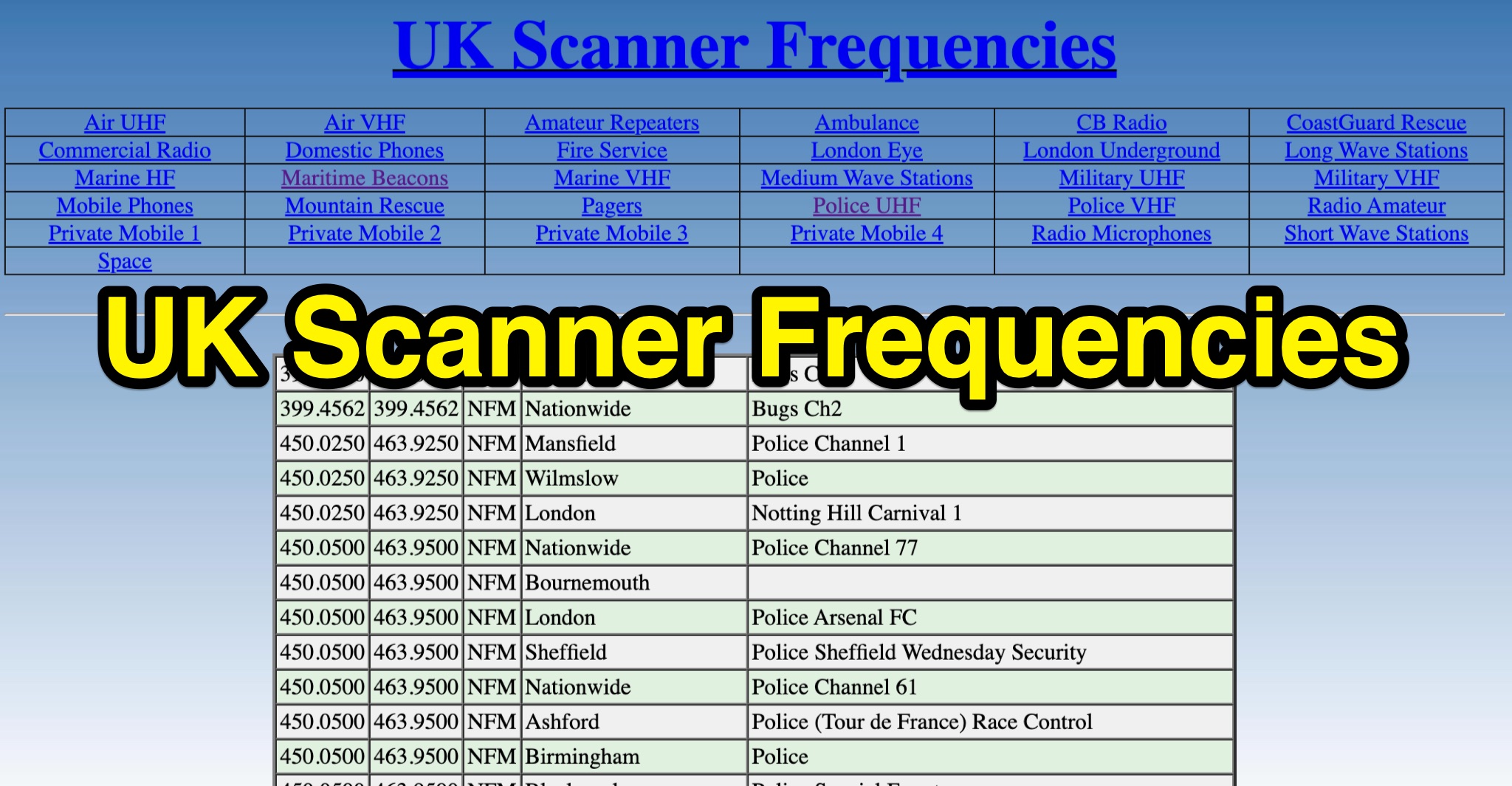 This page provides a list of scanner frequencies for hams in the UK. It offers a comprehensive guide for ham radio operators looking to find and tune into various frequencies for communication. The page is useful for hams who want to explore different channels and connect with fellow operators in the UK. Whether you are a beginner or an experienced ham radio enthusiast, this resource can help you discover new frequencies and expand your communication network.
 -
 Operating a modern amateur radio station, particularly for advanced digital modes or microwave experiments, often requires precise test and measurement equipment. This resource from NI (National Instruments), now part of Emerson, showcases a wide array of hardware and software solutions designed for demanding test objectives. Their portfolio includes modular instruments and configurable software interfaces, such as _LabVIEW_ and _TestStand_, which integrate AI assistance via _NI Nigel™ AI_ for code completion and sequence building. For those involved in RF and microwave work, the offerings extend to vector signal transceivers, RF signal generators, software-defined radios, and spectrum analyzers. These tools are crucial for characterizing antenna performance, optimizing transceiver circuits, or developing custom radio systems. The company emphasizes its 50 years of innovation, with 40 years dedicated to _LabVIEW_, highlighting a long-standing commitment to engineering solutions. The site also details products for data acquisition, electronic test, and wireless design, covering components like CompactDAQ modules for precise sensor measurements and various communication bus interfaces. Their events and perspectives sections offer insights into topics such as 5G technology and strategies for breaking out of testing silos, providing a broader context for their measurement solutions.
 -
-
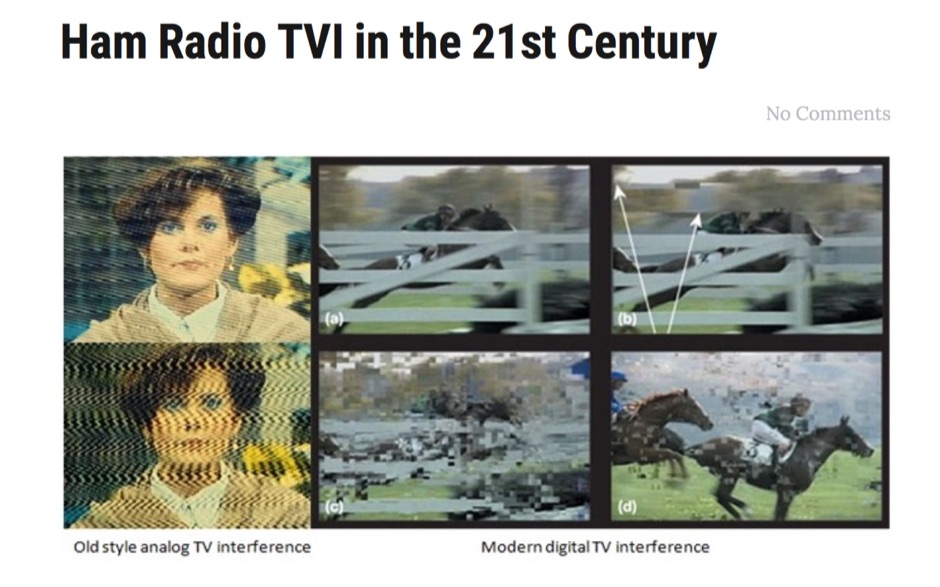 Ham radio transmissions can interfere with television reception. This is called television interference, or ham radio TVI. Consumer adoption of cable television has significantly reduced ham radio TVI. But the introduction of IPTV, or television over phone systems, has brought ham radio TVI back, often with a vengeance. Here's why
 -
 Low-frequency (LF) radio time signals, operating primarily in the 40–80 kHz range, are broadcast by national physics laboratories for precise clock synchronization. Transmitters like **JJY** (40 kHz, 50 kW; 60 kHz, 50 kW), RTZ (50 kHz, 10 kW ERP), MSF (60 kHz, 15 kW ERP), WWVB (60 kHz, 50 kW ERP), RBU (66.66 kHz, 10 kW), and DCF77 (77.5 kHz, 50 kW) cover vast geographic areas, often several hundred to thousands of kilometers. LF signals offer distinct propagation advantages over higher-band transmissions such as GPS. Their long wavelengths (3–6 km) enable effective diffraction around obstacles like mountains and buildings. The ionosphere and ground act as a waveguide, eliminating the need for line-of-sight and allowing a single powerful station to cover extensive regions. Ground wave propagation minimizes ionospheric variability effects on transmission delay, and signals penetrate most building walls effectively. Robust and low-cost receivers, often priced at 20–30 USD/EUR, are widely used in radio clocks. These receivers typically comprise a tuned ferrite core antenna, a receiver IC (e.g., Atmel T4227, U4223B, MAS1016) for amplification and AM detection, and a microcontroller for decoding the time signal and phase-locking a local clock. Specific components for DCF77, MSF, and WWVB are readily available from vendors like HKW Elektronik and Ultralink.
 -
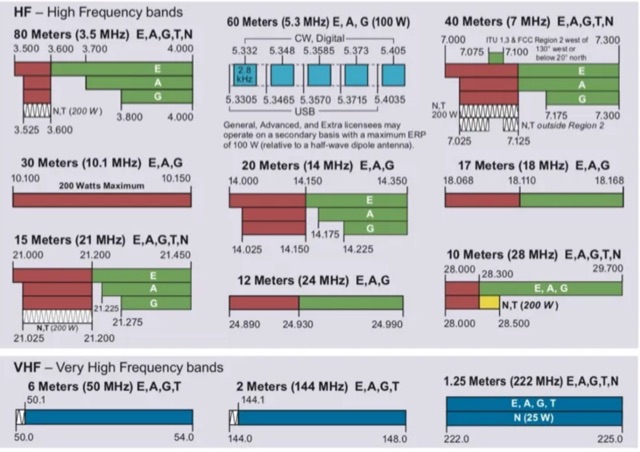 This guide explores different radio bands that hobbyists use to talk to each other worldwide. It explains how these bands work and what they're used for. From low-frequency to high-frequency bands, each has its own unique features for people who enjoy communicating through radios
 -
-
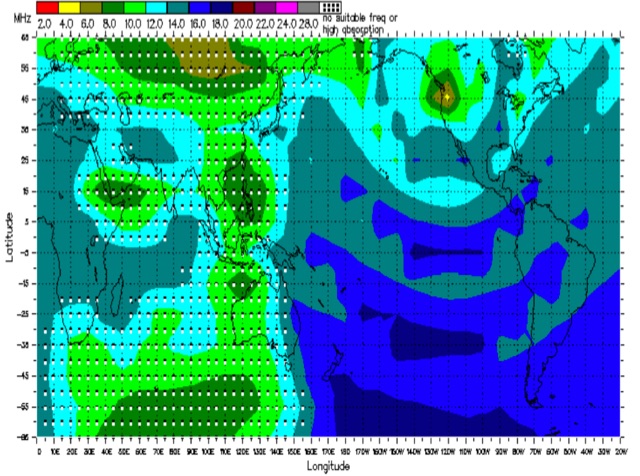 This paper presents the method of calculating the maximum usable frequency (MUF) and field strength of radio waves reflecting 2 times at the F2 ionosphere layer under inhomogeneous conditions of the ionosphere. The comparison between predicted and measured MUF has shown that the proposed method significantly increases the accuracy of calculation MUF.
 -
 Effective operation of amateur radio repeaters, particularly in high-density areas, relies on coordinated frequency assignments to prevent interference. This resource from the _Illinois Repeater Association_ (IRA) serves as the official frequency coordination body for the state of Illinois, providing essential information for repeater owners and users. It details coordination policies, guidelines, and application forms for new and existing repeaters, ensuring fair and consistent spectrum utilization. The site also includes a comprehensive band plan, last revised in 2006, and a selective access policy (PL/Squelch Plan) updated in 2015, which are critical for maintaining orderly operations. The IRA website offers various repeater directories, sortable by frequency, city, and region, including a dedicated section for digital systems. These directories are invaluable for hams traveling through Illinois or setting up new repeater projects, helping them identify available frequencies and coordinated systems. The resource also provides meeting minutes, newsletters, and links to other regional repeater councils, demonstrating its role in fostering inter-state coordination. This structured approach to frequency management helps ensure reliable communications and minimizes QRM across the state, supporting thousands of repeater contacts annually.
 -
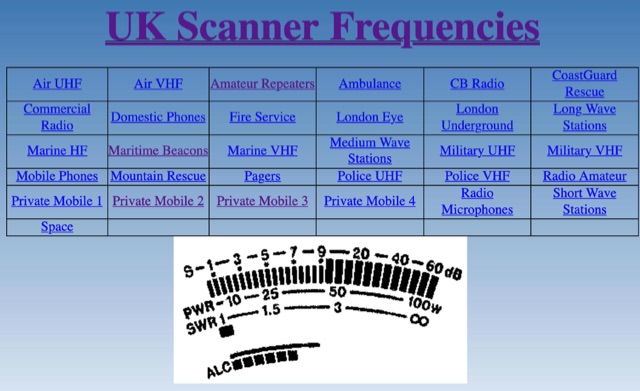 UK frequency list provide reference table to lister to Police scanner channels UHF VHF, Amateur Repeaters, Ambulance CB Radio CoastGuard Rescue, marine VHF, Military and more.
 -
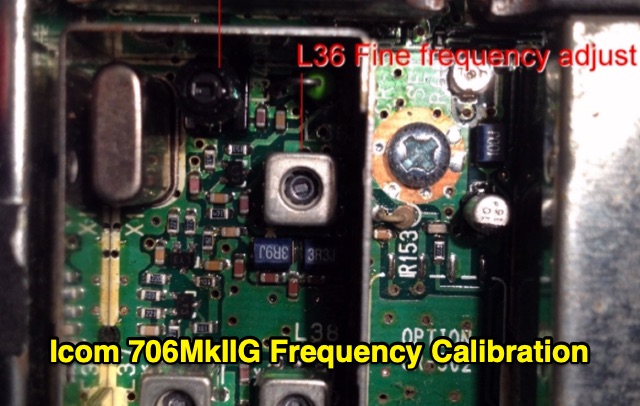 Unlike older radios, the 706 uses only one crystal oscillator (called the Master Oscillator). All other frequencies in the radio (L.O., 3-4 I.F. stages, VFO, and CW-offset) are computer-derived from the Master Oscillator. This makes it relatively simple to frequency-align the radio, so that it agrees with the Frequency Display in all modes.
 -
 Tektronix Frequency Counters pack the functionality of a frequency counter, meter and timer into one instrument.
 -
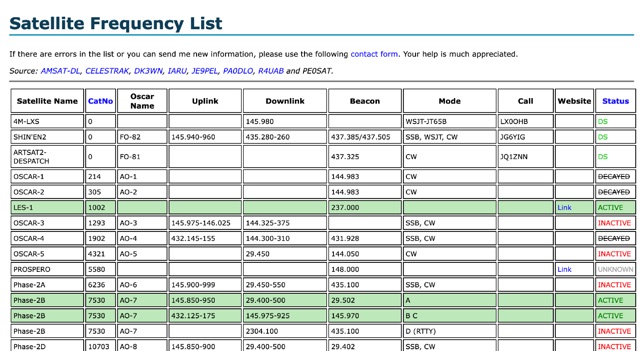 An online reference table with Satellite information including current status, uplink and downlink frequencies.
 -
 a subcommittee of the Amateur Radio Council of Arizona
 -
 Time Mapper UHD is a versatile mapping and time visualization program offering multi-satellite viewing with frequency display and unique country-pairs for PskReporter data. It features live feeds from logging programs and can plot ADIF files. Ideal for schools, offices, or amateur radio stations, it provides customizable 4K or HD world clock displays with over 60 map layers, including ham radio zones and natural features. The program supports various time functions and can import logs for detailed analysis. It runs on Windows 10 or 11 and offers a 30-day free trial.
 -
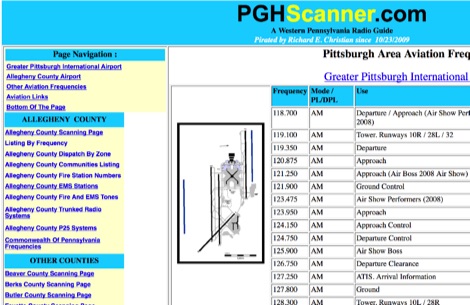 A Western Pennsylvania Radio Guide
 -
 This page provides a list of UK scanner frequencies, specifically focusing on the Police UHF bands. It is a useful resource for hams interested in monitoring and listening to police communications in the UK. The page offers a detailed breakdown of frequencies used by the police, allowing hams to stay informed and connected to emergency services in their area.
 -
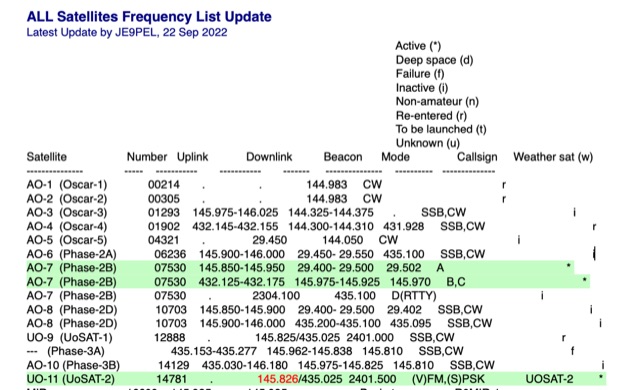 All Satellites Frequency List Update. A complete list of satellite frequencies available in several formats, including info on Satellite Uplink and Downlink frequencies Beacon, operative Mode, Callsign and Weather sat functionality.
 -
 This page provides a fully customizable band plan. You can easily customize the frequency limits, scale, define custom windows for modes and activities, adding or removing bands. You can tehn Export to PDF or print the bandplan to distribute the document to help hams operating within the designated spectrum efficiently. Useful for both new and experienced hams looking to produce their custom bandplan.
 -
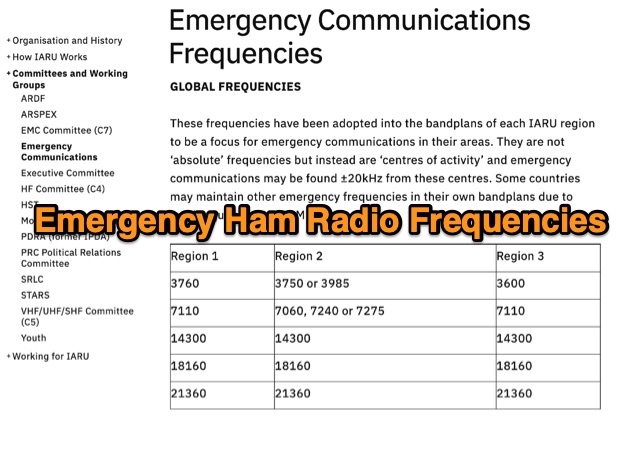 These frequencies have been adopted into the bandplans of each IARU region to be a focus for emergency communications in their areas. They are not absolute frequencies but instead are centres of activity and emergency communications may be found around 20kHz from these centres. Some countries may maintain other emergency frequencies in their own bandplans due to local requirements, QRM etc
 -
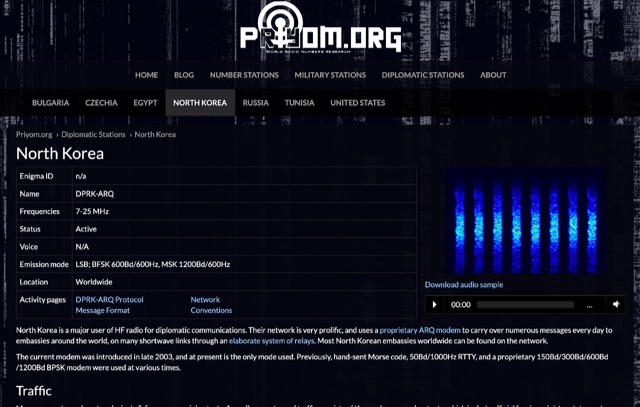 The resource details active HF radio networks maintained by foreign ministries for diplomatic communications, specifically listing operational schedules and frequencies. It currently covers networks for Bulgaria, Czechia, Egypt, North Korea, Russia, Tunisia, and the United States. The content provides specific operational parameters for these government-run shortwave stations. Information includes details on _legacy modes_ of operation and specific transmission times. The site also includes schedules for various _number stations_ which often utilize similar HF spectrum allocations. The data presented aids in identifying and monitoring these unique, non-amateur radio signals across the shortwave bands. Specific sections are dedicated to the networks of North Korea and the United States, offering granular data for each.
 -
 The recognition of telegraphy masked by noise at 40 and 80 signs/min telegraphy speed was studied in 10 normal-hearing subjects at different sound pressure levels (25-85 dB SPL in steps of 5 dB) as well as at different test frequencies (2000, 1000, 800, 630, 500 and 250 Hz). The ability to recognize the signs varied with varying SPL. Recognition for most of the subjects was best at an SPL close to 70 dB. All subjects improved their recognition as the frequency was lowered to 500 Hz, some even at 250 Hz. These facts should be taken into consideration when training telegraphy operators as well as in the construction of radio receivers to permit listening at low frequencies. Furthermore, the critical ratio was calculated at the different test frequencies.
 -
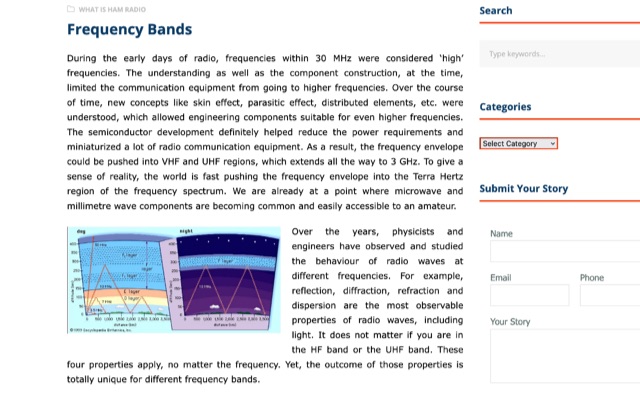 During radio's early days, high frequencies were under 30 MHz due to technical limitations. As understanding grew, components improved, allowing for higher frequencies like VHF and UHF up to 3 GHz. The HF band's long wavelengths provide unique propagation challenges influenced by solar activity. VHF and UHF bands face diffraction and reflection issues but offer diverse applications, from amateur radio to 5G and GPS technologies.
 -
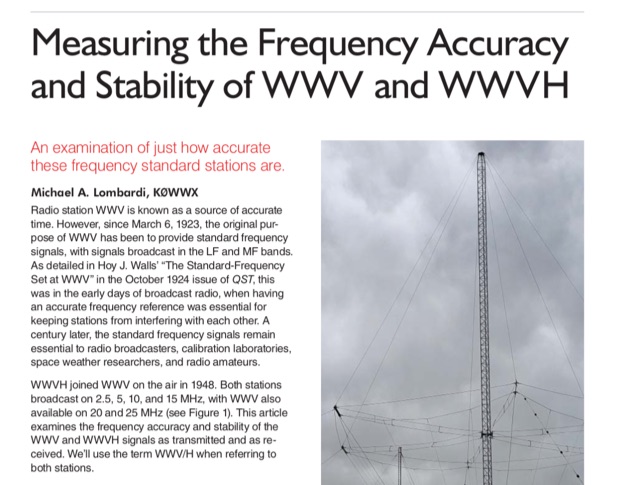 Measuring the Frequency Accuracy and Stability of WWV and WWVH by Michael A. Lombardi. An examination of just how accurate these frequency standard stations are.
 -
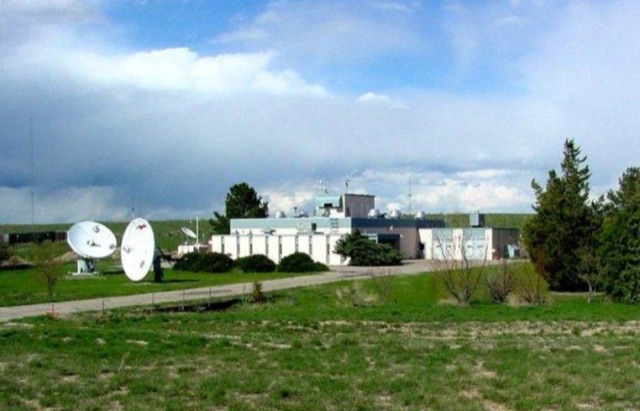 NIST radio station WWV broadcasts time and frequency information 24 hours per day, 7 days per week to millions of listeners worldwide. WWV is located near Fort Collins, Colorado, about 100 kilometers north of Denver. The broadcast information includes time announcements, standard time intervals, standard frequencies, UT1 time corrections, a BCD time code, and geophysical alerts
 -
 When new to the 2-meter FM transceiver, securing a quiet frequency for chatter seems straightforward, but it's essential to navigate FCC rules and band plans effectively. Even though frequency allocations are consistent above 50 MHz for Technician licenses, adherence to specific segments within the 2m band—ranging from 144 MHz to 148 MHz—is crucial. This includes respecting designations for different modes like CW, SSB, and FM to prevent interference, particularly with satellites and exotic modes like EME. Understanding and following the structured band plans not only ensures legal compliance but also optimizes frequency use and minimizes disruptions in the amateur radio community.
 -
 Operating amateur radio repeaters involves understanding frequency offsets, CTCSS tones, and the basic signal flow through a repeater system. This resource details the fundamental concepts of repeater operation, including the distinction between input and output frequencies, the role of **CTCSS (Continuous Tone-Coded Squelch System)** for access, and the typical frequency bands utilized for local communication. It clarifies terms such as "simplex" versus "duplex" operation and provides a diagram illustrating the signal path from a handheld transceiver to a repeater and back to another station, emphasizing the range extension repeaters offer. The article further explains practical aspects like identifying a repeater's offset (e.g., +600 kHz for 2-meter band) and the necessity of programming the correct tone. It compares the operational benefits of using repeaters for local communication over direct simplex contacts, highlighting how repeaters overcome line-of-sight limitations. The content is structured to assist new licensees in confidently making their first repeater contacts, providing a foundational understanding of how these critical infrastructure components facilitate wider area coverage for VHF/UHF amateur radio.
 -
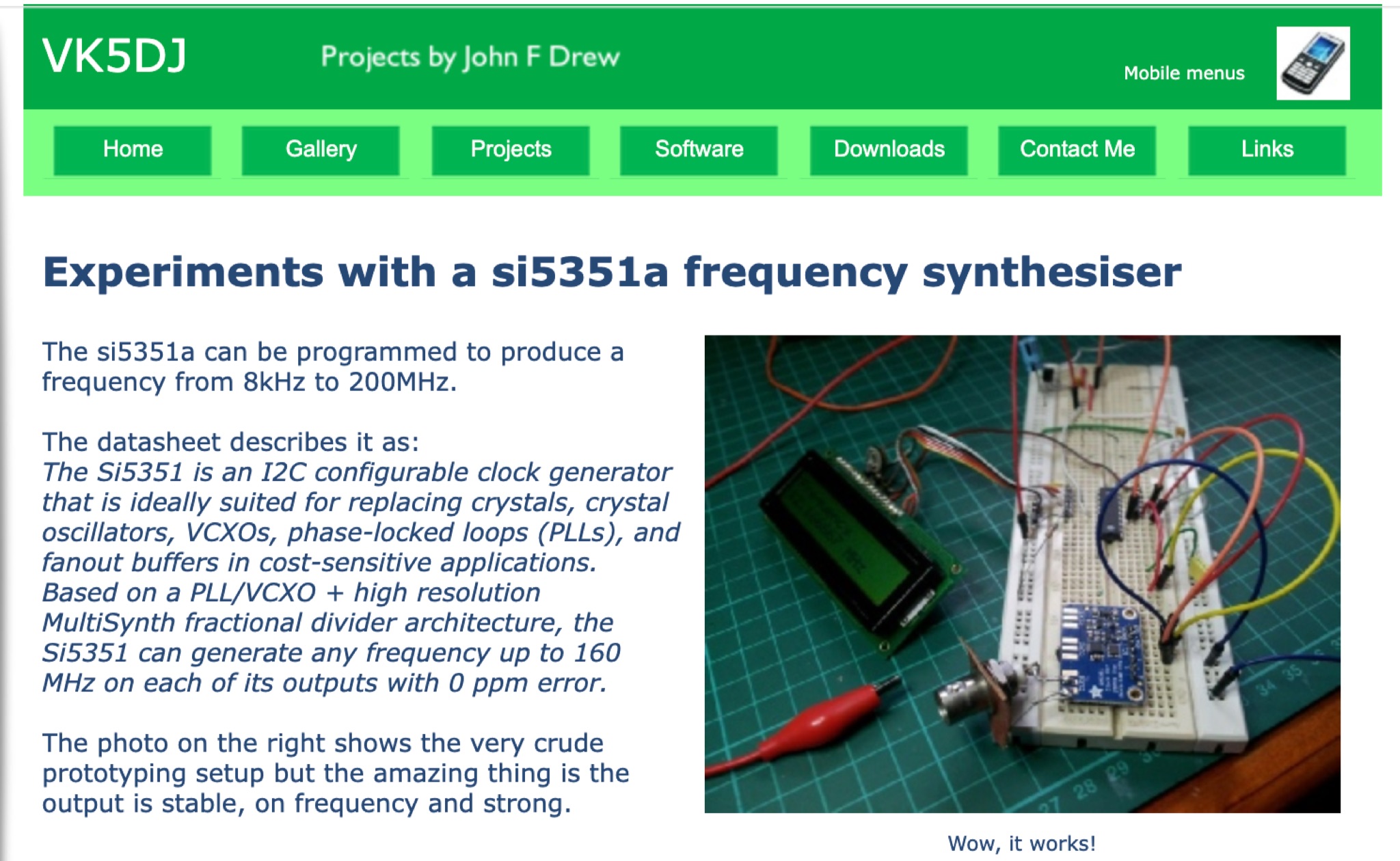 Explore VK5DJ's experiments with the si5351a frequency synthesizer, a versatile device capable of generating frequencies from 8kHz to 200MHz. Learn how this I2C configurable clock generator can replace crystals and oscillators in various applications, providing stable and precise outputs. Discover how to program the si5351a for your own signal generator projects and repeater site setups. Utilize the affordable and efficient Adafruit module for reliable performance. Enhance your understanding of PLL/VCXO architectures and fractional dividers for frequency generation. Join the PDS Forum community in experimenting with this innovative technology.
 -
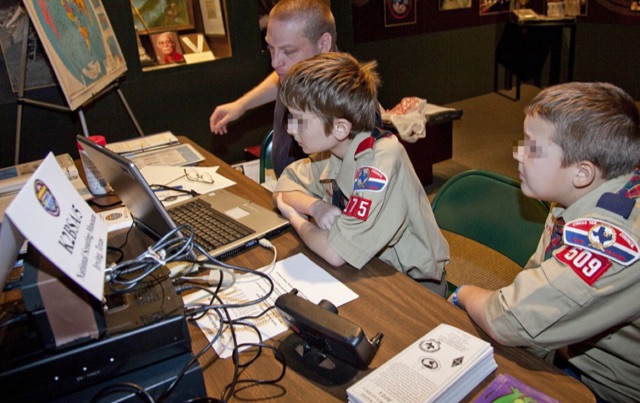 Information on frequencies suggested as Scout amateur radio frequencies. These were initially suggested by the World Organization of the Scout Movement and their Jamboree on the Air organizer. As with all amateur radio frequencies they are a shared resource. If someone else is already on that frequency, move up or down to find a clear frequency for calling.
 -
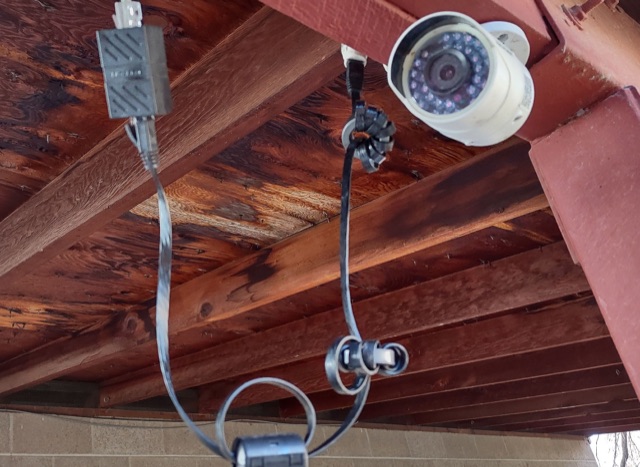 Hams can be annoyed by noise from PoE cameras and access points. These devices and their long cables act like antennas, picking up and spreading unwanted radio signals. By wrapping ferrites around the cable will reduce this noise. It won't silence it completely, but it can make a big difference.
 -
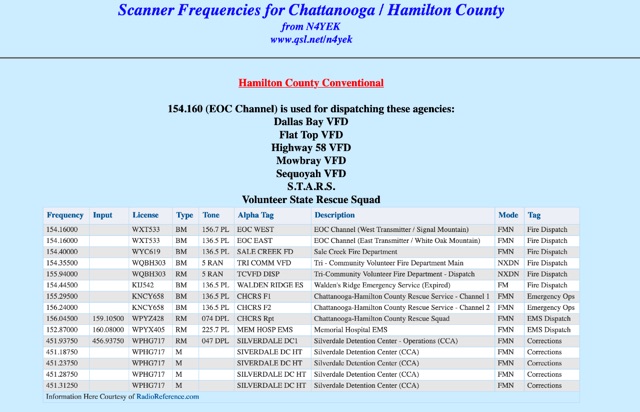 Scanner Frequencies for Chattanooga / Hamilton County. Chattanooga Police Talkgroups, Chattanooga Fire / Rescue Talkgroups, Chattanooga City Services Talkgroups, police, Hamilton County Sheriff Talkgroups
 -
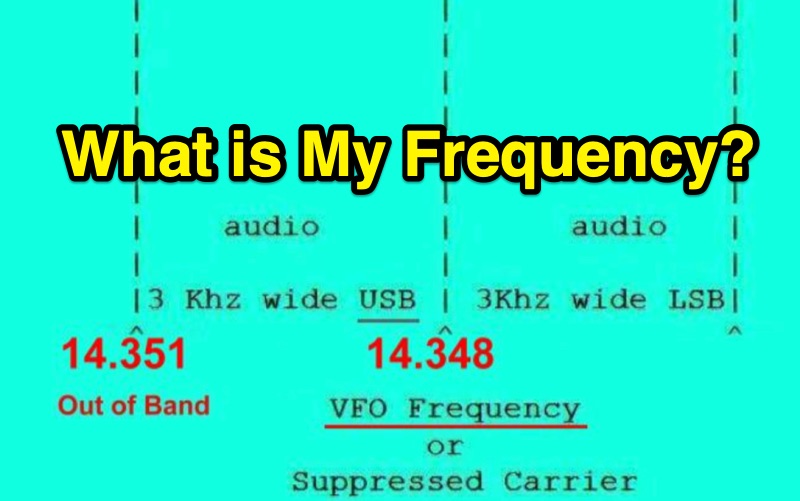 Single Sideband (SSB) operation requires careful attention to the relationship between a radio's displayed frequency (suppressed carrier) and the actual 3 kHz wide audio signal. This resource clarifies how Upper Sideband (USB) and Lower Sideband (LSB) signals occupy spectrum above or below the indicated frequency, respectively. It provides practical examples for General Class operators on the **20m** and **40m** bands, such as setting a VFO to 14.226 MHz for USB on 20m or 7.178 MHz for LSB on 40m, to maintain a safe margin from band edges. The resource emphasizes the critical importance of staying within allocated band limits to prevent out-of-band emissions, particularly when operating close to band edges. It includes relevant excerpts from **FCC Regulation Part 97**, specifically section 97.307, which details emission standards, necessary bandwidth, and spurious emission attenuation requirements. The text explains that unused sidebands are considered spurious emissions and notes that modern HF equipment typically exceeds the 43 dB spurious emission reduction standard, often achieving 60 dB or more.
 -
 Improve the FRG-7 operation adding a home made digital frequency display. The author explains the challenges of using the analogue dial on the FRG-7 and how a digital display can be a useful solution. The page provides detailed information about the FRG-7's design and frequency conversion process. It also includes step-by-step instructions on how to connect an external frequency counter to display the kHz part of the frequency.