Search results
Query: acc ga
Links: 250 | Categories: 7
-
 Producers of custom name tags, luggage tags, club badges, Employee Name Tags, Special Event Badges, but also Comtech Amateur Radio Television Transmitters and Receivers D480 filters, Video cameras and accessories.
 -
 The Kentucky Contest Group (KCG) website, maintained by N4GN, serves as a hub for amateur radio operators interested in **radiosport** contesting within Kentucky and southern Indiana. It details the group's dedication to promoting contesting, offers links to KCG officers, membership rosters, and upcoming meetings, and provides access to an active KCG e-mail reflector and Facebook Group for member communication. The site also features a comprehensive list of N4GN's recommended ham radio web picks, covering various categories like contesting resources, DXing, VHF/UHF/Microwave, and propagation information. The KCG's map center coordinates were updated on May 16, 2015, shifting approximately 16.5 miles SSW to 37° 21' N, 85° 39' W. Despite acknowledging current inactivity and an outdated web presence, the group remains operational, exploring options for reorganization, including a potential merger with the Tennessee Contest Group (TCG), which was ultimately rejected. The site emphasizes that membership applications are considered from anyone with a genuine interest in contesting.
 -
 Accurate meteorological data is crucial for optimizing antenna performance, predicting propagation, and ensuring safe tower work. This resource provides a curated inventory of weather stations, including models like the _AcuRite Atlas_ with lightning detection and the _Ambient Weather WS-2902_ WiFi Smart Weather Station, which offer real-time data on environmental factors. The product listings detail specific features such as direct-to-Wi-Fi connectivity, rainfall tracking, and temperature insights, enabling informed decision-making for various amateur radio operations. The platform categorizes products by application, featuring weather stations tailored for home and backyard use, as well as more robust systems for farm and agriculture, which can be critical for field day operations or remote station monitoring. It also highlights _Made in USA_ options, emphasizing local manufacturing and support. Beyond weather instruments, the site also presents related surveillance technology, such as the _Waggle solar CCTV camera_, designed for outdoor reliability with an IP65 weatherproof rating. This integration allows for comprehensive monitoring of remote ham radio shacks or antenna sites, combining environmental data with visual oversight.
 -
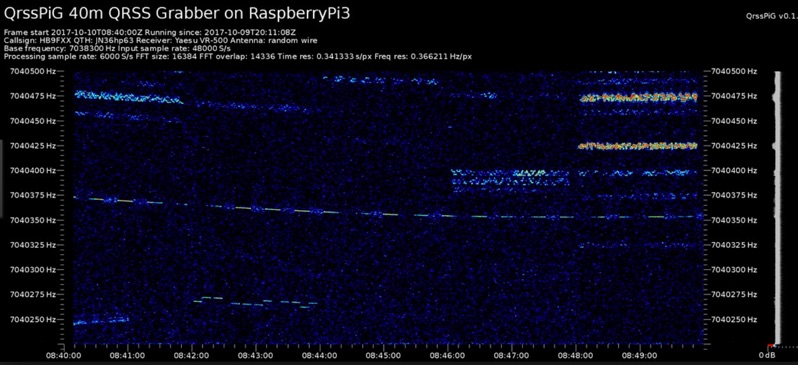 Monitoring extremely weak signals in the QRSS (Very Slow Morse) mode requires specialized receiving and processing capabilities to extract information below the typical noise floor. This project provides a software solution, _QrssPiG_, designed to run on a Raspberry Pi, enabling it to function as a dedicated QRSS grabber. It interfaces with various Software Defined Radio (SDR) devices, including the popular _rtl-sdr_ dongles and _HackRF_ units, to acquire raw I/Q data streams. The software then performs the necessary signal processing to visualize and decode these faint, long-duration CW transmissions, often operating with milliwatts of power. The system leverages the computational power of the Raspberry Pi for real-time signal analysis, allowing hams to participate in QRSS experiments and monitor distant beacons. It supports different SDR hardware, offering flexibility in setup and deployment for home stations or remote monitoring sites. The project includes detailed instructions for installation and configuration, making it accessible for those familiar with Linux environments. This grabber is particularly useful for tracking propagation on the LF and HF bands where QRSS activity is common, providing a visual representation of signal presence over extended periods.
 -
 Since 1946, VK6 Weekly News has delivered weekly broadcasts to amateur radio operators across Australia, particularly in the VK6 region. The broadcasts include news updates, acknowledgments of contributors, and calls for operators to engage by transmitting news or submitting stories. This initiative strengthens community ties among amateur radio enthusiasts and encourages collaboration in maintaining the network of repeaters. The broadcasts reach various states, including Western Australia, Queensland, and New South Wales, ensuring that information is disseminated widely. VK6 Weekly News emphasizes the importance of operator contributions, thanking them for their efforts in sustaining the amateur radio community. Accessible through multiple platforms, it supports ongoing amateur radio activities and development in the region. Operators are invited to participate actively, enhancing the richness of the news content and fostering a collaborative spirit within the amateur radio community.
 -
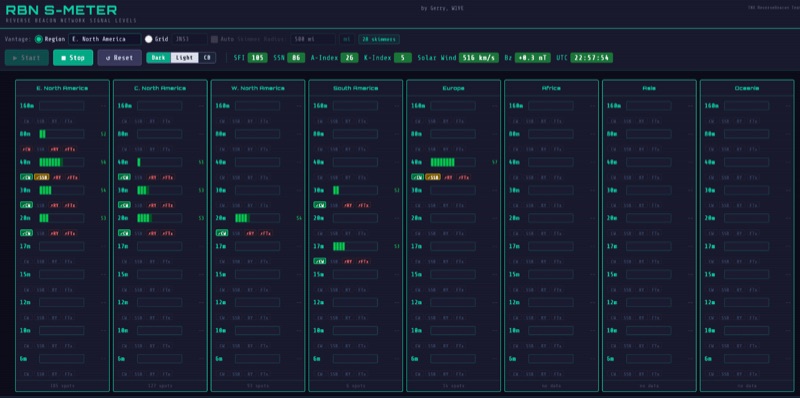 The RBN S-Meter visualizes real-time HF propagation data from the Reverse Beacon Network (RBN). It processes thousands of automated spots per hour, providing a real-time picture of active RF paths on HF bands. Users can set their vantage point using _Region Mode_ or _Grid Square Mode_. Region Mode allows selection from broad geographic areas like E. North America or Europe, while Grid Square Mode uses a Maidenhead grid square and radius for more precise data. The app displays eight region panels, each with horizontal bars for bands 160m through 6m, indicating signal strength with a color ramp from green to red. A dimmer trail shows peak hold values, and an S-unit readout provides additional detail. The app is a free web application accessible on any device, offering a practical tool for ham radio operators interested in CW, RTTY, and FT8 signals. It features a Progressive Web App installation option for enhanced usability on mobile and desktop platforms. Users can install it on Android, iOS, and Windows devices, providing a native app-like experience. The app replaces the previous Windows standalone executable, incorporating user feedback to improve features like grid square mode and automatic location detection.
 -
 Over 100 currently valid callsigns for the Bailiwick of Guernsey are listed, encompassing full, intermediate, and foundation licenses, alongside special event and club station calls. The resource clarifies various callsign types, such as 2U0*** for intermediate licensees with a 50-watt limit and GU0*** for full licensees operating up to **400 watts**. This detailed compilation also includes specific QSL routing instructions for visiting operators and past residents, often referencing their home callsigns like _G4DIY_ or _DJ8NK_. The callbook further acknowledges "silent keys," providing a respectful record of former Guernsey amateurs, complete with their callsigns and dates of passing where available. It also lists local repeaters and provides important QSL bureau information, noting that only US dollar bills are accepted for direct QSLs, not English stamps or Euros. For full addresses, the resource directs users to _QRZ.com_, emphasizing that the provided information is offered in good faith.
 -
 This resource presents a placeholder page for the _Tobacco Valley Amateur Radio Club_ (TVARC), signaling the future establishment of an online presence for this amateur radio organization. The page currently displays a "Coming Soon" message, indicating that the club's official website is in development. It serves as a preliminary marker for the club's digital footprint, suggesting an upcoming platform for members and prospective hams. The current state of the page offers no technical details, operational information, or specific club activities. It functions solely as a temporary landing page, prompting site owners to log in for launch and visitors to check back later. The resource does not provide any data on club repeaters, meeting schedules, or special events, nor does it detail any past achievements like **DX contacts** or **contest scores**.
 -
 The K5BSA Venturing Crew 73 resource, intended for a ham radio club based in Richardson, Texas, currently presents a 404 "Page Cannot Be Found" error. This status indicates the original content, which likely detailed club activities, membership information, or amateur radio projects, is no longer accessible at the specified URL. The page provides general information about _QSL.net_ hosting services, noting it supports over 30,000 websites for amateur radio operators and organizations. The error message suggests contacting the website owner directly or using an internet search to locate the intended content. It also clarifies that QSL.net cannot assist in finding specific missing pages hosted by individual users, as each site is independently maintained. The platform offers its email and web services without cost to the amateur radio community. Despite the error, the page includes links to general QSL.net resources such as "About QSL.net," "The Help Page," and "EMail Mailing Lists." It also features a prominent "Make a Donation" option, emphasizing that while services are free, user contributions are encouraged to support the hosting infrastructure.
 -
 The EA8ALP personal page, hosted on QSL.net, is currently inaccessible, presenting a 404 "Page Cannot Be Found" error. This resource was intended to feature Adelto, an amateur radio operator from the Canary Islands, likely detailing his station, operating activities, or other personal ham radio interests. The QSL.net platform, which hosts over 30,000 amateur radio websites, provides free web and email services to operators and organizations, relying on donations for support. While the specific content of EA8ALP's page is unavailable, the platform's structure suggests it would typically include information relevant to **DXing** and **contesting**, common interests for operators in geographically desirable locations like the Canary Islands. Users encountering this error are advised to contact the website owner directly or use an internet search to locate the intended content, as QSL.net cannot assist with individual site content issues.
 -
 The World Radiosport Team Championship (WRTC) is a unique on-site ham radio competition, typically held every four years, bringing together top operators globally. Unlike traditional contests where participants operate from their home QTH, WRTC competitors travel to a designated location and operate from identical stations under field conditions, ensuring a level playing field. Past events have taken place in diverse locations such as Seattle (1990), Slovenia (2000), Russia (2010), and Italy (2023), showcasing the international scope of this **radiosport** challenge. Because each WRTC event is organized by a dedicated, volunteer-driven committee, historical information and results often become dispersed across various online platforms. This resource serves as a centralized repository, diligently collecting and preserving data from all previous WRTC competitions. It provides a consistent point of reference for participants, enthusiasts, and researchers interested in the history and evolution of this premier **DX contesting** event. The WRTC Sanctioning Committee officially endorses this site, ensuring its accuracy and completeness.
 -
 Highlights the PRO CW CLUB's mission to foster the art of telegraphy, a fundamental skill in amateur radio. The club actively encourages members to engage in CW operation, emphasizing its historical significance and continued relevance in modern ham radio communications. Members participate in various activities designed to improve their Morse code proficiency and on-air operating techniques. The club's focus extends to supporting new operators in mastering CW, providing resources and mentorship to help them achieve comfortable speeds and accurate copy. This dedication ensures that the legacy of _telegraphy_ endures within the amateur community, connecting hams across continents with the simplicity and effectiveness of dots and dashes. The PRO CW CLUB serves as a hub for CW enthusiasts, promoting regular on-air activity and camaraderie among its members, who span the globe.
 -
 The W6JWS 2-meter Repeater Maintenance and Repair Log documents the ongoing upkeep of a 146.745 MHz repeater, specifically addressing modifications to enhance its functionality. It details changes made to ensure the repeater powers up in _PL mode_ and to improve the reliability of touch-tone control, drawing comparisons to similar work performed on the AE6KE repeater. The log also notes a repair to a fused wire in the reverse battery protection circuit after an accidental polarity reversal, highlighting a temporary workaround where a wire was omitted but the system remained operational. The resource includes practical insights from Jeff Liebermann, AE6KS, regarding jumper configurations and programming, with accompanying photos. It provides access to several documents for the Icom RP-1510 repeater, including operating manuals and a schematic for the single logic board version, which differs from the dual-board configuration described in some printed manuals. The log mentions a specific modification to adjust the dropout delay, which was later deemed unnecessary, and references a related project for the AE6KE repeater, aiming to replicate successful modifications on the W6JWS machine, resulting in improved touch-tone reliability and proper PL mode activation.
 -
 Distributor of test and measurement and calibration instruments and provider of NIST traceable ISO/IEC 17025 accredited calibration services. Texso sells insulated tools, multimeters, insulation testers, and much more.
 -
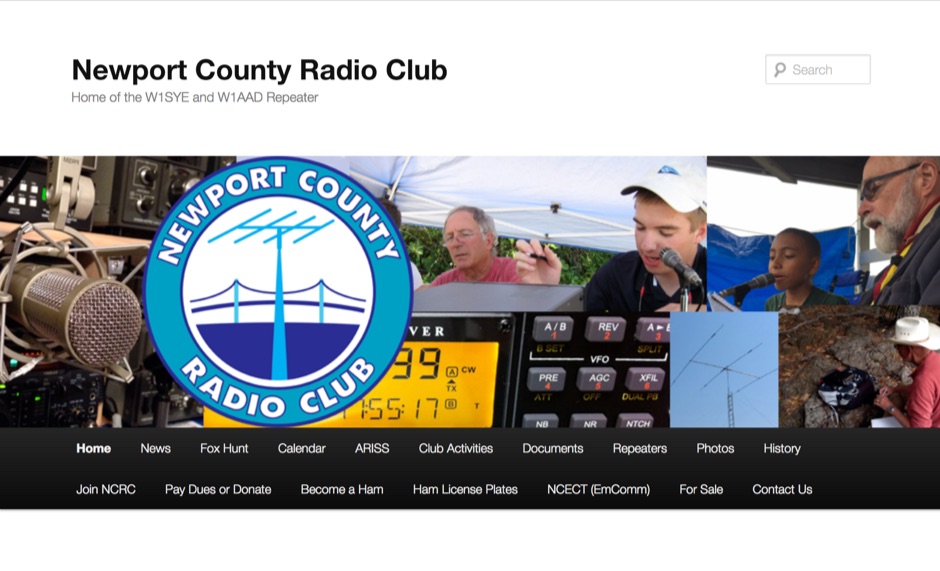 The Newport County Radio Club (NCRC) serves as a central hub for amateur radio operators in Rhode Island, providing resources and activities for its members. The club maintains and operates two repeaters, W1SYE and W1AAD, which are critical infrastructure for local communications and emergency preparedness. These repeaters support various modes and are widely utilized by the amateur community for daily contacts and organized nets. The club's activities encompass a range of interests within the hobby, from general operating to specific technical pursuits. It offers opportunities for hams to engage in field operations, participate in contests, and develop their technical skills through shared knowledge and experience. The NCRC fosters a community environment where members can collaborate on projects and enhance their understanding of radio science. Membership provides access to club resources and participation in events, reinforcing the local amateur radio presence.
 -
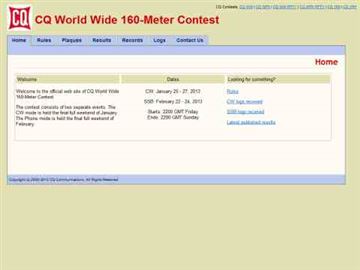 Presents the official results for the _CQ World Wide 160-Meter Contest_, a premier event for Top Band enthusiasts. The resource details final scores for both CW and SSB segments, offering links to comprehensive articles, plaque winner lists, and club score breakdowns. It also includes access to score databases for individual modes and years, along with "Soapbox/QRM Comments" from participants, providing insights into operating conditions and experiences. This archive spans results from 2010 through 2025, with a forward-looking note regarding the 2026 SSB contest date adjustment due to a conflict with the _ARRL DX CW Contest_. The site provides specific links for each year, allowing operators to review detailed outcomes, including top scores, errata, and all-time records, such as the _SX5R_ 2017 SSB performance. The structured presentation facilitates easy navigation through historical contest data.
 -
 The Michigan Radio Amateur Youth Network (MRAYN) aims to centralize resources for young operators across Michigan, fostering engagement in amateur radio. This initiative brings together various youth-related clubs and activities, providing a dedicated platform for information exchange and participation. The network supports educational efforts and promotes the hobby among younger generations, ensuring continuity and growth within the amateur radio community. Corey Bulock, KD8BOQ, is listed as a key contact for MRAYN, indicating active leadership in coordinating these youth-centric endeavors. The network's focus includes organizing events and sharing relevant content to keep young hams informed and active. By consolidating information, MRAYN simplifies access to opportunities for youth interested in two-way radio communication, from basic licensing to advanced operating techniques.
 -
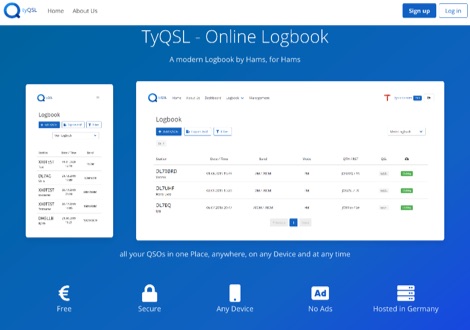 TyQSL provides a web-based online logbook platform, enabling users to manage all QSOs from any device with features like fast ADIF import, supporting up to **100,000 QSOs** per file. The platform facilitates real-time uploads to services such as _Clublog_ and _eQSL_, either automatically or with a single click, ensuring logs are current across multiple platforms. Operators can manage multiple callsigns and create various logbooks within a single account, allowing for flexible QSO organization. The integrated logger features a streamlined layout with live DXCC checking, duplicate QSO alerts, and autofill for satellite operations. It also supports one-click logging from _WSJT-X_. Users can share public profiles, displaying QSO statistics and searchable logbooks, enhancing community interaction. A PRO account offers additional features like an interactive QSO map, showing worked grids and future activities of other users.
 -
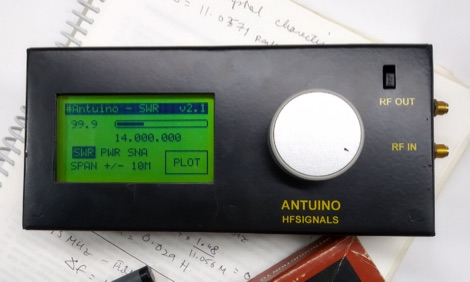 Antuino is an accurate instrument that can be used in the field to measure SWR, field strength, modulation, etc. In the lab, it can be used to sweep filters, measure gain, distortion, frequency response, etc. It works upto 150 Mhz. On the third harmonic, it is usable on 435 Mhz band as well (with reduced sensitivity).
 -
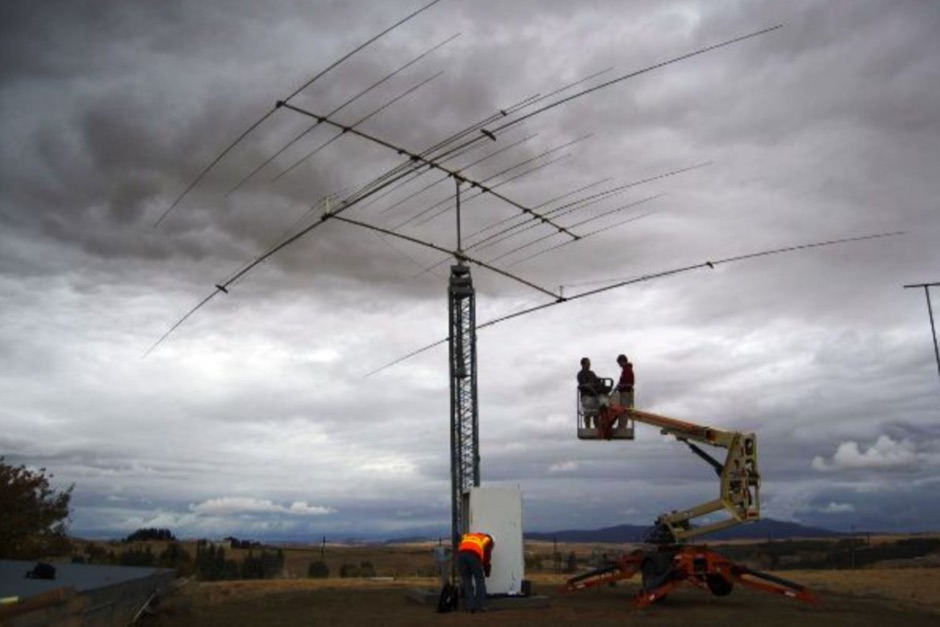 Accessing antennas at great height poses many potential safety hazards. Essentially, climbing ladders or scaling towers, regardless of whether or not a commercial safety harness is fitted, is risky business indeed particularly for those hobbyists in their latter years or not as physically capable as others.
 -
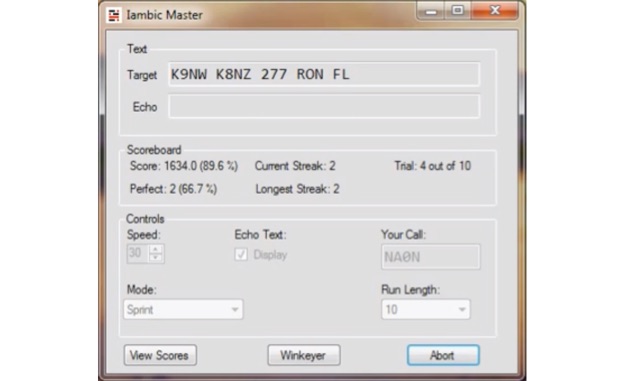 Free Windows program intended to be used as a training aid for sending CW using an iambic Winkeyer from K1EL Systems. Iambic Master operates as a game. The objective of the game is to send the text in the Target box as accurately as possible.
 -
 The Itchen Valley Amateur Radio Club (IVARC) provides a local hub for radio amateurs in the Southampton and Winchester areas of the UK. This club actively participates in various UK contesting events, including the weekly _RSGB VHF UKAC_ contests, _RSGB AFS club contests_, and _BERU contests_, alongside annual UK field days. As a _Brickworks Accredited_ club, IVARC is committed to supporting both new licensees and experienced operators in exploring diverse aspects of the hobby, fostering skill development and operational experience. Meetings are held on the 2nd and 4th Friday of each month at the Bianchi Suite, Otterbourne Village Hall, offering a consistent schedule for members and visitors. The club's recent activities include supporting _Jamboree On The Air_ (JOTA) for local Scout groups (e.g., GB1ESG), activating special event stations like _GB0SR_ from Solent Rescue Lifeboat Station, and organizing club visits to significant historical sites such as Bletchley Park. IVARC also hosts events like QRP Day and National Field Day, providing practical operating opportunities and fostering camaraderie among members.
 -
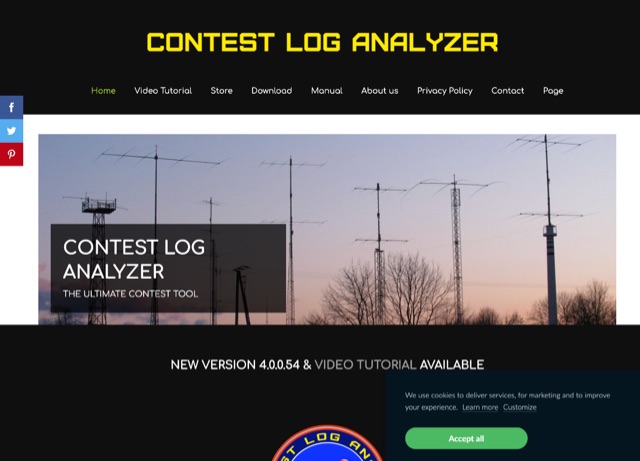 The complete software suite to Edit, Analyze, Generate Statistics, View multiple logs simultaneously, Map QSOs, Import and Export to Cabrillo or ADIF files. The Contest Log Analyzer has been developed as a complete database management application, where you can create separate Databases, containing several Logs, a convenient way to save, in one place only, all your log files that accumulate over the years. It runs on Mac and Windows, and it is a commercial product.
 -
 Outlines the Club de Radio Amateur de Charlevoix (VE2CCR), a regional amateur radio organization serving the Charlevoix area in Quebec, Canada. The resource details the club's objectives, which include promoting amateur radio, fostering technical knowledge among members, and supporting emergency communications. It lists various club activities such as regular meetings, field day participation, and local repeater maintenance. The site provides contact information for prospective members and details on how to join the club, including membership fees and application procedures. Information on the club's repeaters, including frequencies and access tones, is also presented, facilitating local amateur radio operations. The resource serves as a central hub for VE2CCR members and interested individuals seeking to engage with the amateur radio community in Charlevoix.
 -
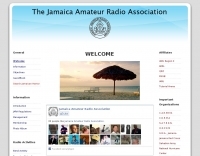 Operating in the Caribbean, the Jamaica Amateur Radio Association (JARA) provides a central hub for amateur radio enthusiasts on the island. The association details its **repeater network**, including IRLP node 7673 and ECHOLINK access, alongside information on band activity and packet radio operations. Members can access specific documents like the JARA Membership Form and the JARA Disaster Plan, while general visitors can review the full JARA Regulations and learn about the club's history. The site features a photo album and outlines various radio activities, including what constitutes a JARA Field Day. It also provides essential resources such as the Reciprocal License Form and Jamaica Amateur Radio Regulations, crucial for visiting operators. The **WINLINK Project** and Radio Voice Procedure are also covered, offering practical guidance for communications. JARA maintains affiliations with international bodies like **IARU Region II**, ARRL, and RSGB, and lists important organizations such as SATERN 14.265, Jamaica Red Cross, and the National Hurricane Center. The website also includes links to other amateur radio clubs across North America, the Caribbean, and Central and South America, fostering regional and international connections.
 -
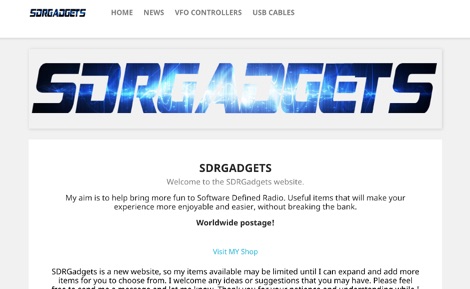 Explores the re-establishment of SDRGadgets as an online shop, focusing on accessories for Software Defined Radio enthusiasts. The proprietor details the process of rebuilding the website and restocking products after a hiatus, emphasizing a commitment to affordability and user experience in the SDR hobby. The site aims to offer items that enhance SDR operation, such as VFO controllers, without significant financial outlay. Anticipates a refreshed product line featuring a "sleeker and more technical look and feel," leveraging new manufacturing technologies. The owner expresses enthusiasm for showcasing these redesigned items and expanding the inventory beyond initial offerings, inviting customer suggestions to tailor product development. Welcomes both returning customers and new visitors, acknowledging the current limited product availability during the rebuilding phase. The site promises worldwide postage and encourages interaction for product ideas, aiming to foster a community around practical, budget-friendly SDR solutions.
 -
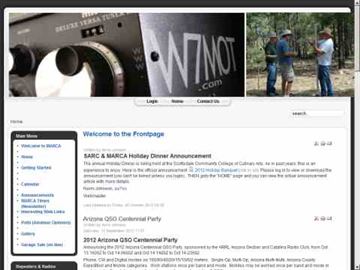 MARCA, Inc. operates approximately 24 repeaters across Arizona mountaintops and Phoenix-area rooftops, supporting modes like D-STAR and Fusion. The club, holding the **W7MOT** callsign, engages in diverse activities including ARRL Field Day events near Forest Lakes, AZ, ARRL FMT contests, and antenna experimentation. Members actively participate in HF operations such as voice, digital, CW, DXing, and various digital HF modes, alongside MESH and EOC operations within the valley. The club's interests span a broad technical spectrum, from SDR radio building to antique radio restoration, and include modern digital modes like WSPR, WSJT, FT8, and FT4. They also explore computer-based operations such as Echolink, fostering a dedicated Single Board Computer (SBC) and Raspberry Pi group. Monthly VE testing sessions for Technician, General, and Extra Class licenses are conducted by Ray Vasquez, K4RMV. Meetings are held on the third Tuesday of each month, typically lasting two hours, with a business segment followed by a technical presentation. These gatherings occur in-person at IHop in Mesa, AZ, and concurrently via Zoom, accommodating both local members and winter visitors. Informal chat groups often form post-meeting to discuss specialized topics like D-STAR, SDR, APRS, MESH, and Fusion.
 -
 Presents various amateur radio topics through blog posts, detailing operational experiences and technical insights from the perspective of SV2YC. The content frequently discusses antenna projects, such as a **portable 20m/40m dipole** designed for rapid deployment, and explores the performance characteristics of different wire configurations in varied field conditions. Observations on propagation and band activity across the HF spectrum are also regularly documented, providing practical context for fellow operators. Specific entries often include detailed accounts of **DX contacts** and participation in minor contests, outlining station setup, power levels, and antenna choices. The blog also covers modifications to commercial transceivers and homebrew accessory construction, offering practical advice on improving station efficiency and functionality. Further posts delve into software applications for logging and digital modes, sharing configurations and operational tips for maximizing their utility in daily amateur radio activities.
 -
 Covers the WB2JKJ Educom HF Net, which operates on 7.238 MHz and 21.395 MHz. This resource highlights the activities of The Radio Club of Junior High School 22 NYC, Inc., a non-profit organization established in 1980. The club's mission, "Education Thru Communication" (EDUCOM), focuses on integrating amateur radio into schools across the nation as a teaching theme. WB2JKJ, Joe Fairclough, founded and presides over this club, which is recognized as NYC's largest ham radio club. The site also provides access to the "APPLE SLICE NewsletterCurrent Edition" and information on how to support the organization. It includes a scrapbook section and contact details for further engagement. The content was last updated on May 5, 2023, reflecting recent activity.
 -
 Demonstrates the activities and mission of ARMIC, the Association of Visually Impaired and Disabled Radio Amateurs of Catalonia, operating under the callsign EA3RKR. The organization focuses on making amateur radio accessible to all, particularly those with visual impairments, by providing resources and fostering a supportive community. It highlights their commitment to inclusive radio operation within the amateur radio service. ARMIC's initiatives include an accessible radio school, emphasizing practical construction projects and operational techniques tailored for members. The association actively promotes participation in various amateur radio activities, ensuring that visually impaired operators can engage fully with the hobby. Their work underscores the importance of adaptive technologies and methods to overcome physical barriers in radio communication. This resource reflects ARMIC's dedication to building an accessible radio environment, aligning with the broader goals of the Grupo Social ONCE, a Spanish organization supporting blind and visually impaired individuals.
 -
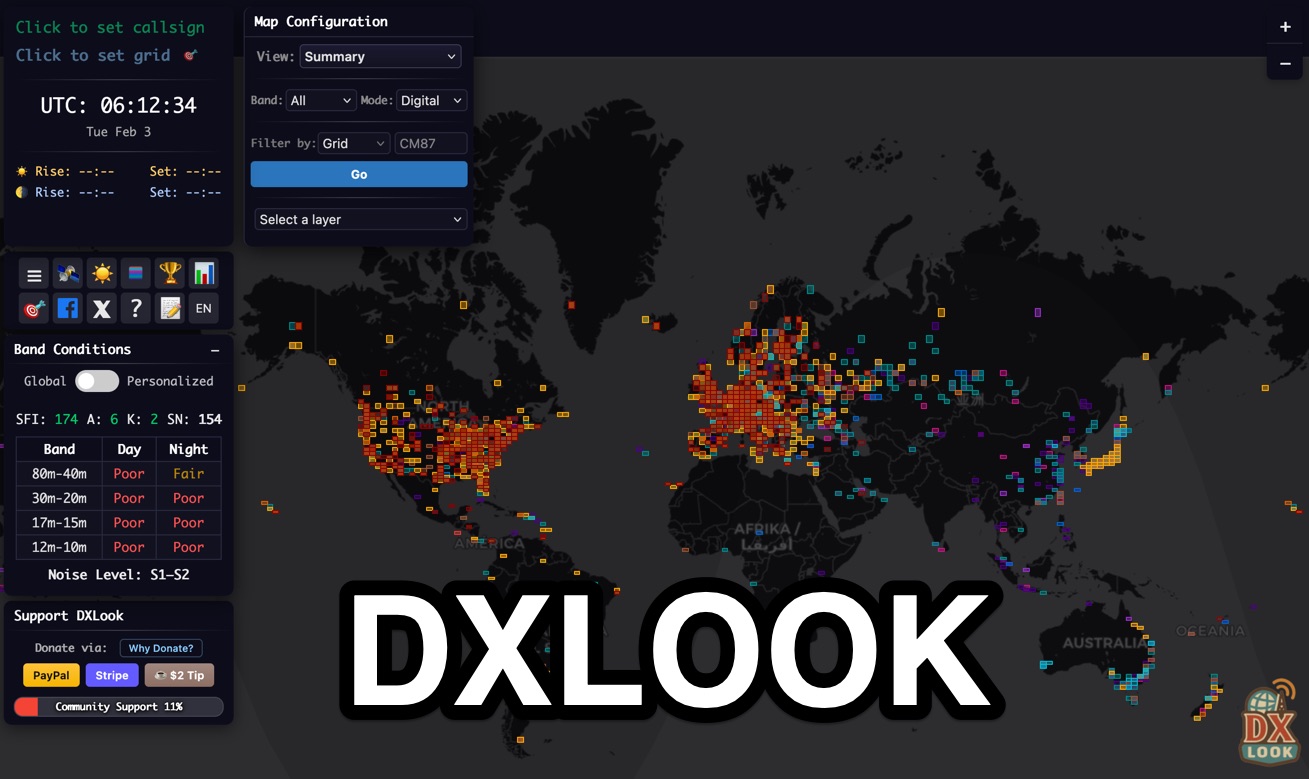 DXLook is a free, web-based propagation platform that delivers comprehensive, real-time insight into HF and VHF conditions directly from any modern browser. It aggregates live spots from PSK Reporter, WSPRnet, RBN, and DX Cluster, complemented by NOAA space-weather metrics such as SFI, K/A indices, and geomagnetic alerts. Integrated VOACAP predictions allow practical "theory versus reality" comparisons, while the interactive world map with filters, gray line, and grid overlays enhances situational awareness. With no installation or maintenance required, DXLook provides a convenient, accurate, and accessible solution for everyday operating and propagation analysis.
 -
 The Covey Hill Amateur Radio Club operates a 146.685 MHz analog repeater with an 88.5 Hz PL tone, alongside several digital repeaters. The resource details specific frequencies and modes for D-STAR (145.590 MHz, 1266.300 MHz voice, 1297.675 MHz data on 23 cm), DMR-Marc (448.525 MHz), DMR-Brandmeister (441.750 MHz), Yaesu Fusion (449.725 MHz), and P-25 Digital (147.315 MHz). It also lists Echolink node 595040 (VE2REX-R) as an access point for the club's network. A recent update, dated June 19, 2024, announces the VE2REX analog repeater and Echolink are fully functional again, after resolving issues including a conflicting 100.0 Hz tone, software repairs for Allstar and Echolink, a suspected defective USB port on the Mini PC, and a faulty exciter in the Motorola Quantar repeater. Guy, VE2VMT, was instrumental in troubleshooting these problems. The club, established in 1994, provides a calendar, news, links, and membership information, with Linda Cullen, VE2NJK, serving as president and VA2DBJ as webmaster.
 -
 Documents the XR0ZR DXpedition to Juan Fernandez Island (SA-005) in November 2013, providing insights into activating a highly sought-after DXCC entity. The team's efforts focused on maximizing QSO opportunities across various bands and modes, a critical aspect for stations aiming to complete their DXCC or IOTA awards. Operating from a remote location like Juan Fernandez presents unique logistical and technical challenges, which the expedition successfully navigated to put this entity on the air for thousands of eager DXers worldwide. The resource outlines the operational period, the callsign XR0ZR, and the specific island group activated. Such DXpeditions are vital for the global amateur radio community, enabling hams in less accessible regions to achieve their award goals and fostering international communication. The detailed account serves as a historical record of a significant activation.
 -
 The Delta Amateur Radio Club (DARC) serves as a community organization for amateur radio operators in the Memphis, Tennessee area, providing resources and activities centered around two-way radio communication. The club maintains the W4BS repeater system, which operates on 147.060 MHz with a +600 kHz offset and a 100 Hz PL tone, facilitating local VHF communications. DARC actively supports the Amateur Radio Emergency Service (ARES), preparing members for public service and disaster response through training and coordinated drills. The club also hosts regular meetings and events, fostering camaraderie and technical skill development among its members. Membership in the Delta Amateur Radio Club offers opportunities for participation in various amateur radio activities, including field day operations and local nets. The W4BS repeater provides reliable coverage across the Memphis metropolitan area, serving as a critical asset for both daily ragchewing and emergency traffic handling. DARC's affiliation with the Amateur Radio Relay League (ARRL) ensures access to national resources and advocacy, reinforcing the club's commitment to promoting amateur radio and public service within the community. The club's focus on emergency communications strengthens local preparedness.
 -
 Accessing current operational statistics for a DXpedition is crucial for DXers planning their next contact. This Club Log page provides a detailed, real-time overview of the 3Y0J Bouvet Island operation, a highly sought-after DXCC entity. It presents a dynamic dashboard showing total QSOs, unique calls worked, and duplicate contacts, all updated as logs are uploaded from the remote location. Users can observe the expedition's progress and strategize their operating times. The interface features interactive charts and graphs, allowing operators to analyze the _3Y0J_ log data by band and mode, including CW, FT8, and SSB. A breakdown of QSOs by continent provides insight into propagation patterns and where the expedition has focused its efforts. The page also includes a map for checking real-time propagation conditions to Bouvet Island, which is invaluable for optimizing contact attempts. Further details include the first and last QSO times, total operating days, and the impact on users' DXCC totals, such as new bands, modes, or DXCC entities worked. This resource is a vital tool for the DX community, offering transparency and actionable intelligence for chasing one of the rarest entities on the air.
 -
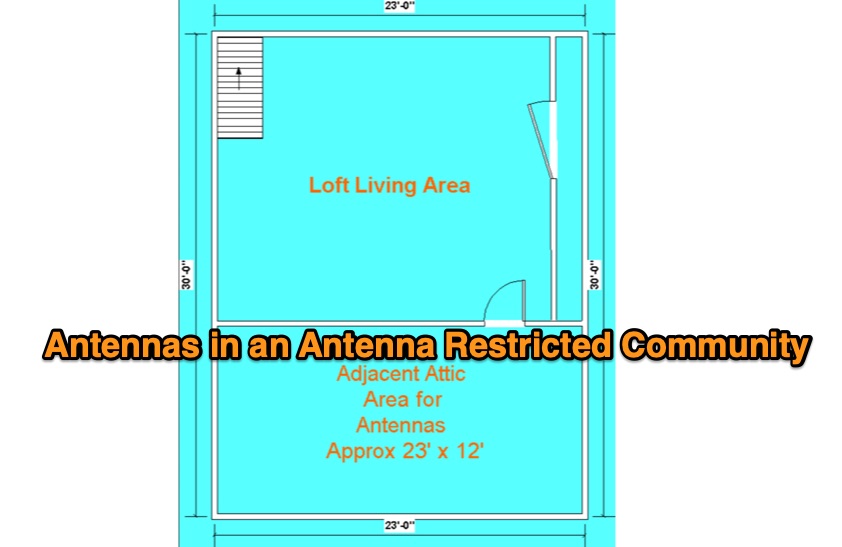 Operating in antenna-restricted communities presents unique challenges for amateur radio operators, often necessitating creative solutions for antenna deployment. This resource details the design and implementation of stealth antennas within a townhouse community in Exton, PA, where external antennas were strictly forbidden by covenants. The author, WB5NHL, describes his setup, which involved locating the shack in the basement and utilizing an unused space under the roofline of a finished third-floor loft for antenna placement. The content specifically addresses the practicalities of routing coax cables three floors and maximizing antenna performance within limited attic space. It covers solutions for multi-band operation, including dedicated sections for 40-10 meter and 80-meter antennas, along with strategies for mitigating potential interference issues. The approach emphasizes full compliance with community covenants, achieving maximum height-above-ground for horizontal antennas, enabling instant band switching, and efficiently utilizing available attic volume. While acknowledging limitations such as potential interference with high power and fixed antenna patterns, the resource provides a detailed account of a functional compromise for restricted environments. Links to individual pages on _coax cables_, _40-10 meter antennas_, _80-meter antennas_, and _interference issues_ offer deeper dives into each specific aspect of the installation.
 -
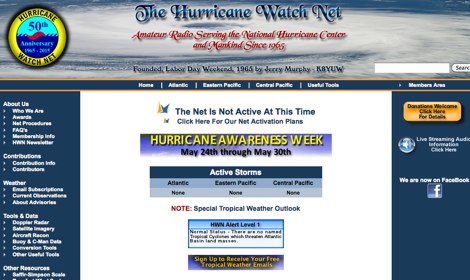 The Hurricane Watch Net (HWN) is an amateur radio organization dedicated to serving the National Hurricane Center and the public since 1965. It plays a crucial role in disseminating real-time tropical weather information for the Atlantic and Eastern Pacific regions. The HWN operates during hurricane events, providing updates and facilitating communication among amateur radio operators and emergency services. This network is essential for ensuring that communities are informed and prepared for severe weather conditions. In addition to its operational role, the HWN offers educational resources and outreach programs aimed at enhancing public awareness about hurricane preparedness. This includes providing access to tracking maps, storm surge information, and safety guidelines. The HWN encourages amateur radio operators to participate in its activities, fostering a spirit of community and collaboration in the face of natural disasters. By subscribing to their email updates, individuals can stay informed about active storms and receive vital safety information.
 -
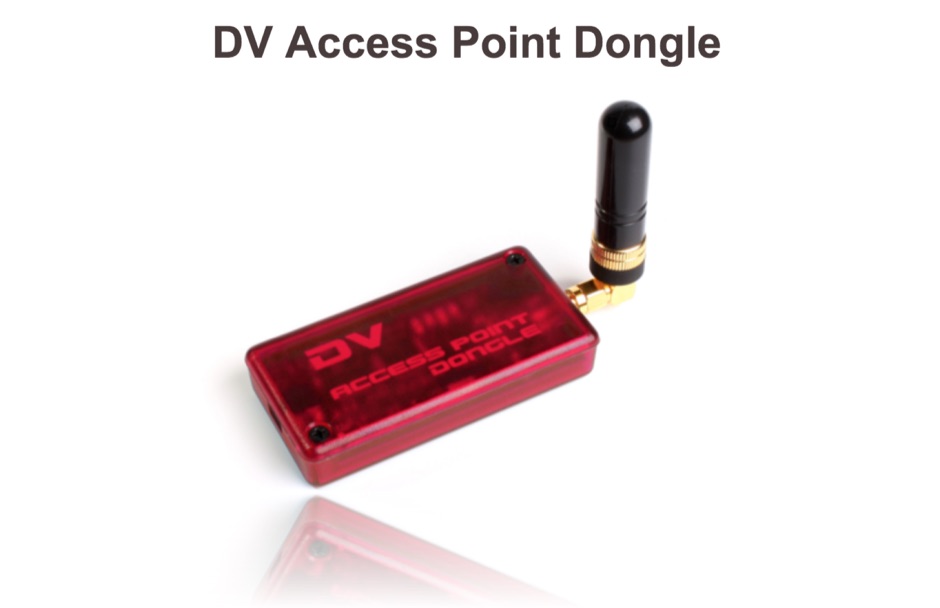 The DV Access Point Dongle connects to your PC or Intel based Mac via a USB port and provides a 2 meter Access Point for use with a D-STAR radio. Using an Internet connection, a user may connect to and communicate with D-STAR gateways and reflectors around the world
 -
 Details the operational scope and maintenance requirements for the Gloucestershire Repeater Group's amateur radio repeater network. It outlines the financial obligations associated with site rent, electricity, insurance, and professional aerial maintenance, emphasizing the necessity of member support or donations for sustained operation. The resource provides information on accessing individual repeater systems via the site menu. It also announces the 2026 Annual General Meeting (AGM) details, including the date, time, and location at The Robins Nest, Cheltenham Town Football Club, noting the venue is shared with the Cheltenham Amateur Radio Association. The page highlights the availability of the repeaters to all licensed radio amateurs and details how to contribute to their upkeep through membership or direct donations.
 -
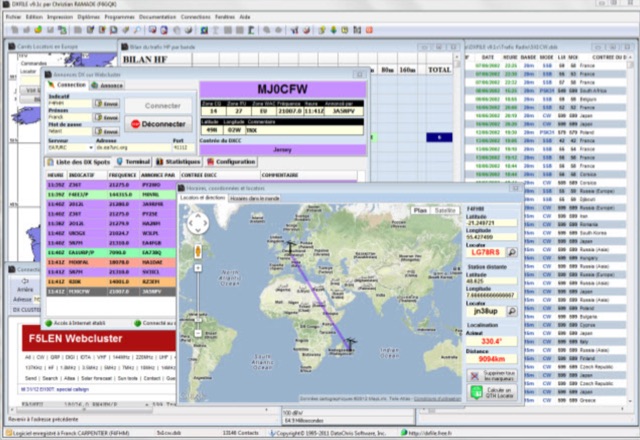 DXFile is a Windows shareware application designed for amateur radio operators, providing comprehensive log management capabilities. The software, developed in Pascal, facilitates real-time and deferred QSO entry, automatically populating fields like frequency, mode, and DXCC country based on user input and system time. It includes features for searching, modifying, and deleting QSO records, with options to sort logs by date, callsign, or entry order. The program offers various printing functions, including QSL card labels in multiple formats, and can generate standard logbook printouts. Beyond basic logging, DXFile integrates modules for tracking progress towards major operating awards such as DXCC, _IOTA_, WAZ, WAS, DDFM, and DIFM. It provides detailed summaries of contacts by band and mode, including graphical representations of HF traffic. A dedicated QSL Manager module assists in processing received QSLs, allowing users to mark confirmations and print multi-line QSL labels. The application also incorporates a DXCC list viewer, which can be updated to ensure accurate country and zone data for logging and award tracking. A distinctive feature is its HF propagation prediction module, which calculates optimal frequencies and signal levels for paths between **250 km** and **6000 km**, considering both E and F layer ionospheric conditions. This module helps operators determine the best times for long-distance contacts. Additionally, DXFile includes a _Web-Cluster_ interface, enabling connection to various DX cluster servers like DXLITE, DXSCAPE, and NC7J for real-time spot information.
 -
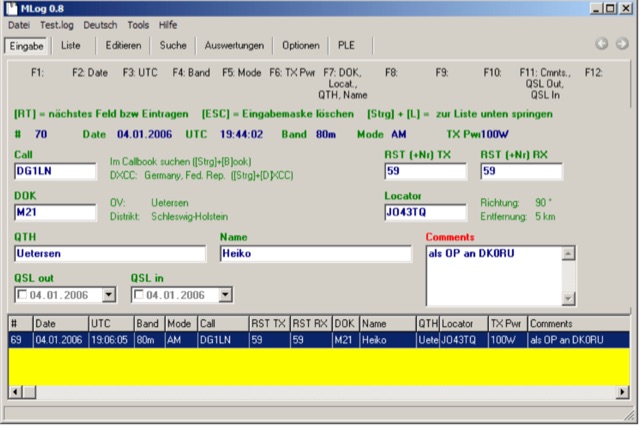 MLog 0.8d is a freeware logging software designed for Windows operating systems (NT, 98, ME, 2000, XP) that facilitates the logging, management, and analysis of amateur radio QSOs. It features a customizable input mask for rapid contest logging, a robust search function for existing contacts, and immediate data storage in CSV format to prevent data loss. The software also includes a double-check mechanism against reference logs during callsign entry, integrated DXCC information, and a "magic field" for streamlined data input, all within a single-window interface. Key functionalities include graphical QSL card management via _QSL-Collection_, CW output through soundcard or PC speaker, and direct access to _Radio Amateur Callbook_ data. MLog supports transceiver control via _Ham Radio Deluxe_ URLs, offers a detailed world map with locator conversions, and can launch _VOACAP_ through _HamCap_. It provides extensive data analysis options for QSLs, _Locator_ large fields, _DOKs_, _DXCCs_, QSO counts, and user-defined contest evaluations, alongside flexible import/export capabilities for various log formats.
 -
 This practical, hands-on article offers a valuable journey through balun construction for portable antenna systems. The author skillfully navigates from theoretical debates to practical implementation, providing a well-documented DIY process using RG316 micro coax and an FT114-43 toroid core. The step-by-step instructions, complemented by photographs, make this complex technical project accessible to hobbyists. Particularly impressive is the author's focus on lightweight design (just 173 grams) for SOTA field operations. While the final antenna requires minor tuning adjustments, the successful field test during the Pirate Contest demonstrates the effectiveness of this approach. An excellent resource that transforms theory into practical application for ham radio operators.
 -
 This project involves constructing a dual-band Moxon antenna, optimized for ham radio enthusiasts, with functionality on both the 10-meter and 6-meter bands. The antenna is designed to operate using a single 50-ohm feedpoint, acting as a mini-beam on 28 MHz (10 meters) and as a 2-element Yagi on 50 MHz (6 meters). Performance-wise, it offers a 4.0 dBd gain on 10 meters and 4.3 dBd on 6 meters, with impressive front-to-back ratios of 30 dB and 11 dB, respectively. Builders like Aleks (S54S) and Marcio (PY2OK) have successfully brought this design to life using the provided specifications. Aleks noted that bending the corners of the structure proved especially useful during assembly. The project comes with a detailed parts list, highlighting the use of aluminum tubes with different diameters and lengths to form essential components like the reflectors and radiators. For those looking to fine-tune the antenna, adjustments can be made by altering the length of certain parts that fit into larger tubes. The feeding system is equipped with a balun to accommodate different power levels, making the design versatile enough to handle outputs of either 300 watts or 1 kilowatt.
 -
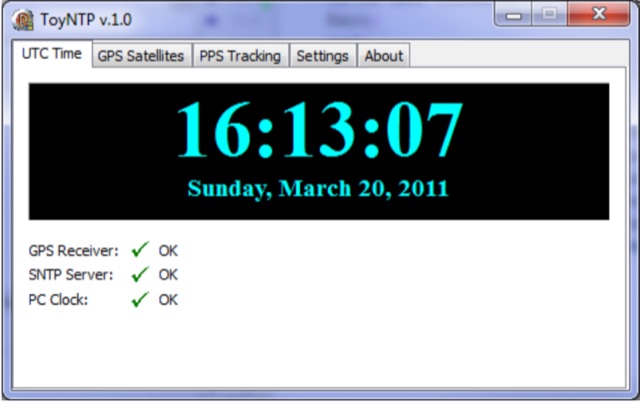 ToyNTP is a simple freeware time server for Windows that implements the SNTP protocol and uses a GPS receiver, Garmin GPS 18x LVC, as time reference. ToyNTP was designed to be used with Faros in the locations where access to the SNTP servers on the Internet is not available, but it may be used for other purposes as well, in particular, it may be configured to keep the PC clock synchronized to a GPS receiver.
 -
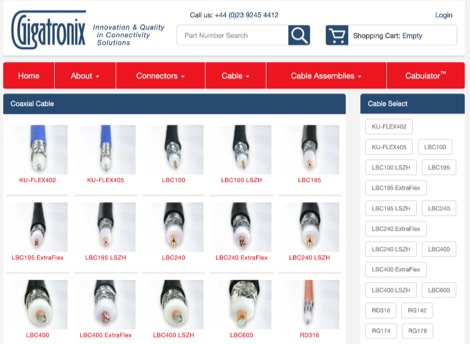 Gigatronix manufactures thousands of coaxial connector styles for stock, including cable fixing, PCB, panel mount, and adaptors. Precision 12G SDI Coaxial Connectors are designed to fit an extensive range of broadcast cables, compliant with **SMPTE ST2082-1 4K single channel** specifications. The company offers an online configurator, "Cabulator," for custom coaxial cable assemblies, streamlining specification and purchase. This includes **IPX / UFL micro-coaxial cable assemblies** configurable with SMA, TNC, and BNC panel fixing connectors. Stock assemblies, tooling, and accessories like strain relief boots are also available. The Resource Hub provides articles, product focus information, and general reference materials for technical details.
 -
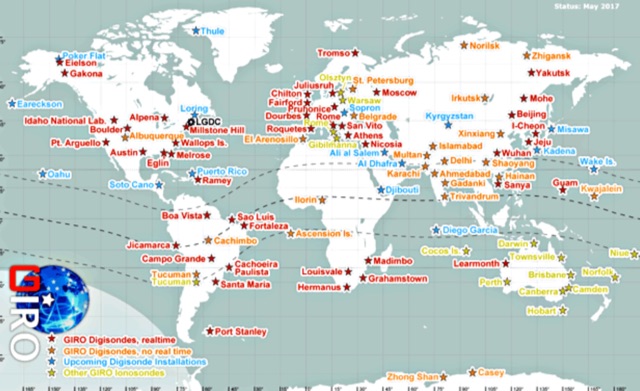 In cooperation with the URSI Ionosonde Network Advisory Group (INAG), the LGDC promotes cooperative agreements with the ionosonde observatories of the world to accept and process real-time data of HF radio monitoring of the ionosphere, and to promote a variety of investigations that benefit from the global-scale, prompt, detailed, and accurate descriptions of the ionospheric variability.
 -
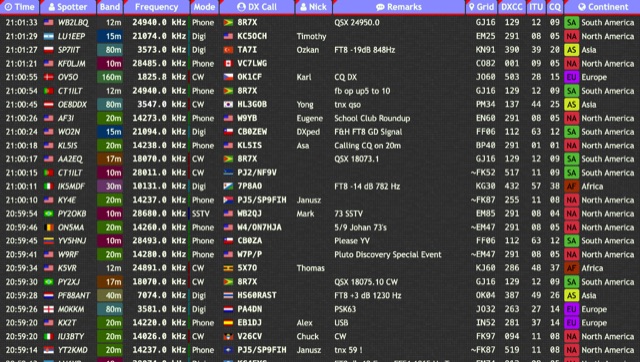 Over 15 amateur radio bands, from 160m to 70cm, are supported by the _DXTRON_ web cluster, providing real-time DX spotting information. This service integrates directly with the _QRZCQ_ API, allowing users to monitor activity across various modes including CW, Phone, Digi, RTTY, SSTV, and SAT. DXTRON displays critical spot data such as timestamp, spotter callsign, frequency, mode, DX call, and remarks, along with geographical details like Grid, DXCC, ITU, CQ zone, continent, and country. Developed by _DO5SSB_, DXTRON v1.42 offers a user-friendly interface for filtering spots by band and mode, catering to both casual DXers and serious contesters. The platform is designed for accessibility, providing a clear overview of current propagation conditions and active stations worldwide. This web cluster is a practical tool for hams seeking to identify rare DX, track contest activity, or simply observe band conditions. Its reliance on the QRZCQ API ensures a consistent flow of up-to-date spotting data, making it a reliable resource for real-time operational awareness.
 -
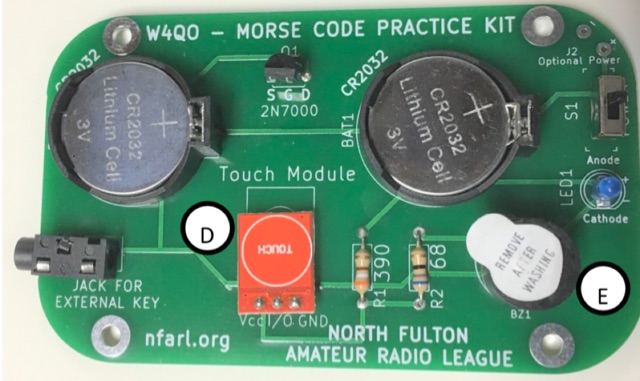 The Code Practice Oscillator kit, featured at TechFest 2020, provides a straightforward device for Morse Code skill development. It utilizes two 3V coin batteries for power and is designed for ease of construction, making it accessible for hams of various ages. The kit's primary technical substance revolves around generating an audible tone for practicing Morse Code timing and ear training, with a downloadable schematic detailing its electronic configuration. Construction of the oscillator involves soldering, with adult supervision recommended for younger builders. The kit's practical application lies in offering a hands-on method for beginners to learn Morse Code and for experienced operators to refine their sending abilities. Instructions for assembly are available as a downloadable PDF, complementing the schematic to guide users through the building process.
 -
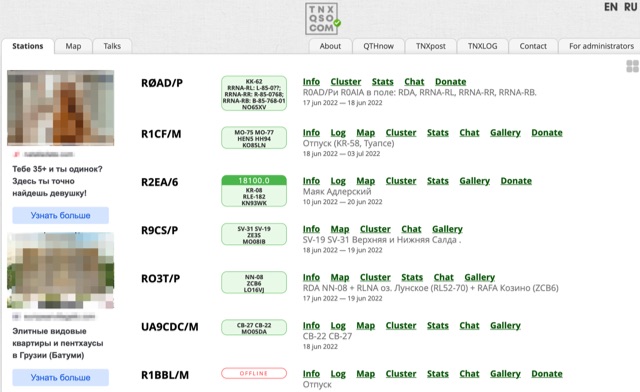 TNXQSO.com offers a streamlined **log search** utility, specifically designed to consolidate QSL information for **DXpeditions** and special event stations. This online service aggregates data from prominent logging platforms such as Club Log, Logbook of The World (LoTW), and HRDLog, presenting a unified interface for radio amateurs to verify their contacts. The platform aims to simplify the process of confirming QSOs by providing direct links to the respective logging services, allowing users to quickly ascertain if their contact has been uploaded and confirmed. Users can input a callsign and band to retrieve immediate results, indicating whether a QSO is present in the linked logs. The service also supports DXpedition teams by offering tools for managing their own logs and QSL routes, without requiring an account for general log searching. This functionality proves particularly useful for DXers seeking rapid confirmation of rare contacts or for those managing their QSLing efforts across multiple platforms after a significant operating event.
 -
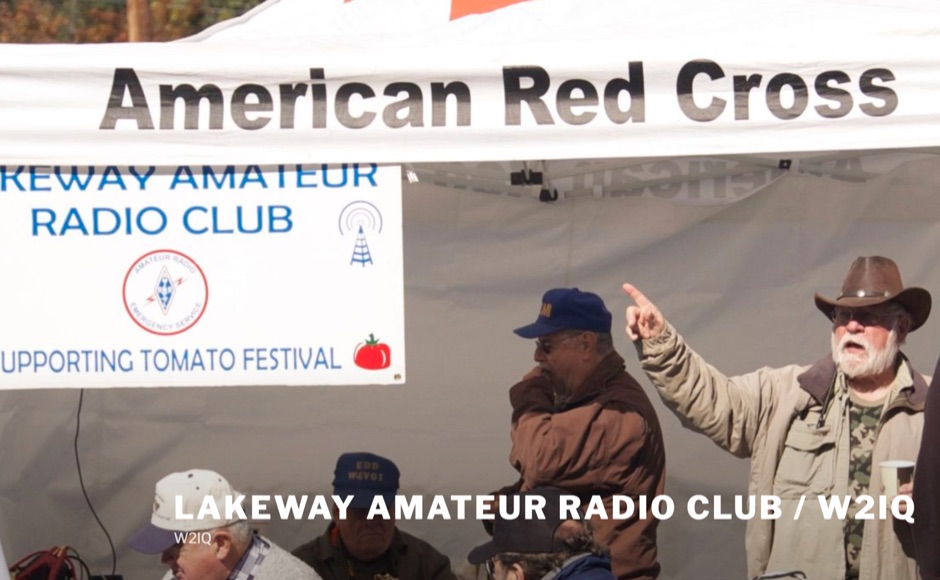 The Lakeway Amateur Radio Club, identified by its callsign _W2IQ_, serves as a significant hub for amateur radio operations within the Lakeway Area. This organization demonstrates a strong commitment to regulatory compliance and amateur radio accessibility through its robust Volunteer Examination (VE) Team. As an ARRL-accredited entity, W2IQ facilitates online FCC amateur radio licensing examinations, providing a critical service for new licensees to enter the hobby. This infrastructure supports the growth of the amateur radio community by streamlining the licensing process, making it highly accessible to prospective operators. The club's technical contributions extend to fostering diverse operational interests, though specific repeater or APRS infrastructure details are not explicitly detailed. Their emphasis on licensing and education, particularly through remote testing protocols, highlights a modern approach to amateur radio entry. This focus on **VEC protocol coordination** ensures a consistent pathway for individuals seeking to obtain or upgrade their amateur radio licenses. The club also promotes engagement with various aspects of the hobby, indicating a broad interest in amateur radio activities and technical development within its geographic sphere of influence. Their dedication to supporting new radio amateurs underscores a foundational role in regional frequency management and community building.