Search results
Query: win test
Links: 260 | Categories: 0
-
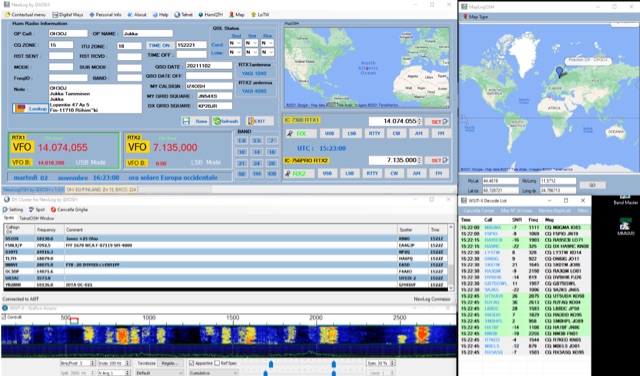 NewLogOSH is a logging application for amateur radio operators, featuring integrated support for various digital modes including FT4, FT8, RTTY, and PSK. The software incorporates DXCluster connectivity and radio interfacing capabilities, allowing for seamless operation with transceivers. Its database is built within the SQLite environment, providing a robust and portable data storage solution for logging QSOs and managing station information. The program's architecture focuses on practical functionality for daily amateur radio operations. Operators can utilize NewLogOSH for contest logging, general DXing, and managing their station's contact history. The inclusion of FT4 and FT8 modes reflects current trends in digital communication, while RTTY and PSK support caters to established digital protocols. The DXCluster integration provides real-time spot information, aiding in DX hunting and propagation analysis. Its SQLite backend ensures data integrity and ease of backup, making it a reliable tool for maintaining comprehensive station logs.
 -
 Win32 command line utility, that allows you to create Master Callsign Database file (DTA), used in many contesting programs, from different logs in ADIF, Cabrillo, and plain text formats.
 -
 Over 15 years of operational notes are documented on the AA6E Station Log, covering diverse amateur radio topics. The blog presents detailed accounts of station setup, antenna experiments, and digital mode operations, often featuring specific equipment like the _Ten-Tec Orion_ transceiver. It includes practical discussions on **station grounding techniques** and insights into PSK31 Morse code communication. The resource provides a chronological record of Martin Ewing's amateur radio activities, offering firsthand perspectives on equipment performance and operational challenges. Content often includes technical observations and solutions developed through practical experience, such as optimizing antenna systems for various bands. Specific entries detail contest participation and DX chasing, providing context for operational decisions and results.
 -
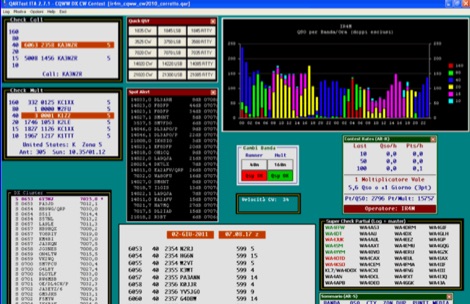 Free Windows contest logging software, initially designed for the ARI 40-80 contest supports all major world wide contests. QARtest supports dx cluster, radio control interface and many new features. Can be used for most popular amateur radio contests. Works from Windows XP to Windows 10.
 -
 The MMMonVHF database, curated by DL8EBW, currently lists 63,455 entries for VHF operators, providing a searchable resource for locating stations active on 144 MHz and higher bands. Operators can register their callsigns to be included, with specific criteria such as participation in _MS_ (Meteor Scatter), _WSJT_ modes, or _EME_ (Earth-Moon-Earth) operations required for inclusion in the `call3.txt` file. This resource facilitates VHF DX expeditions and contest planning by allowing users to identify potential contacts within a geographical area. The database supports various VHF/UHF operating modes, including those focused on weak signal propagation. Statistical data regarding the database entries is also presented, offering insights into the distribution of registered VHF activity.
 -
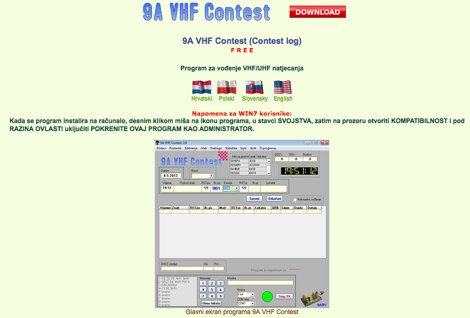 Multi language contest log program for 9A VHF UHF contest. Freeware for Windows
 -
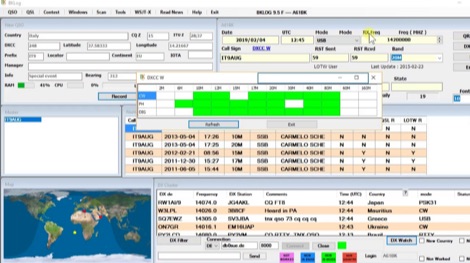 BKLog is a versatile log book and contest program designed specifically for amateur radio operators. Developed in VB.NET, it offers a user-friendly interface and a range of features that cater to both casual and competitive hams. Users can log their contacts, manage contest entries, and utilize automatic CW sending, making it a valuable tool for any operator. One of the standout features of BKLog is its integration with DX Cluster access, allowing users to stay updated on DX spots and enhance their operating experience. Additionally, it supports uploads to popular online QSL services such as QRZ, LoTW, and Club Log, streamlining the QSL process for users. With regular updates and improvements, BKLog continues to evolve, ensuring it meets the needs of the amateur radio community. Whether you're a seasoned contester or a newcomer to logging, BKLog provides the essential tools to enhance your ham radio experience. Its compatibility with Windows makes it accessible to a wide range of users, and its ongoing development ensures that it remains relevant in the ever-changing landscape of amateur radio.
 -
 Valley of the Moon Amateur Radio Club website provides information on club events, history, officers, licensing, and how to join. Users can download newsletters, hamfest flyers, and net scripts. The club serves the Sonoma Valley wine country, holding monthly meetings, weekly nets, and breakfast gatherings. The club call sign, W6AJF, honors Frank Jones, an Amateur Radio pioneer. Various events are listed on the site, including picnics, VE testing, and breakfast nets.
 -
 Presents the W9VT Tri-Town Radio Club, an ARRL-affiliated organization serving the Illinois amateur radio community. The club maintains a 2-meter repeater on 147.180 MHz (+600 kHz offset, 107.2 Hz CTCSS) and a 70-centimeter repeater on 444.825 MHz (+5 MHz offset, 107.2 Hz CTCSS), both located in Woodridge, IL. Regular meetings are held on the second Tuesday of each month at 7:00 PM at the Woodridge Public Library, focusing on technical discussions, operating practices, and community service. The club participates in Field Day, supports local public service events, and offers licensing classes for Technician, General, and Extra class examinations. Members engage in various amateur radio activities, including DXing, contesting, and digital modes, fostering skill development among hams. The club's repeater infrastructure provides reliable local communication for members and supports emergency preparedness efforts within DuPage County. Participation in ARRL-sponsored events like the Simulated Emergency Test (SET) and various operating awards promotes active engagement and technical proficiency. The club provides a platform for mentorship, allowing experienced operators to guide newer hams through licensing and operational aspects.
 -

-
 21st Century telegraphy paddles, software defined telegraphy paddles by 9A5N. Following global trends in the application of the latest technology, HAM 9a5n has made a significant technological breakthrough in the field of CW paddles
 -
 Reports indicate the PA1RBZ DX Cluster, previously accessible via telnet at pa1rbz.dyndns.org on port 9000, is no longer operational. The QSL.net hosting platform displays a 404 error, indicating the specific page or file for the cluster's web interface or related information is missing. This service was designed to provide amateur radio operators with real-time DX spotting data, facilitating long-distance contacts across various bands. The cluster's primary function was to aggregate and disseminate DX spots, allowing users to monitor current propagation conditions and identify active stations. Such systems are crucial tools for DXers and contesters, enabling rapid response to new openings and rare DX entities. QSL.net, which hosts over 30,000 amateur radio websites, provides these services free of charge to hams, relying on user donations for operational continuity.
 -
 This resource compiles claimed scores, often referred to as "rumor scores," for numerous amateur radio contests, providing a historical snapshot of competitive activity from 1993 through 2007. It lists entries for prominent events such as _CQWW CW_, _ARRL Sweepstakes_, _IOTA Contest_, and various _NAQP_ events, categorized by year and contest. Each entry typically includes the contest name and the month/year of operation, allowing users to quickly navigate to specific contest periods. The site also references the _3830 Web Page_ on Contesting.com as the primary submission portal for these claimed scores. The collection offers a unique perspective on contest participation and performance trends over more than a decade, preceding the widespread adoption of real-time score reporting systems. While not official results, these rumor scores provided early indications of top performers and overall activity levels for a wide array of HF and some VHF contests, including _ARRL 10M_ and _CQWW VHF_. The historical data can be useful for analyzing past contest popularity, identifying consistently strong operators, or simply reminiscing about earlier competitive eras in amateur radio.
 -
 The CQ World Wide DX Contest records page details the highest scores achieved in the CQ WW DX Contest across various categories and years. It systematically lists records for both SSB and CW modes, segmenting results by entry class such as Multi-Multi, Multi-Two, Multi-Single High, Multi-Single Low, Single Operator High Power, Single Operator Low Power, Single Operator QRP, Single Operator Assisted High, Single Operator Assisted Low, and Single Operator Assisted QRP. Each record entry specifies the callsign, the operator's callsign in parentheses if different, the year of operation, and the total score achieved. The data is further broken down by individual amateur radio bands, including 160m, 80m, 40m, 20m, 15m, and 10m, allowing for granular analysis of performance within specific frequency segments. The page also includes records for the "ALL" band category, representing cumulative scores across all operational bands. The presented records span from 1948 to 2025, providing a historical perspective on contest performance. This resource also references other CQ contests like CQ WPX, CQ WW RTTY, CQ WPX RTTY, CQ 160, CQ VHF, and WW DIGI, indicating a broader context of contest record keeping. It explicitly states that late logs are not included in the records, ensuring data integrity. The page is maintained by the World Wide Radio Operators Foundation, Inc.
 -
 TACLog offers a distinct approach to contest logging for **VHF/UHF/SHF** operations, diverging from the rigid input formats often found in other logging applications. This software prioritizes operational freedom, allowing contesters to input data in a sequence that suits their workflow during a fast-paced event, rather than being constrained by predefined field orders. It's particularly tailored for those participating in contests governed by **Region 1 rules**, ensuring compliance with established regulations. The program's design focuses on practicality for serious contesters, providing a robust platform for managing contacts. Its support for the EDI format is a significant advantage, streamlining the process of submitting logs to contest committees and facilitating data exchange within the amateur radio community. My experience with various logging tools confirms that flexibility in data entry can dramatically improve efficiency during multi-operator or high-rate single-operator contests, where every second counts.
 -
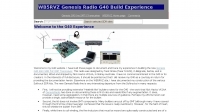 The WB5RVZ Genesis Radio G40 build log documents the construction of a 5W QRP 40m SDR transceiver kit, detailing each phase of assembly from power supply to RF filtering. It provides specific component lists, parts placement diagrams, and testing procedures for stages like the local oscillator, Tayloe detector, and RX op-amps. The resource highlights discrepancies between documentation versions and offers practical advice for builders, including a "virtual build" approach to preemptively address potential ambiguities in component identification and placement. It also addresses a specific "VK6IC Fix" for early board revisions, involving trace cuts and jumper wires for improved performance. The build log presents measured voltages and expected current consumption for various stages, such as the 4.9-5.0 Vdc on the 5V rail and under 100mA for RX current. It outlines critical adjustments like image rejection tuning, a common procedure for direct conversion receivers. The resource also includes practical tips for handling components like the 2N3866 transistor and its heatsink, emphasizing pre-assembly. It details the winding of two 1.45 uH toroidal inductors on T50-6 cores with 17 turns of #20 AWG wire, crucial for the RF path.
 -
 Constructing a dip oscillator provides radio amateurs with a fundamental piece of test equipment for resonant circuit analysis. This particular design, adapted by VK3YE from a concept by _Drew Diamond VK3XU_, details a practical build using readily available components. The unit incorporates four plug-in coils, covering a frequency range from **2.6 MHz to 55 MHz**, mounted on 5-pin DIN plugs for versatility. A salvaged two-gang air dielectric variable capacitor, fitted with a vernier reduction drive, serves as the tuning mechanism, with the smaller gang optimizing bandspread at higher frequencies. In practical application, the dip oscillator is used by setting the meter needle to approximately two-thirds scale. When the instrument's coil is brought near a tuned circuit under test, a noticeable dip in the meter reading indicates resonance. This allows for precise measurement of resonant frequencies in antennas, filters, and other RF circuitry, proving invaluable for homebrewing and troubleshooting. The design emphasizes short wire runs for stable operation, particularly at the higher end of its operational range.
 -
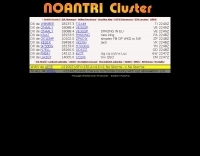 The Noantri WebCLX presents real-time DX spots, including frequency, DX callsign, country, and comments, facilitating active DXing and contesting. It operates as a web-based cluster, offering an alternative to traditional Telnet clusters for accessing spotting data. The interface displays current UTC, allowing operators to track propagation and activity across various amateur bands. This service is maintained by the _Noantri DX Group ARI Roma_, indicating its origin within the Italian amateur radio community. It supports the dynamic exchange of DX information, crucial for operators seeking new entities or participating in competitive events. Key features include the display of spots for modes like FT8, and it functions as a DXSpider-based system, providing a robust platform for **DX spotting** and **propagation analysis**.
 -
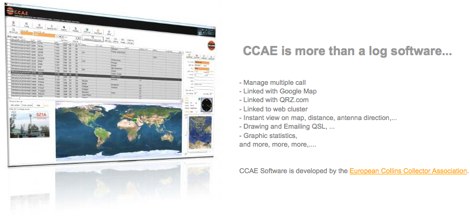 CCAE Software Log provides a dedicated platform for amateur radio operators to manage their QSO records, offering functionalities beyond basic logging. This application supports various operational aspects, including contest participation and general DXing activities, catering to the needs of radio enthusiasts who utilize classic equipment such as Collins radios. The software integrates features for efficient data entry and retrieval, allowing users to maintain a detailed history of their contacts. It is designed to be intuitive for operators focused on collecting and preserving their radio communication logs. The program's development by the European Collins Collector Association (F6HOY) suggests a focus on reliability and specific utility for vintage radio enthusiasts. Its core function is to serve as a robust **logbook software**, facilitating organized record-keeping for ham radio operations.
 -
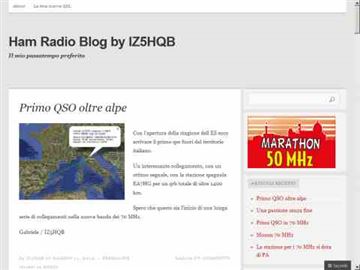 ContestLogHQB is a free windows contest logging program developed by Gabriele IZ5HQB. Currently in Italian, support most of the VHF and Up contests including Maraton 50Mhz.
 -
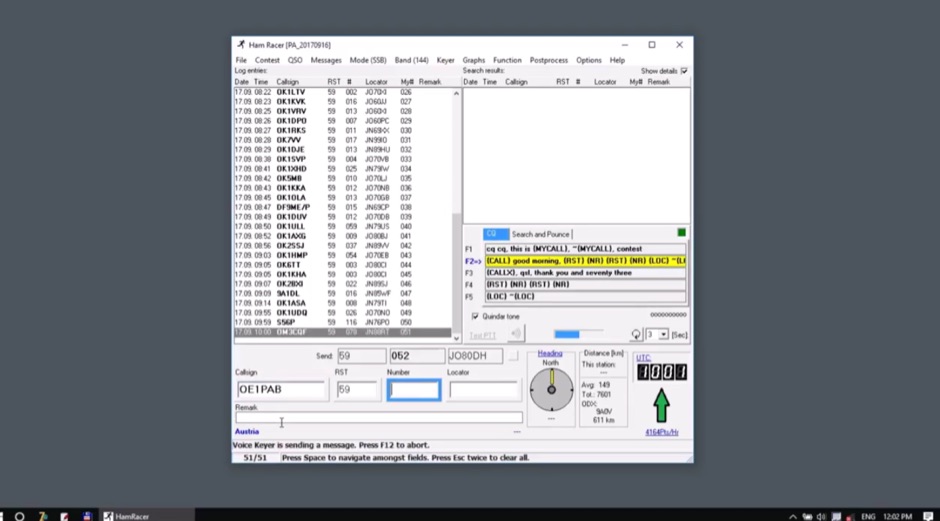 The **HamRacer** voice keyer, a Windows-based application, is showcased in this video, illustrating its utility for radio amateurs participating in SSB contests. It functions as a synthesized PC-based voice keyer, specifically designed for HF and VHF SSB contest operations, allowing operators to transmit pre-recorded or text-to-speech generated messages during rapid-fire exchanges. The demonstration includes actual recorded QSO examples from a contest, featuring contacts with stations such as SP6OWA, S57O, OK1IEI, 9A1DL, OE1PAB, OK1GTH, and 9A1E. These examples highlight the software's practical application in a live contesting environment, demonstrating how it facilitates contest participation for operators who might otherwise face challenges with traditional voice keying. The resource provides a direct look at the software in action, emphasizing its role in promoting inclusivity within the amateur radio contesting community. It details the use of Windows SAPI for speech synthesis, a core component of HamRacer's functionality.
 -
 First released around 1995 and significantly redesigned as QWTelnet 2, this software provides a dedicated interface for monitoring DX-Cluster traffic via Telnet. It integrates a **SOTAwatch parser** with configurable audio alerts, allowing operators to receive notifications for specific search patterns in DX-Cluster remarks without constant screen attention. The application also supports parsing for **GMAwatch (German Mountain Award)**, providing alerts for German Mountain Award activations. QWTelnet 2.4.0, released on 07-APR-2012, runs on Windows (tested on W7) and is distributed as a ZIP file containing the `qwtelnet.exe` executable. It does not require a formal installation process; users simply extract and run the program. The software can display DX information for single bands, integrate with the Reverse Beacon Network, and link to external web resources for DXCC and SOTA information. It also supports local reference files for IOTA, WFF, and RDA awards, which users must source and place in the `qwtelnet/files` directory. For IOTA data, users can convert `IOTA.CSV` from UCX-Log or `DX4WIN_IOTA.TXT` into `iota.csv`. WFF and RDA reference files are directly sourced from their respective websites.
 -
 The CQ World Wide DX Contest records document top scores, with the Multi-Multi SSB category showing CN8WW achieving **78,170,508 points** in 2000. These records span from 1948 to 2025, categorizing results by region, operating class (e.g., Single Operator High Power, Low Power, QRP, Assisted), and specific bands like 10M, 15M, 20M, 40M, 80M, and 160M. For instance, EF8R (E77DX) holds the All-Band High Power SSB record with **25,747,775 points** in 2025. Each entry includes the callsign (with operator callsign in parentheses for guest ops), year of operation, and total score. The _CQ WW DX Contest_ also features records for the RTTY and VHF contests, alongside the main SSB and CW categories. QRP records demonstrate significant achievements, such as P40W (W2GD) with 5,097,780 points in the All-Band SSB QRP category in 2000. Multi-Two and Multi-Single categories are also detailed, providing a comprehensive overview of competitive performance.
 -
 CBS is a program that produces statistical data from a Cabrillo file by K5KA and CBSW windows version by N6TV
 -
 Windows shareware contest log program for the ARRL 160 meter contest
 -
 Loki5ace version 5.3.39.1 is a freeware amateur radio logging program designed for Windows operating systems (XP, Vista, 7) and compatible with Linux Wine. The software offers multiple installation methods, including a portable version (loc5portable.zip or Loce5pack.zip) that does not require administrator rights or Windows Registry modifications, making it suitable for USB stick deployment or limited user accounts. An official installation (loc5acest.zip) is also available, typically installing to C:\Program Files\Hamlok\LokiAce\ and requiring administrator privileges for initial setup and updates, with user-specific settings and database files stored in application data folders. The program's database, Loc4ac.mdb, can be renamed to the user's callsign for personalization. Loki5ace supports context-sensitive help, which requires WinHlp32.exe installation on Windows Vista and 7. The software includes features such as special print functions, Telnet Watch with comment display, and an 'Own QTH' field for location management. Updates can be performed via an in-program function or by manually copying the Loki5ace.zip file, which contains the main executable, Loki5ace.exe, to the program folder. The latest version 5.3.39.0 includes repairs for special prints and enhancements to the Telnet Watch feature.
 -
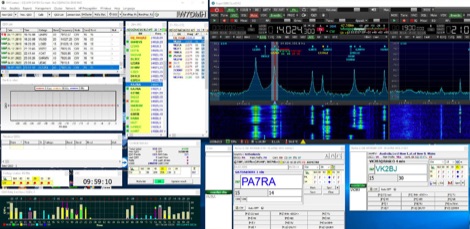 Russian and english contest log software for windows. The full version of the program contains all the tests and utilities.
 -
 The _Alessandro Volta RTTY Contest_ is an annual digital mode competition focusing on Radioteletype (RTTY) operation, challenging participants to make contacts across various HF bands. This event typically occurs in January, drawing a global field of operators aiming to maximize their QSO count and multiplier accumulation. The contest emphasizes accurate exchange of signal reports and serial numbers, with specific rules governing single operator, multi-operator, and SWL categories. Participants utilize software like _N1MM Logger+_ or _WriteLog_ to manage their logs and generate Cabrillo files for submission. Scoring is based on points per QSO, multiplied by unique DXCC entities and Italian provinces worked on each band. The contest encourages both seasoned RTTY contesters and those new to digital modes to engage in competitive HF activity, promoting skill development in digital communication. Final results and logs are typically published on the contest website, showcasing top performers and providing detailed breakdowns of scores.
 -
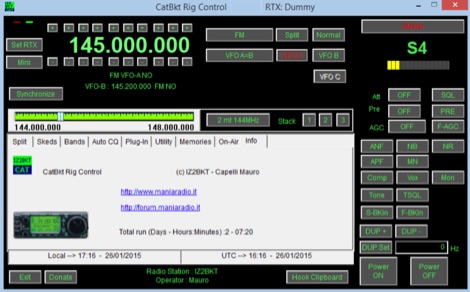 Program for the control of the transceiver from your PC. Works on windows and has been tested with different serial and USB interfaces, Based on hamlib libraries , Auto CQ for repetitive calls, Audio Recorder, BktNetInterface for JTDX and WSJT-X
 -
 KComm, a logging and communication program, was specifically engineered for Elecraft K2, K3, and KX3 transceivers, leveraging the Lazarus cross-platform development tool. It operates natively on Windows XP and can be compiled for Linux, with potential for macOS, prioritizing low resource usage for casual DXers and contest participants. The software integrates with external applications like Fldigi for diverse digital modes and CW Skimmer for advanced Morse decoding, enhancing its functionality beyond basic logging. The design philosophy of KComm emphasizes utilizing the physical radio controls for operational adjustments, rather than replacing the transceiver's front panel. It facilitates keyboard CW operation via the Elecraft serial protocol and capitalizes on the K3 and KX3's built-in decoders for RTTY and PSK31. Additionally, KComm supports PSK31, PSK63, and PSK125 through the AE4JY PSK Core DLL on Windows and integrates with PSKReporter.info for spotting. While not a dedicated contest logging or award tracking program, KComm supports ADIF and Cabrillo export for casual use, allowing logs to be imported into other software. The author, G4ILO, ceased all software development, providing KComm "as is" without further support or updates; however, the source code is available under the GNU GPL for community continuation.
 -
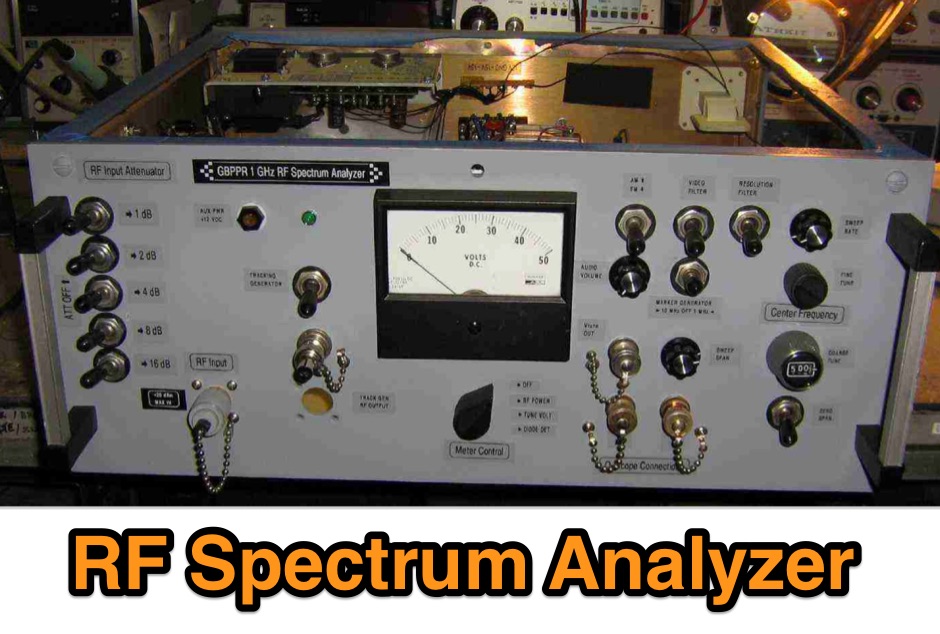 Constructing a high-performance RF spectrum analyzer up to 1000 MHz requires careful attention to component selection, shielding, and circuit isolation. This resource details a project that improves upon the _Spectrum Analyzer for the Radio Amateur_ design by Wes Hayward (W7ZOI) and Terry White (K7TAU), incorporating ideas from Scotty Sprowls' project, particularly his 1013.3 MHz IF bandpass cavity filter. The analyzer utilizes a Mini-Circuits SRA-11 mixer with a sweeping local oscillator from 1013 to 2013 MHz, feeding into a 4-pole copper pipe cavity filter. The design employs a second SRA-11 mixer with a fixed 1024 MHz LO to produce a 10.7 MHz final IF. This signal then passes through narrowband resolution filters and is processed by Analog Devices AD603 and AD8307 ICs for IF amplification and logarithmic detection, driving an oscilloscope in X/Y mode. The project emphasizes modular construction, using salvaged components and double-sided FR4 material for PCBs, with critical notes on minimizing spurious images through effective shielding and proper voltage regulation for each module. Key components include a Z-Communications V585ME48 VCO for the first LO and a Z-Comm V583ME01 VCO controlled by a Motorola MC145151 PLL for the second LO. An optional Hittite HMC307 step attenuator and K&L 5L121-1000/T5000-O/O low-pass filter manage RF input. Tuning procedures for the 10.7 MHz IF resolution filter are also detailed, showing before-and-after spectrum views.
 -
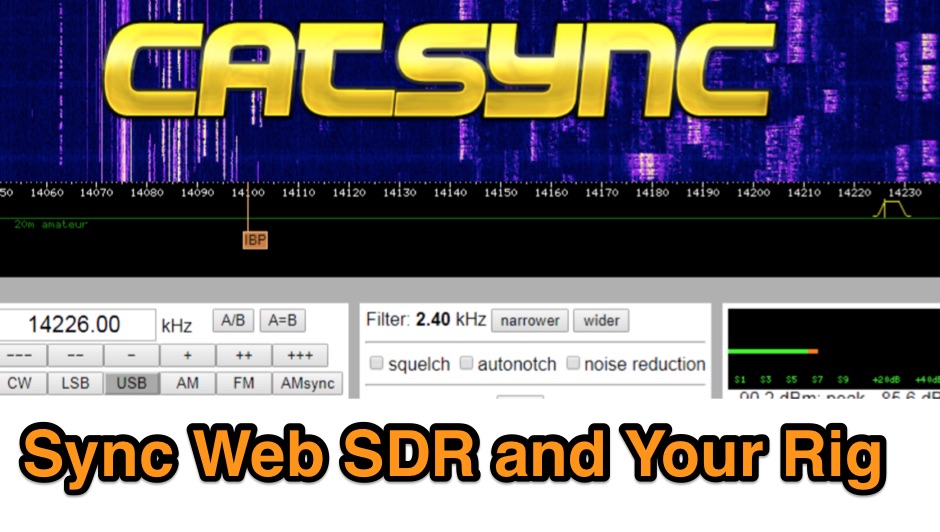 CATSync V1.30 integrates OpenWebRX support, expanding its capability to synchronize a local amateur radio transceiver's CAT control with a broader range of public WebSDR receivers. The software facilitates real-time frequency tracking, allowing the operator to adjust their physical rig's VFO and observe the connected WebSDR instantly follow the tuned frequency. This functionality is crucial for remote listening, signal comparison, and verifying propagation conditions across different geographic locations using a familiar hardware interface. The application supports both the classical WebSDR interface and KiwiSDR platforms, providing a consistent control experience across various online SDR deployments. It bridges the gap between local station operation and the vast network of globally distributed software-defined radios, offering a practical tool for DXers and contesters. CATSync is designed for Windows and Linux environments, with Android compatibility noted, making it accessible to a wide user base seeking to leverage WebSDR resources with their existing station setup.
 -
 Windows shareware contest log program for the CQ 160 meters contest
 -
 Operating in the **microwave** spectrum, Response Microwave, Inc. specializes in the design and manufacturing of RF and microwave signal processing components and subsystems. The company's product line encompasses a wide array of offerings, including Connectivity Series components, rotary joints, phase shifters, cable assemblies, surge protectors, terminations, Hybridline/Couperline products, circulators/isolators, directional couplers, quadrature hybrids, attenuators, custom assemblies, filters/diplexers, DC blocks & bias tees, power dividers/combiners, laser diodes & drivers, high-frequency connectors, and precision test accessories. This extensive catalog supports various applications requiring precise signal manipulation and transmission at elevated frequencies. The resource provides access to a comprehensive product catalog and a dedicated connector catalog, detailing specifications for components like **high-frequency connectors** and test cables. While specific performance data or comparative analyses are not directly presented on the main page, the breadth of products indicates a focus on providing foundational building blocks for microwave systems. The company emphasizes customer service and aims to be a reliable source for RF/Microwave/Optics product requirements, serving a growing customer base with its specialized component offerings.
 -
 The original SurplusEQ.com domain, once a hub for amateur radio operators and electronics enthusiasts seeking test equipment, meters, and various high-tech components, has been repurposed. Historically, such platforms facilitated the acquisition of essential gear for shack setups, antenna analysis, and general electronics work, often providing cost-effective alternatives to new retail purchases. The site's previous focus on "test equipment, meters, testers" directly supported the technical aspects of the hobby, from RF measurements to circuit diagnostics. Currently, the domain points to a gambling platform named "SEMUTWIN," offering online slot games, live casino options, and other digital wagering activities. This shift represents a complete departure from its former identity as a resource for surplus electronics and amateur radio-related equipment. The content now features game titles like "Sweet Bonanza Super Scatter" and "Gates of Olympus Super Scatter," alongside promotional offers for online gaming.
 -
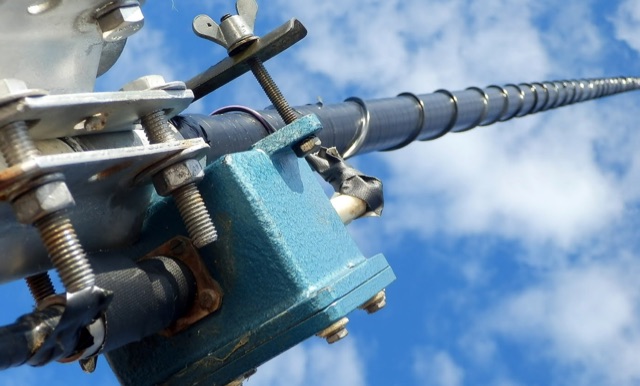 This DIY vertical multi-band Windom antenna offers a practical and effective solution for amateur radio enthusiasts seeking a versatile and compact antenna for HF communications. Its simplicity of construction, multi-band capability, and favorable performance make it a valuable addition to any radio shack. The article provides detailed instructions on constructing the antenna and balun, along with diagrams and component specifications. Field tests demonstrated successful contacts with stations across Europe and North America on 14, 18, and 28 MHz. The antenna exhibited comparable performance to a W3DZZ dipole and outperformed a Cobweb antenna on 18 MHz. Low noise levels were observed, effectively suppressing background noise.
 -
 Details the Highline Amateur Radio Club (HARC), an organization dedicated to public service through Amateur Radio and community engagement for radio enthusiasts. The club conducts a monthly general meeting on the 4th Saturday at 10 AM at Burien Fire Station 28. HARC also hosts a weekly net on Tuesdays at 7:30 PM, operating on **146.660 MHz** with a -600 kHz offset and a 103.5 Hz **CTCSS tone**. Additionally, members gather for a weekly breakfast on Fridays at 9:30 AM at Tuscany at Des Moines Creek. The resource provides current weather conditions for Burien, WA, displaying temperature, wind chill, and a three-day forecast from the National Weather Service Seattle/Tacoma Office. It also links to the latest ARRL Newsletter, noting a system breach in May 2024 affecting archived links. The club's activities include regular meetings, on-air nets, and social gatherings, supporting local amateur radio operations and community involvement.
 -
 Presented is a historical collection of short-wave listening (SWL) QSL cards, primarily from the late 1930s and early 1940s, offering a glimpse into early international broadcasting and the technical pursuits of SWL operators like Les Miles during that era. The resource showcases specific QSLs from stations such as _Broadcasting Corporation of Japan_, _XGOY - The Central Broadcasting Administration_ in Chungking, China, and _Australian broadcasting ship, Kanimbla VK9MI_, each with reception dates and frequencies like 11.90MHz or 9.525MHz. It highlights the self-sufficiency of SWL enthusiasts who constructed and maintained their own radio and test equipment, evoking the sensory experience of vintage valve receivers. The collection provides concrete examples of international broadcast stations active before and during World War II, including _2RO3 - Rome_ and _WRUL - World Wide Broadcasting Foundation_ from Boston. Each QSL entry details the station, location, reception date, and often the frequency, such as 9.63MHz or 11.26MHz, allowing for historical verification of broadcast schedules. The resource also briefly mentions the operational details of the _VK9MI_ offshore radio station, directing readers to further information on its history. This compilation serves as a tangible record of global radio communication during a pivotal historical period.
 -
 Presents the official results for the _CQ World Wide 160-Meter Contest_, a premier event for Top Band enthusiasts. The resource details final scores for both CW and SSB segments, offering links to comprehensive articles, plaque winner lists, and club score breakdowns. It also includes access to score databases for individual modes and years, along with "Soapbox/QRM Comments" from participants, providing insights into operating conditions and experiences. This archive spans results from 2010 through 2025, with a forward-looking note regarding the 2026 SSB contest date adjustment due to a conflict with the _ARRL DX CW Contest_. The site provides specific links for each year, allowing operators to review detailed outcomes, including top scores, errata, and all-time records, such as the _SX5R_ 2017 SSB performance. The structured presentation facilitates easy navigation through historical contest data.
 -
 Remembrance Day Contest Logger free Windows software. Remembrance Day is a popular contest in Australia.
 -
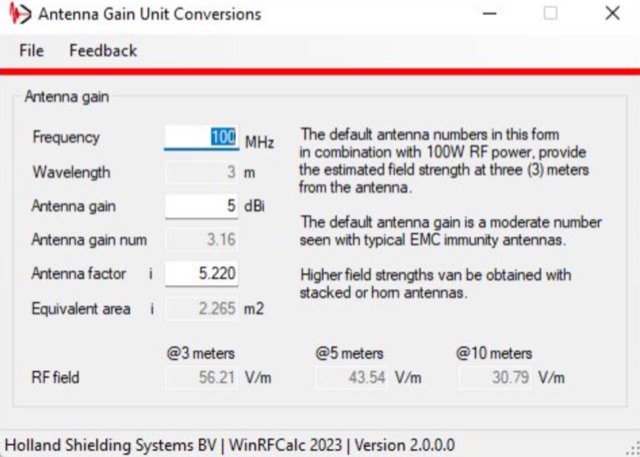 A multi tool Windows program that has been designed to offer the EMC RF and Radio Engineer a large variety of tools for Attenuation calculation, VSWR analysis, FIR Filter calculations, EMC system configuration, Radar testing , RF Filter calculation and much more without the need of a live internet connection.
 -
 The Itchen Valley Amateur Radio Club (IVARC) provides a local hub for radio amateurs in the Southampton and Winchester areas of the UK. This club actively participates in various UK contesting events, including the weekly _RSGB VHF UKAC_ contests, _RSGB AFS club contests_, and _BERU contests_, alongside annual UK field days. As a _Brickworks Accredited_ club, IVARC is committed to supporting both new licensees and experienced operators in exploring diverse aspects of the hobby, fostering skill development and operational experience. Meetings are held on the 2nd and 4th Friday of each month at the Bianchi Suite, Otterbourne Village Hall, offering a consistent schedule for members and visitors. The club's recent activities include supporting _Jamboree On The Air_ (JOTA) for local Scout groups (e.g., GB1ESG), activating special event stations like _GB0SR_ from Solent Rescue Lifeboat Station, and organizing club visits to significant historical sites such as Bletchley Park. IVARC also hosts events like QRP Day and National Field Day, providing practical operating opportunities and fostering camaraderie among members.
 -
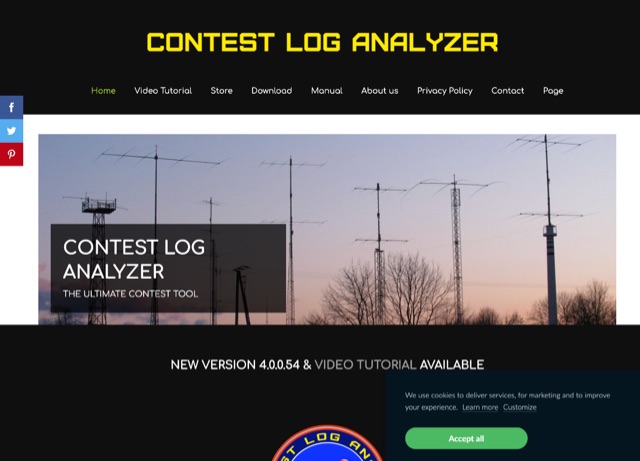 The complete software suite to Edit, Analyze, Generate Statistics, View multiple logs simultaneously, Map QSOs, Import and Export to Cabrillo or ADIF files. The Contest Log Analyzer has been developed as a complete database management application, where you can create separate Databases, containing several Logs, a convenient way to save, in one place only, all your log files that accumulate over the years. It runs on Mac and Windows, and it is a commercial product.
 -
 MARCA, Inc. operates approximately 24 repeaters across Arizona mountaintops and Phoenix-area rooftops, supporting modes like D-STAR and Fusion. The club, holding the **W7MOT** callsign, engages in diverse activities including ARRL Field Day events near Forest Lakes, AZ, ARRL FMT contests, and antenna experimentation. Members actively participate in HF operations such as voice, digital, CW, DXing, and various digital HF modes, alongside MESH and EOC operations within the valley. The club's interests span a broad technical spectrum, from SDR radio building to antique radio restoration, and include modern digital modes like WSPR, WSJT, FT8, and FT4. They also explore computer-based operations such as Echolink, fostering a dedicated Single Board Computer (SBC) and Raspberry Pi group. Monthly VE testing sessions for Technician, General, and Extra Class licenses are conducted by Ray Vasquez, K4RMV. Meetings are held on the third Tuesday of each month, typically lasting two hours, with a business segment followed by a technical presentation. These gatherings occur in-person at IHop in Mesa, AZ, and concurrently via Zoom, accommodating both local members and winter visitors. Informal chat groups often form post-meeting to discuss specialized topics like D-STAR, SDR, APRS, MESH, and Fusion.
 -
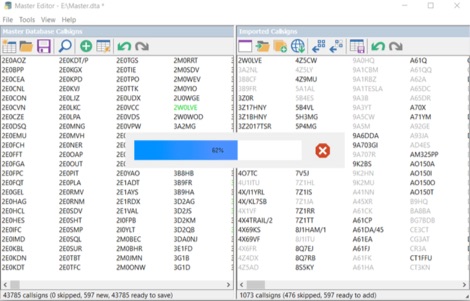 Master Callsign Database Editor allows to create and modify Super Check Partial database files used by many contesting programs in DTA and SCP formats. The files produced by Master Editor in DTA format can be used with CT, WriteLog, TRlog, SD, and others. The SCP versions of the produced files are for use with Win-Test, N1MM+, and others. Master Editor allows to create a callsign database from a separate log or from a set of logs in the Batch Import mode.
 -
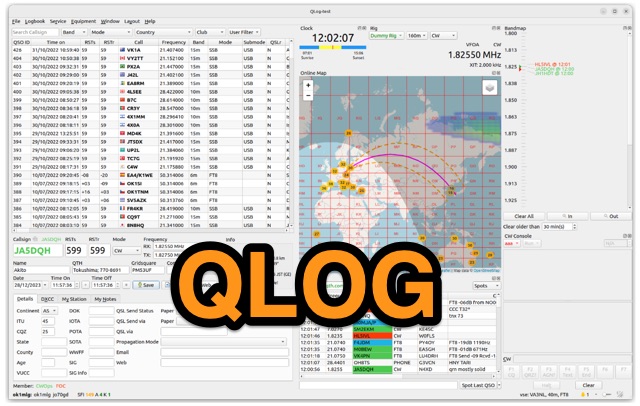 Provides a robust logging solution for amateur radio operators across multiple operating systems, QLog simplifies the process of recording contacts and managing station data. It leverages the _Qt framework_ for its graphical user interface and stores all QSO information efficiently in a local SQLite database, ensuring data integrity and accessibility. This design choice supports a streamlined user experience for daily logging activities. QLog supports essential logbook functionalities, enabling hams to accurately document their two-way radio contacts. While not specifically designed for high-speed contest operation, it serves as a reliable tool for general amateur radio logging, allowing operators to maintain detailed records of their on-air achievements and station activities. Its cross-platform compatibility, including Linux, Windows, and macOS, makes it a versatile option for a wide range of amateur radio enthusiasts seeking a free and functional logging application. The project is a fork from _7h0ma5/QLog_, indicating a continued development path.
 -
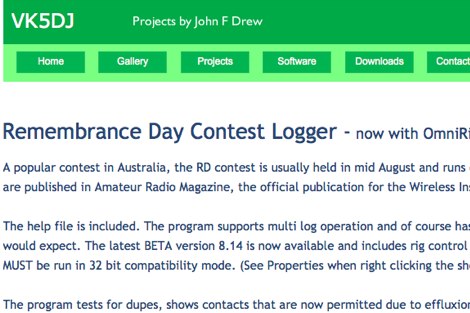 Windows log software for the popular RD contest, usually held in Australia in mid August.
 -
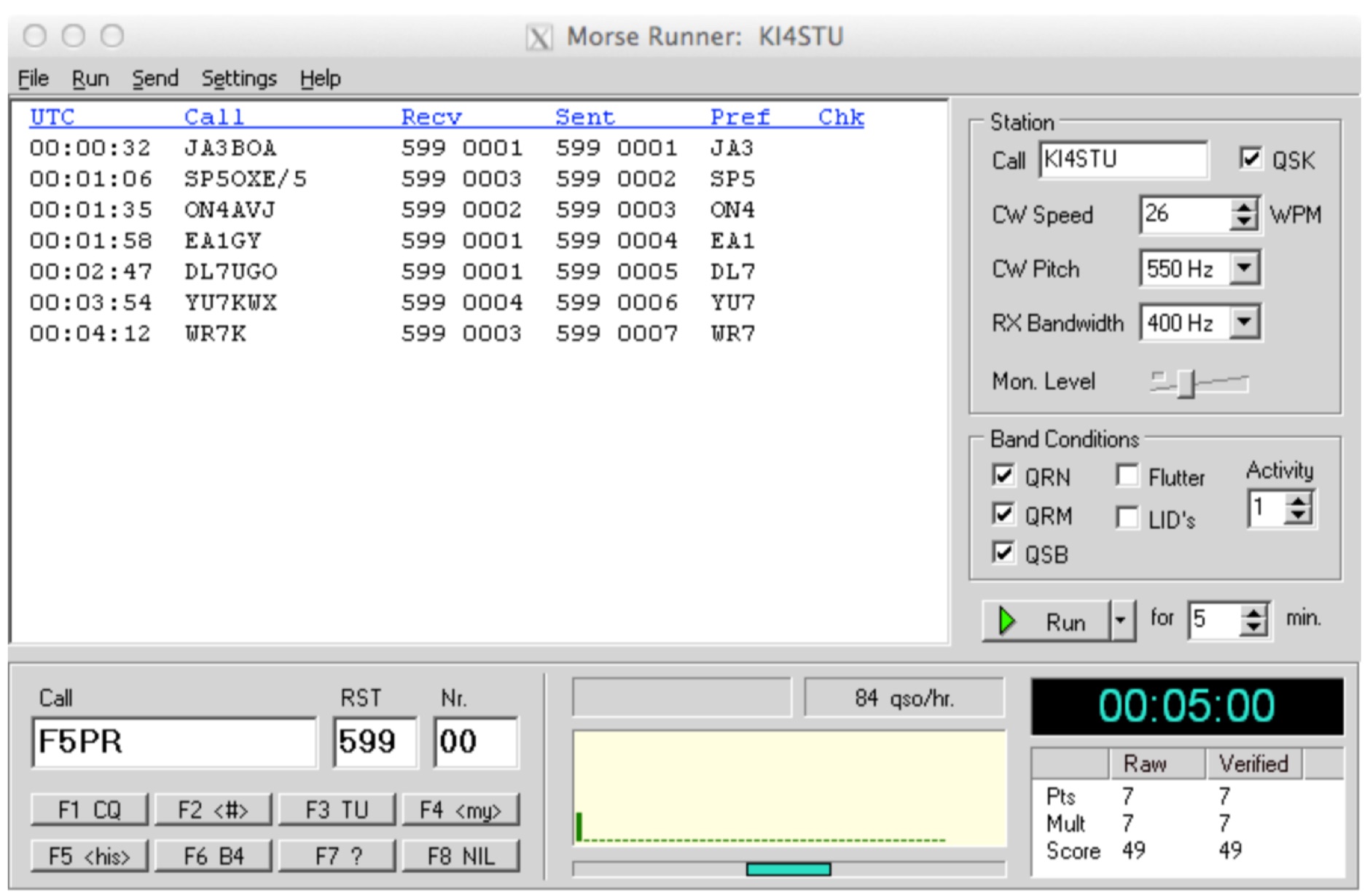 Run Morse Runner on Apple MacOSX computers using Wineskin. Morse Runner is a popular MS Windows morse code contest simulator. You can do this by yourself or just download the ready-made dmg and use it on your apple mac.
 -
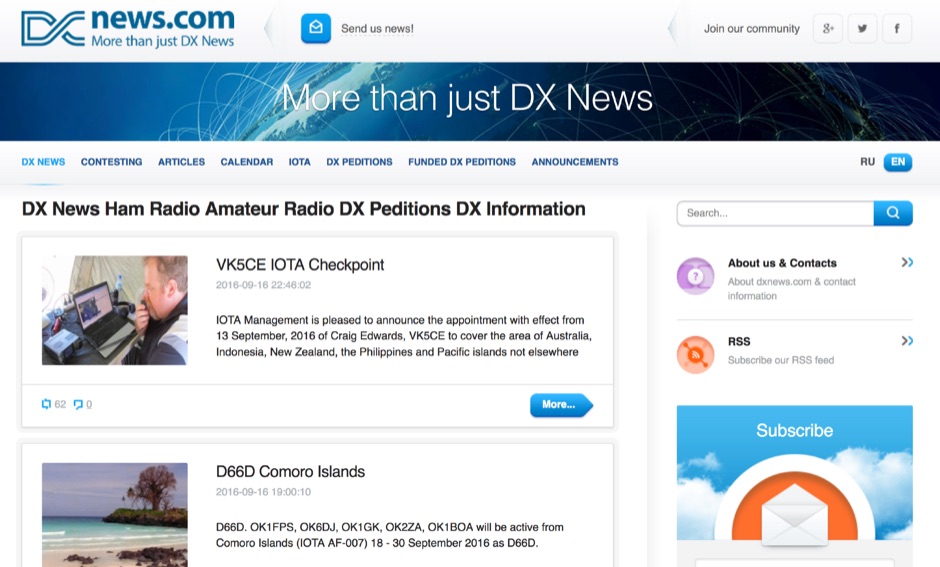 A news site focused on DXing and contesting, DXNews.com provides daily updates on upcoming **DXpeditions**, contest announcements, and general **amateur radio news**. The site features a continuously updated feed of articles detailing call signs, operating dates, IOTA references, and specific contest participation plans for various DX operations. Content includes detailed reports on planned activities from rare and semi-rare DX entities, often with information on operators, bands, modes, and QSL routes. It also covers major amateur radio contests, offering insights into rules, participating stations, and results. The archive depth extends back many years, providing a comprehensive historical record of DX activity. This resource is ideal for experienced DXers and contesters seeking timely information to plan their operating schedules, track rare DX entities, and stay informed about the global DX scene. It also serves general amateur radio operators interested in following significant events and operations within the DX community.
 -
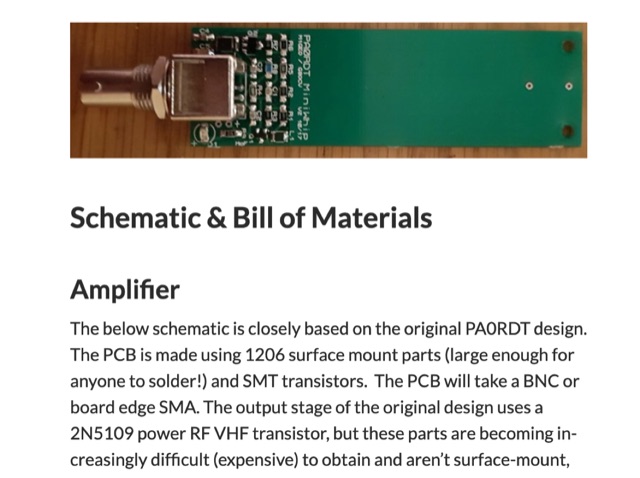 When experimenting with the WellGood Loop antenna, I came across the PA0RDT MiniWhip design referenced in several places. The construction of the PA0RDT MiniWhip is simpler than the WellGood Loop since there are no inductors to wind, but during my testing, I have found the loop to have slightly better performance.