Search results
Query: mark v
Links: 212 | Categories: 3
-
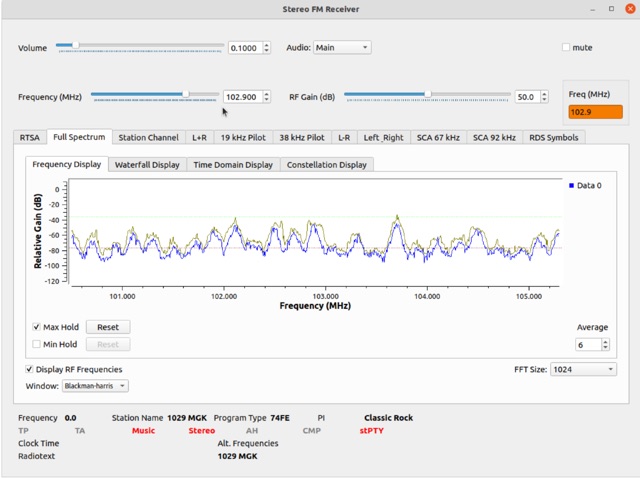 This document outlines various miniature projects undertaken by Mike Markowski to enhance his skills in GNU Radio. Key projects include an FM stereo receiver and an AM radio receiver, featuring advanced functionalities like pilot tone recovery and RDS integration. Additional experiments involve generating Gaussian noise, chirp signals, and Morse code decoding, emphasizing hands-on learning and customization in GNU Radio. The author encourages feedback and shares flow graphs and Python code for each project, aiming to foster community engagement and knowledge sharing.
 -
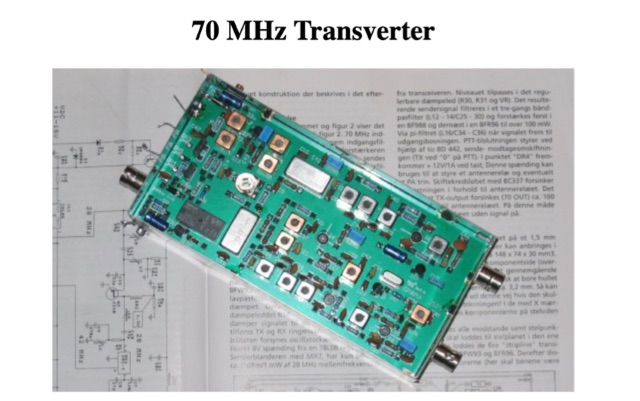 This page gives a brief description of a 70 MHz transverter that has been published in the Danish amateur radio magazine "OZ." This way hams outside Denmark may also benefit from the design.
 -
 This document serves as a thorough guide to amateur radio nets throughout Australia and includes some international (DX) nets. It outlines key information like frequencies, schedules, and the people responsible for managing these nets. Among the nets covered are Ron's 10 A.M. net, the Australian Travellers Net, and several others, each operating on different bands and regions. Additionally, it offers technical details about repeaters, such as frequency, offset, and CTCSS tones where applicable. Any updates are clearly marked, and further details are included for linked repeater systems and network connections.
 -
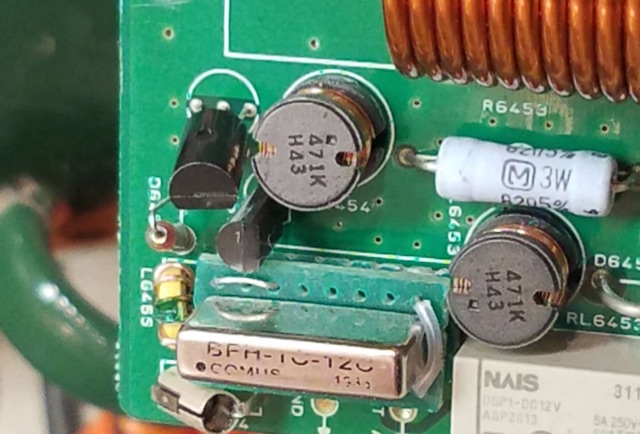 Repair of a Yaesu FT-1000 MP Mark V probably struck by lightning.
 -
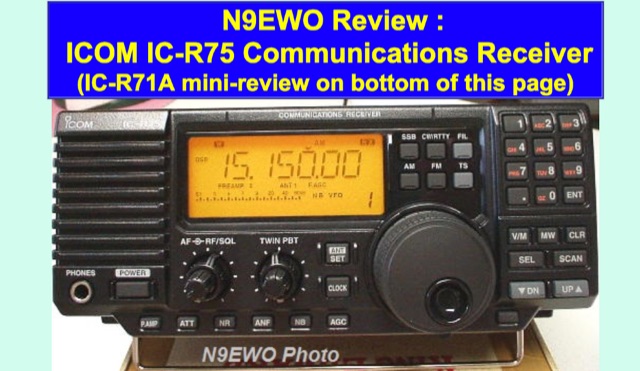 Icom IC-R75 tabletop HF communications receiver came onto the market back in 1999 and was taken out of production in late 2015. Frequency coverage is from 30 hz right to 60 MHz. This allows one to catch the 6 Meter amateur band as well.
 -
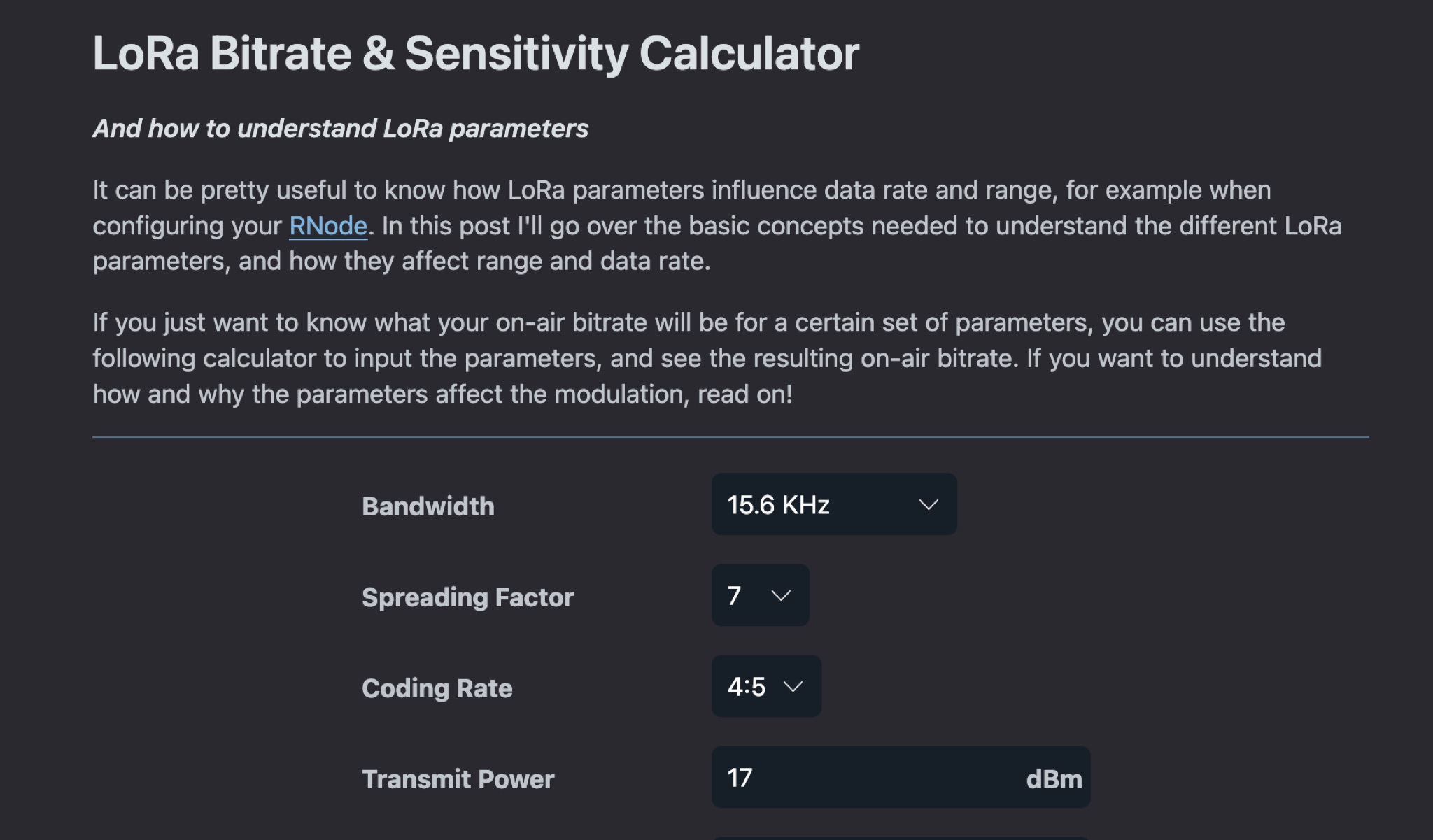 This article explains how LoRa parameters impact data rate and range when setting up a LoRa transceiver. It covers the basic concepts needed to understand different LoRa parameters and their effects on modulation. By adjusting parameters, you can achieve fast data transfers or extend transmission range. The post also offers a calculator to determine on-air bitrate based on input parameters. Understanding LoRa parameters is crucial for optimizing performance and achieving desired communication outcomes.
 -
 KISS703 is a 703 Hz narrowband digital mode for amateur radio, designed for simple, low-power operation without computers. A 500 Hz pilot tone ensures frequency alignment, replaced by unique tones for 37 symbols (letters, numbers, space). Built from common discrete components, it draws about 40 mA at 12 V, ideal for SOTA/IOTA use. The receiver uses amplification, wave shaping, and a pulse-counting frequency meter for manual decoding via a calibrated meter. Transmitter and receiver calibration involves marking meter positions for each tone, enabling fully self-contained messaging with minimal hardware in portable or fixed operations.
 -
 Unicom Radio, since 2005, has excelled in the communications and telecommunications market, offering advanced services across diverse industries globally. Specializing in corporate communication systems, base station construction, and professional antenna systems, Unicom Radio leverages expertise to deliver high-tech equipment internationally. Unified by a strategic vision, the company continues to innovate and build trust with partners and clients.
 -
 The author discusses ways to display VHF and higher bands using a K3/10 as transverter, NooElec Upconverter, SDR, and SDR-Console. He observed that the results were remarkable, with the tuned frequency visible at +/-100kHz. The K3 Interface Option (KXV3A) produces a buffered IF output at 8.213MHz, which is received using a NooElec NESDR SMArt SDR dongle and Ham It UP Upconverter. The SDR-Console program is utilized, with Omnirig synchronizing the SDR and K3. To configure the system, particular parameters are required, such as adjusting the IF frequency to 133.213MHz (125MHz + IF frequency) and inverting the spectrum. The Panadapter demonstrated ES activity at 10m, and modest software tweaks may be required for improved performance.
 -
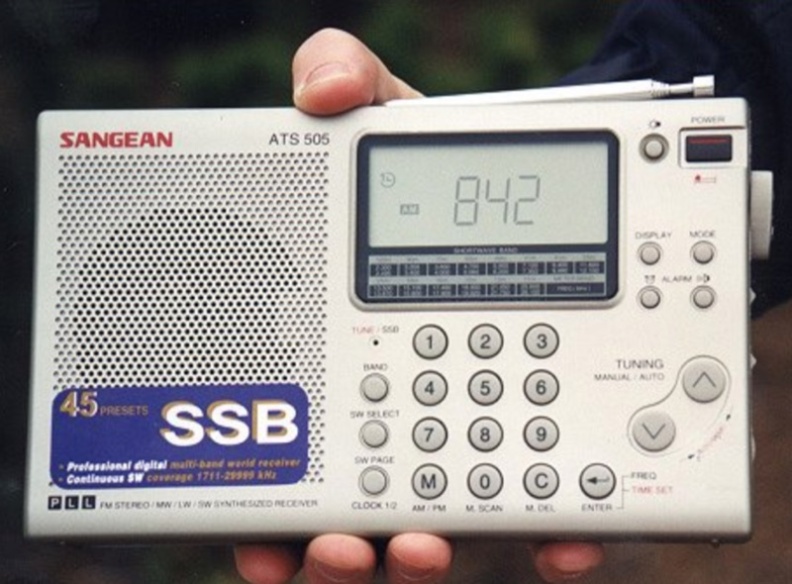 Examines the Sangean ATS-505 portable receiver, a unit introduced in March 2000, providing an in-depth analysis of its capabilities. The review details critical specifications such as its 6 Volt DC power requirement, utilizing 4 AA batteries, and its physical dimensions of 128 x 214 x 39 mm, weighing 840 g without power cells. Frequency coverage spans **LW** from 153-279 kHz, **MW** from 520-1710 kHz, **SW** from 1711-29999 kHz, and FM from 87.5-108 MHz, making it a versatile listener for various broadcast types. Key features highlighted include a backlit display for low-light operation, 45 memory presets for quick access to favorite stations, and the inclusion of Single Sideband (SSB) mode, which is crucial for serious shortwave listening and utility monitoring. The review also draws technical comparisons with other Sangean models, specifically the ATS-404 and ATS-909, pointing out differences in band coverage and operational features. This independent assessment offers practical insights into the ATS-505's performance, helping enthusiasts understand its place within the portable receiver market.
 -
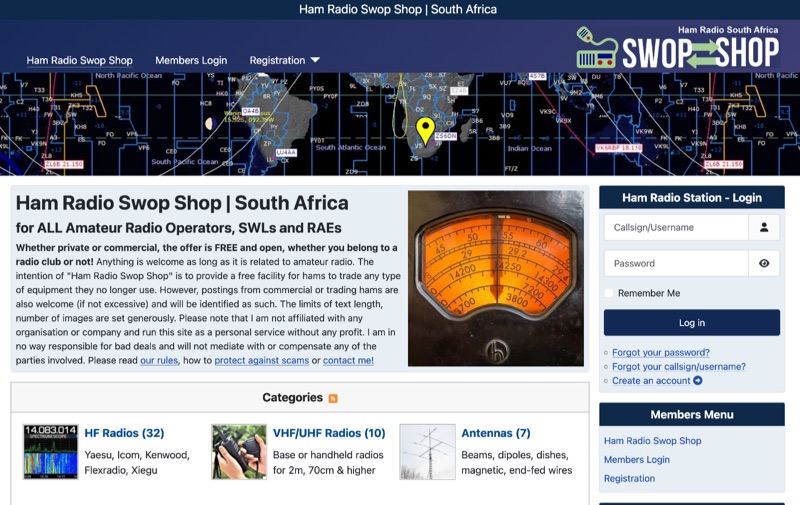 In the realm of amateur radio, the need for a reliable platform to exchange equipment is crucial. _Ham Radio Swop Shop_ addresses this by providing a dedicated online classifieds service for South African amateur radio operators, SWLs, and RAE holders. The platform allows users to list a wide range of items, including _HF_ and _UKW_ transceivers, antennas, and surplus parts. Each listing can include detailed descriptions and multiple images, facilitating informed transactions. The service operates with a clear policy that commercial entities may participate, provided their postings are not excessive and are clearly marked. This ensures transparency and maintains the platform's focus on individual users. Importantly, the administrator, ZS1AI, does not mediate disputes or assume responsibility for transaction outcomes, emphasizing the need for users to conduct their own due diligence. Distinctively, the Swop Shop functions independently, unaffiliated with any external organizations, fostering a self-regulated marketplace. This independence ensures a neutral environment where the South African amateur radio community can freely buy, sell, and swap equipment. The platform's commitment to neutrality and user responsibility makes it a unique resource for radio enthusiasts in the region.
 -
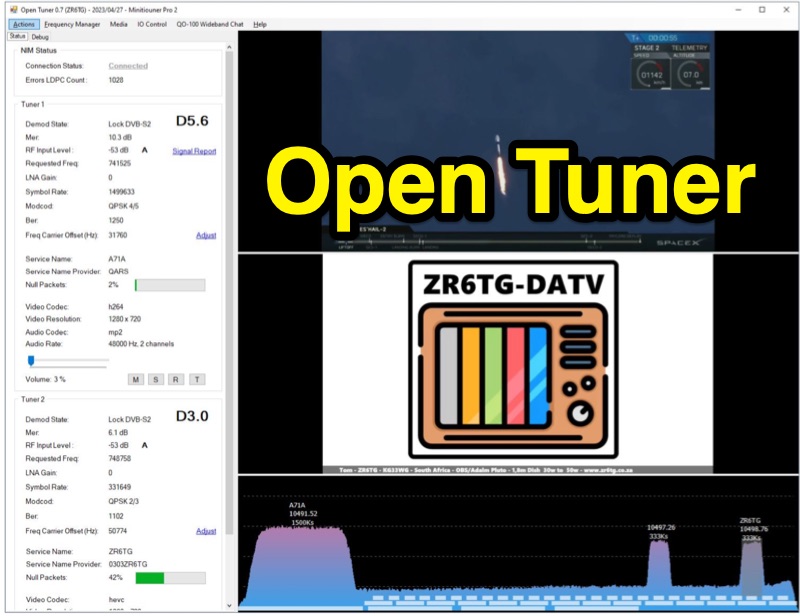 Version 0.7 of Open Tuner, released on April 27, 2023, marked a significant milestone by introducing proof-of-concept dual tuner functionality for the BATC Minitiouner. This C# client, inspired by Heather Lomond's _Longmynd_ project, aims to leverage both tuners and demodulators within the NIM module, a capability crucial for advanced Digital Amateur Television (DATV) operations on QO-100 and terrestrial links. My own experience with DATV often involves juggling multiple receive paths, so a unified client like this simplifies the workflow considerably. Further enhancing its utility, version 0.9 (February 11, 2024) integrated support for the Raspberry Pico, utilizing Colin (G4EML)'s _PicoTuner_ firmware. This offers a more accessible and cost-effective alternative to the traditional FTDI module, streamlining dual tuner setups with a single USB cable. The project's evolution reflects a practical approach to overcoming hardware availability challenges. The software is developed using Visual Studio 2019/2022 and .NET Framework 4.7.2, requiring specific Nuget packages like VLC/Websocket and an ffmpeg folder for full operation. It's an active, community-driven effort, with the source code openly available on GitHub for contributions and bug reporting, embodying the collaborative spirit of amateur radio development.