Search results
Query: log contest
Links: 268 | Categories: 9
-
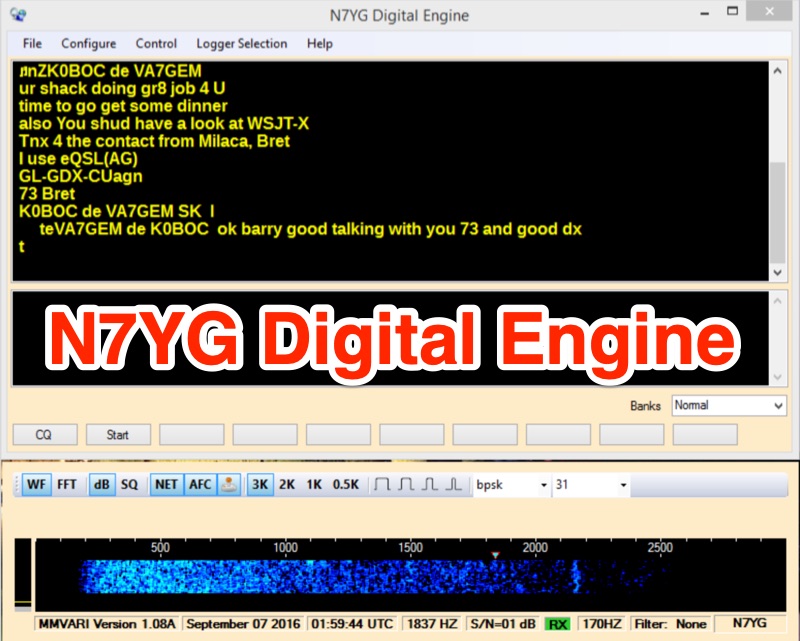 The N7YG Digital Engine, functions as a streamlined digital modem, supporting **PSK**, **RTTY**, and **MFSK** modes. It eliminates many ancillary logging and awards features found in other software, focusing instead on providing a dedicated digital interface. The software is specifically engineered to complement the N3FJP logging suite, offering a simple digital modem with a floating waterfall display that can coexist on the same screen as the logger. The application includes support for PSK Reporter, EXTFSK, TinyFSK, and K1EL Winkey FSK, enhancing its utility for various digital operations. Key features comprise a separate waterfall window, a main GUI with operational controls, receive and transmit display areas, and 10 Macro Buttons across 10 user-definable macro banks, totaling 100 macros for general and contesting use. Configuration options include sound card selection, digital gain (0-32767), AFC Level (0-100), AFC Width (in Hz), and COM Port TX keying for VOX/SignaLink or direct port control. Input and Output Mixer buttons provide direct access to OS audio mixer controls for precise level adjustments. The software is digitally signed with a security certificate, aiming to prevent conflicts with antivirus programs.
 -
 Logbook, contest score, calendar, EQSL, DX Expeditions streams and much more! HamPass is a complete tool for ham.
 -
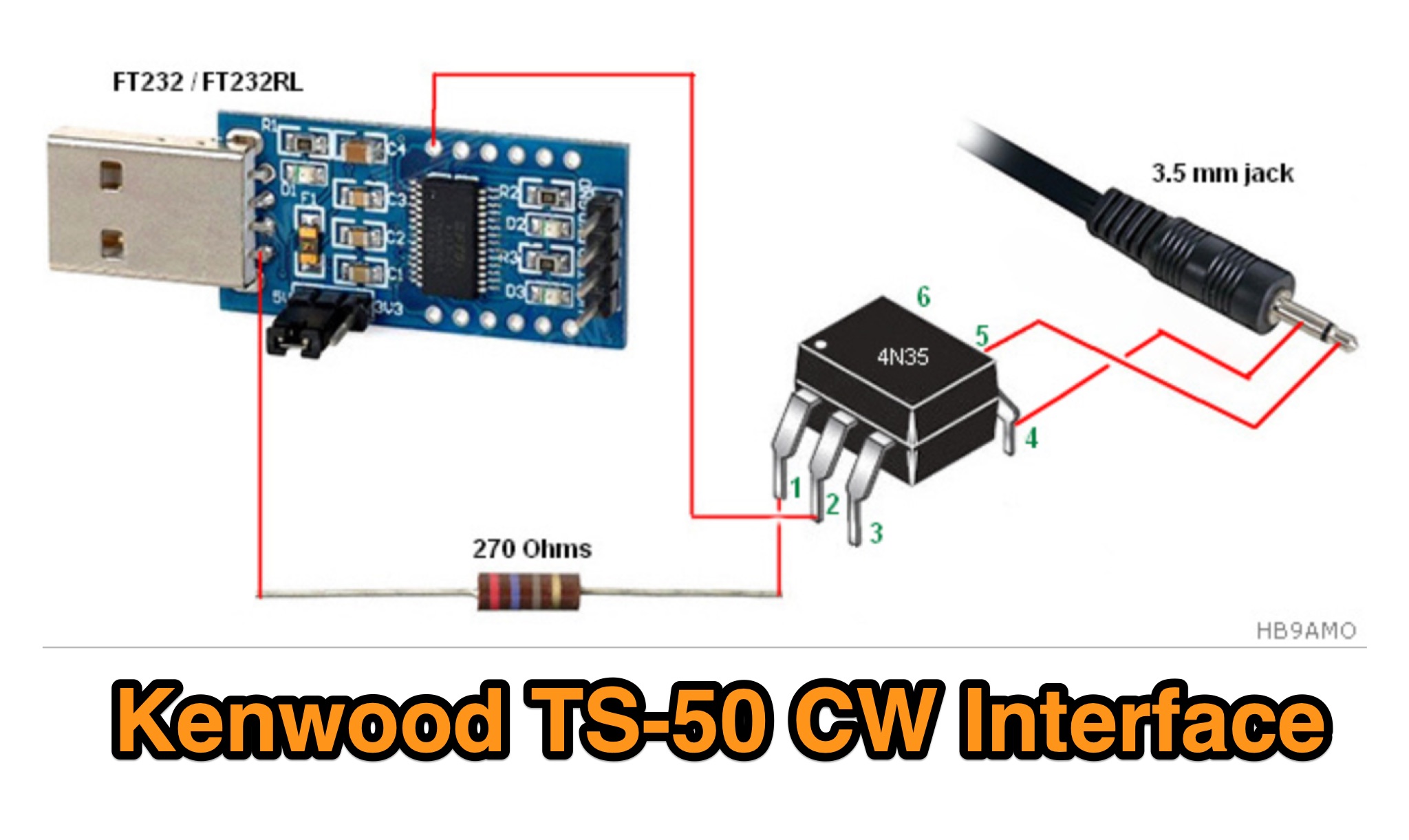 The Kenwood TS-50 is a reliable 25-year-old mobile HF radio, widely used in DX operations but lacking CAT and DATA ports for modern logging or contest software. To overcome this, a custom CW interface was built using an USB to TTL module (FT232/FT232RL) and an optocoupler (e.g., 4N25, H11A1) for galvanic isolation. This setup enables the TS-50 to connect with a computer via USB, facilitating integration with software like LOGGER32 and Win-Test. The interface is cost-effective and driver-free for Windows XP and 7, making it an accessible solution for enhancing the TS-50's functionality.
 -
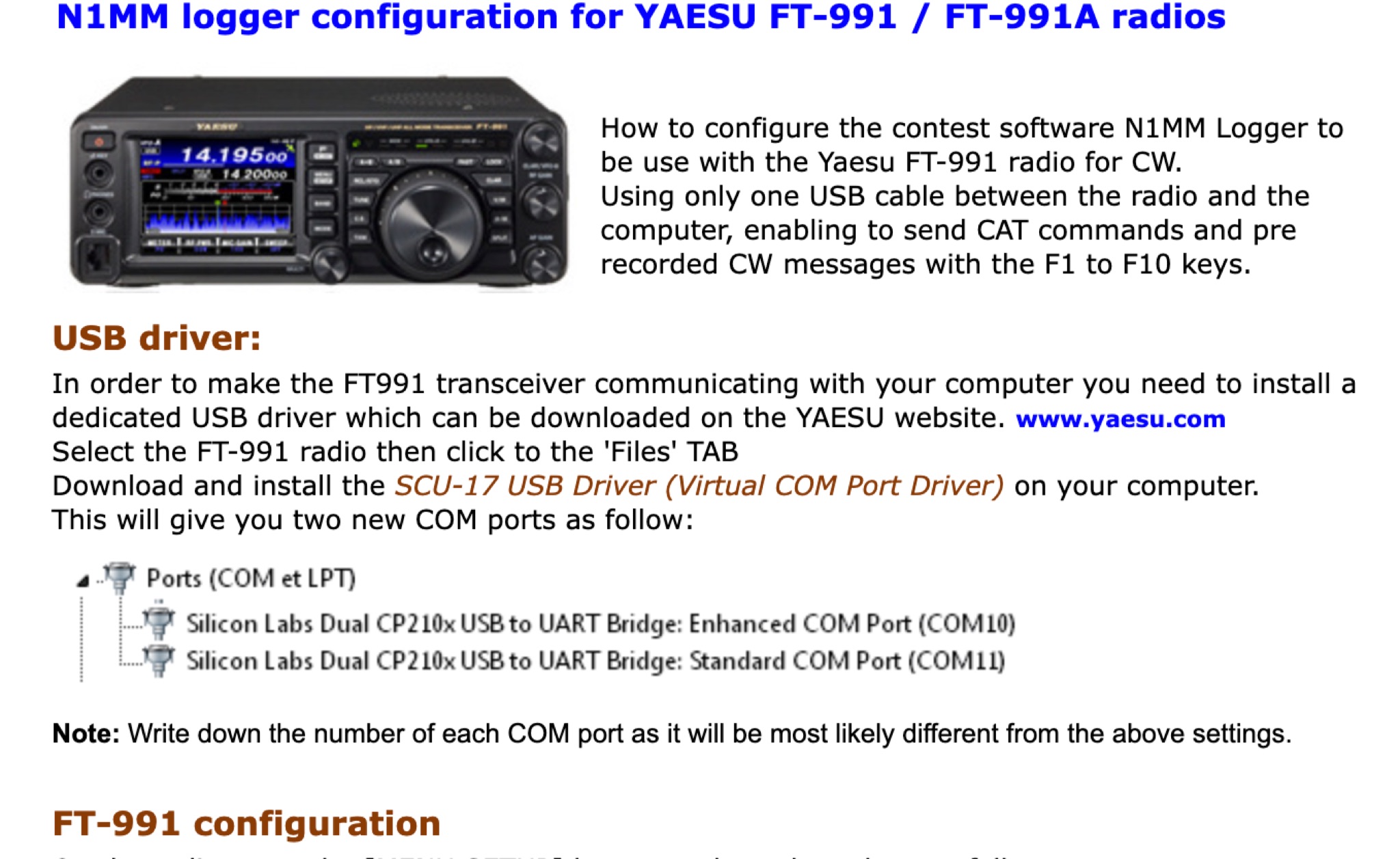 Learn how to set up N1MM Logger+ software for your FT-991 transceiver. This article provides a step-by-step guide on configuring your transceiver settings to work seamlessly with the N1MM Logger+ program. By following these instructions, hams can enhance their contesting and logging experience with improved efficiency and accuracy. Whether you are a beginner or an experienced operator, this tutorial will help you optimize your FT-991 setup for contesting and general ham radio operations.
 -
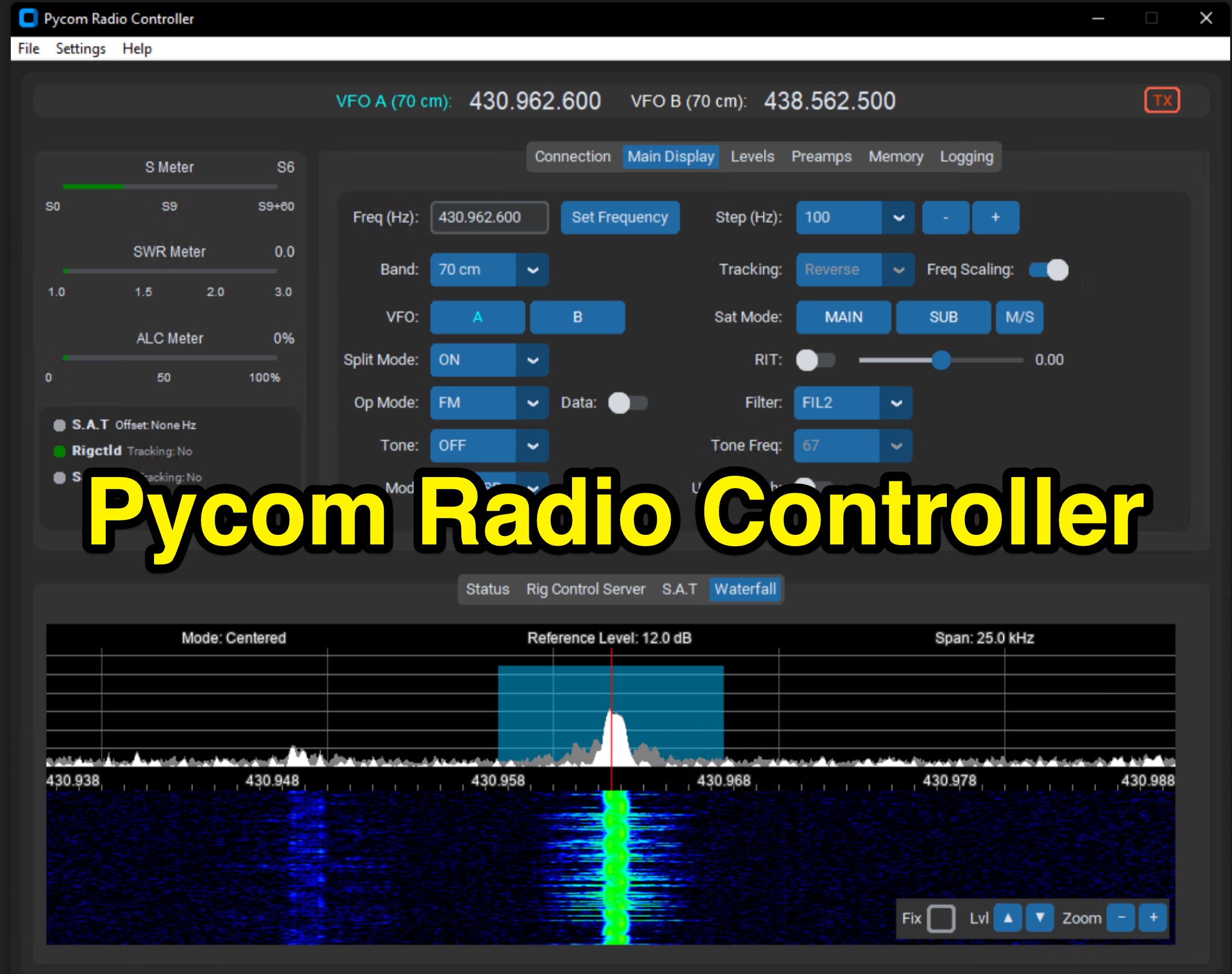 The Icom IC-9700 transceiver, a popular choice for VHF/UHF/1.2 GHz operations, gains enhanced remote control capabilities through Pycom Radio Controller. This software provides direct _CI-V based control_, enabling operators to manage frequency, mode, memories, and tones from a connected computer. It integrates a built-in rigctl server and supports popular satellite tools like Gpredict and SatPC32, facilitating full duplex Doppler control for satellite passes. Key features include real-time meters, a waterfall display, and remote RC-28 integration. Designed for practical amateur radio use, the application streamlines voice and digital satellite operations. It allows for full duplex remote Doppler control, crucial for maintaining accurate frequencies during satellite contacts. The software also incorporates callsign lookup and logging functions, alongside enhanced memory management. Documentation pages offer configuration guidance and operating examples, ensuring users can effectively set up and utilize the software for their satellite communication needs, potentially improving success rates for contacts and contests.
 -
 This is a contest keyer for the AEA MM-3 Morse Machine. It integrates with OmniRig for your radio's frequency. It has a built in logbook as well as a keyboard keyer. You can also export your log as an .adi or cabrillo format for contest submission. Please find my contact details on QRZ.COM for any suggestions or help 73 ZS6WAR
 -
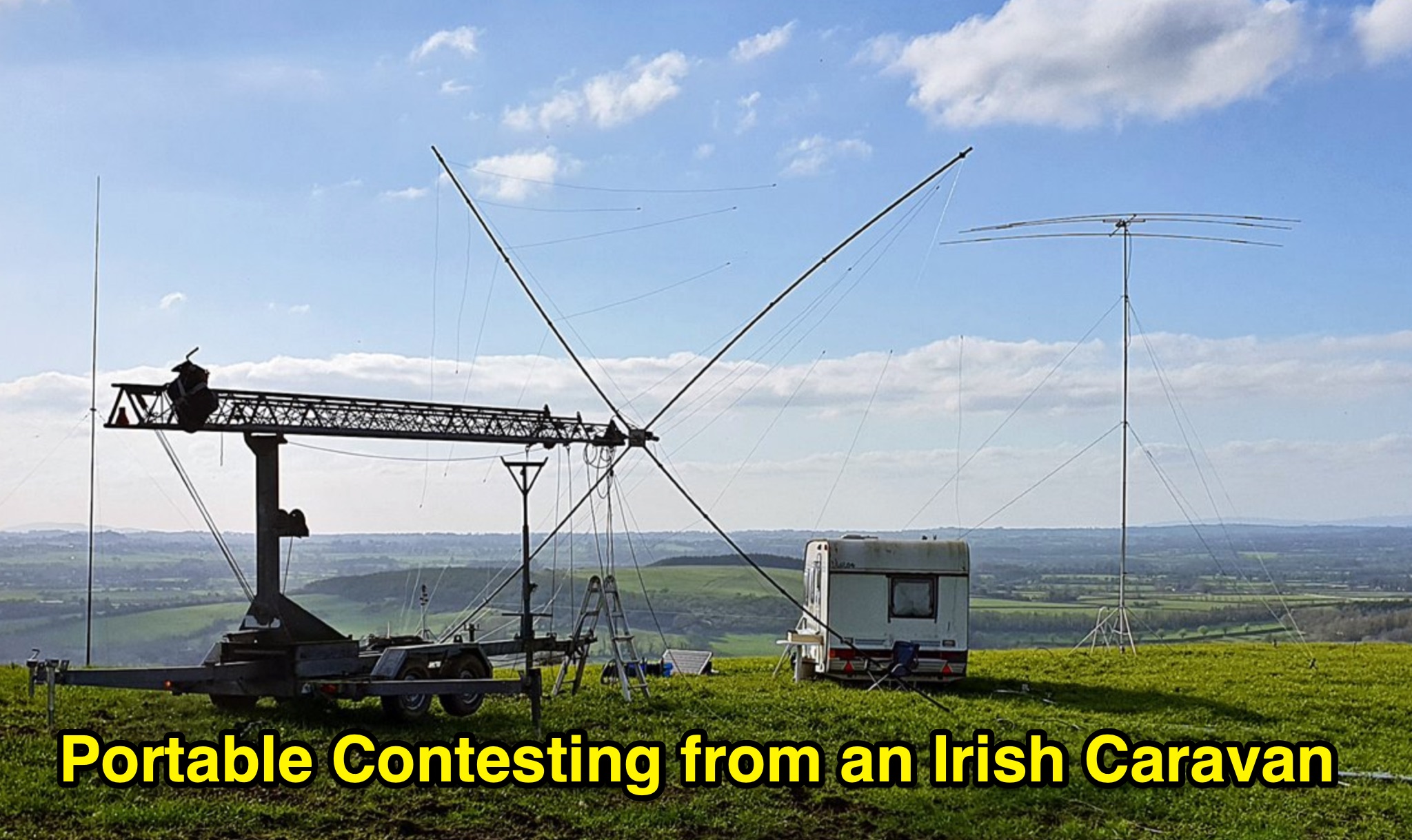 This blog chronicles over a decade of portable HF contesting from rural Ireland (2008–2019) by Olivier, operating under callsigns EI/ON4EI, EI8GQB, EI1A, and EI7T. Using only green energy from a caravan, he achieved top-tier results in major international contests—including 1st World in the 2018 IARU HF Championship (SSB LP) and multiple 1st-place finishes in CQ WW and CQ WPX SSB Europe. Operating in the demanding Single Operator All Band Low Power and SO2R categories, he deployed up to five antennas across five bands, often in remote or emergency-style conditions. The narrative blends technical detail, fieldcraft, and personal reflection, documenting triumphs, setbacks (including carbon monoxide poisoning), and the logistical challenges of sustainable portable operation—culminating in his decision to transition to team-based contesting and future DXpeditions.
 -
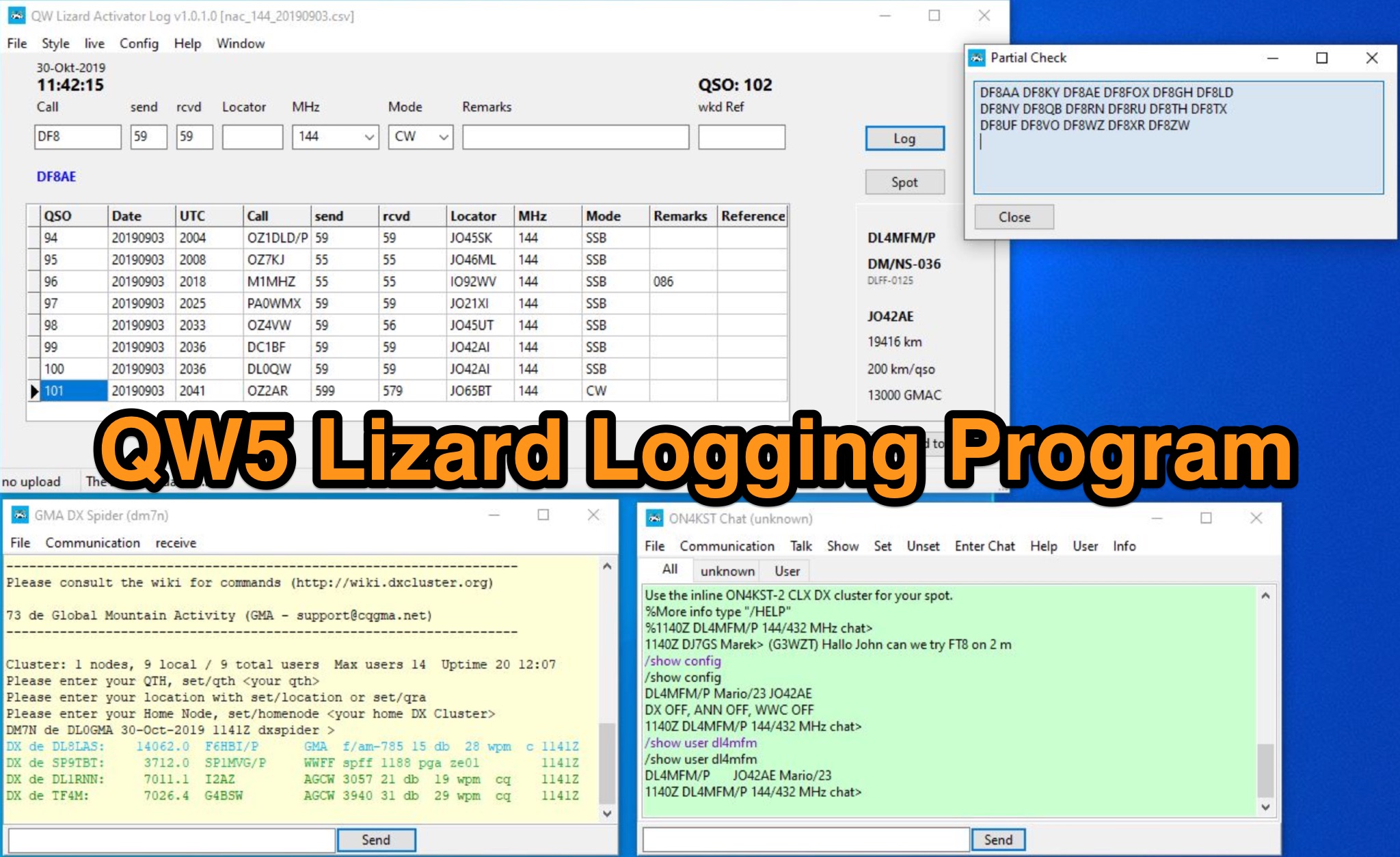 Version 1.0.1.0 of QW5 Lizard, released on September 21, 2019, is a specialized logging program designed for Windows notebooks, particularly for outdoor operations and contest participation. It supports individual configuration and input masks, making it suitable for various HF and VHF/UHF contests. The software prioritizes data security, with a planned feature for live upload directly to the GMA database, catering to activations of references such as mountains, WCA, lighthouses, and WWFF. This logging tool offers robust export capabilities, including EDI for NAC and IARU Region 1 Contests, as well as standard ADIF and Cabrillo formats. The program has undergone extensive testing and deployments by various stations, demonstrating its utility in real-world contest scenarios, such as the Holzhammer Contest. Future extensions for specific contests are also anticipated, enhancing its versatility for the competitive ham radio operator.
 -
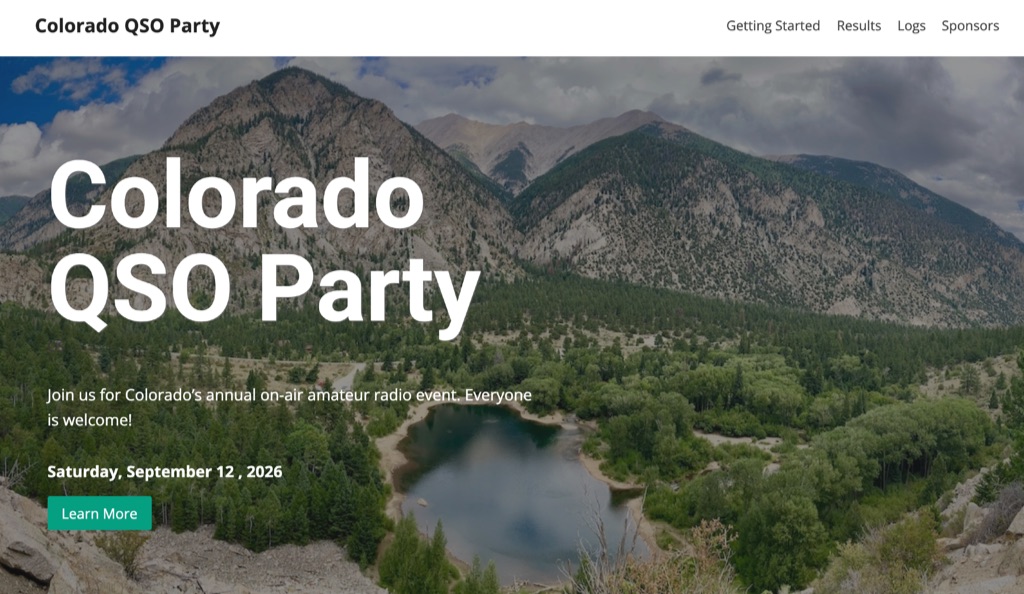 The _Colorado QSO Party_ is scheduled for **September 12, 2026**. This amateur radio event focuses on contacts with stations operating within Colorado. The _Grand Mesa Contesters of Colorado_ sponsors the event. Operators may pursue contacts across all **64 counties** of Colorado. Activations for programs such as POTA and SOTA are permissible during the event period. Logs generated from these activations are eligible for submission to both the _Colorado QSO Party_ and the associated operating program. DXZone Focus: QSO Party | Colorado | Mixed | All Amateur Bands
 -
 Provides access to a robust DX cluster node, G6NHU-2, running DX Spider software, which facilitates real-time amateur radio contact spotting across HF bands. This service is engineered for high reliability and low latency, ensuring rapid dissemination of DX spots from a global network of interconnected nodes. It features multiple redundant links to prevent data loss and maintain continuous operation, even if individual connections drop. The cluster integrates directly with the Reverse Beacon Network (RBN), allowing users to enable or disable skimmer spots for specific modes like CW, RTTY, FT8, and FT4. It also offers an extensive one-year spot history, significantly longer than most other DX clusters, which typically retain only a month of data. The node supports various lookup commands for callsign information, beam headings, QSL routing, and FCC database lookups, enhancing operational efficiency for DXers and contesters. Additionally, it permits self-spotting, a feature increasingly relevant in modern contests, and provides detailed instructions for connecting popular logging software such as N1MM+, HamRadioDeluxe, MacLoggerDX, LOG4OM2, Logger32, and N3FJP's Amateur Contact Log.
 -
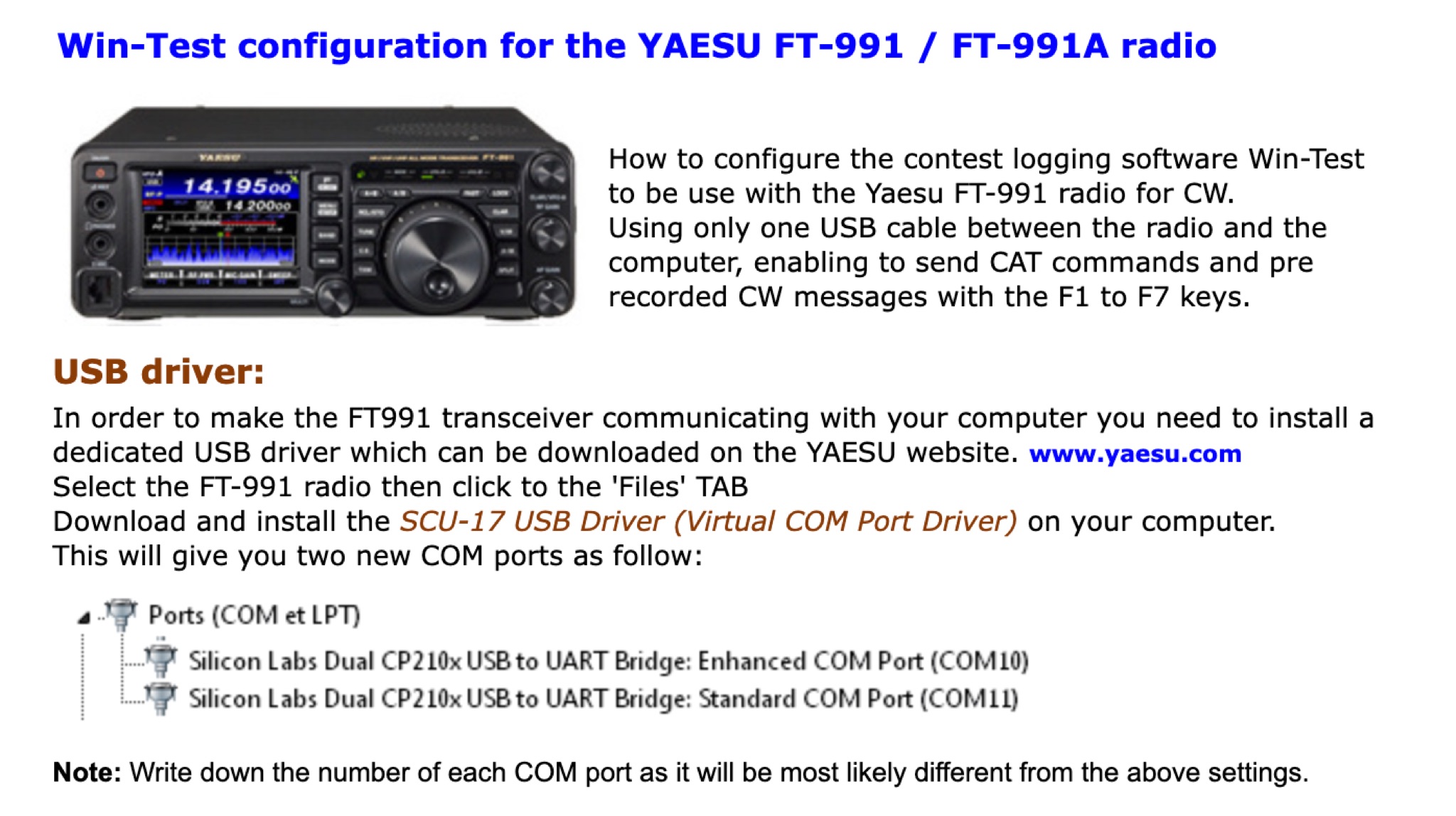 This page provides detailed instructions on how properly setup the Win-Test contest logging application for windows with the popular Yaesu FT-991 transceiver by installing properly the UART Bridge COM to USB port drivers to properly set the switched inside the Win-Test application.
 -
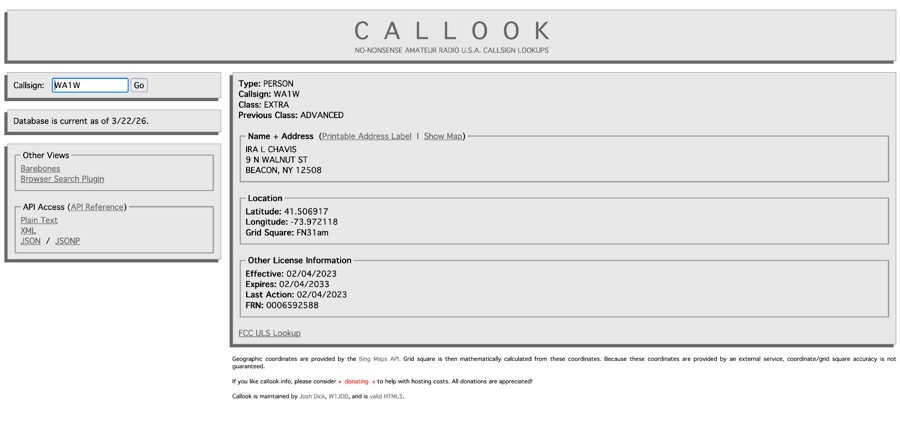 Callook provides a **USA amateur radio callsign lookup service** with data current as of March 25, 2026. The platform allows users to search for valid callsigns and retrieve detailed information, including geographic coordinates sourced from the Bing Maps API. A mathematically calculated **grid square** is derived from these coordinates, though accuracy is not guaranteed due to reliance on external services. The service supports multiple access methods, including a browser search plugin, direct API access with a reference, and plain text output for integration into other applications or scripts. This tool facilitates rapid identification of US amateur radio operators, offering an alternative to other callbook services. Its API access enables developers to integrate callsign lookup functionality into custom applications, streamlining data retrieval for logging software or contest management. The direct presentation of FCC data, combined with grid square calculation, assists DXers and contesters in verifying contact information and location details during on-air operations.
 -
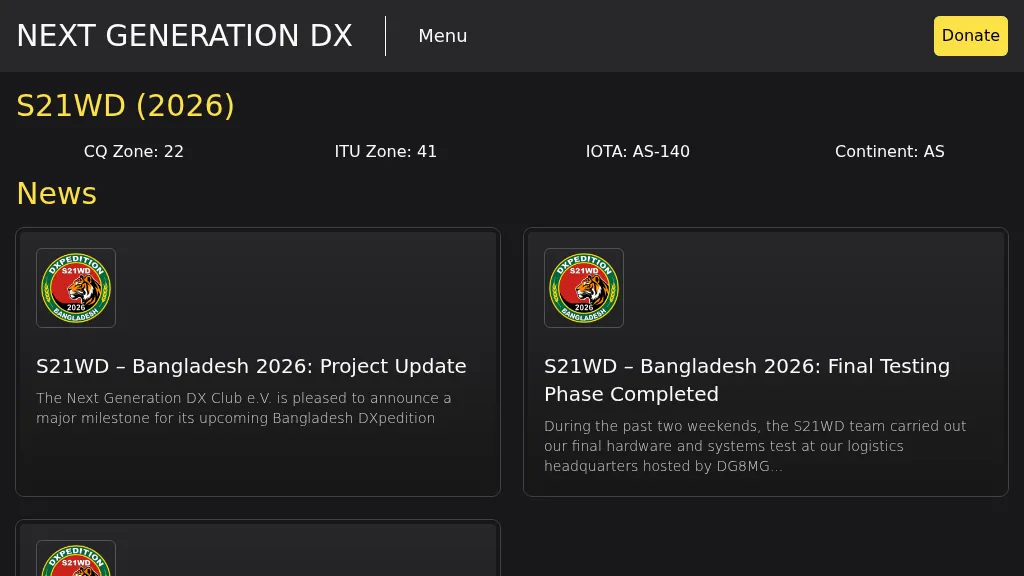 Presents the S21WD DXpedition to Bangladesh (IOTA **AS-140**) scheduled for 2026, organized by the Next Generation DX Club e.V. It outlines the project's progress, including final hardware and systems testing, and the team's successful arrival and activation from the target location. The resource provides a concise summary of Bangladesh, covering its geography, cultural aspects, and economic landscape. The page includes the Clublog Most Wanted ranking for Bangladesh, categorized by continent and mode, as of January 2026. The DXpedition aims to achieve over 70,000 QSOs across CW, SSB, RTTY, and FT8 modes, with a specific focus on RTTY (targeting over 2,000 QSOs) and **lowband** operations. The team plans a Multi-Single entry in the ARRL CW 2026 contest. QSO data will be uploaded to Clublog and LoTW, with Clublog livestream and daily free LoTW uploads anticipated, contingent on stable internet connectivity. The S21WD callsign corresponds to CQ Zone 22 and ITU Zone 41. Further details include a preliminary bandplan, FT8 operating guidelines using MSHV software, a VOACAP DX Prediction link, and an azimuthal map centered on Bangladesh. QSL services are managed by DJ4MX via Clublog OQRS, offering direct, bureau, and LoTW options, with daily LoTW uploads expected.
 -
 Since 1988 and after few decades of activities, Romeo Charlie is an International DX group and counts more than 1700 members in 150 divisions. Serious QSL management * Unique eQSL system, cluster & spot-push-notifications. * Online logs monitors. * Free contests, trophies & Challenges. * Activations all around the world. * Free fee for most of divisions. * Personal web page for members. * One of the most active DX group on 11m band. It's time for a change... Join a modern DX group... Looking to the future !
 -
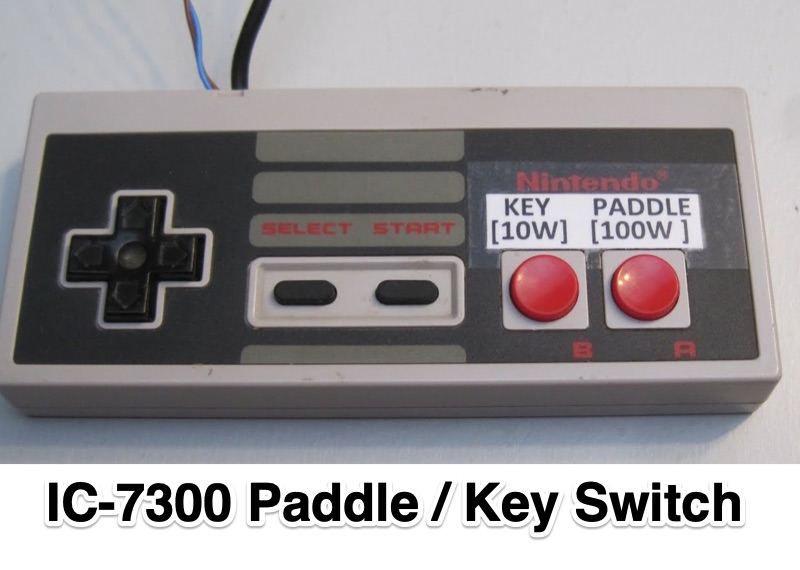 Demonstrates an **Arduino-based** solution for the Icom IC-7300 transceiver, specifically addressing the operational inconvenience of switching between a CW paddle and a straight key. The project leverages the IC-7300's **CI-V bus** (Computer Interface 5) to provide instant keyer type selection and two preset power levels, bypassing the rig's menu system which otherwise requires eight button presses. This implementation utilizes the 3.5mm CI-V connector, leaving the USB port free for CAT control and the internal soundcard, a critical design choice for integrated station setups. The system's utility is particularly evident for CW operators who frequently alternate between keying methods during contesting or general operating. The article details the hardware setup, including an Arduino Nano, a 3.5mm jack for CI-V, and pushbuttons for control. An update in 2023 expanded the project to incorporate an 8-button Nintendo controller, enhancing user interface flexibility and demonstrating the adaptability of the initial design for further customization and feature integration.
 -
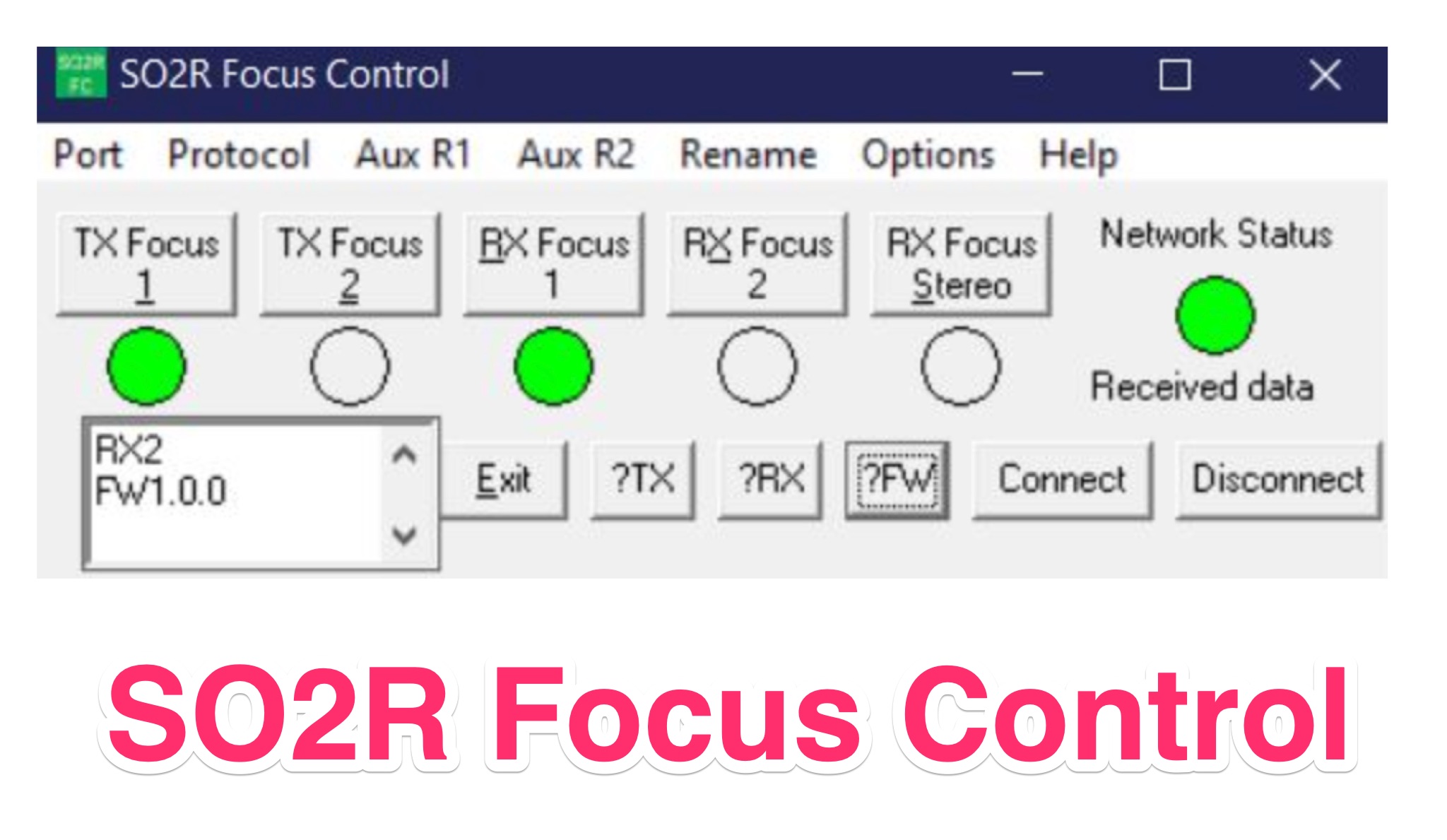 SO2R Focus Control and SO2R FC Server are freeware VB6-based tools enabling remote or local control of modern SO2R controllers (supporting OTRSP and MK2R protocols) outside contest logging sessions. The client (SO2R Focus Control) manages serial-connected controllers and can interface remotely via LAN or internet using the optional SO2R FC Server, which supports up to two concurrent clients. Key features include AUX port control with customizable labels, interlock options, AES-256 encrypted network communication, and compatibility from Windows XP through Windows 11. Designed for operators needing flexible station control—especially for remote antenna switching—both programs install cleanly via NSIS and uninstall completely.
 -
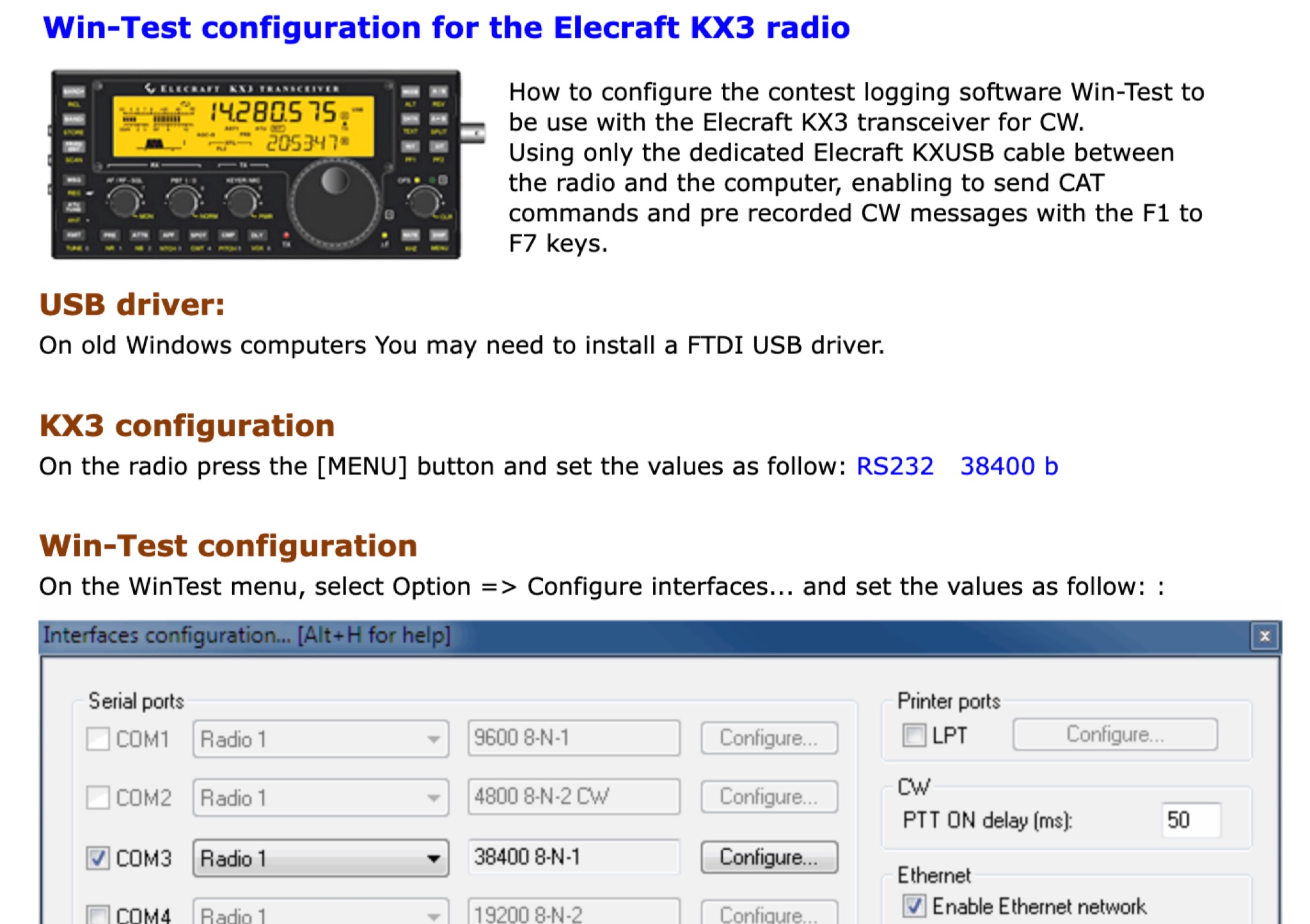 This page provides a detailed instructions on how to setup the KX3 transceiver with the Win-Test software. How to configure the contest logging software Win-Test to be use with the Elecraft KX3 transceiver for CW. Using only the dedicated Elecraft KXUSB cable between the radio and the computer, enabling to send CAT commands and pre recorded CW messages with the F1 to F7 keys.
 -
 Define the SWL contest 2026 as an event for monitoring a variety of languages on _medium wave_ (MW) and _shortwave_ (SW) AM radio stations. Participants can utilize either traditional radio receivers or _WEB SDR_ platforms to log their findings. The contest encourages the use of both analog and digital methods to maximize the diversity of languages captured. The contest rules specify that entries must include detailed logs of the stations received, including frequency, time, and language identified. Logs should be submitted in a standardized format to ensure consistency and accuracy in judging. The use of WEB SDR is particularly highlighted for its ability to access distant stations that may not be reachable with local equipment. The contest is open to all SWL enthusiasts worldwide, with a focus on European WEB SDR access. The event aims to foster a deeper understanding of global broadcasting patterns and linguistic diversity. Participants are encouraged to explore various bands within the MW and SW spectrum, enhancing their skills in signal identification and language recognition. The contest offers a unique opportunity to engage with the global SWL community and share insights into the art of listening.