Search results
Query: am operations
Links: 415 | Categories: 51
Categories
- Technical Reference > AI Ham Radio
- Operating Modes > AM
- Manufacturers > Amplifiers
- Operating Modes > Amtor
- Operating Modes > Ham Radio Balloons
- Technical Reference > Ham Radio Go Kits
- Shopping and Services > Ham Radio Insurance
- Technical Reference > Amplifiers > VHF Amplifiers
- Operating Modes > HF Operations
- Operating Modes > Portable Operations
- Operating Modes > Remote Operations
- DX Resources > DX Peditions > 2011 DXpeditions
- DX Resources > DX Peditions > 2012 DXpeditions
- DX Resources > DX Peditions > 2013 DXpeditions
- DX Resources > DX Peditions > 2019 DXpeditions
- DX Resources > DX Peditions > 2020 DXpeditions
- DX Resources > DX Peditions > 2021 DXpeditions
- DX Resources > DX Peditions > 2026 DXpeditions
- Technical Reference > Batteries
- Technical Reference > Radio Frequency Interference > BPL
- Radio Scanning > Regional > Canada
- Operating Modes > Packet Radio > Clubs
- Software > Contesting
- DX Resources > DX Calendars
- Operating Modes > EME
- Internet and Radio > Ftp Sites
- Operating Aids > Grid Squares
- Technical Reference > Key Clicks
- Software > Legacy Systems
- Software > Linux
-
 The PAPA System is a member-supported amateur radio network in Southern California with inter-linked FM, D-STAR, DMR, and P25 repeaters. It provides extensive coverage from Mexico to north of Santa Barbara and from the Arizona border to the Pacific Ocean. Known for its reliability and motto "no call goes unanswered," the network supports casual conversations and emergency operations. Members enjoy using the system, attending events, and building friendships. Monthly meetings in Los Angeles, Orange County, and San Diego feature technology presentations, license testing, and door prizes.
 -
 The project aims to create a remote control system for the VK5RSE beacons located near Millicent, South Australia. The beacons on 144.550, 432.550, and 1296.550 MHz can interfere with nearby amateur radio operations, particularly for EME work on 1296 MHz. The remote control system uses a DTMF decoder and PIC microcontroller to allow turning the beacons on and off individually or in combination. The system is housed in a diecast box and powered from 5-8V. The password-protected control allows authorized users to manage the beacon operations remotely, helping mitigate interference issues for local amateurs.
 -
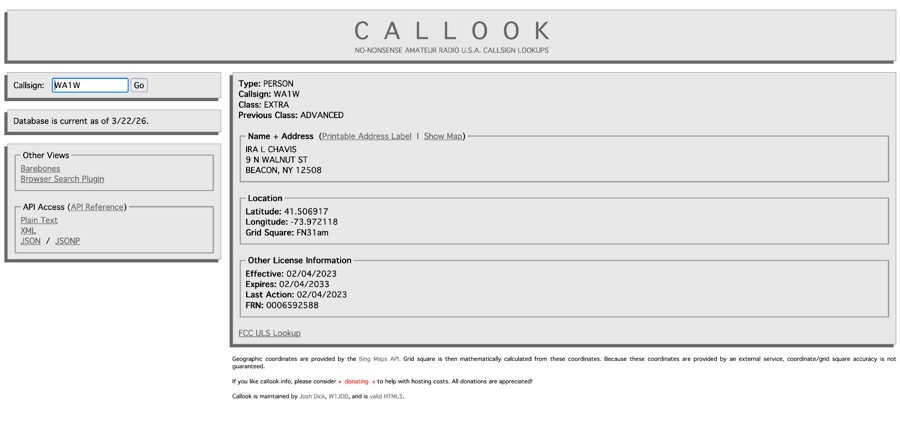 Callook provides a **USA amateur radio callsign lookup service** with data current as of March 25, 2026. The platform allows users to search for valid callsigns and retrieve detailed information, including geographic coordinates sourced from the Bing Maps API. A mathematically calculated **grid square** is derived from these coordinates, though accuracy is not guaranteed due to reliance on external services. The service supports multiple access methods, including a browser search plugin, direct API access with a reference, and plain text output for integration into other applications or scripts. This tool facilitates rapid identification of US amateur radio operators, offering an alternative to other callbook services. Its API access enables developers to integrate callsign lookup functionality into custom applications, streamlining data retrieval for logging software or contest management. The direct presentation of FCC data, combined with grid square calculation, assists DXers and contesters in verifying contact information and location details during on-air operations.
 -
 The Parks on the Air website is dedicated to international portable amateur radio operations from national/federal and state/provincial parks. It provides rules, guides, and resources for ham radio operators looking to participate in emergency awareness and communications. The site also offers a book exploring the process of park activations and hunting for those activations, with advice and motivation from experienced operators. Visitors can make contributions to support the site's overhead costs and keep it ad-free. The site is a valuable resource for hams interested in getting active in the growing POTA community.
 -
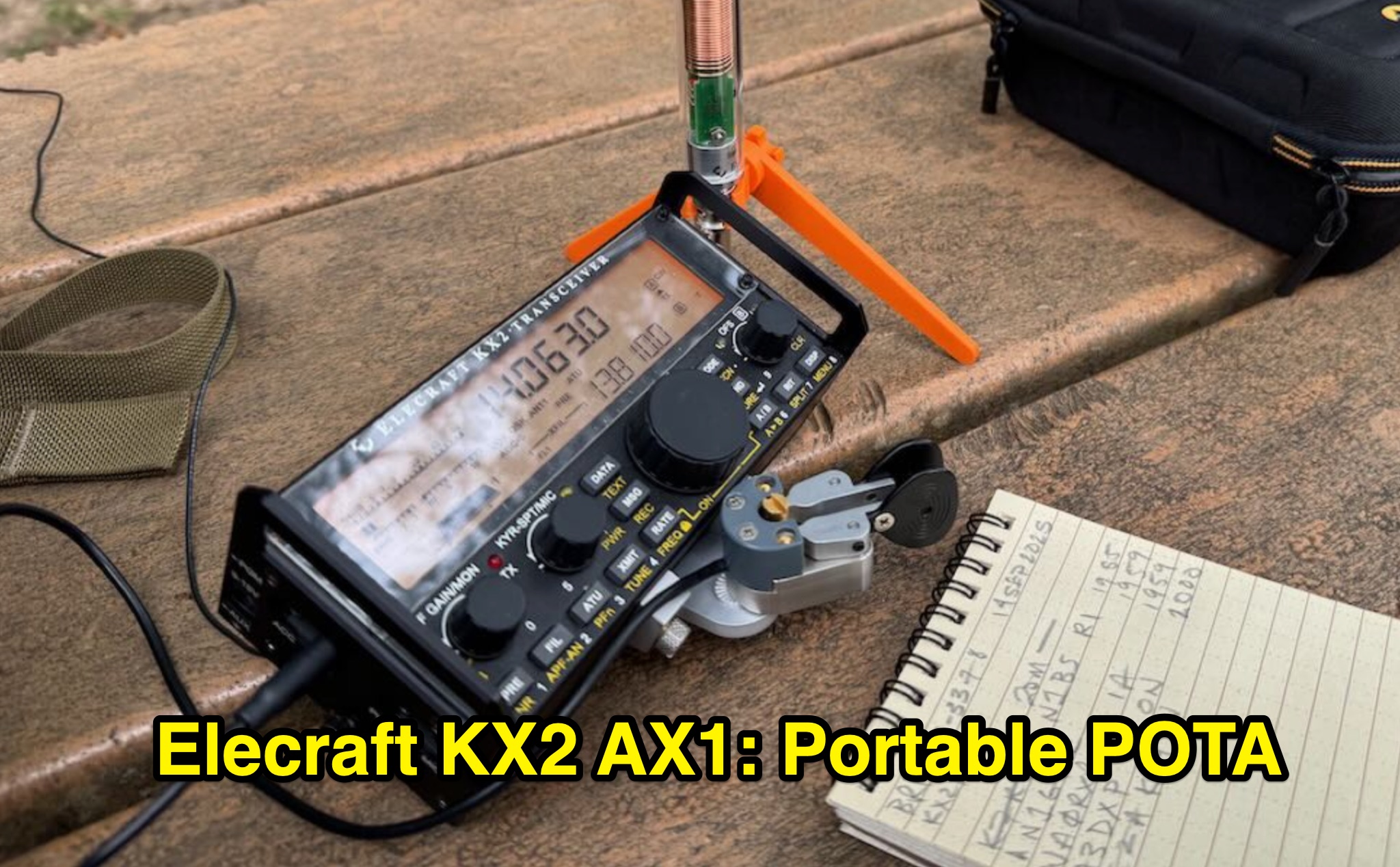 Join Thomas (K4SWL) as he shares his experience activating a POTA site using the Elecraft KX2 AX1 combo. Follow along on his journey from a podcast recording session to a quick POTA activation, showcasing the ease and efficiency of this portable setup. Discover the joy of getting on the air with minimal setup time and maximum enjoyment, perfect for hams looking for a grab-and-go solution. Learn about the benefits of using the AX1 antenna and how it can enhance your portable operations, all while supporting QRPer.com through affiliate links.
 -
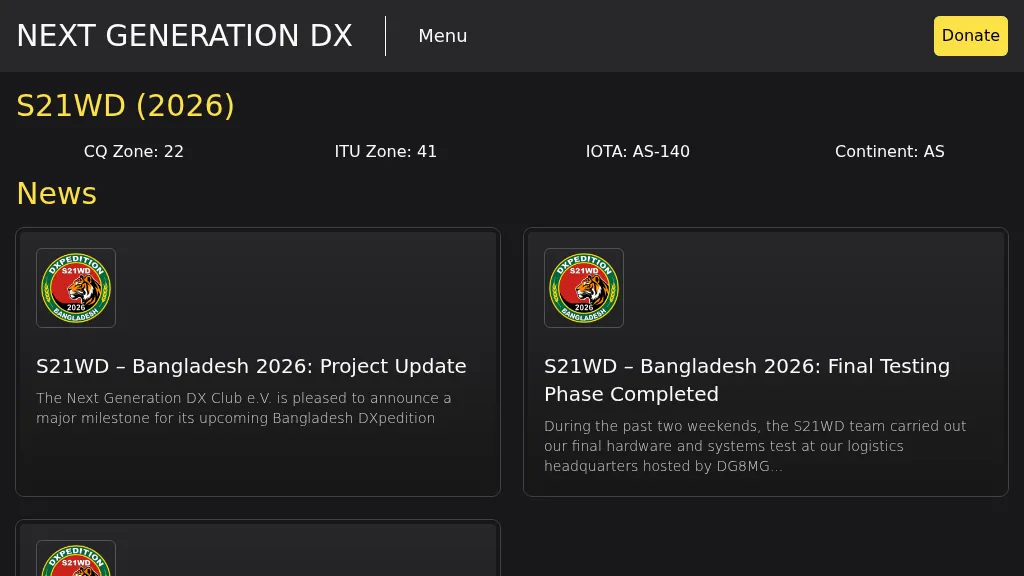 Presents the S21WD DXpedition to Bangladesh (IOTA **AS-140**) scheduled for 2026, organized by the Next Generation DX Club e.V. It outlines the project's progress, including final hardware and systems testing, and the team's successful arrival and activation from the target location. The resource provides a concise summary of Bangladesh, covering its geography, cultural aspects, and economic landscape. The page includes the Clublog Most Wanted ranking for Bangladesh, categorized by continent and mode, as of January 2026. The DXpedition aims to achieve over 70,000 QSOs across CW, SSB, RTTY, and FT8 modes, with a specific focus on RTTY (targeting over 2,000 QSOs) and **lowband** operations. The team plans a Multi-Single entry in the ARRL CW 2026 contest. QSO data will be uploaded to Clublog and LoTW, with Clublog livestream and daily free LoTW uploads anticipated, contingent on stable internet connectivity. The S21WD callsign corresponds to CQ Zone 22 and ITU Zone 41. Further details include a preliminary bandplan, FT8 operating guidelines using MSHV software, a VOACAP DX Prediction link, and an azimuthal map centered on Bangladesh. QSL services are managed by DJ4MX via Clublog OQRS, offering direct, bureau, and LoTW options, with daily LoTW uploads expected.
 -
 The **CubeSat** standard, developed by California Polytechnic State University (Cal Poly) and Stanford University, facilitates frequent and affordable access to space for small satellites. This resource serves as a central hub for the CubeSat community, offering a comprehensive directory of active and past CubeSat projects, technical specifications, and educational materials. It details the standardized dimensions and mass constraints for these pico-satellites, which typically range from 1U (10x10x10 cm, 1.33 kg) to 12U configurations, enabling their deployment as secondary payloads on various launch vehicles. The site also provides insights into mission planning, component selection, and regulatory considerations for amateur radio satellite operations. Operators and developers can utilize the project directory to research existing CubeSat missions, understand their communication protocols, and identify potential collaboration opportunities. The platform's forum section allows for direct engagement with other enthusiasts and experts, fostering knowledge exchange on topics such as **AMSAT** frequency coordination, telemetry decoding, and ground station setup. This collaborative environment supports the development of new CubeSat projects, promoting innovation in amateur radio satellite communication and space exploration.
 -
 This presentation explores the practice of QRP (low-power) amateur radio operation in outdoor settings. It guides operators to identify their specific objectives for portable operations, which inform equipment and antenna choices. The discussion covers considerations including portability, operating modes, power requirements, and weather resistance. Various antenna designs are examined, from vertical configurations to dipoles and end-fed options, with emphasis on deployment practicality in public spaces. The presentation concludes with practical advice on selecting operating locations, RF safety, and resources for equipment and community support for QRP enthusiasts.
 -
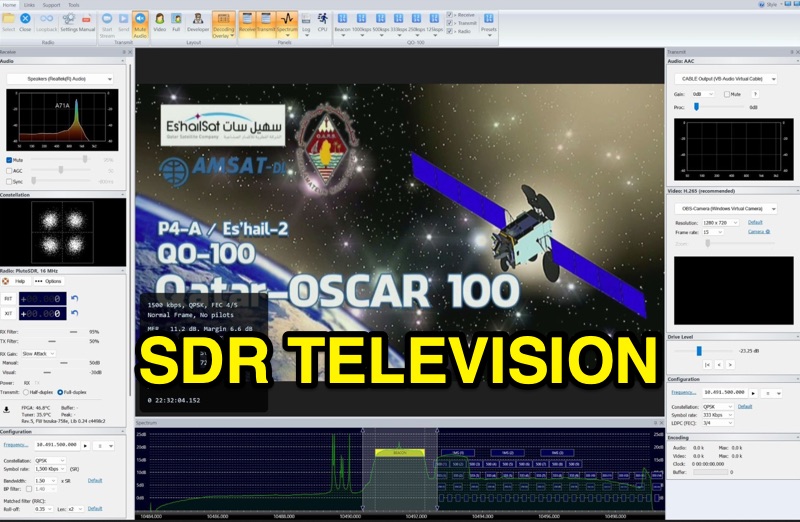 SDR Television v1.0 operates as a DVB-S2 / AAC / H264 / H265 program, specifically engineered for QO-100 satellite Digital Amateur Television (DATV) operations. It provides a full-duplex solution on modern x86 computers running Windows 10 or 11 (64-bit, 8+ cores, AVX2 support recommended), leveraging DLLs from _SDR Console_ for control of devices like _Pluto_ and _LibreSDR.TV_. The software requires installation of the SDR Radio kit for wideband mode support. Initial development focused on a proof-of-concept for QO-100, with future enhancements planned to include H266 / AV1 / Opus codecs and an improved cross-band user interface. The current stable release functions reliably for QO-100 DATV. Users must install the SDR Radio kit, followed by the SDR Television kit, into the same directory. Support inquiries are handled via the SDR-Radio.com mailing list, ensuring direct assistance for operational questions.
 -
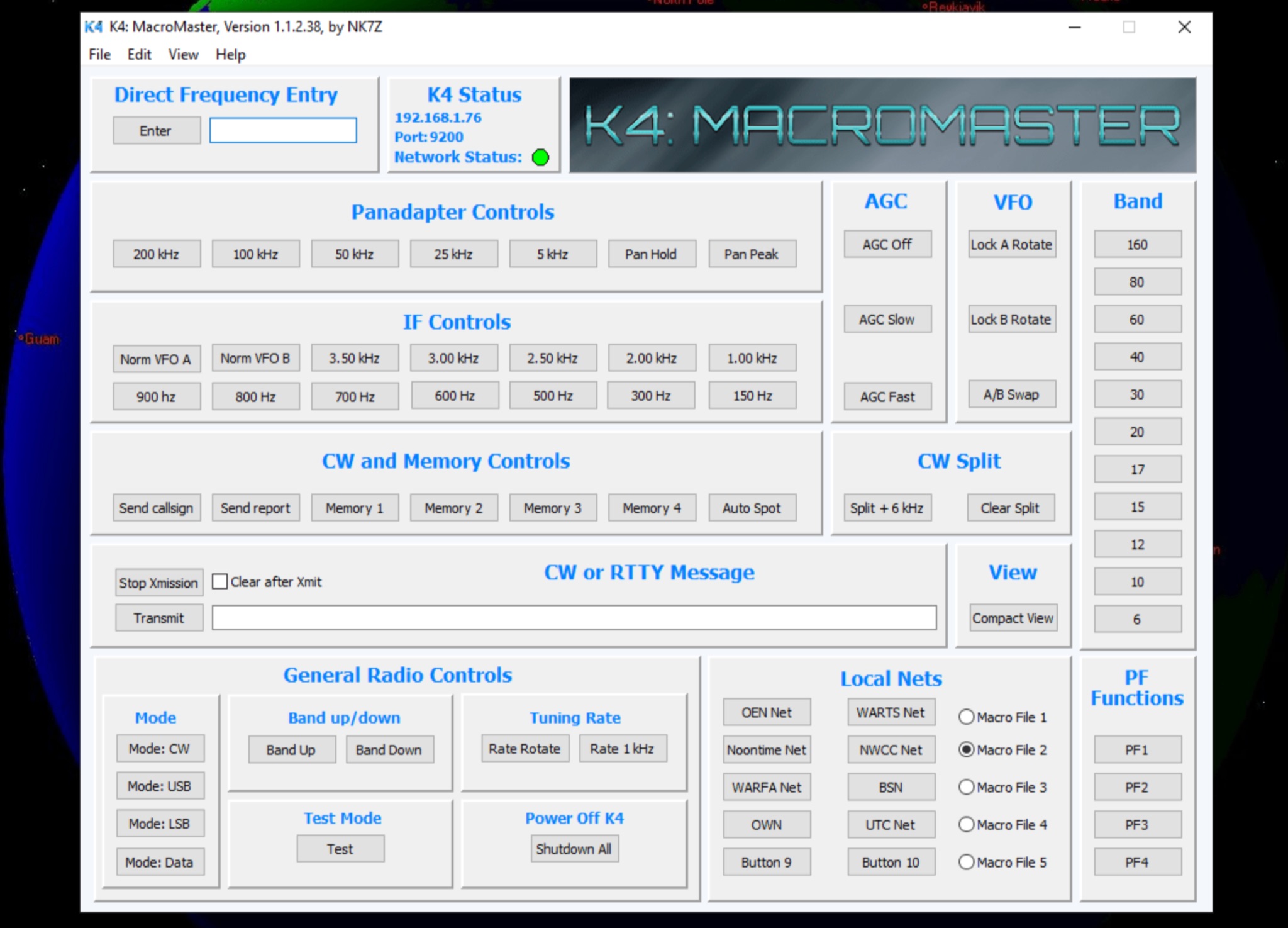 This page provides a detailed review and setup guide for the K4 MacroMaster program, designed for Elecraft K4 and K4D radio users. The program allows users to easily program, test, and implement macro commands through Ethernet or Wifi connection. Users can create up to fifty user programmable macros in groups of 10, called Macro Clusters. The software includes an editor for creating, storing, and naming clusters by function, as well as a hint feature for quick reference. This resource is valuable for hams looking to streamline their radio operations with customized macro commands.
 -
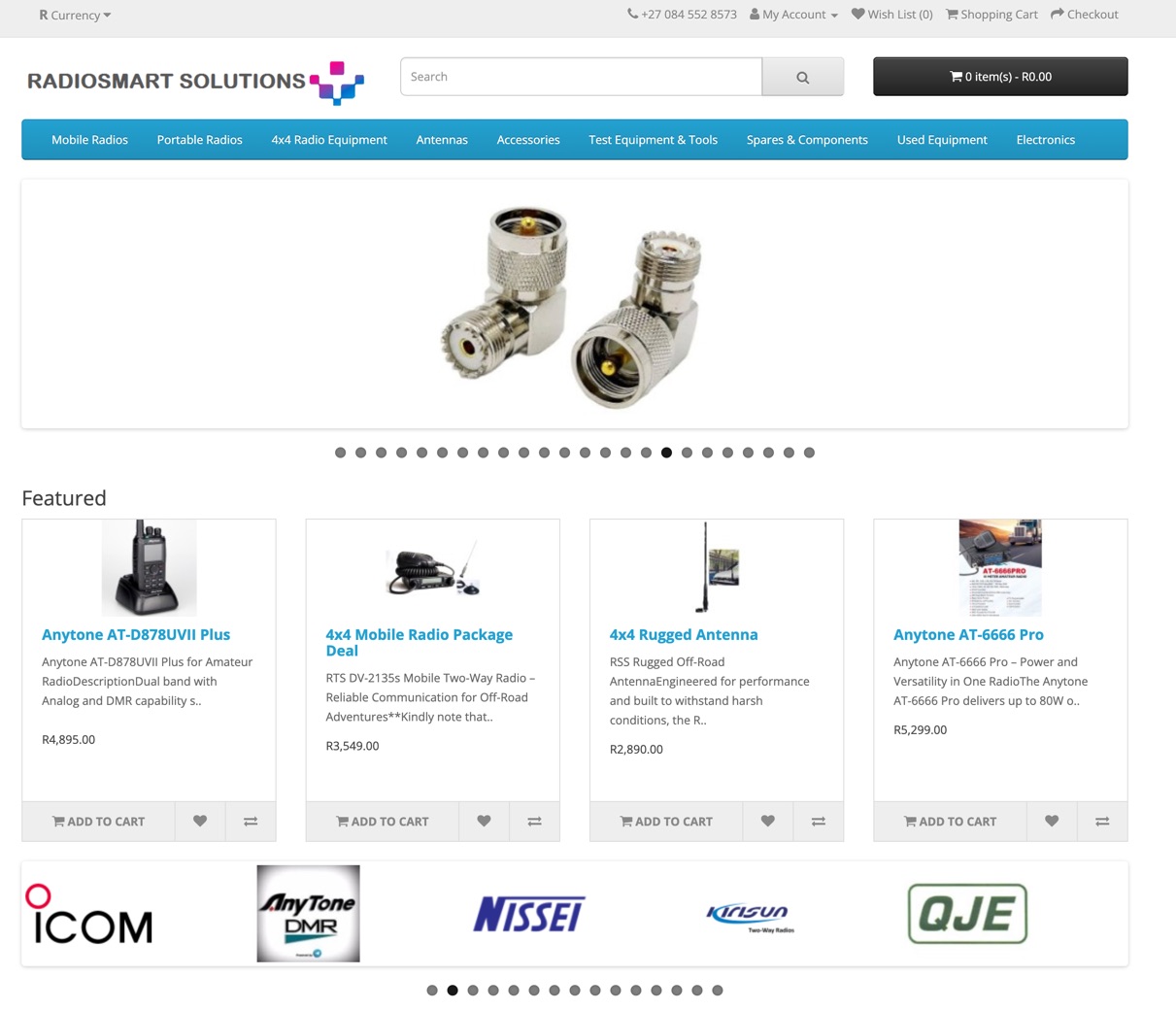 The Anytone AT-D878UVII Plus, a dual-band transceiver, supports both Analog and DMR modes, providing versatile communication options for amateur radio operators. This model is complemented by the Anytone AT-6666 Pro, which delivers a substantial 80W output, catering to users requiring higher power for their radio operations. For mobile and off-road applications, RadioSmart Solutions features a 4x4 Mobile Radio Package Deal, which includes the RTS DV-2135s Mobile Two-Way Radio. This package is specifically designed for reliable communication in challenging environments, often encountered during off-road adventures. An _RSS Rugged Off-Road Antenna_ is also available, engineered to withstand harsh conditions and ensure robust performance. The product range addresses the needs of individuals seeking durable and functional communication solutions for both general amateur radio use and specialized mobile deployments.
 -
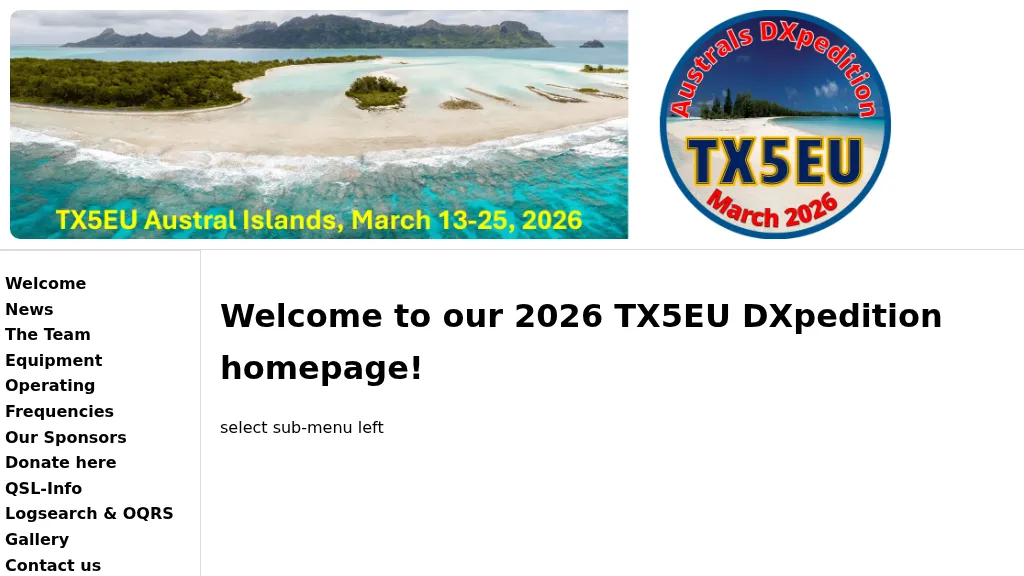 TX5EU 2026 DXpedition to Raivavae Island, **OC-114**, within the Austral Islands, providing a detailed account of the German/Dutch team's operations. The resource outlines the participation of operators such as DL2AWG Guenter, PA2KW Evert, and DK2AMM Ernoe, who engaged in CW, SSB, RTTY, and various digital modes. It documents the real-world challenges encountered, including significant equipment failures and antenna damage to 80/60m, 30m, and 10m verticals due to adverse storm conditions. The page offers timely news updates on the expedition's progress, noting repairs to a power amplifier's 10/12m bandpass filter, which enabled three stations to utilize amplification. Earlier reports highlighted power failures and the loss of multiple power amplifiers, necessitating one station to operate barefoot FT-8 with 100W. The team's persistent efforts to repair antennas as weather permits are also detailed, reflecting the dynamic nature of remote island operations.
 -
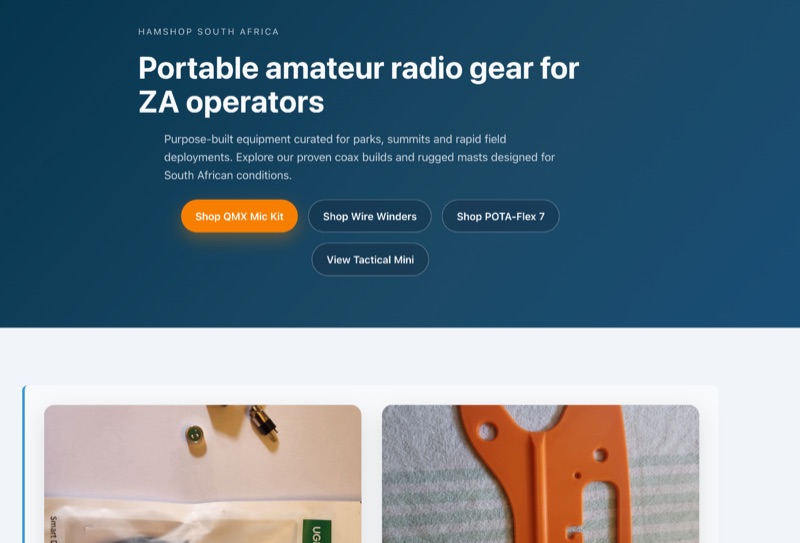 Over 15 years of field experience informs the product selection at Hamshop South Africa, focusing on gear that performs reliably in diverse outdoor environments. The shop emphasizes purpose-built equipment, including proven coax assemblies and robust masts, all designed to meet the unique demands of portable operations across the region. Every item is curated to ensure durability and functionality for activations in parks, on summits, or during rapid field deployments. The inventory is specifically tailored for the South African amateur radio community, prioritizing portability and ruggedness. This ensures operators have access to gear that can withstand challenging conditions, from dry bushveld to coastal humidity, without compromising performance. Products are selected based on their ability to support effective and enjoyable amateur radio activities in various outdoor settings, reflecting a deep understanding of what works in the field.
 -
 Over 44,000 square kilometers of Scotland's natural beauty provide a unique backdrop for the _GMFF_ award program. Designed for amateur radio operators who thrive on portable operations, this program encourages activators to set up stations in designated flora and fauna areas. Participants engage in _SSB_ and _CW_ modes, making contacts from these scenic locations, which are part of the _WorldWide Flora and Fauna_ network. Activators and chasers alike benefit from the program's structure, which awards points for successful contacts. The _GMFF_ program is part of a larger global initiative, allowing operators to contribute to conservation awareness while enjoying their hobby. With a focus on environmental preservation, the program aligns amateur radio activities with ecological interests, promoting responsible and sustainable operating practices. The program's website provides resources for participants, including maps of designated areas and guidelines for operation. By participating, operators not only enjoy the challenge of portable operation but also support the conservation of natural habitats. The _GMFF_ program thus combines the thrill of amateur radio with a commitment to environmental stewardship.
 -
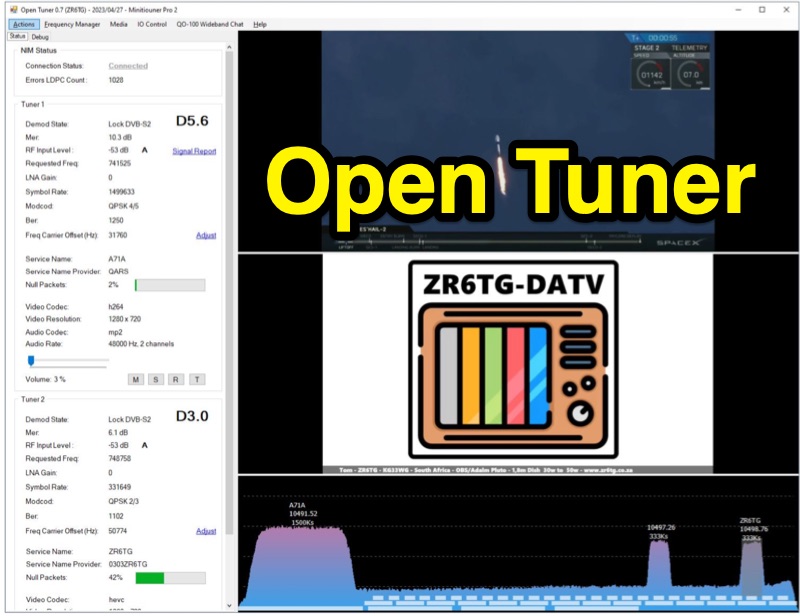 Version 0.7 of Open Tuner, released on April 27, 2023, marked a significant milestone by introducing proof-of-concept dual tuner functionality for the BATC Minitiouner. This C# client, inspired by Heather Lomond's _Longmynd_ project, aims to leverage both tuners and demodulators within the NIM module, a capability crucial for advanced Digital Amateur Television (DATV) operations on QO-100 and terrestrial links. My own experience with DATV often involves juggling multiple receive paths, so a unified client like this simplifies the workflow considerably. Further enhancing its utility, version 0.9 (February 11, 2024) integrated support for the Raspberry Pico, utilizing Colin (G4EML)'s _PicoTuner_ firmware. This offers a more accessible and cost-effective alternative to the traditional FTDI module, streamlining dual tuner setups with a single USB cable. The project's evolution reflects a practical approach to overcoming hardware availability challenges. The software is developed using Visual Studio 2019/2022 and .NET Framework 4.7.2, requiring specific Nuget packages like VLC/Websocket and an ffmpeg folder for full operation. It's an active, community-driven effort, with the source code openly available on GitHub for contributions and bug reporting, embodying the collaborative spirit of amateur radio development.