Search results
Query: audio
Links: 488 | Categories: 18
Categories
- Technical Reference > Audio
- Software > Audio Recorders
- Software > Audio Streaming
- Operating Modes > Morse code > Morse Code Practice Audio Files
- Software > Virtual Audio Software
- Shortwave Radio > Broadcasters
- Operating Modes > ESSB
- Internet and Radio > Live streaming
- Manufacturers > Microphones
- Radio Equipment > Microphones
- Software > Morse Code Decoders
- Ham Radio > News Casts
- Internet and Radio > Police Scanners
- Shopping and Services > RF Tubes
- Software > Signal Generator
- Internet and Radio > Sounds
- Manufacturers > Speakers and Headsets
- Software > Voice tools
-
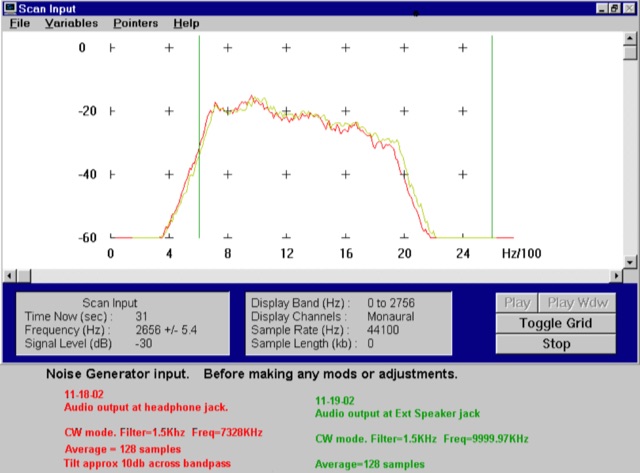 Spectrogram, a PC-based audio frequency spectrum analyzer available from Visualization Software, aids ham radio enthusiasts in aligning receivers like Elecraft K2. Versions are downloadable, with an intuitive interface and customizable parameters. Tutorials by experts like Tom Hammond and John Grebenkemper offer additional guidance.
-
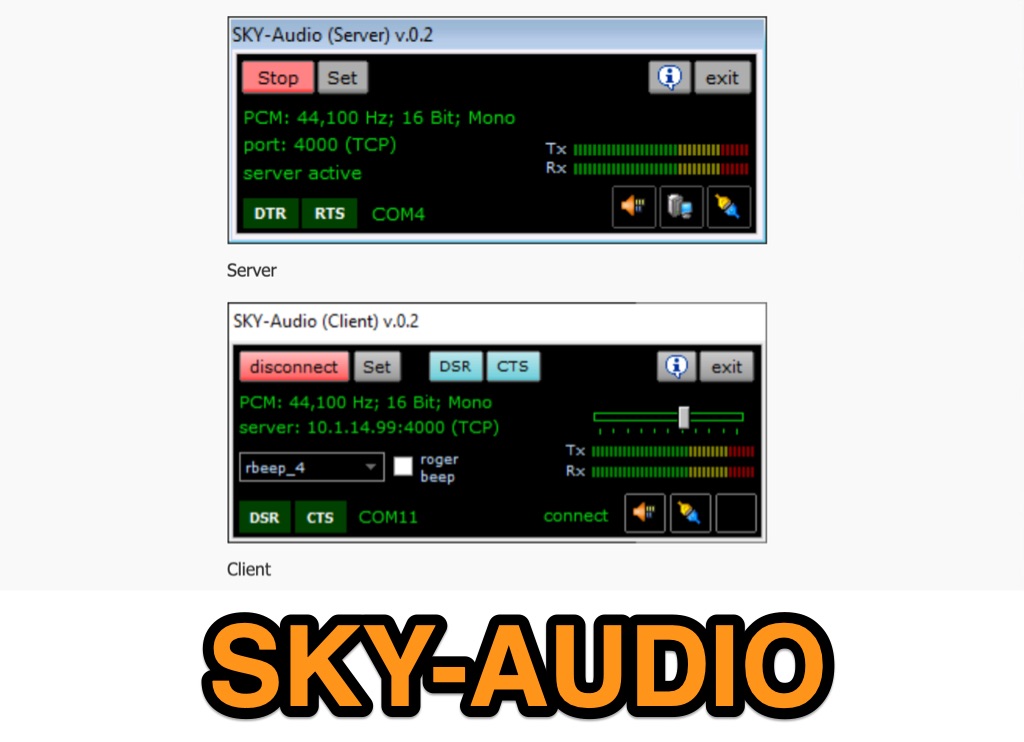 SKY Audio is a duplex remote audio software for Windows, allowing two-way audio transmission between devices. Users can send and receive audio, as well as engage in PTT functionality. The program offers low audio latency and the ability to configure connection settings. The freeware software can be downloaded from the provided link.
-
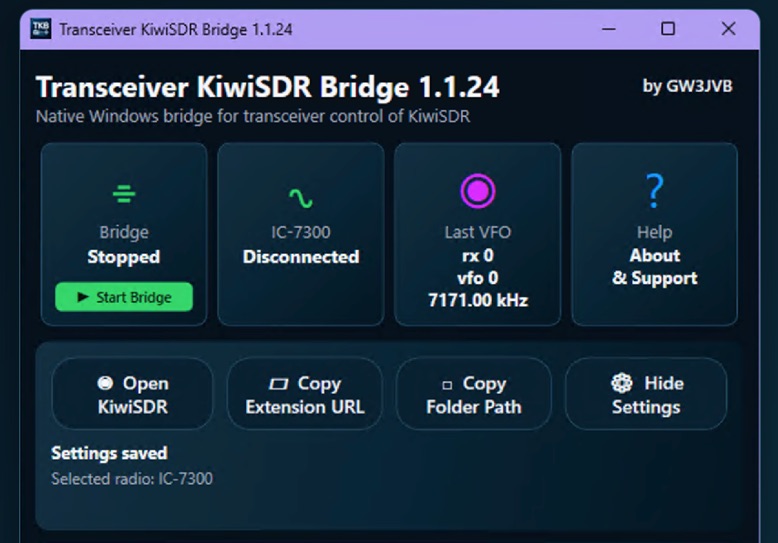 Demonstrates a practical solution for remote reception, the Transceiver-KiwiSDR Bridge, a free Windows utility by GW3JVB. This software links a local amateur radio transceiver to a remote **KiwiSDR** receiver, allowing the KiwiSDR to automatically track the transceiver's VFO frequency and mode. This capability proves invaluable for mitigating local noise, enhancing reception, or simply leveraging the superior receive capabilities of a remote station located globally. The bridge supports a diverse range of transceivers through COM port/CAT connections or **TCI** over a network. Specific compatibility extends to popular models like the Icom IC-7300, systems utilizing the TCI Protocol (such as Thetis, Expert Electronics, Apache Labs ANAN, and Hermes Lite 2), and many radios supported by Hamlib. Experimental Yaesu CAT options are also included, broadening its utility for various shack configurations. Key features encompass automatic mode changes, updates to RX filter bandwidth, and even IC-7300 PBT/filter adjustments. The application integrates a browser extension for Chrome, Brave, and Microsoft Edge, and offers an optional KiwiSDR audio mute during local transmission, ensuring a seamless operating experience. The compact view keeps the interface unobtrusive, with full settings readily accessible.
-
 SZ1A's ongoing improvements are bolstered by donations, sponsorships, and volunteer work. Contributing to this collective effort, specialized lightning protection equipment, including ABB’s three-phase lightning arrestor and Crystal Audio's surge protection sockets, was installed. These enhancements safeguard sensitive electronics and reduce RF interference, highlighting the importance of community support in achieving the station's goals.
-
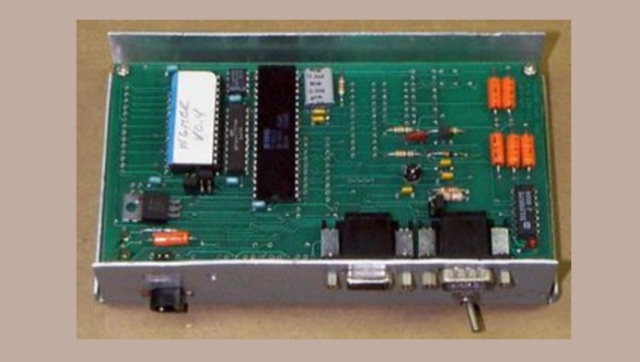 When it is time for you to hide a Hidden Transmitter there are several ways to control the transmission timing and audio of the transmitter.The most basic of these is of course the manual method of hiding in the bushes with your trusty HT and talking on and off for several hours.
-
 Ham radio communication in the VHF and UHF bands, which was previously dominated by analog Frequency Modulation (FM), is increasingly incorporating Digital Voice (DV) modes. DV transceivers digitize audio and offer benefits like as signal integrity, encoded caller ID, and bandwidth savings. Today D-STAR, DMR and Yaesu System Fusion (YSF) are popular DV formats, each with its own set of features but mainly incompatible with the others. Internet access with Voice Over Internet Protocol (VoIP) expands DV communication worldwide. Repeaters and personal hotspots expand DV capabilities, enabling seamless worldwide connections. However, implementing DV frequently necessitates learning new technologies and negotiating network complexity.
-
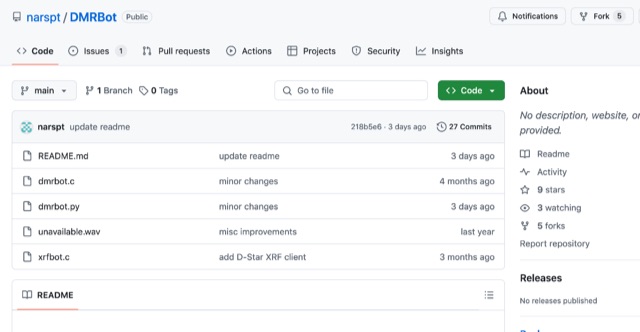 This software connects to a DMR master using the MMDVM protocol, enabling a ChatGPT-powered AI bot for voice interaction. It comprises a main program (a DMR/D-Star client handling audio via AMBEServer) and a Python script for audio processing via APIs. OpenAI Whisper handles speech recognition, while Google Translate powers text-to-speech, supporting multilingual interaction. Clear, polite questions improve recognition. If silent for over one second, the bot provides local weather, with forecasts available on request. English performs best for recognition accuracy.
-
 Amateur Television (ATV) is a ham radio technology that transmits and receives broadcast-quality video and audio. It utilizes existing standards for commercial television and can be used for various purposes including experimentation, entertainment, and public service events. ATV signals can be relayed over long distances using repeaters and are capable of transmitting live video from locations like the International Space Station. The article explores how to get started with ATV, highlighting its ease of use and suitability for beginners in ham radio. The future of ATV appears promising with advancements in digital and narrowband transmission techniques.
-
 Make an otherwise fine radio even better, change one resistor and one capacitor in the audio section
-
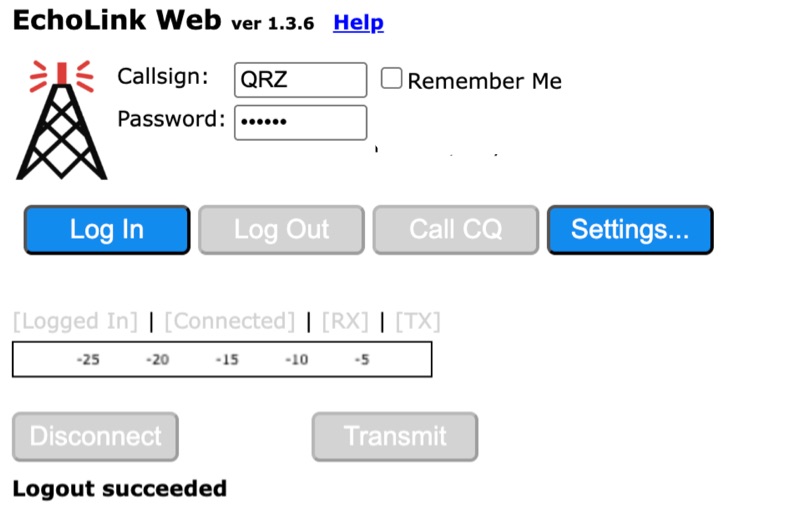 Connecting to the global *EchoLink* network via a web browser simplifies internet linking for licensed amateur radio operators. This web application provides a direct interface, eliminating the need for client software installation. Users can log in with their validated callsign and password to access the system, facilitating contacts with other stations, repeaters, and conferences worldwide, much like traditional VoIP applications but tailored for amateur radio. The interface offers essential controls for managing connections, including selecting specific stations or conferences from a dropdown list, initiating a connection, and disconnecting. Features such as a 'Call CQ' button allow users to signal their availability for a contact, while options for low bandwidth operation and accepting incoming connections optimize performance and accessibility. Audio device selection ensures proper microphone and speaker integration with the web client. Validation of an amateur radio license is a prerequisite for full access, ensuring that only authorized operators utilize the network. The system prompts unvalidated users to provide an email address and password to begin the validation process, which typically involves submitting proof of license. This free service extends the reach of amateur radio communications globally, bridging geographical distances through internet connectivity.
-
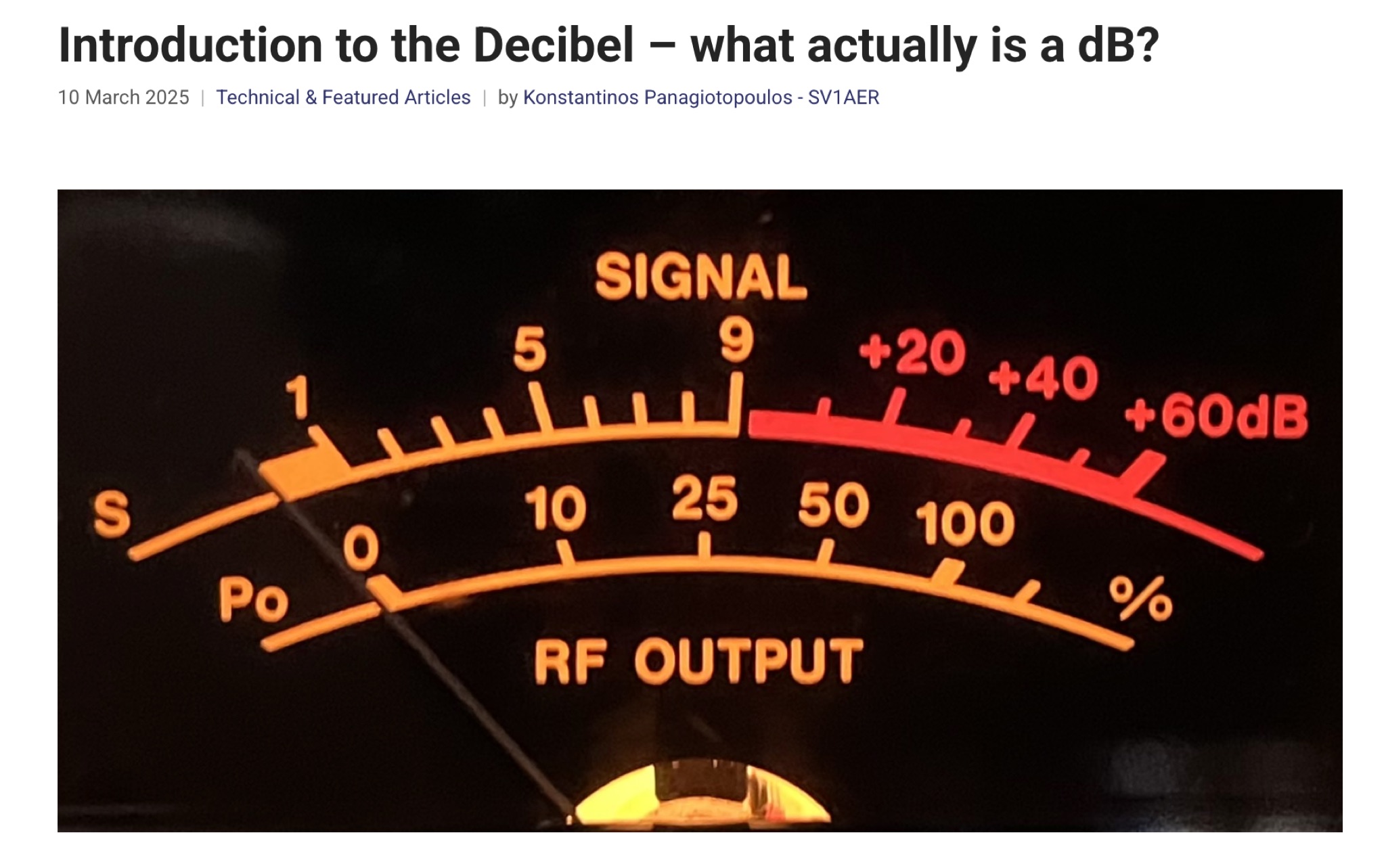 This article provides a comprehensive introduction to the decibel (dB), its logarithmic nature, and its applications in power, voltage, and antenna gain calculations. It explains how dB simplifies comparisons in electronics, telecommunications, and audio perception. The author clarifies key mathematical concepts, including power ratios, voltage doubling, and absolute levels like dBm and dBV. The discussion on S-units and antenna system gain is particularly relevant for radio amateurs. Overall, this is an informative and well-structured guide to understanding and applying decibels in technical fields.
-
 MyWaveRecorder is a lightweight utility designed to capture and save any audio played on your computer. Whether it’s sounds generated by programs like CW_PLAYER, WX_PLAYER, MyWaveRecorder itself, your microphone, your sound card, or even streaming audio from the internet, this tool records them all with a single click.
-
 Morse News reads RSS/Atom messages and translates them into Morse code, playable as CW radio tones, spark-gap sounds, telegraph clicks, or via a physical telegraph sounder. It supports Farnsworth effects, natural American Morse timing, and realistic audio enhancements. Twitter integration allows user-generated Morse messages.
-
 The NRC Archives feature past DX News and DX Audio Service publications, offering a glimpse into the "Heyday" of BCB DX. Subscribe to DX News for essential information, 20 bulletins annually, and membership privileges with discounted NRC products. New visitors can download a free sample copy of DX News
-
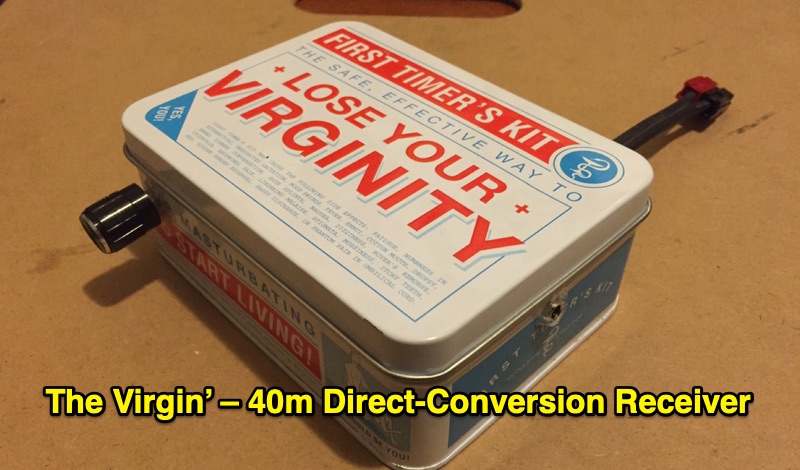 Demonstrates the construction of 'The Virgin', a **direct-conversion receiver** specifically designed for the 40m amateur radio band. This project, completed in February 2016, features a fixed operating frequency determined by a crystal oscillator, requiring a physical crystal change to alter the reception frequency. The design incorporates two integrated circuits and a power regulator, emphasizing simplicity with a single control knob. The author details the initial design, subsequent modifications to the front end, and troubleshooting steps addressing common issues like audio motorboating and power supply instability. The resource presents the final design of the receiver, reflecting the author's first experience building such a unit between December 2015 and February 2016. It offers practical insights into basic circuit construction and the iterative process of refining a homebrew radio project. The content is particularly relevant for those interested in fundamental receiver principles and hands-on **QRP** transceiver building.
-
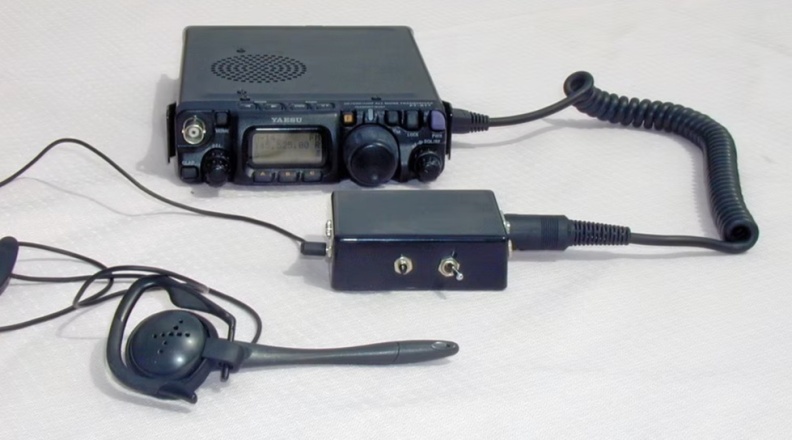 This online project documentation details the construction of a hands-free microphone interface unit designed for _mobile_ amateur radio operation. The curriculum covers the integration of electret microphone elements with amateur radio transceivers, specifically addressing **VHF** band communication. It outlines the circuitry for a switch box that provides an interface between various radio models and microphone types. The guide specifies the inclusion of a **1750 Hz** tone-burst generator for accessing amateur radio repeaters, an operational protocol for many VHF systems. Design considerations include the reduction of ambient vehicle noise through an adjustable audio input level control. The project provides schematics and wiring diagrams for connecting the interface unit to specific amateur radio transceivers, including the Yaesu FT-817. It addresses the selection and adaptation of readily available electret microphone and earpiece assemblies, initially sourced from mobile phone accessories, and later from dedicated headset units. The design incorporates a control mechanism for radio functions, enabling hands-free operation during _mobile_ excursions. Circuit details cover power supply considerations for the electret microphone and signal routing for both transmit audio and received audio monitoring. The documentation specifies component selection for the switch box, ensuring compatibility with common amateur radio microphone input impedances and output levels. This includes considerations for PTT line switching and audio path isolation. DXZone Focus: Online Project Documentation | Hands-Free Mobile Microphone Interface | Electret Microphone Integration | 1750 Hz Tone-Burst Generation
-
 The ICOM IC-R75, introduced in 1999, operates on 13.6 Volts DC and measures 241 by 94 by 229 mm. Its coverage spans from 30 kHz to 60 MHz, making it a versatile receiver for various bands. The review details available accessories, including optional filters and the **UT-106 DSP module**, which significantly enhances signal processing capabilities. Performance comparisons are drawn against other notable receivers such as the Drake R8B and earlier ICOM models, providing context for its audio quality and overall functionality. User feedback is integrated, offering practical insights into its daily operation and reception characteristics across the spectrum. This analysis offers an in-depth look at the IC-R75's technical capabilities and features, serving as a valuable reference for operators interested in this **legacy receiver**.
-
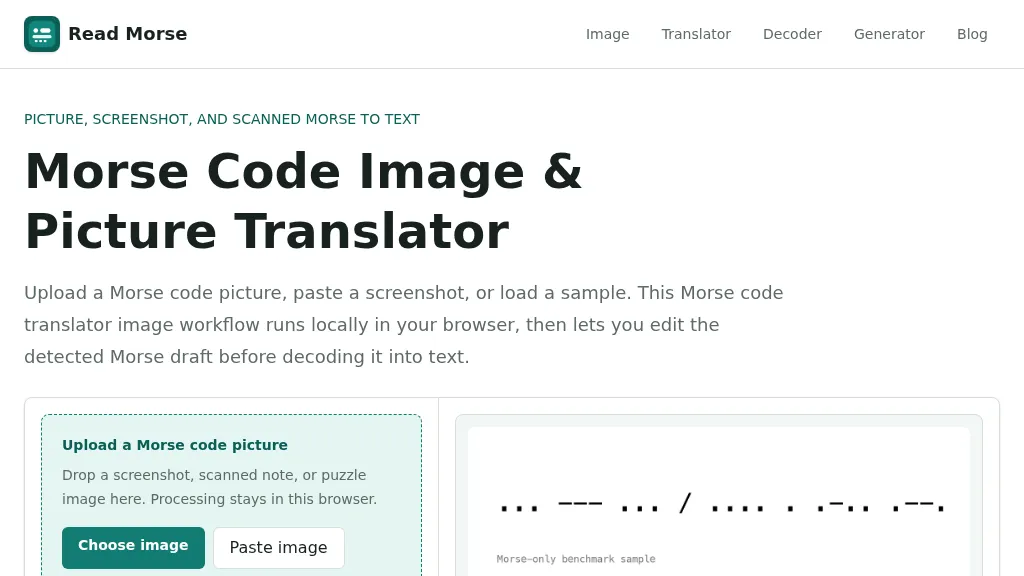 Decoding Morse code from visual sources like screenshots, scanned documents, or photographs presents unique challenges compared to audio-based reception. This web-based utility addresses these by allowing users to upload or paste images containing Morse code, which is then processed entirely within the user's browser, ensuring privacy. The tool identifies individual marks, classifying them as dots or dashes, and estimates letter and word spacing to generate an editable Morse draft. Users can refine the detection by utilizing controls for cropping, rotation, contrast boosting, and manual threshold adjustment, which are crucial for overcoming issues like low contrast, skewed baselines, or extraneous graphics. After the initial detection, the generated Morse draft, such as _... --- ... / .... . .-.. .--?_, can be manually corrected before being translated into plain text. The system provides confidence indicators and warnings to highlight potential ambiguities in the decoded output, prompting users to review and make necessary edits. This specialized approach differs from general OCR engines by focusing on the distinct patterns of Morse marks and gaps, rather than attempting to read standard alphanumeric characters. The tool supports common image formats like PNG, JPG, JPEG, and WebP, and includes sample images for benchmarking its performance, demonstrating its capability to handle various image qualities and complexities.
-
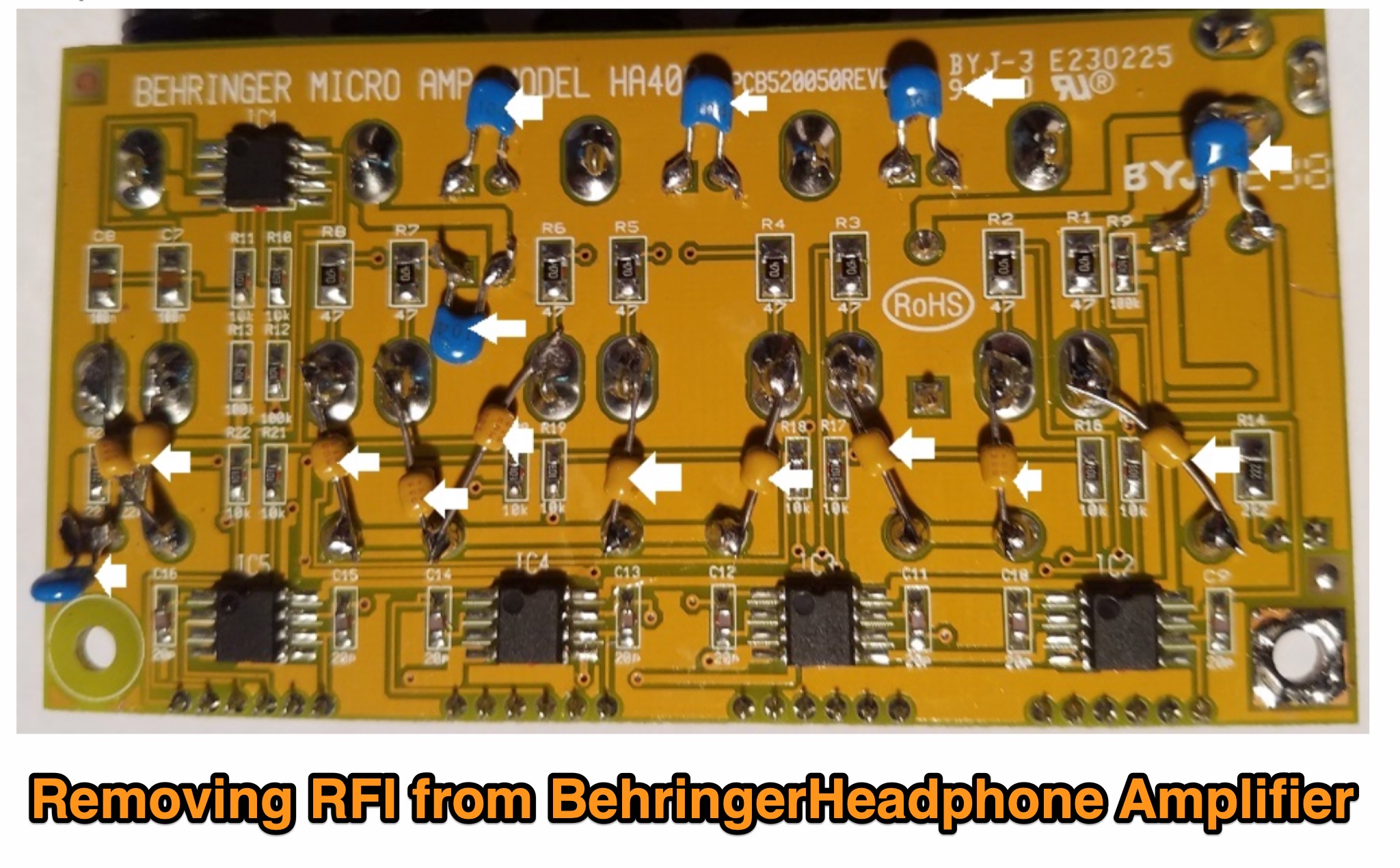 Learn how to eliminate RF interference from your Behringer HA400 headphone amplifier for a better listening experience. Discover the simple modifications needed to prevent distortion caused by RF in your audio setup. Follow the step-by-step instructions provided by WB5NHL Ham Radio to improve the performance of your headphone amplifier in ham radio activities.
-
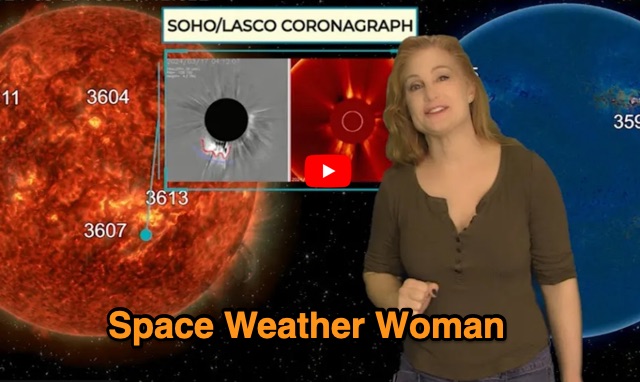 Website dedicated to weekly space weather forecast and updates on current solar activity. Dr Skov provides video forecasts and weekly audio forecasts
-
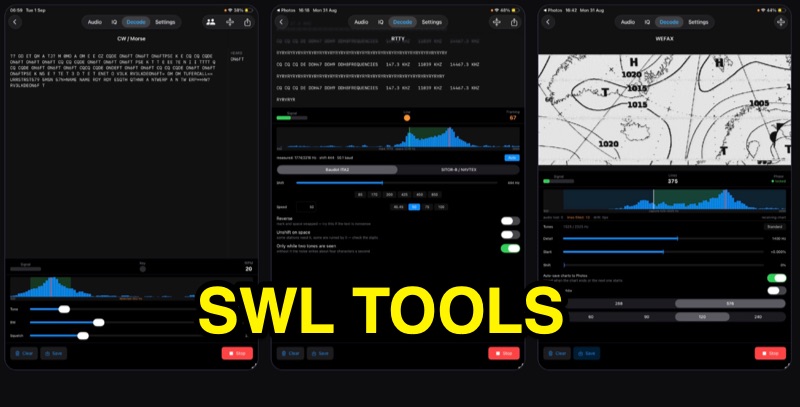 SWLTools, an iOS application for iPhone and iPad running iOS 17+, provides real-time decoding of various digital modes. It automatically locks onto CW tones, measures sending speed, and collects callsigns, distinguishing valid entries from misreads for a reliable log. For RTTY and SITOR-B, the app allows users to set shift and speed, then automatically tunes to the two tones for text reception, supporting marine bulletins, press agencies, and NAVTEX. The application also decodes WEFAX, building charts line by line for direct saving to the photo library, and processes ACARS aircraft messages, including CRC checks for data integrity and mapping of position reports. Beyond decoding, SWLTools integrates a GPU-accelerated FFT spectrum analyzer, a scrolling waterfall display with frequency cursors, and an adjustable FIR bandpass filter to isolate signals. It supports IQ signal analysis from receivers via two-channel audio interfaces, correcting mirror images. Flexible audio input options include the built-in microphone, USB audio dongles, and Bluetooth sources, with diagnostics for audio routing and buffer status. The app records audio, plays it back, and converts recordings into shareable videos, while decoded texts and charts are also savable and shareable, with all timestamps in UTC.
-
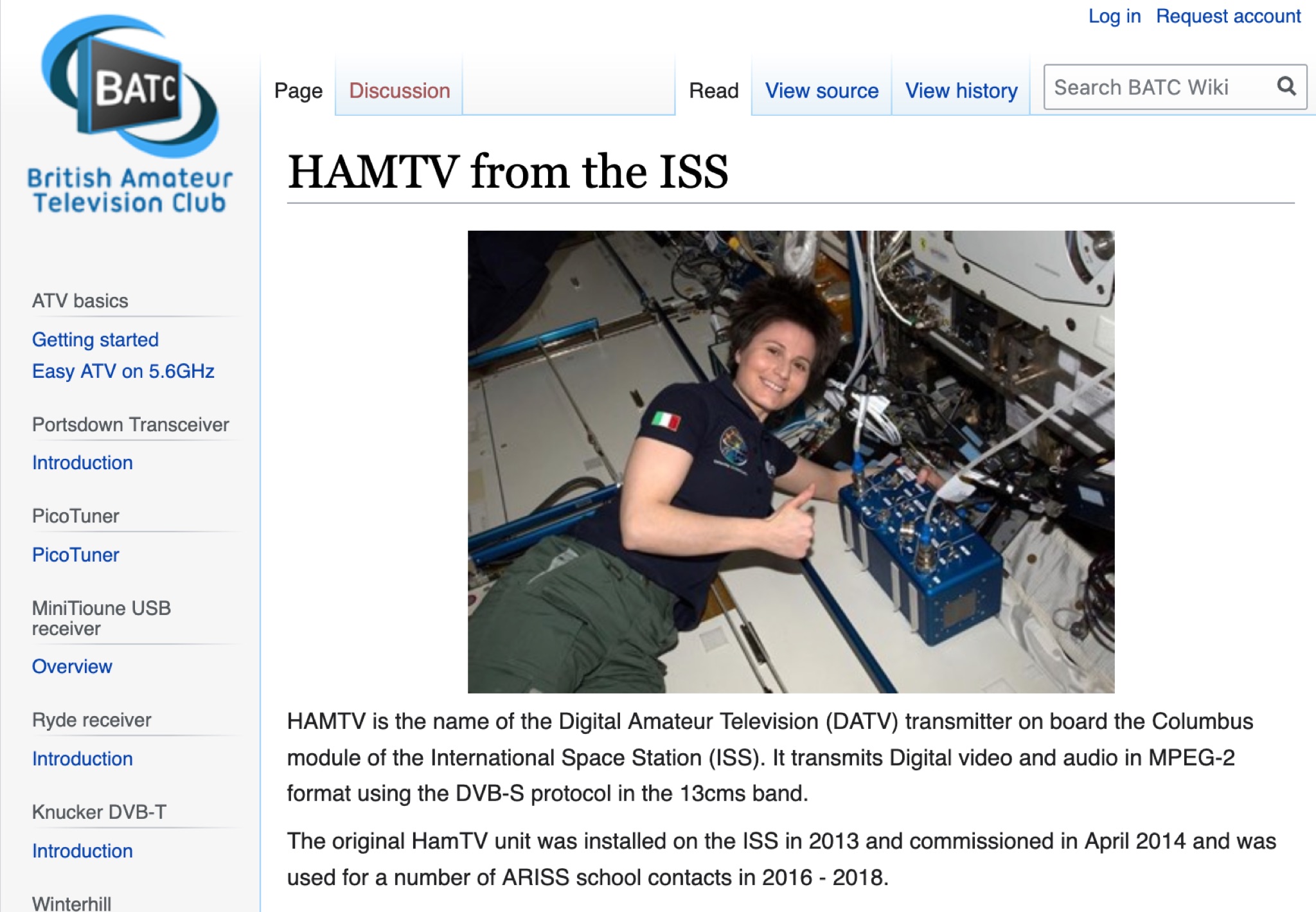 Learn about the HAMTV Digital Amateur Television (DATV) transmitter on the International Space Station (ISS), transmitting video and audio in MPEG-2 format using the DVB-S protocol. Discover its history, installations, failures, and repairs, as well as the current status and live video feed. Explore the technical details and challenges of the HAMTV transmitter, including power output, polarization, and antenna location. Find recordings of previous transmissions and understand the potential signal reflections caused by various ISS components. Stay updated on the latest developments and activities related to HAMTV from the ISS.
-
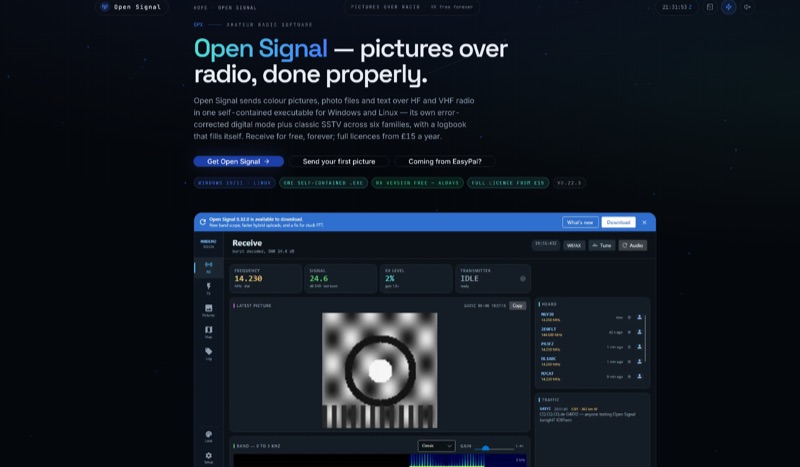 Open Signal, a software application for Windows 10/11 and 64-bit Linux, facilitates the transmission of color pictures, photo files, and text over HF and VHF amateur radio bands. It integrates its own error-corrected OFDM digital picture mode, delivering pixel-exact images in under a minute, with classic analog SSTV across six families: Martin, Scottie, Robot, Wraase, PD, and MMSSTV's MP/MR, featuring automatic VIS mode detection on receive. The application offers four distinct sending methods, including byte-exact JPEG transfer, a hybrid mode utilizing internet for full quality with a short RF link, and its proprietary digital waveform. This self-contained executable eliminates the need for external software like FLDIGI, Hamlib, or virtual audio cables, simplifying setup. It includes a self-filling logbook that integrates with Wavelog/Cloudlog, eQSL, and provides UDP ADIF broadcast. Built-in spotting features include PSK Reporter, DX cluster announcements, and APRS-IS position beacons. The receive-only version is permanently free, while a full license, enabling transmit capabilities and access to the live network, is available for an annual or lifetime fee. The software is actively maintained, unlike EasyPal, which has not seen updates since 2014.
-
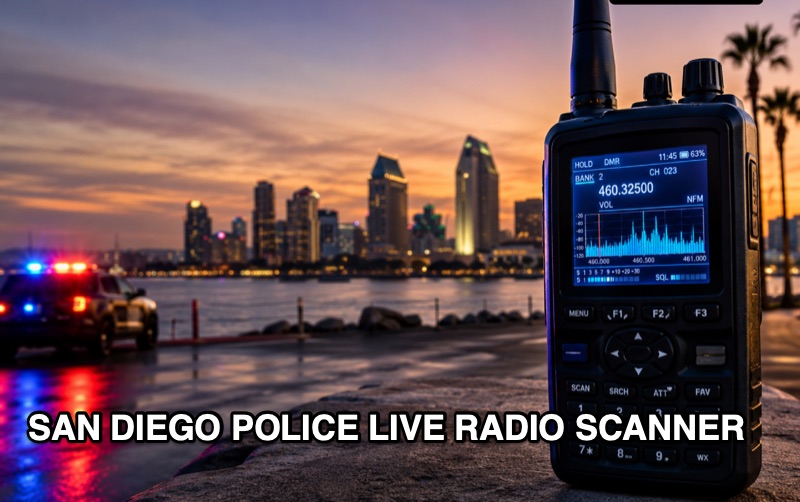 Monitoring public safety communications, particularly fire department dispatch, presents a unique challenge as agencies increasingly move towards encrypted systems. This Broadcastify feed, originating from a _BCD396XT_ scanner situated in northern San Diego City, provides real-time audio for the San Diego City Fire Department. While it previously included police dispatch, those transmissions are now fully encrypted, a common trend impacting scanner enthusiasts and emergency services observers alike. The setup utilizes a Windows server running _Freescan_ and _RemoteFS_ for remote control, ensuring consistent operation and clear audio via a ground loop isolator. With a peak of 8,785 listeners in the last 24 hours, the feed demonstrates significant interest in local emergency traffic. Alpha tags, indicating the current channel, are generally available for premium users, enhancing situational awareness for listeners. Feed archives are maintained in 30-minute segments, allowing for review of past incidents and operational patterns, a valuable feature for those studying emergency response or simply keeping informed about local events.
-
 Andrew Roos (ZS6AA) details his practical approach to building a Single Operator Two Radio contest station within suburban constraints. The article explains how he leveraged a Force-12 C-31XR triband beam's unique separate feed arrangement to operate on two bands simultaneously. Using band-pass filters and an antenna switch, he achieved sufficient isolation between bands without requiring multiple towers. The setup includes automatic band selection, audio switching, and computer control. Testing during the 2007 CQ WPX CW contest confirmed the system's effectiveness, demonstrating that competitive SO2R operation is achievable with limited space and budget.
-
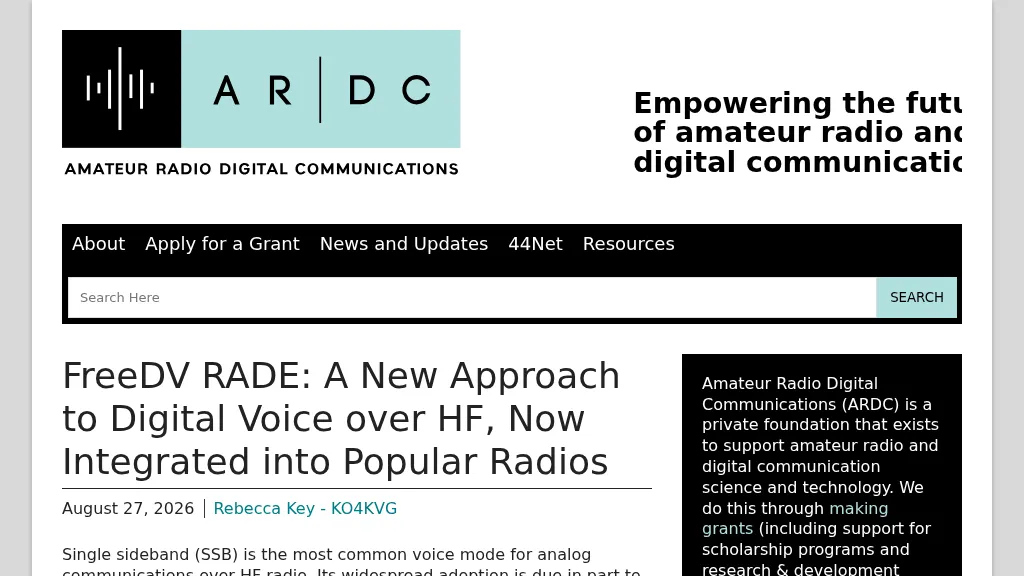 Demonstrates _FreeDV RADE_, an open-source digital voice mode for HF, which combines machine learning with classical Digital Signal Processing (DSP) to achieve improved speech quality and spectral efficiency. Released in June 2025 by ARDC grantee FreeDV, RADE operates at Signal-to-Noise Ratios (SNRs) as low as -2 dB and occupies approximately 1.5 kHz of bandwidth, half that of a typical SSB signal, while transmitting about 8 kHz of voice audio. The mode also features an optimized Peak-to-Average Power Ratio (PAPR) for efficient power amplifier use, reducing heat and consumption. Users, such as _VK3TPM_, report significantly improved listening ease compared to analog modes, particularly in high HF noise environments, making it easier to conduct nets across various Australian states. The mode's integration into popular radios like the _FlexRadio 6000_ series allows direct operation without external computers. A C library for RADE is available, facilitating broader integration into other radios and SDR programs, with development continuing on FreeDV RADE v2 to further narrow bandwidth below 1 kHz.
-
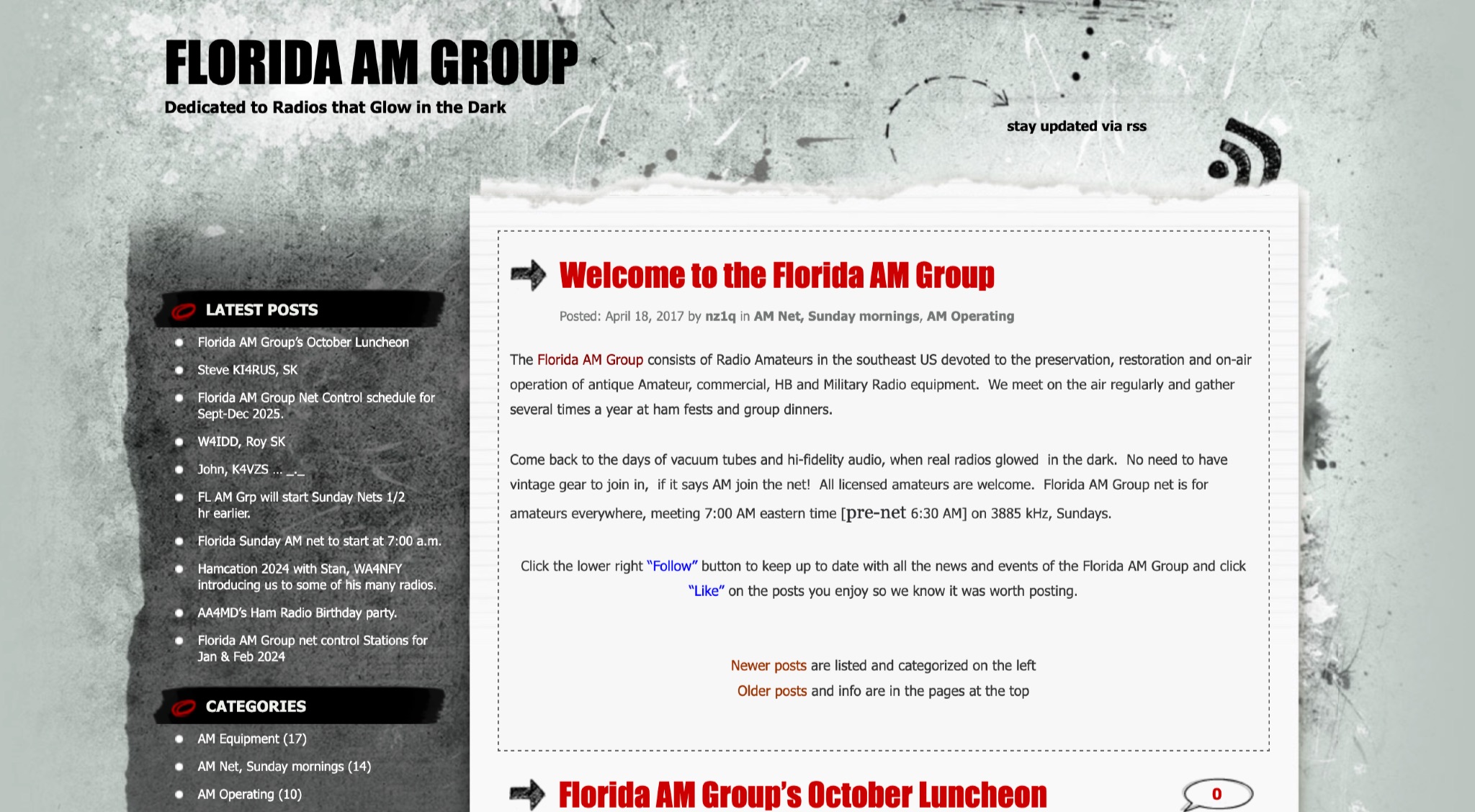 The Florida AM Group operates a weekly Amplitude Modulation (AM) net on 3885 kHz every Sunday morning, with a pre-net starting at 6:30 AM Eastern Time and the formal net at 7:00 AM. This group focuses on the preservation, restoration, and on-air operation of antique Amateur, commercial, homebrew (HB), and Military Radio equipment, emphasizing **Amplitude Modulation** (AM) mode. Participants are encouraged to use AM mode, regardless of whether they possess vintage gear, fostering a community around classic radio operation and the distinctive high-fidelity audio associated with **vacuum tube** equipment. The net utilizes NetLogger software for check-ins and round table management, providing a structured environment for participants. The group regularly publishes net control schedules, listing operators like NZ1Q, K1HH, and W3XM, and organizes various in-person events such as Hamcation gatherings, luncheons, and boat anchor swap meets. These activities facilitate eyeball QSOs and equipment exchanges, reinforcing the community aspect beyond on-air operations. The Florida AM Group also provides contact information for net control volunteers and shares news, including SK (Silent Key) announcements for members like Steve KI4RUS and Roy W4IDD, highlighting the group's long-standing camaraderie and shared passion for AM radio.
-
 The article details how to eliminate Radio Frequency Interference (RFI) from the Behringer HA400 headphone amplifier when used in ham radio setups. While the HA400 is praised for its quality and affordability, it was not designed for RF environments, causing distortion when used with a 500-watt radio station. Initial attempts using clamp-on ferrites on the headphone and power cables only partially resolved the issue. Upon opening the unit, the author discovered the circuit lacked RF bypassing components. The solution involved installing 0.1μF (104) capacitors at key points in the circuit: the power supply input, audio circuits, and op amp inputs. This modification, combined with the external ferrites, completely eliminated the RFI problem, making the unit suitable for ham radio operations.
-
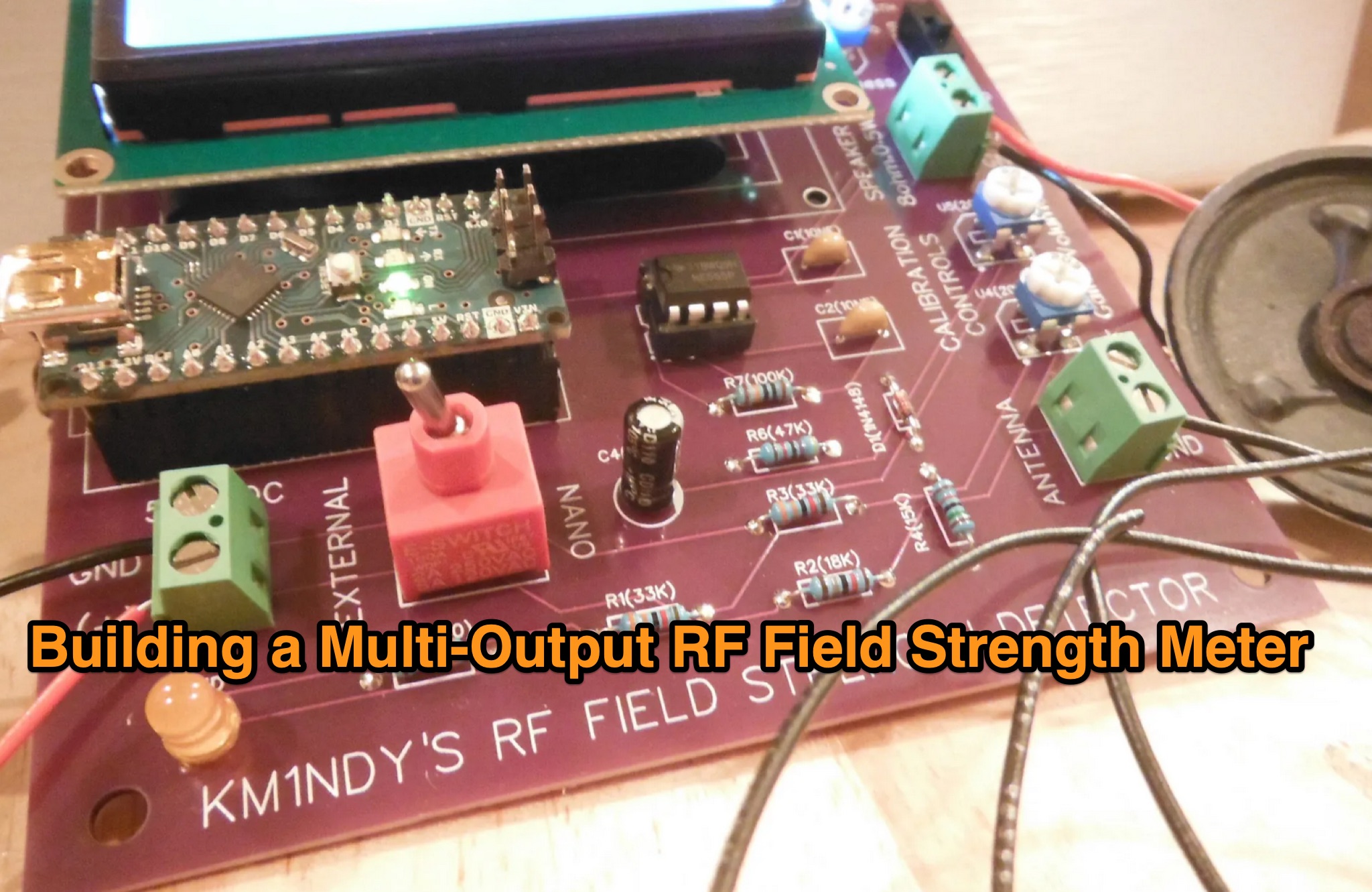 This article describes a DIY RF field strength meter project inspired by VK3YE's "The Squeakie" design. The device, built around a 555 timer IC and a 1N4148 diode, converts RF signal strength into audible tones with proportional pitch. The author enhanced the original design by adding volume control, LED indication, and digital readout capabilities using an Arduino Nano and LCD display. The completed project functions as a versatile RF detection tool, suitable for antenna testing and fox hunting, while offering multiple output methods: audio, visual, and digital measurement display.
-
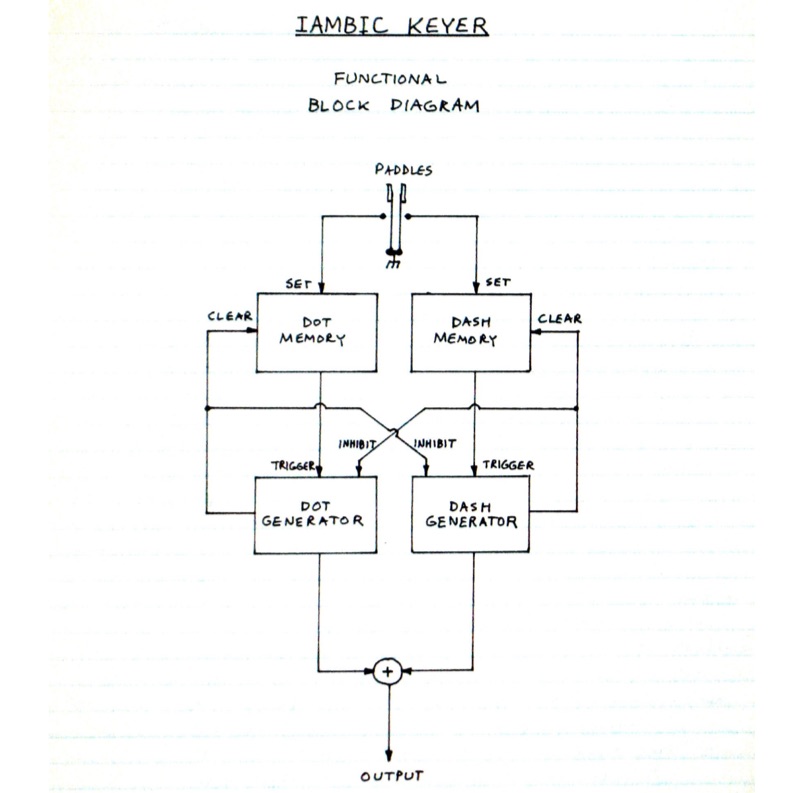 VE3SMA's document addresses several operational issues encountered with the Yaesu FTDX10 HF transceiver, offering practical solutions and technical explanations. It specifically tackles the high-frequency headphone hiss during CW operation with narrow filters, providing a schematic for a homebrew audio filter to mitigate this. The resource also investigates the FTDX10's behavior of transmitting CW via USB even when BK-IN is set to OFF, particularly when using N1MM+ contest software, and suggests tuning outside ham bands as a workaround. Furthermore, the document notes the rapid disappearance of band and mode selection screens, acknowledging a December 2021 software update that extended their display times. The analysis extends to audio harmonics generated in digital modes like FT8 and JS8CALL when using USB audio input, attributing the issue to unattenuated USB CODEC output and a low PRESET RPORT GAIN value. VE3SMA proposes a solution involving a higher RPORT GAIN setting (between 30 and 70) and a lower transmit audio level from the computer, demonstrating how to achieve a clean signal using the FTDX10's built-in spectrum scope. The document also discusses unstable power output in FT4/FT8 modes when driving an amplifier, recommending the use of Fake It or Rig Split modes in WSJT-X and operating with some ALC action. Finally, it explores methods for achieving a low-power continuous carrier for adjusting external antenna tuners, offering various techniques depending on the operating mode.
-
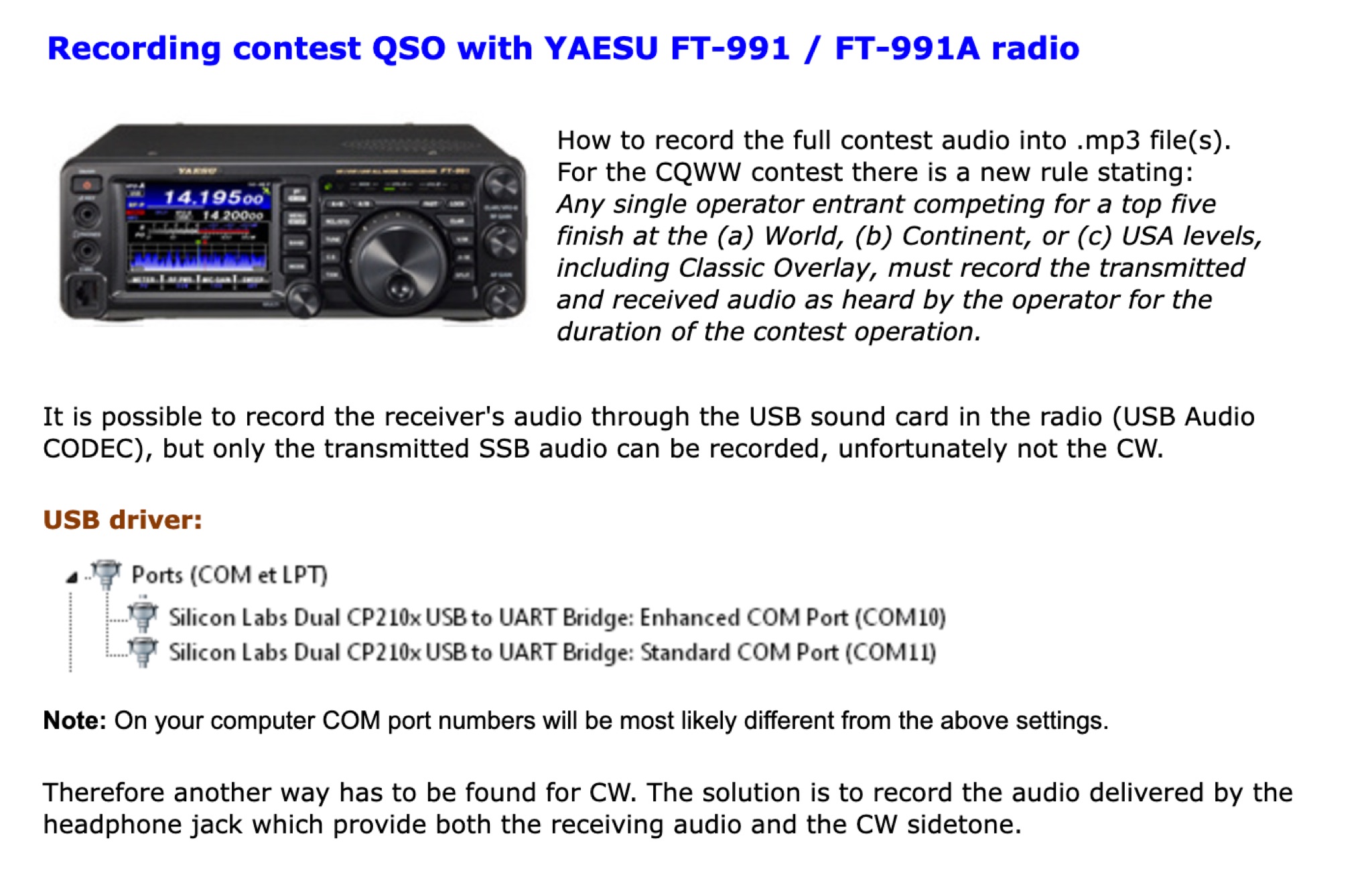 How to record the full contest audio into .mp3 file(s). t is possible to record the receiver's audio through the USB sound card in the radio (USB Audio CODEC), but only the transmitted SSB audio can be recorded, unfortunately not the CW.
-
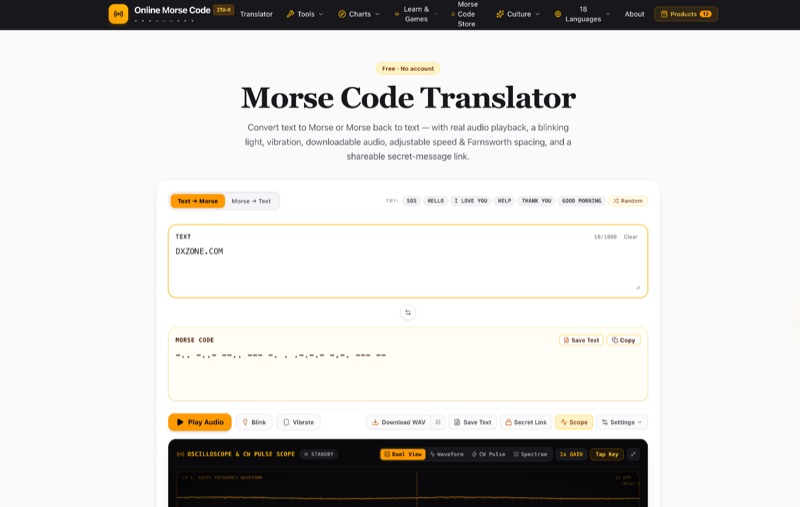 The Online Morse Code Translator provides real-time conversion of plain text to Morse code and Morse code back to text, strictly adhering to the ITU-R M.1677-1 international standard. Users can adjust the audio playback speed up to 30+ WPM, customize the tone pitch from 300 Hz to 1,000 Hz, and utilize Farnsworth spacing for effective learning. The platform offers versatile output options, including authentic sine tone or telegraph sounder audio, visual light-flash simulation, and tactile vibration for mobile devices, expanding its utility beyond basic translation. Beyond direct text-to-Morse and Morse-to-text functions, the tool integrates specialized decoders for analyzing Morse code from audio recordings and images. It also allows users to download generated Morse audio as WAV files for offline practice or create shareable secret-message links. The resource details the translator's client-side mechanism, operational modes, and fundamental principles of Morse code. Comprehensive sections cover Morse code history, various international and historical code variants like American Morse and Wabun Code, and real-world applications in amateur radio, aviation, and assistive technology. An extensive FAQ addresses common queries regarding timing rules (e.g., dot = 1 unit, dash = 3 units), emergency signaling (SOS), and learning methodologies.
-
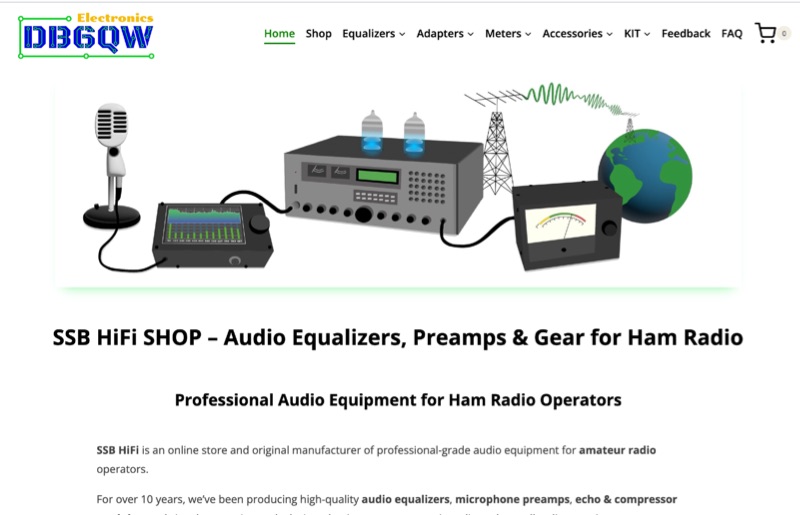 Optimizing on-air audio for SSB, DXing, and contesting operations is addressed through a range of specialized audio processing equipment. The offerings include multi-band equalizers, specifically 5-band, 8-band, 10-band, and 12-band units, some integrated with features such as compressors, echo effects, noise gates, and phase rotation capabilities. These devices are engineered to interface with common amateur radio transceivers, with explicit compatibility noted for models like the Yaesu FT-DX10, FT-DX101D, FT-1000MP, FT-DX5000, Collins HF-380, and Flex 6300, alongside analog S/P meters for Icom rigs. The product line focuses on enhancing microphone audio characteristics, supporting XLR dynamic microphones for improved signal clarity and presence. The manufacturer, DB6QW Electronics, emphasizes direct support and a 100% manufacturer's warranty, reflecting confidence in product quality and operational reliability. This resource details specific audio processing tools designed to refine the transmitted audio signal, providing operators with granular control over their voice characteristics for competitive and casual amateur radio communications.
-
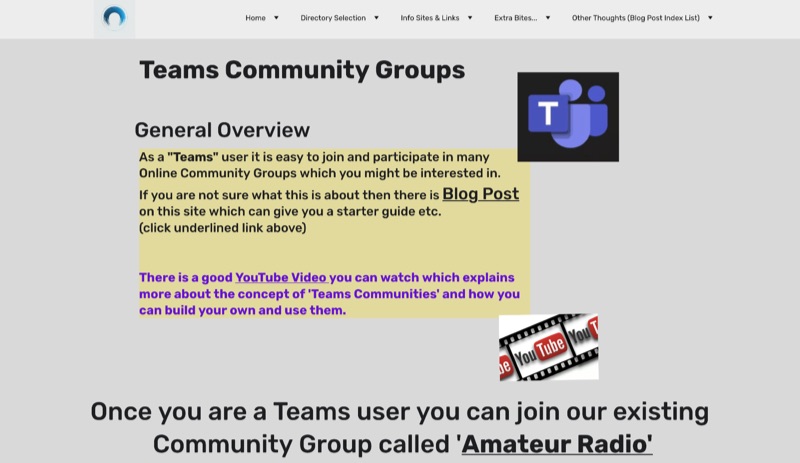 The **Amateur Radio** community on Microsoft Teams provides a platform for hams to connect through chat and video calls. It features five distinct channels, facilitating structured discussions on various topics, akin to a community forum without advertisements. Users can schedule events for group video chats or engage in one-on-one calls, with user status indicators showing availability. The platform supports sharing messages, files, and both video and audio communications within a defined group. An open video chat room is also available, accessible even to non-community members, allowing broader participation. The resource details how to join the existing 'Amateur Radio' community group and provides links to a blog post and a YouTube video for new users to understand Teams Communities.
-
 Gordon West Radio School provides comprehensive study materials including books, audio courses, and practice exams. "Gordo" is renowned for his ability to explain complex concepts in memorable ways, often using humor and mnemonics. His materials include insider tips from his decades of teaching experience and administering exams. The audio courses are especially popular among commuters who can study while driving. The site offers package deals combining different media formats for various learning styles.
-
 Home page of CE3SAD with information on his activity and progress expecially on the six meters band with audio recordings of some 50 MHz QSOs.
-
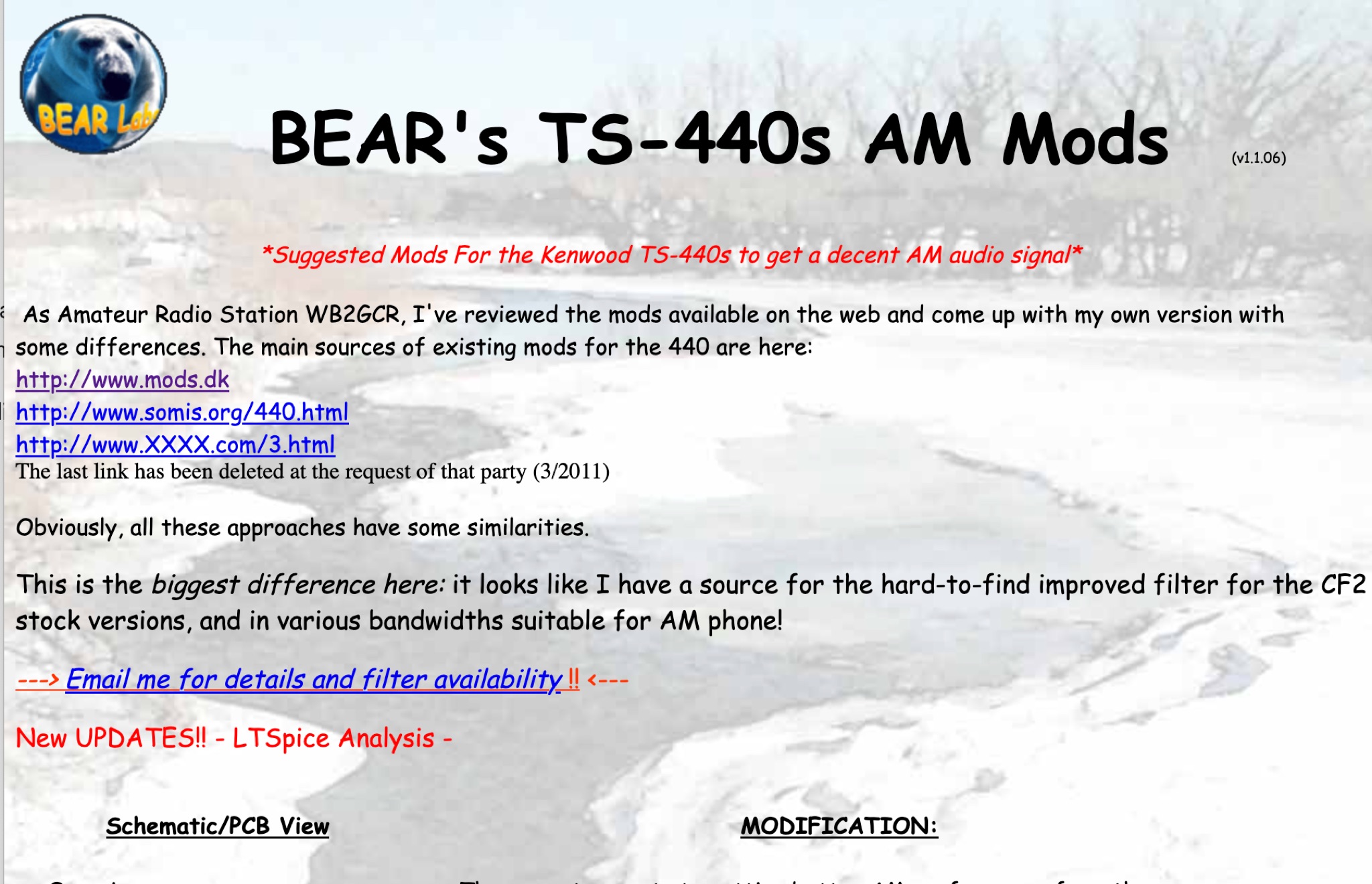 The page provides details on an improved filter for the TS440 CF2 slot with better selectivity and shape factor than stock versions. It includes information on LTSpice Analysis, essential changes to capacitors, and suggestions for optimizing audio bandwidth for AM phone use. The content is geared towards hams or amateur radio operators looking to enhance their TS440 transceiver performance with filter upgrades and capacitor adjustments.
-
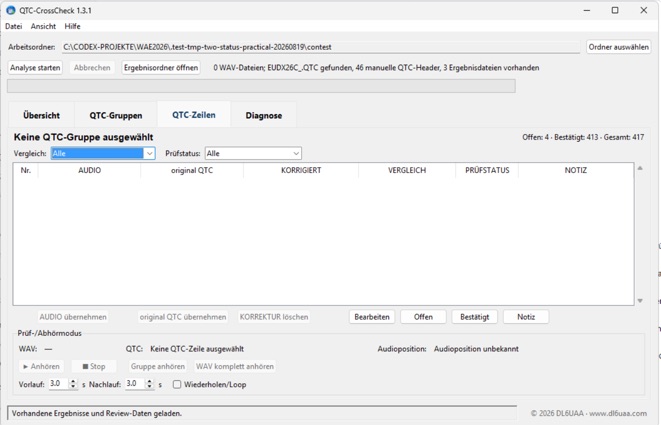 QTC-CrossCheck 1.5.0 is a free offline Windows tool for reviewing WAEDC CW QTC traffic. It analyzes QTC groups from local WAV recordings and supports comparison with UCXLog QTC data. Integrated audio playback helps verify individual QTC rows and resolve discrepancies. The portable application requires no installation or internet connection. Download the Windows ZIP archive and extract it fully before running QTC-CrossCheck.exe. A SHA-256 checksum is provided for download verification.