Search results
Query: graphics
Links: 20 | Categories: 1
Categories
-
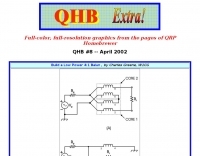 Build a Low Power 4:1 Balun , by Charles Greene, W1CG with full-color, full-resolution graphics from the pages of QRP Homebrewer
 -
-
 HourWorld is a program with rich graphics that can show you what time it is in a certain part of the world, and well as demonstrate what is actually looks like over the globe.
 -
-
 FindU.com operates as a robust database archiving **APRS** (Automatic Packet Reporting System) data, including weather, position, telemetry, and message reports. It integrates data from both amateur radio APRS systems and the internet-based Citizen Weather Observer Program. This substantial 58 GB database is hosted on dual servers utilizing data replication, processing approximately 20 new reports per second to provide constantly updated information. The system supports various applications, such as displaying weather reports, tracking position data, and facilitating long-term vehicle tracking. A notable function involves forwarding over 100,000 near-realtime weather observations daily to the National Oceanographic and Atmospheric Administration (NOAA) for accuracy checks and use by NOAA and the National Weather Service. Additionally, it archives APRS reports from the International Space Station. Access to the database is primarily via dynamic web pages, with a comprehensive list of available CGIs detailed on a dedicated server page. While direct URL parameter editing is possible for advanced users, alternative web pages with forms simplify query submission. The platform utilizes **PNG** images for dynamic graphics, a choice made due to past GIF patent issues, ensuring broad browser compatibility.
 -
 A Study of Amateur Radio Gender Demographics. How many ham radio operators in the usa ? Estimated Number of Hams in Each State, by Gender
 -
 Simple program for ham radio Uses AX25 support built in Linux kernel, works in X11 graphics environment.
 -
 A graphics-intensive bandpass filter program based on the helical resonator.
 -
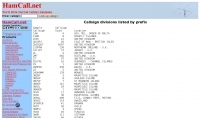 The HamCall.net database offers a detailed listing of amateur radio callsign divisions, organized by prefix, which is crucial for DXers and contesters to quickly identify the geographical origin of a station. Each entry includes a specific callsign prefix, the total count of callsigns registered under that prefix, and the associated DXCC country or entity, such as "AL9Z 43203 USA" or "3AOH9MM 237 MONACO." This structured data allows operators to rapidly ascertain the DXCC entity for a given callsign, aiding in QSL verification and award tracking. This information is particularly useful for confirming rare DX entities during contests or for logging contacts for awards like DXCC. For example, an operator hearing a "3Y0C" callsign can immediately identify it as Bouvet Island, a highly sought-after entity. The inclusion of callsign counts provides a sense of the activity level within each prefix, which can be helpful for anticipating pile-ups or assessing the likelihood of making a contact. The data presented reflects a snapshot of the HamCall database, offering practical insights into global amateur radio demographics.
 -
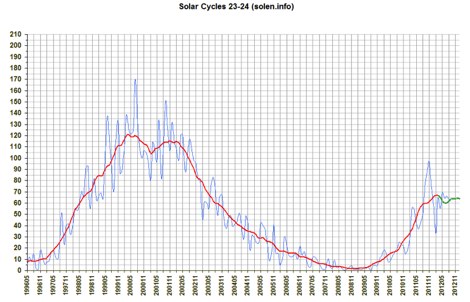 Graphics representing solar cycles 21-24. This graphs show solar activity since 1976
 -
 This graphics-intensive program designs and analyzes active quadrature ("90-degree") networks for use in SSB transmitters and receivers.
 -
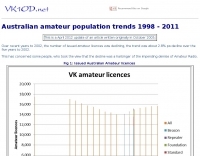 Approximately 2.8% annual decline in Australian amateur radio licenses was observed over the five years leading up to 2002, a trend that prompted further analysis of the country's amateur population. This resource examines licensing statistics and demographic shifts within the Australian amateur radio community between 1998 and 2007, utilizing available data to identify patterns in license issuance and renewal. The study focuses on **population trends** and the underlying factors contributing to changes in the number of active **amateur radio operators**. It provides insights into the health and growth trajectory of the hobby in Australia during this specific period. Understanding these demographic shifts is crucial for clubs, regulatory bodies, and equipment manufacturers to adapt strategies and foster engagement.
 -
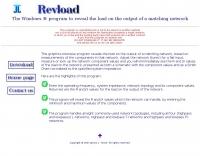 This graphics-intensive program reveals the load on the output of a matching-network, based on measurements of the components in that network. Adjust the network (tuner) for a flat input, measure or look up the network component values and you will immmediately see the R and jX values of the load on the network, presented as both a schematic with the component values and as a Smith Chart normalized to the specified system impedance.
 -
 The NCSU Student Amateur Radio Society (W4ATC StARS) is a group of men and women who practice the hobby ofamateur radio. We represent a wide range demographics, of majors, and of interests.
 -
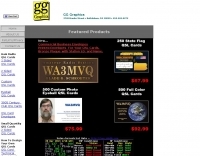 QSL card printer based in Bethlehem, PA offer QSL Card printing, Bronze Plaque with sation ID and Printed Envelopes
 -
 QSL Cards design and printing, offer free shipping and free graphic design from any quantity of photos and graphics
 -
 This resource, despite its title, does not provide information relevant to amateur radio operations or the W1BD Central Vermont Amateur Radio Club. Instead, the content focuses on commercial topics such as vinyl lettering, business signage, and brand recognition strategies. It details the application of _transfer tape_ for graphics, the importance of pre-masking in vinyl cutting, and the use of squeegees for smooth decal application. The site also discusses various types of business signs, including monument signs and awning signs, highlighting their role in attracting customers and establishing brand presence. Further sections delve into home maintenance tasks like gutter cleaning, offering advice on using power washers and the importance of safety measures when working on ladders. The content also explores strategies for building brand recognition and customer loyalty, emphasizing consistent marketing efforts and excellent customer service. It touches upon the use of custom-printed bags and digital displays, such as LED signs, for enhanced visibility and engagement. The site's articles include practical tips for kitchen renovations, such as upgrading cabinet hardware, adding pendant lighting, and repainting cabinets to achieve a fresh look without significant expense. The content is entirely unrelated to amateur radio activities, club information, or technical aspects of radio communication.
 -
 This page provides updated data and statistics about United States amateur radio operators, including historical totals, demographics, and geographic distributions. It also explains the Amateur Radio Service, highlighting its role in promoting wireless communication and technological advancements. The page is a valuable resource for hams interested in understanding the current landscape of amateur radio in the United States.
 -
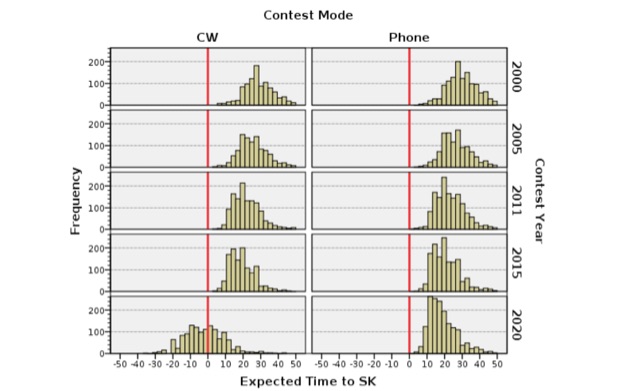 Examining the demographic shifts within amateur radio, particularly concerning **radiosport** participation, this resource analyzes survey data from the National Contest Journal (NCJ) and two regional ARRL surveys. It focuses on the relationship between age and engagement in contesting, presenting findings that suggest older amateur radio operators tend to participate in more contests annually. The author, a spatial demographer, details the methodology, including data consolidation, georeferencing, and statistical analysis performed in collaboration with Dr. Scott Wright K0MD, covering ARRL November Sweepstakes participants from 2000 to 2020. The analysis also addresses the limitations inherent in using voluntary response samples rather than random samples, which may influence the generalizability of the results. Furthermore, the resource investigates the preferred sources of contest information among different age groups, noting that older contesters frequently rely on traditional publications like the NCJ, while younger participants show a preference for online platforms. This demographic review provides insights into the evolving landscape of **amateur radio contesting** and the generational differences in information consumption.
 -
 A versatile digital VFO design utilizing the Silicon Labs Si5351a oscillator chip and Nokia 5110/3310 graphics LCD display, operating from 1-160MHz with dual VFO capability. This microcontroller-based system, powered by an ATmega328 processor, features rotary encoder tuning, selectable step sizes, RIT control, and comprehensive band memory functions. Drawing less than 40mA at 3.3V, it significantly improves upon previous DDS designs' power consumption while offering advanced features like S-meter display, VFO lock, and programmable BFO/CIO offsets. The design achieves flexible functionality through simple hardware implementation and efficient software architecture, making it particularly suitable for QRP and portable amateur radio applications.