Search results
Query: ont canada
Links: 29 | Categories: 0
-
 Over 200 Telnet DX cluster entries are meticulously cataloged, each providing the cluster's callsign, IP address or hostname, and the specific port for connection. The resource details the geographic location for each cluster, often including grid square information or city/country, which is crucial for operators seeking regional or local spotting networks. For instance, **AB5K** offers both worldwide and USA/Canada-only spot feeds, while **K2LS** explicitly limits spots to USA/Canada/Caribbean Zones 1-8, excluding chat messages. The compilation serves as a practical reference for amateur radio operators who utilize traditional Telnet clients for real-time DX spotting. It presents a raw, unadorned list, prioritizing direct access information over elaborate interfaces. This format allows for quick integration into logging software or terminal programs that support Telnet connections. Distinctively, the resource focuses exclusively on Telnet access, differentiating it from web-based or aggregated cluster services. The sheer volume of listed clusters, spanning continents from Europe and North America to Asia and Oceania, makes it a robust tool for DXers and contesters aiming to monitor propagation and identify rare DX stations across various bands.
 -
-
 Located in southern Ontario Canada, supplier for HF VHF antenna kits, aluminium tubing, portable j-pole antennas, lightning suppressors, connectors and adapters
 -
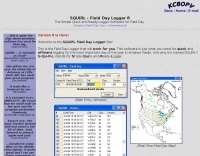 Demonstrates the _SQUIRL Field Day Logger_, a specialized software tool designed for efficient contact logging during the annual ARRL Field Day event. The resource details its core functionality, which includes real-time logging to easily readable text files, with filenames structured by callsign, band, and mode (e.g., K8DAA-20M-SSB.txt). It highlights features such as a real-time history grid of previous contacts, a dynamic USA and Canada map displaying contact locations, and a duplicate checker that provides audio notifications and pre-fills class/section data for previously worked stations. The software also includes an ADIF export function, enabling users to transfer logs to other general-purpose logging programs. The software's design emphasizes simplicity and ease of use, allowing for rapid on-the-spot training, as noted by users like W4CMB. It supports various operating systems, including Windows 98 through 8, and has been successfully run on Linux via _Wine_. Key usability enhancements include a "double-size" feature for improved readability and a "Space Mode" for quick field navigation. The version history indicates continuous development from 2001 to 2013, with significant additions like the real-time Field Day Map in 2003 and ADIF export in 2004, which allows for seamless integration with other logging platforms.
 -
 VE3BDB's personal page serves as a dedicated resource for members of the Radio Amateurs of Canada (RAC) residing in the Ontario South Region. Bob Cooke, VE3BDB, previously held the position of Director for this region, offering localized support and information pertinent to the RAC's activities and initiatives within Ontario South. The page likely covered regional news, events, and specific guidance for local hams, reflecting his role in facilitating communication and engagement among the amateur radio community in that area. While the page is no longer active and Bob Cooke has transitioned from his regional director role to RAC Vice President for Field Services, its original purpose was to centralize information for Ontario South hams. The content would have been tailored to address regional concerns, promote local ham radio activities, and provide updates relevant to RAC members in that specific geographic area, directing users to the main RAC website for current information.
 -
 Website for radio Amateurs in the Hastings, Peterborough, and Northumberland Counties of East Central Ontario, Canada. Propagation information as well as antenna designs and home brew projects and Club News. Many links to Amateur Radio information
 -
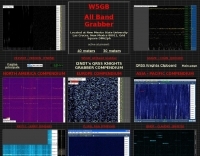 Observing extremely slow CW (QRSS) signals requires specialized reception and display techniques, often involving long-term signal integration to make faint traces visible. This resource compiles numerous screenshots from active QRSS grabbers globally, providing a visual record of signal propagation and operational activity on specific amateur bands. Each entry typically includes the callsign of the grabber station, its grid square, and often the band being monitored, such as 40 meters or 30 meters. The compendium presents a diverse array of grabber outputs, with examples from North America, Asia-Pacific, and Europe. Notable stations featured include _W5GB_ at New Mexico State University, _VE1VDM_ in Canada, and _I2NDT_ (the author's own grabber). The collection illustrates the unique visual signatures of QRSS transmissions, where signals appear as faint lines or patterns against a noise floor, often over extended periods. The utility of such a collection lies in its ability to demonstrate real-world QRSS signal characteristics and the geographical distribution of active grabber sites. It serves as a historical snapshot of QRSS activity, allowing operators to compare signal traces and observe propagation phenomena across different continents.
 -
 Serving London, Ontario, Canada and Area since 1920
 -
 Kingston, Ontario, Canada A RAC Affiliated Club
 -
 The Ontario Science Centre Amateur Radio Club (OSCARC) provides volunteer support to the Amateur Radio (ham radio) demonstration station at the Ontario Science Centre in Toronto, Canada.
 -
 The Club Radio Amateur de Québec (CRAQ) is a prominent amateur radio club based in Québec, Canada, dedicated to fostering interest and participation in amateur radio. It provides a platform for local hams to connect, share knowledge, and engage in various radio-related activities, including **DXing**, contesting, and technical experimentation. The club supports its members through regular meetings, technical presentations, and organized operating events, aiming to enhance their skills and enjoyment of the hobby. CRAQ also plays a role in public service communications, often collaborating with local authorities for emergency preparedness and response. CRAQ's activities include operating club stations, organizing **field day** events, and offering training sessions for new licensees. Members frequently participate in provincial and national contests, contributing to the club's competitive standing. The club maintains a network of repeaters, providing reliable local communication infrastructure for its members and the broader amateur radio community in the Québec area. These resources facilitate daily QSO traffic and serve as critical links during community service operations.
 -
 Barrie amateur radio club barrie ontario canada
 -
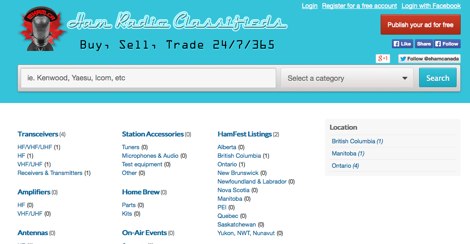 Ham and Amateur Radio Swap - Buy, Sell, Trade, Swap, radios, amplifiers, antennas and more. Classified ads for Canada, Ontario, Quebec, Maritimes, Prairies, British Columbia and USA
 -
 Over 1900 ARISS school events have been conducted since 2000, facilitating amateur radio contacts between students and ISS crew members. This resource details the Amateur Radio on the International Space Station (ARISS) program, outlining scheduled contacts, operational procedures, and application processes for educational institutions worldwide. It lists specific upcoming contacts, such as those with Lewis Center for Educational Research in California and Vauban, Ecole et Lycée français de Luxembourg, typically operating on a 145.800 MHz downlink frequency. The content also provides crucial guidelines for radio amateurs, emphasizing the importance of not interfering with scheduled school contacts and utilizing the crossband repeater for general QSOs when available. It clarifies crew availability for casual contacts, noting that astronauts are usually free during personal time, approximately one hour after waking and one hour before sleeping, and often on weekends. Constraints on scheduling, such as avoiding EVA weeks and specific crew rest periods, are also detailed. Furthermore, the resource includes historical statistics on direct versus telebridge contacts, QSL information, and links to related ARISS, AMSAT, ARRL, and NASA websites. It also provides information on applying to host an ARISS contact for schools and youth organizations in various regions, including the United States, Europe, Africa, the Middle East, Canada, Central and South America, Asia, and Australia.
 -
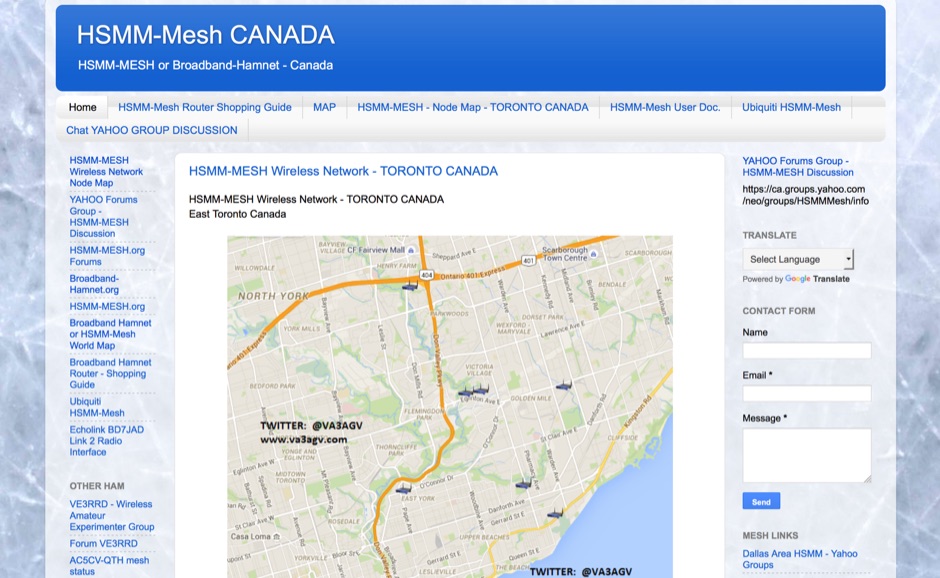 HSMM-MESH or Broadband-Hamnet - Canada a web site dedicated to HamNet development in Toronto Area
 -
 Quinte West, Ontario, Canada
 -
 The Renfrew County Amateur Radio Club is located in the County of Renfrew in the province of Ontario, Canada.
 -
 Kingston, Ontario, Canada A RAC Affiliated Club
 -
 This site is dedicated to co-ordinating the APRS activities in Ottawa, Ontario, Canada and the surrounding region.
 -
 Demonstrates the online presence of the West Island Amateur Radio Club (WIARC), a Canadian amateur radio organization. The resource presents fundamental club information, including contact details via an "info" email address. It also indicates the club's location within Quebec, Canada, and its focus on **ham radio** activities. The site's technical implementation notes its creation with **Arachnophilia 4.0**, a specific HTML editor. This resource, while minimal in content, serves as a digital point of contact for the WIARC. It confirms the club's existence and provides a channel for inquiries, which is typical for many local amateur radio clubs. The mention of a frame-compliant browser suggests an older web design, common for sites maintained over several years.
 -
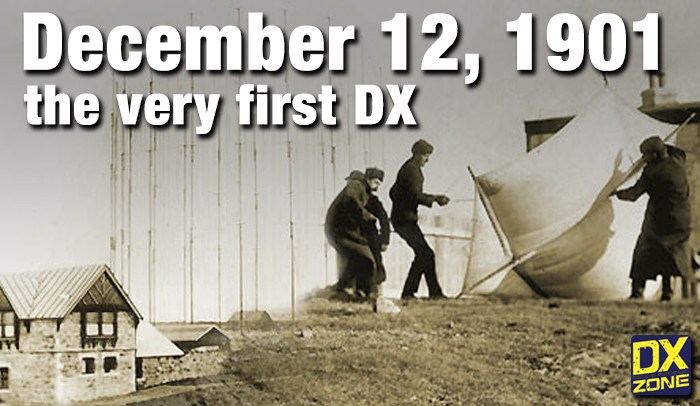 On December 12, 1901, Guglielmo Marconi successfully received the first transatlantic wireless communication, a Morse code "S" (three dots), at 04:30 GMT. This article details the setup for this groundbreaking experiment, noting Marconi's receiver in St. John’s, Newfoundland, Canada, utilized a _coherer_ and an antenna elevated by balloons and kites. The transmitting station at Poldhu, Cornwall, England, featured twenty-four 200-foot ships' masts and a 25-kilowatt alternator. The resource explains how this contact disproved contemporary beliefs about radio wave limitations due to Earth's curvature, later understood through _ionospheric propagation_. It frames Marconi's achievement as the "very first DX" in amateur radio terms, defining DX as telegraphic shorthand for distance and _DXing_ as the hobby of receiving distant signals. The article also provides external links for further reading on Marconi's experiments and the science behind transatlantic radio signal reception.
 -
 Outlines the Club de Radio Amateur de Charlevoix (VE2CCR), a regional amateur radio organization serving the Charlevoix area in Quebec, Canada. The resource details the club's objectives, which include promoting amateur radio, fostering technical knowledge among members, and supporting emergency communications. It lists various club activities such as regular meetings, field day participation, and local repeater maintenance. The site provides contact information for prospective members and details on how to join the club, including membership fees and application procedures. Information on the club's repeaters, including frequencies and access tones, is also presented, facilitating local amateur radio operations. The resource serves as a central hub for VE2CCR members and interested individuals seeking to engage with the amateur radio community in Charlevoix.
 -
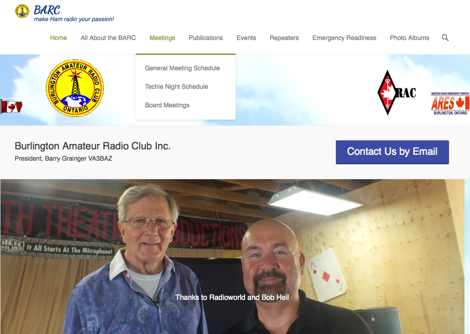 The Burlington Amateur Radio Club (BARC) provides a community hub for amateur radio operators in Burlington, Ontario, Canada, offering regular meetings, educational programs, and a dedicated hackspace for electronics and radio experimentation. The club operates several repeaters, including a 2m repeater (VE3RSB) on 147.210 MHz with a +600 kHz offset and 131.8 Hz tone, which supports AllStar node 542490. Additionally, BARC maintains a UHF repeater on 444.825 MHz with a +5 MHz offset and 131.8 Hz tone, and a 1.25m (220 MHz) repeater, facilitating local communication and digital mode access. BARC hosts multiple nets, including a Fusion Net on Mondays at 8:00 p.m. via VE3RSB-Room 61272, a Regular Wednesday Night Net on the VE3RSB system at 7:30 PM, and a 220 Net on Thursdays at 7:00 p.m. The club also runs a CW/SSB HF Net every Thursday at 7:00 p.m. local time on 40m, utilizing 7.125 MHz for LSB and 7.124.3 MHz for CW check-ins. These activities promote on-air participation, technical skill development, and social interaction among members, supporting both VHF/UHF local operations and HF DXing.
 -
-
 A 3 band dipole antenna for 40-80-160 meter bands, It's made with easily available materials and is designed for inverted V mounting. The antenna is shortened for these bands, but still manages to make contacts in 80m and 160m with stations in Canada and the USA. The construction details are provided, including the dimensions of the antenna elements and the traps. The antenna is easy to build and provides good performance in all three bands. In Italian.
 -
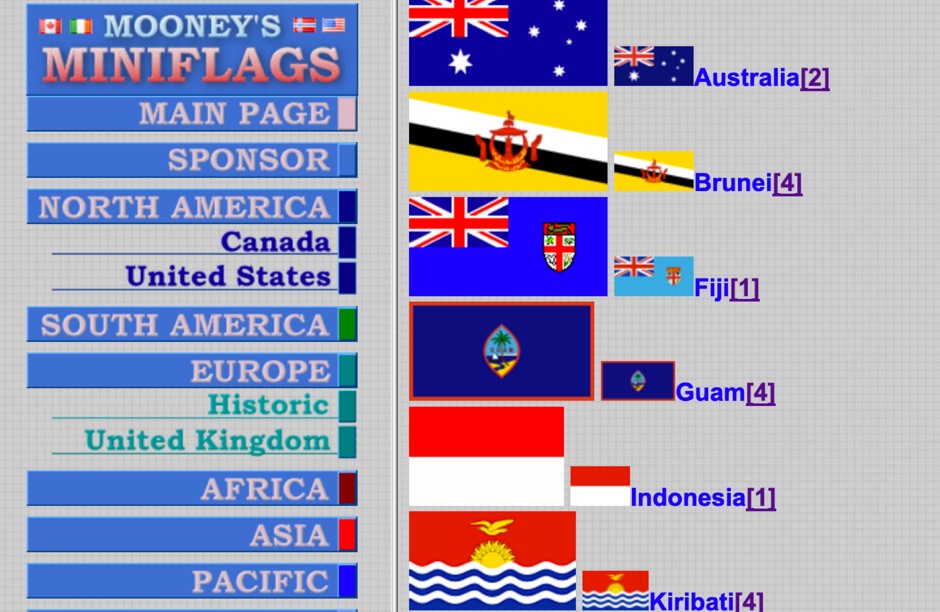 A website with a large collection of world flags pictures in GIF format divided per continent. Includes flags of US and Canada states
 -
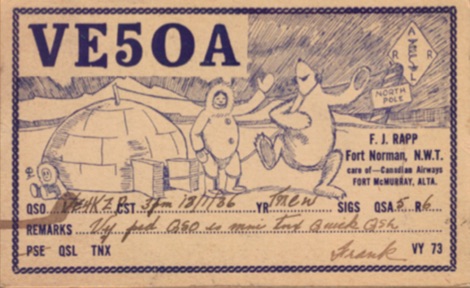 A collection of QSL cards from and old operator, Art J. Cook, VE4KZ, who lived in Calgary Alberta, that contained some from the far north of Canada.
 -
 Learn how to troubleshoot and configure ICOM 7300 Rig Control under Linux for seamless communication between your radio and computer. Author Colin from Canada shares his insights and experiences with setting up rig control software for digital signal decoding.
 -
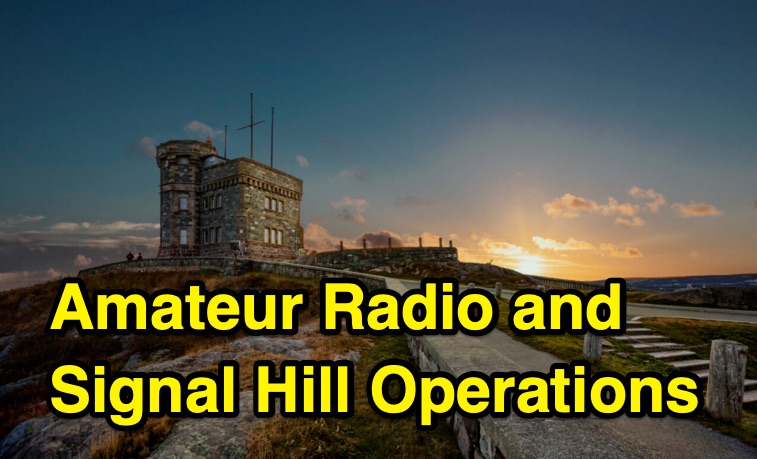 Examines the historical context of amateur radio, specifically focusing on Guglielmo Marconi's pioneering wireless transatlantic signal reception at Signal Hill, Newfoundland, in 1901. It describes the operation of a contemporary remote radio station at Signal Hill, utilizing the special event call sign _VD1M_ issued by Innovation, Science and Economic Development Canada. The content recounts a specific contact from Signal Hill, reporting a signal strength of 5 by 9 to a station in Sarnia, Ontario, which received the signal at 3 by 3. The narrative also introduces the concept of 'Marconi chasers' who endeavor to replicate historical transmission methods. Further, the resource discusses general amateur radio operating procedures, the evolution of the hobby, and its critical role in emergency communications, citing examples from hurricanes _Irma_ and _Maria_ in 2017 and the conflict in Ukraine in 2022.