Search results
Query: phil
Links: 65 | Categories: 0
-
 Design of a preamplifier for 144 MHz with 1 dB NF and 23 dB gain using BF981. This amplifier is using a low cost silicon MOSFET (BF981 from Philips) to give more than 20 dB gain with around 1 dB noise figure on 2 meter.
 -
 New York / Long Island Scanner forums, chat, and live scanner feeds of Nassau County Fire Departments. Site registration is needed to listen to the live feeds
 -
 Long range Wi-Fi antennas you can build. Helicals, parabolics, and biquads discussed. How to add external antennas to WUSB54GC and F5D7050 usb wireless adapters for long range connections.
 -
 The PSK31 philosophy, tips and tricks, sound files, how to get started, sound card setup and tips.
 -
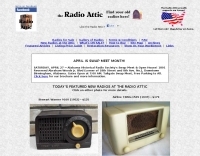 The Radio Attic serves as a dedicated online marketplace for **antique radios**, offering a platform for enthusiasts to buy and sell vintage communication equipment. The site features classified advertisements, each displaying full-color photographs of the radio, a detailed description, and a direct link to the seller's email address. This structure facilitates direct communication between buyers and sellers, as transactions are handled independently, not by the webmaster. Listings are categorized by style, manufacturer, and year of manufacture, including models from Admiral, Airline, Atwater Kent, Crosley, Emerson, Fada, General Electric, Philco, RCA, Silvertone, and Zenith. The platform also tracks new additions, with 49 radios and 6 books added in the past 30 days, and highlights recently sold items, totaling 157 radios this year. Beyond sales, the site provides resources like a price guide and information on upcoming swap meets, such as the Southeastern Antique Radio Society's Spring Swap Meet in Forsyth County.
 -
 We are manufacturers and re-sellers of a wide range of AM, FM and Shortwave broadcast transmitters, kits and related products.
 -
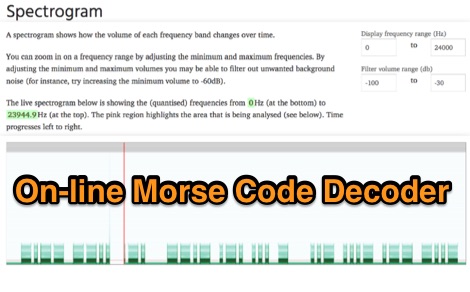 Demonstrates an online **CW** audio decoder tool, currently under active development, designed for analyzing and decoding Morse code. Users can upload audio files containing Morse code or record live audio input via a microphone, with processing handled entirely in JavaScript using the Web Audio API. The software analyzes the audio, attempting to determine the pitch and speed, and then decodes the message, providing options to compare the decoded output against a predefined message or a perfectly timed version. The interface allows for setting optional comparison messages, character speed in WPM, and Farnsworth speed. It also features interactive charts for visualizing the audio analysis, where users can zoom with the mouse wheel and pan by dragging. Specific buttons highlight different element types such as intra-character space, inter-character space, extra elements, missing elements, and replaced elements, aiding in detailed signal analysis. Built-in test files are available for immediate analysis, allowing users to quickly evaluate the decoder's performance. The tool is noted to work with specific browsers and is presented as a testing platform for user feedback, indicating ongoing refinement of its decoding algorithms and user interface.
 -
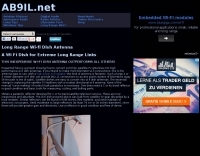 Build parabolic WLAN antenna adapted from a small satellite dish. It provides high gain and long range connections.
 -
 Conversion notes and amateur radio firmware especially for Finnish PMR radios and cellular phones like Nokia, Mobira and Benefon. Also some information for other European brands (Ericsson, Key Radio/Kyodo, Philips) and an extensive link collection.
 -
 Survey of galactic synchrotron radiation at 408 MHz in the south of England using a 10 metre dish and a Dicke radiometer
 -
-
 VHF/UHF DX site showing latest propagation, software, radio dealers, awards, maps etc.
 -
-
 A collection of extra Icons for the superb MixW programme.
 -
 Examines the historical landscape of "boat anchor" amateur radio equipment manufacturers, focusing on the technical innovations and market dynamics that shaped the industry from the pre-WWII era through the transition to SSB. It details the origins and key product lines of prominent U.S. companies like _Collins Radio Company_, _Central Electronics_, and _Barker & Williamson_, highlighting their contributions to receiver and transmitter design. The resource contrasts early AM technology with the advent of SSB, explaining the circuit changes required in receivers and the complete rethinking needed for transmitters. It discusses the impact of military contracts on company survival and the eventual shift towards smaller, self-contained transceivers. Specific examples, such as the _Collins R-390/URR_ receiver and the _Central Electronics 100V/200V_ broadband transmitters, illustrate the engineering prowess and design philosophies of the era, offering insights into their operational characteristics and enduring appeal among collectors.
 -
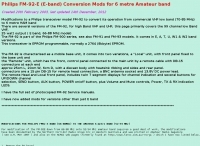 conversion of low band VHF Philips FM-92E to 6 metres
 -
 An affiliate of the Philippine Amateur Radio Association, Inc.
 -
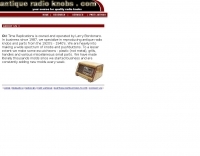 Replicating vintage radio components addresses the challenge of restoring classic receivers and transmitters to their original aesthetic and functional condition. Many historical radios, particularly those from the _Golden Age of Radio_ (1920s-1940s), suffer from brittle or missing control knobs and trim pieces, making authentic restoration difficult. This resource focuses on manufacturing new parts that precisely match the originals, ensuring period-correct repairs. The service offers a vast catalog of reproduced items, with thousands of molds created since 1987. This extensive inventory includes a wide spectrum of knobs and pushbuttons, along with some plastic escutcheons, grills, and handles. The meticulous reproduction process ensures that restorers can find accurate replacements for brands like Philco, Collins, and Atwater Kent, preserving the historical integrity of these valuable pieces of radio history. The owner, Larry Bordonaro, has been in business since 1987, demonstrating deep experience in this niche.
 -
 The Smith Chart was originally created many years ago as an RF engineering aid by Phillip Smith of RCA.These pages includes extesnive documentation on smith carts.
 -
 Wood and plastic broadcast radios from the 1930s and 1940s, lovingly described and profusely illustrated.
 -
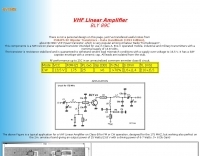 There is not a personal design on this page, just I've transfered useful notes from PHILIPS RF Bipolar Transistors - Data HandBook about BLY89C VHF Power transistor, which is very popular among Amateur Radio homebrewers
 -
 conversion of low band VHF Philips FM-828 E band down to 6 metres
 -
-
-
 The largest gathering of shortwave listeners (about 200) in North America, near Philadelphia in March.
 -

-
 Far East Broadcasting Company (FEBC) - Manilla, Philippines.
 -
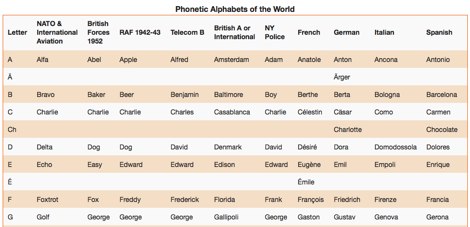 A selection of alphabets used, particularly by ham radio operators, to spell out words
 -
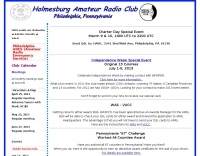 H.A.R.C. Radio club in in Phila. Pa. area
 -
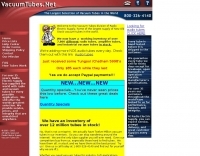 Vacuum Tubes and Radio Tubes Our specialty. We carry over 5,000 radio and vacuum tubes in stock every day and we ship world wide. Tubes for industry, music, ham radio, the audiophile.
 -
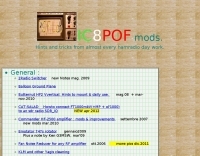 IC8POF's How To index, Hamradio mods, Crazy PA Tuner project (transform any manual amplifier in an automatic one).
 -
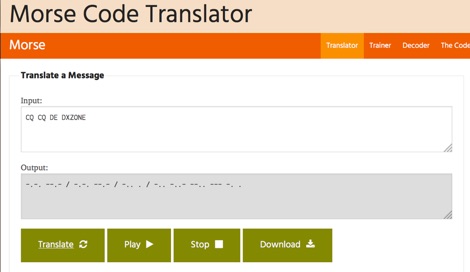 One hundred and fifty words per minute (WPM) is a configurable speed setting in this online Morse code translator, which facilitates bidirectional conversion between plain text and **Continuous Wave (CW)**. Users can input text to generate corresponding Morse code, or enter Morse code using dots and dashes to receive a text translation. The tool supports various alphabets, including Latin, Cyrillic, Ukrainian, Hebrew, and Arabic, broadening its utility for international communication. The platform offers multiple output methods for the generated Morse code, including audible playback, visual flashing, and device vibration. Advanced configuration options allow for precise control over the sound's pitch (frequency), volume, and overall speed, including a **Farnsworth speed** setting. This flexibility enables users to customize the learning or communication experience to their specific needs. Additional features include the ability to save the generated Morse code audio as a WAV file and to create shareable links for messages, which can be sent with or without the accompanying text. The interface is entirely web-based, built with HTML5 and JavaScript, ensuring broad compatibility across modern browsers.
 -
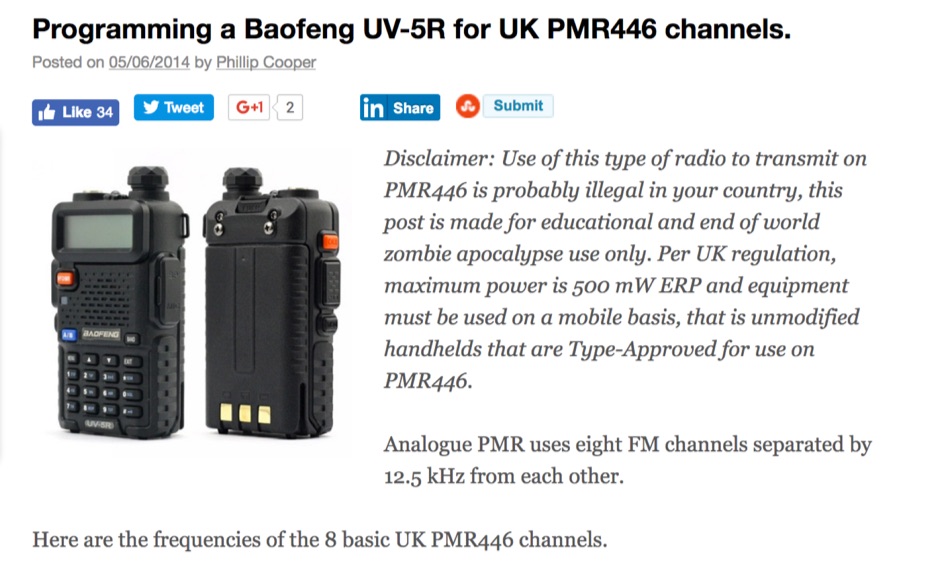 Nice feature of the Baofeng UV5R family is that they support 6.25kHz tuning steps. That fact makes it possible to dial in the radio to use the exact PMR446 channel frequencies rather than a nearest fit which is the case in many other transceivers.
 -
 The Phil-Mont Mobile Radio Clu
 -
 Wondering whether to spend a fine day with the YL or with the antenna? This article may help you decide by W1GV
 -
 Connecting rhythm and language with Morse Code by Phil and David Tulga
 -
 The Frankford Radio Club originated in the Frankford High School, in Philadelphia, around 1927.
 -
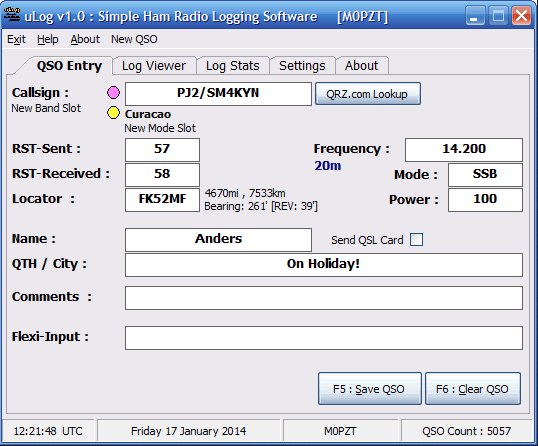 Demonstrates the design and functionality of _uLog_, a Windows-based logging application for amateur radio operators. The resource details its core purpose as an easy-to-use logbook, emphasizing its streamlined interface that provides only the basic fields necessary for efficient QSO entry. It positions _uLog_ as a practical alternative to more complex logging software, catering to operators who prefer simplicity and speed in their logging workflow without an abundance of advanced features. The application's utility is highlighted by its focus on fundamental logging tasks, distinguishing it from comprehensive contest loggers or DX cluster clients. While not explicitly comparing it to other specific software, the description implies its niche for everyday logging rather than specialized operating events. Its design philosophy prioritizes quick data input, making it suitable for casual operating or for those who desire a minimalist approach to maintaining their station log.
 -
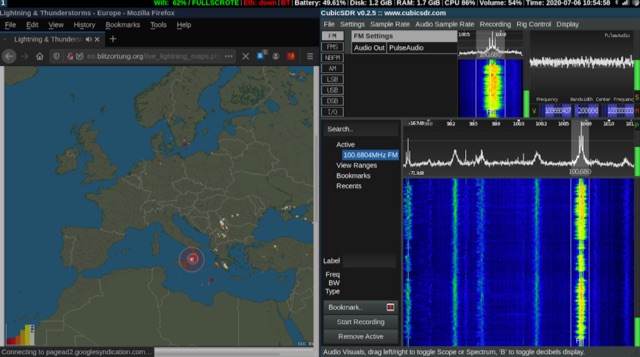 Linux for shortwave and amateur radio monitoring. Supports popular SDR hardware and online streaming from KiwiSDR, WebSDR, and Spyserver sites. Articles about using Linux with your SDR devices.Skywave Linux, an innovative operating system, leverages cutting-edge technology for seamless access to radio signals globally. Ideal for regions with limited internet access, it effortlessly connects to a network of SDR servers, offering high-performance SDR operation without the need for extensive hardware. With pre-installed and configured SDR software, Skywave Linux simplifies signal discovery and operation for all users.
 -
 Antique radio collection from brazil, philips , philco, telefunken, blaupunkt, saba, mende, rca, ekco, pilot, general electric, bush and more
 -
 Background: The PSK31 philosophy, The QPSK mode, Varicode, Sound Card DSP Setup and Operating Tips
 -
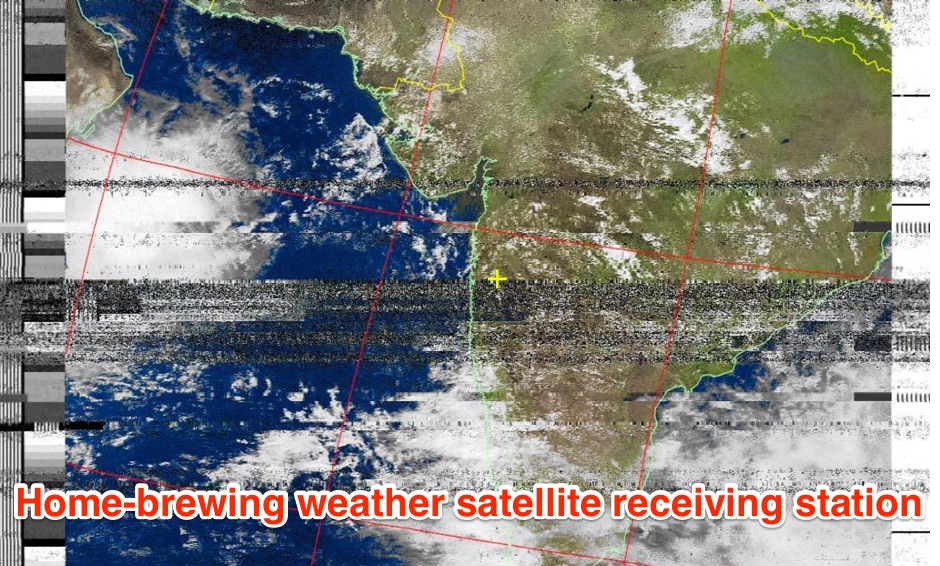 The page provides a detailed guide on how to build your own NOAA weather satellite receiving station, covering hardware, antenna, computer setup, and software installation. It offers a straightforward explanation suitable for beginners and serves as an educational project. The content includes step-by-step instructions and tips for observing satellites in the night sky.
 -
 The Guernsey Amateur Radio Society (GARS) provides a central hub for amateur radio operators in the Bailiwick of Guernsey, offering resources like a local _GU Callbook_ and specific notes tailored for visiting operators. The society maintains an active presence, holding regular meetings on Friday evenings from 7:30 to 9:00 PM in a unique World War II bunker located within the grounds of the Beau Sejour Leisure Centre. Beyond in-person gatherings, GARS facilitates on-air activity with a 2-meter net operating on 145.525 MHz every Tuesday night at 8:00 PM. Additionally, a DMR net is hosted on Thursday nights at 8:00 PM via the _GB7GY_ repeater, catering to digital mode enthusiasts. These nets provide opportunities for local members and visitors to connect and exchange information. Phil Cooper, GU0SUP, serves as a key contact for the society, managing inquiries and web content. The club's location is precisely described as being down a concrete staircase to the left of the road when approaching the Concourse entrance, making it straightforward for newcomers to find their way to the club's distinctive meeting place.
 -
 The Broadcast Employees Amateur Radio Society, Inc. (BEARS) operates an extensive network of **VHF and UHF repeaters** across New York, the Hudson Valley, Long Island, and New Jersey, accessible to all licensed amateur radio operators. This resource details the club's structure as a 501c3 tax-exempt non-profit, emphasizing its role in providing ham radio training, testing, and critical communications support to various public and private emergency response agencies. Key repeaters include W2ABC/RPT on 147.27 MHz with a 141.3 PL tone, serving as a central point for club activities and broader network access. BEARS is also a founding member of the **Disney Amateur Radio Interconnect (DARI)**, a consortium of open, linked VHF and UHF repeaters spanning major metropolitan areas such as Philadelphia, Baltimore/Washington DC, Orlando, Bristol, Los Angeles, and Boston. This interconnected system facilitates wide-area communication for members and supports emergency preparedness efforts across multiple regions. The club's focus extends beyond Disney employees, welcoming aspiring and current hams from outside the company to participate in its activities and utilize its robust repeater infrastructure.
 -
 VK3RVZ IRLP Node 6506, covering the Port Phillip bay area and inner suburbs
 -
 Vintage Tube Radio's from Germany for sale. High class restorations for all valve radios offered. Radio Brands like Saba, NordMende, Majestic, Grundig, Zenith, Philco and more. TubeRadioDoc Vintage Audio Store
 -
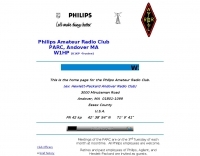 The W1HP Philips Amateur Radio Club, originally the Hewlett-Packard ARC, has a history rooted in Andover, Massachusetts, as an employer-sponsored club. It evolved from a "full-service" club to primarily a Field Day club, maintaining its focus on this major annual effort. The club has participated in Field Day under various configurations, including W1HP/1B in Arizona, and has partnered with K1KKM and utilized GOTA stations like K1KKM and KD1NA. Recent Field Day operations reflect adaptations to changing circumstances, with members operating individually due to COVID-19 and later under "new" ARRL rules, sometimes as a "distributed" club. The club's constitution is also referenced, providing insight into its foundational structure. This page is maintained by W1DYJ, with a last update noted as 9 December 2025.
 -
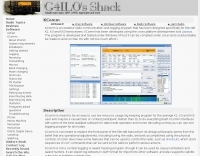 KComm, a logging and communication program, was specifically engineered for Elecraft K2, K3, and KX3 transceivers, leveraging the Lazarus cross-platform development tool. It operates natively on Windows XP and can be compiled for Linux, with potential for macOS, prioritizing low resource usage for casual DXers and contest participants. The software integrates with external applications like Fldigi for diverse digital modes and CW Skimmer for advanced Morse decoding, enhancing its functionality beyond basic logging. The design philosophy of KComm emphasizes utilizing the physical radio controls for operational adjustments, rather than replacing the transceiver's front panel. It facilitates keyboard CW operation via the Elecraft serial protocol and capitalizes on the K3 and KX3's built-in decoders for RTTY and PSK31. Additionally, KComm supports PSK31, PSK63, and PSK125 through the AE4JY PSK Core DLL on Windows and integrates with PSKReporter.info for spotting. While not a dedicated contest logging or award tracking program, KComm supports ADIF and Cabrillo export for casual use, allowing logs to be imported into other software. The author, G4ILO, ceased all software development, providing KComm "as is" without further support or updates; however, the source code is available under the GNU GPL for community continuation.
 -
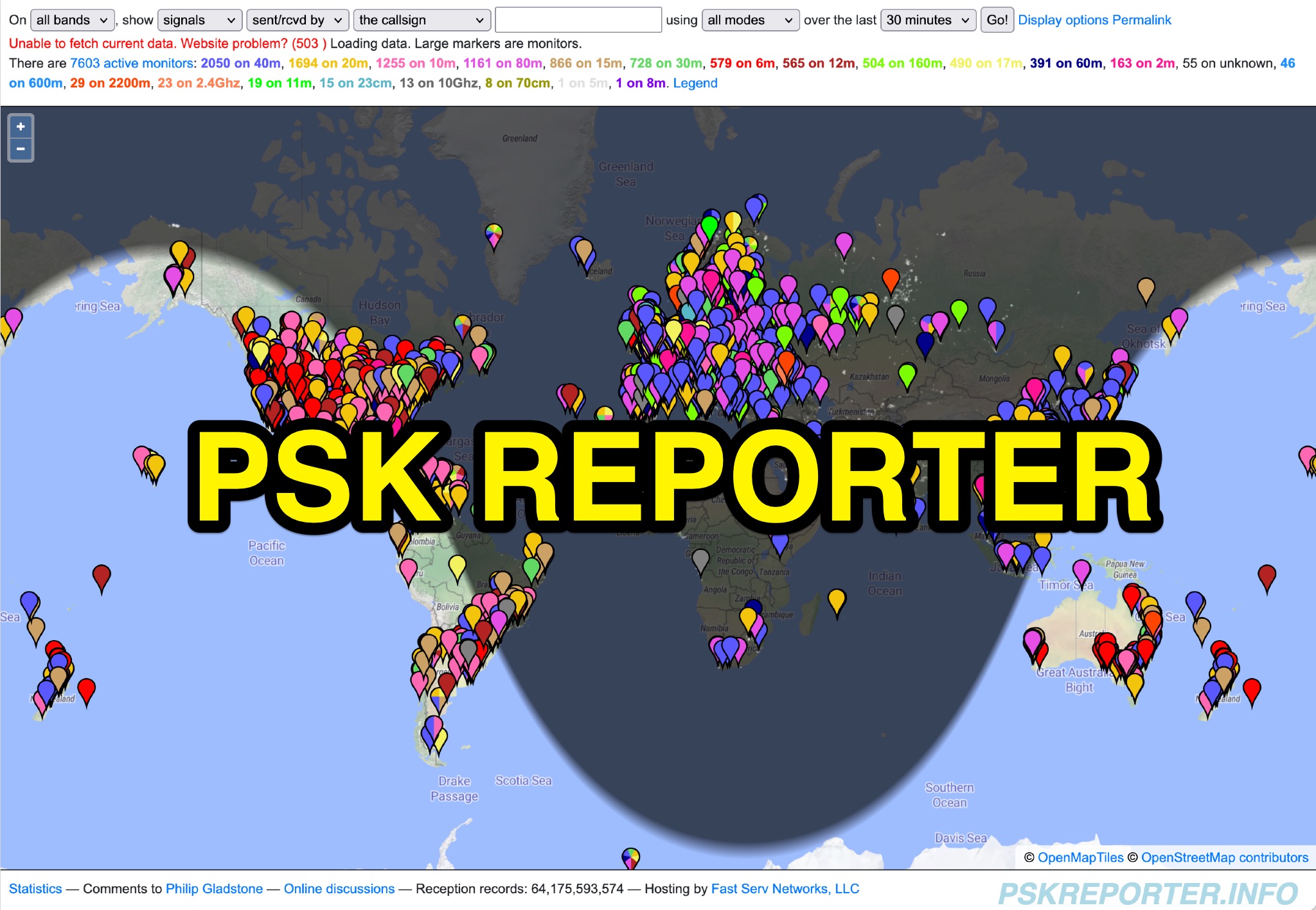 PSK Reporter provides a real-time visualization of amateur radio digital mode reception reports, aggregating data from a global network of monitoring stations. This platform is particularly useful for operators utilizing modes such as FT8, FT4, and PSK, allowing them to observe signal propagation paths and assess their station's reach. The interactive maps display reception reports, enabling hams to analyze band conditions and optimize antenna performance for various frequencies and times of day, aiding in understanding ionospheric conditions. Operators can filter reports by callsign, band, mode, and time, gaining insights into specific propagation events or evaluating the effectiveness of their transmit setup. The data collected helps in predicting optimal operating windows for DX contacts across various digital modes. Philip Gladstone is the contact person for comments and discussions regarding the system.
 -
 FG5LA amateur radio in Guadeloupe Island F.W.I