Search results
Query: printer
Links: 28 | Categories: 2
-
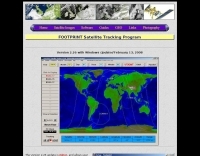 Footprint Satellite Tracker is a satellite tracking software that provides real-time monitoring of satellite movements worldwide. It features a global map with celestial markers and allows users to adjust time settings to predict satellite paths. Customizable options include location coordinates and time zones. Users can analyze satellite ephemeris and print reports, though file-saving requires a virtual printer. Despite its research utility, the software supports a limited satellite list and lacks options for manual data source connections. Current version has been tested running on Windows 10.
 -
 Freeware Windows QSL card printer software. This tool will let you create you own QSL cards importing pictures and customizing colors and other cards aspects. Print directly to your ink-ject or laser printer. Runs on windows systems by wb8rcr
 -
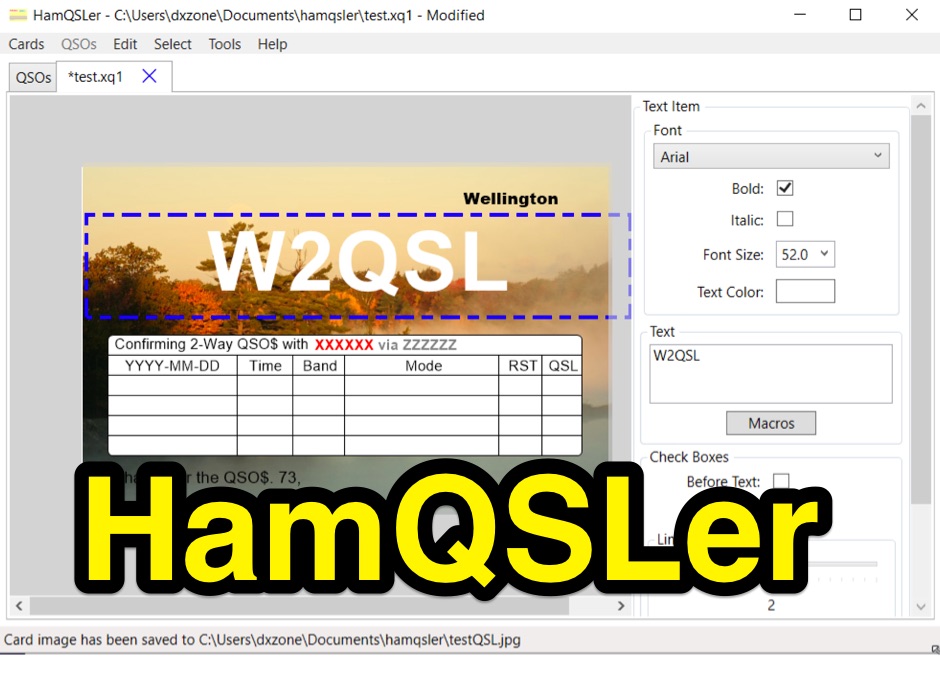 A program to design and print QSL cards on your computer, as well as design QSL cards for printing by commercial printers. This program overcomes many of the limitations that are present in other QSL design and print programs and methods. Works on Windows 7 to 10.
 -
 A program to control a repeater using an old computer and printer or serial port.
 -
 Home of the ultimate Ham Radio QSL Label Program! Quick QSL for DOS, featuring great color, dot matrix, laser, and inkjet printer support, a user-friendly interface,
 -
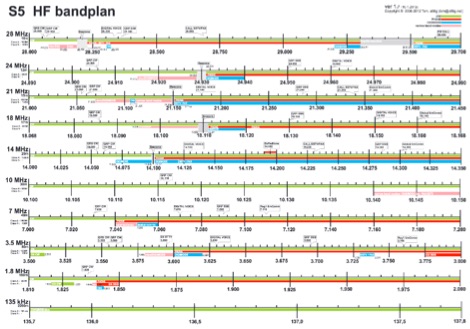 Amateur Radio bandplan in a large PDF A3 format valid for Serbia and Region 2. This band plan can be donwloaded and printed on a color laser printer for optimal quality.
 -
 If you have a computer with word processing software and a printer, you can make your own custom QSL cards, with each card individually printed for the ham you just contacted. WA7S show you how.
 -
 LOGvrr, a **freeware logging software** developed by IN3VRR, provides amateur radio operators with essential tools for managing their contacts. The resource details various downloadable components, including the core LOGvrr application, an international callbook with approximately 1.8 million callsigns, and utility programs for installation and data conversion. It supports functionalities like logging QSOs, managing awards, and interfacing with PacketCluster systems, with specific instructions for installation on Windows operating systems, including compatibility notes for Windows 10 and 11 using Hyper-V or DOSBOX. The site also offers external tools and documentation, such as the FAQ_VRR.PDF manual which covers installation, printer configuration, ADIF conversion, and Packet setup. It references third-party software like Mercurio and BV QSL Management for QSL printing, and ADIF2QSL for label printing, highlighting LOGvrr's ability to export QSOs in **ADIF format** for integration with services like LoTW. The resource includes historical updates, with the latest core component update in August 2014, and notes on the CallBook's maintenance up to 2015.
 -
 IK1PML Tipolitografia Bevione QSL Printer in Italy
 -
 The Japanese Amateur Radio Teleprinter Society (JARTS) serves as a central hub for RTTY and PSK31 enthusiasts in Japan, providing essential information regarding its annual JARTS RTTY Contest. The resource outlines contest rules, exchange parameters, and scoring specifics, enabling participants to prepare effectively for the event. It also offers insights into the club's broader activities and its role in promoting digital mode operations within the amateur radio community. The site details the contest's operational periods and categories, which typically include single-operator, multi-operator, and SWL entries, often with power output classifications. Participants can find guidelines for log submission and result publication, ensuring adherence to the contest's administrative requirements. The JARTS RTTY Contest is a significant event for digital mode operators, drawing participation from across Asia and beyond. Beyond contest specifics, the resource provides historical context for JARTS, highlighting its foundational role in Japanese amateur radio digital communications. It serves as a primary point of contact for members and prospective participants, fostering engagement in RTTY and PSK31 modes.
 -
 Demonstrates how to construct an automatic band decoder, moving beyond manual selector switches for antenna and filter control. It addresses the challenge of varying band data outputs from different transceivers: Icom rigs provide voltage values, Yaesu rigs use Binary Coded Decimal (BCD), and Kenwood rigs lack direct band data output. The resource highlights a clever solution utilizing logging software like _CT (K1EA)_ and _DX4WIN_ to emulate Yaesu's BCD output via a PC's printer port, making the decoder compatible with any rig. The author details experiences building decoders based on designs by Bob _K6XX_ and Guy _ON4AOI_, noting K6XX's simple TTL chip design and ON4AOI's more comprehensive, opto-isolated unit capable of controlling ten outputs and bandpass filters like the _Dunestar_. It also references a _W9XT_ board design, which Steve Wilson, G3VMW, modified with BD140 transistors for source drivers, emphasizing safety. The author successfully cased an ON4AOI-based decoder in an old modem case, connecting it to an FT1000MP or a PC printer port to drive remote relays and a Dunestar Band Pass Filter.
 -
 What electronic parts you can recover from PC monitor, VCR, CD-ROM, FDD, HDD , Laptop, Motherboard, SmartCard reader or Printer
 -
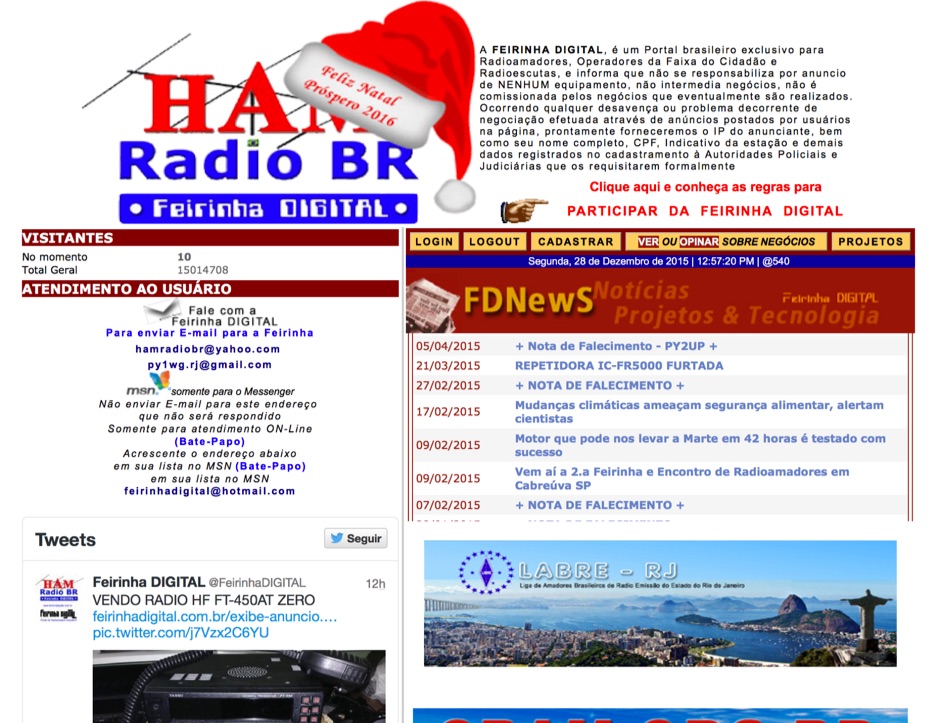 Presents a Brazilian online portal dedicated to **amateur radio**, **CB radio**, and shortwave listening (SWL) communities. The platform facilitates free classified advertisements for radio equipment, including HF, VHF, and UHF transceivers, antennas, and accessories. It also aggregates a substantial collection of technical articles from Brazilian amateur radio operators (e.g., PY2DJW, PY1LJ, PY1LL/4LC), covering topics such as CW training with RufzXP, balun importance, and radio wave characteristics. Furthermore, the resource provides extensive links to Brazilian ham radio sites, clubs, international organizations, and official ANATEL (Brazilian National Telecommunications Agency) documents regarding licensing, equipment homologation, and regulations. The portal features sections for user evaluations of transactions, a "Top Ten" list of most visited pages, and a calendar of past and upcoming ham radio events across Brazil, including "Feirinhas" (local swap meets) and "Encontros de Radioamadores" (hamfests). It also includes a directory of ham radio related businesses and services in Brazil, such as antenna manufacturers (Diex), QSL card printers (Arte Final), and repair technicians (PY2MOK). The site also offers propagation maps, DX cluster links (e.g., DX-SUMMIT), and satellite tracking tools, making it a central hub for Brazilian radio amateurs seeking to buy, sell, learn, or connect with the community.
 -
-
 Full color QSL printer in Poland
 -
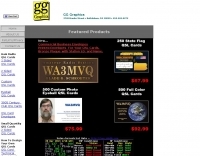
 QSL Printer shop, products include Photo QSL cards, Eyeball cards, and State QSL Cards, based in Hampstead, MD USA
 -
-
 Printer in Poland, now provide T-shirts, CAP with Call sign, dust cover for yaesu, icom, kenwood, elecraft transceivers, acom amplifiers and more. QSL printing has been dismissed
 -
 QSL card printer based in Bethlehem, PA offer QSL Card printing, Bronze Plaque with sation ID and Printed Envelopes
 -
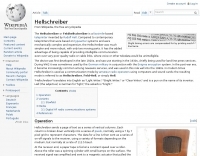 Wiki page of the Hellschreiber or Feldhellschreiber facsimile teleprinter by Rudolf Hell
 -
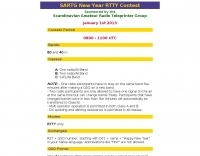 Sponsored by the Scandinavian Amateur Radio Teleprinter Group
 -
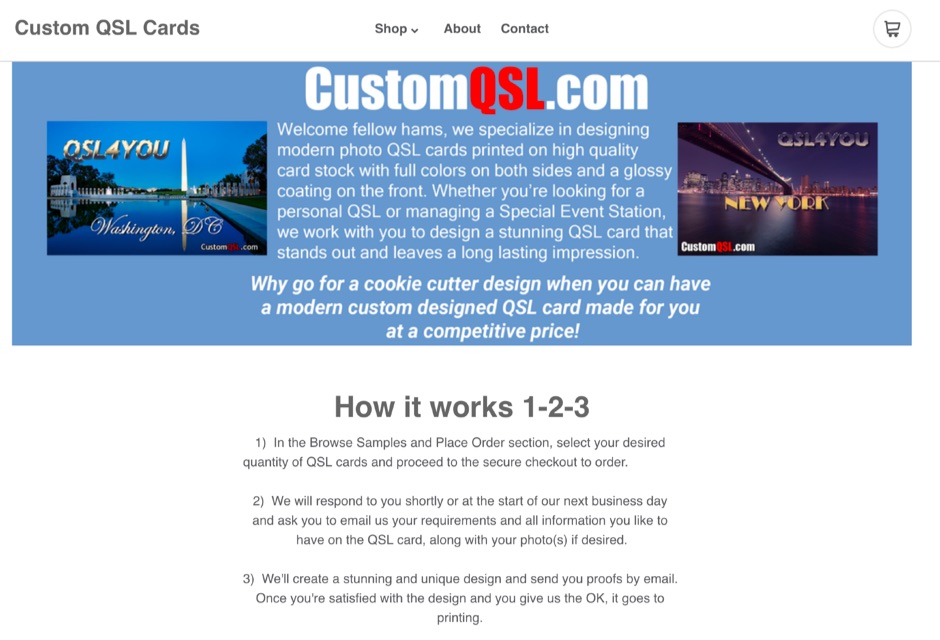 Custom Designed Photo QSL Cards, Full Color stunning designs, High Quality Printing at competitive Prices. US based QSL designer and printer specialized in custom-designed ham QSL cards.
 -
-
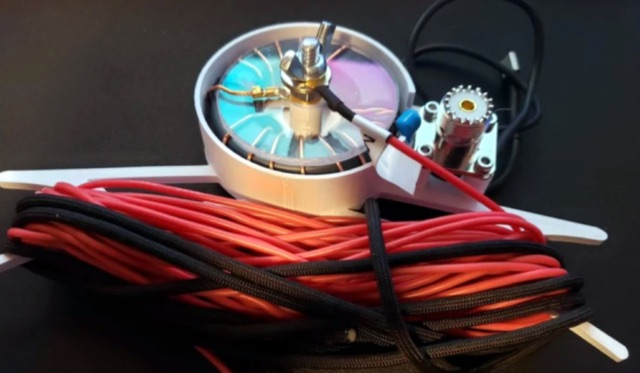 An end fed antenna winder design that also contains the necessary matching toroid. This would be just the thing to throw in your backpack for portable operation.
 -
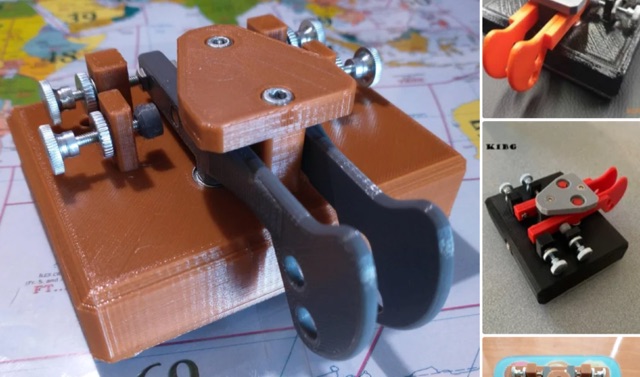 A simple 3D Paddel CW Key made of plastic with a standard 3d printer
 -
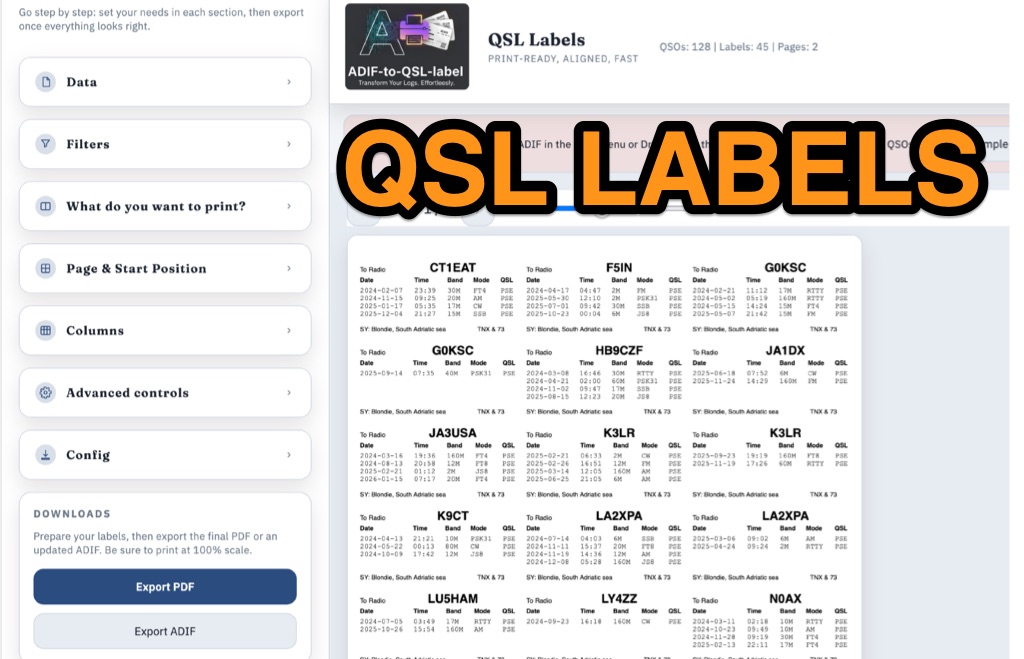 ADIF-to-QSL-label is a GitHub utility designed to generate print-ready PDF QSL labels from ADIF log files. Optimized for the Avery Zweckform 3664 format (A4, 3×8 grid), the tool accommodates up to four QSOs per label. While an HTML version is suggested, the Python script provides extensive customization via the reportlab library. Users can precisely calibrate the layout through single-point configuration, adjusting page margins, global X/Y offsets, and specific column or row nudges. Key features include dynamic column sizing, support for any ADIF field (such as RST or Mode), and debugging tools that print outlines and guides for alignment testing. Configuration is managed via the script, YAML files, or CLI arguments, requiring "Actual size" (100%) printer settings for accuracy.
 -
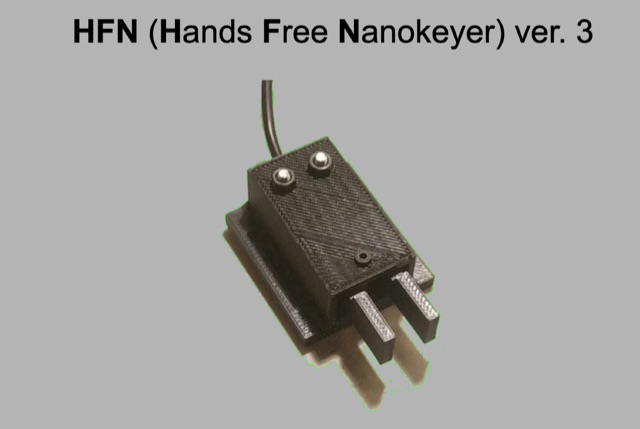 HFN (Hands Free Nanokeyer) is a 3D Printer made morse keyer. In this project the athor shares the STL printer model files for the 3 versions build.
 -
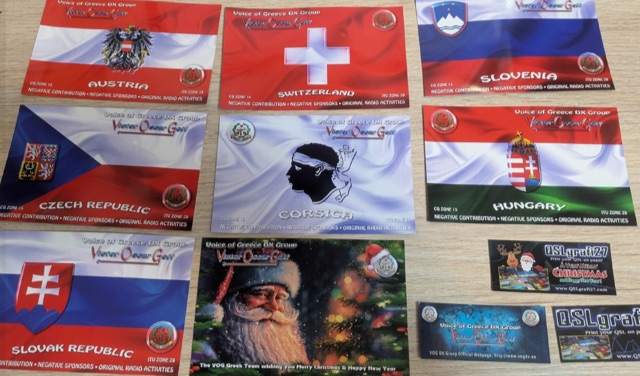 QSL card printer service based in Spain