Search results
Query: ham radio internet link
Links: 10 | Categories: 2
-
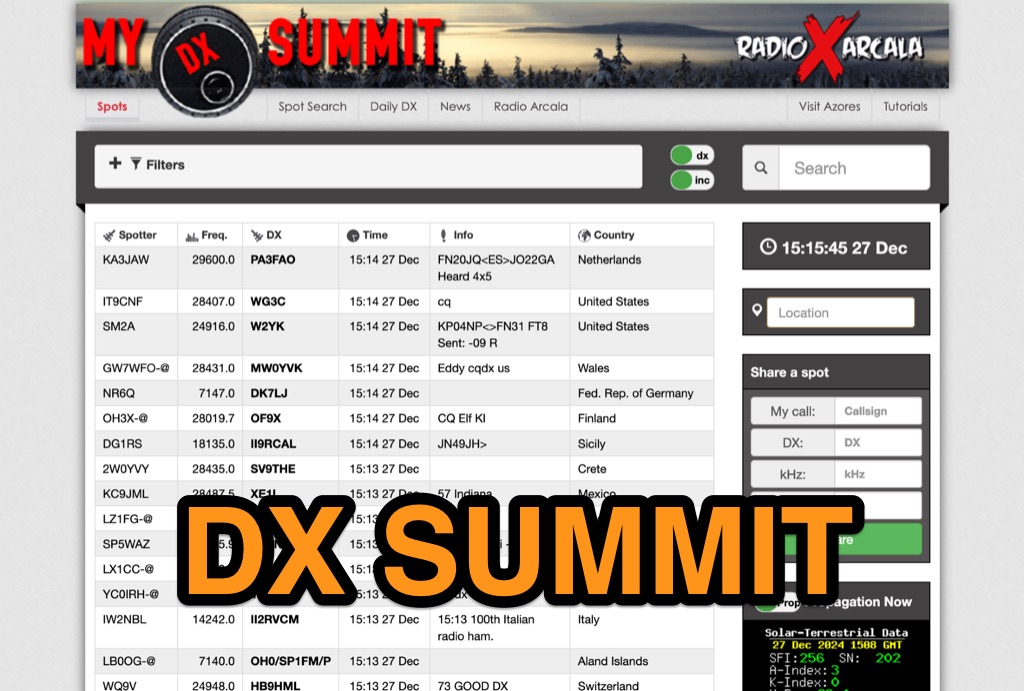 DX-Summit, is one of the very first **DX Clusters** on the internet,operated by the OH9W OH2AQ Radio Club, offering today a full featured web-based DX cluster, with real-time and even historical DX spots across basically the whole spectrum of amateur radio bands. This web application aggregates **DX spots**, enabling hams to monitor DX activity on frequencies from 1.8 MHz through 47 GHz, including specialized categories like beacons, digital modes, IOTA, QRP, and satellite operations. As all DX Clusters, it is as a critical tool for DXers and contesters seeking current propagation conditions and DX stations activity. The web application utility extends to providing daily DX news (even if not up to date) and a spot search function, allowing hams to research previous activity of a specific call signs on several bands. Features integration with direct link to **VOACAP** predictions, QRZ.com and ClubLog. Access to the service during contest events, expecially the most popular ones, may make the sevice overloaded. The inclusion of a full featured tutorial enhances its value. DX Summit's long-standing operation, maintained by **OH8X**, underscores its reliability as a go-to resource for seeking amateur radio spots and identifying rare DX or unidentified signals.
 -
 CQiNet is a family of programs that combine Ham Radio with the Internet using Voice over IP (VoIP) technology. Two programs are currently in the family, "theBridge" and echoLinux. Thebridge is a iLink/EchoLink compatable conference bridge that runs under various versions of Unix as well as Windows. EchoLinux is a EchoLink client program for the Linux operating system.
 -
 EchoMac is an apple macintosh client for EchoLink internet radio network.
 -
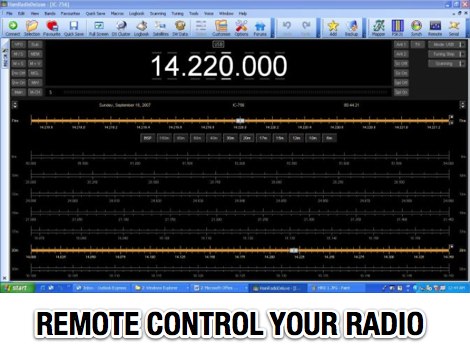 By Alfred T Yerger II WA2EHI, in this PDF file explain how to remote your rig via the internet by using HRD Ham Radio Deluxe and skype
 -
 EchoLink and IRLP Internet Radio Linking Project Node's, Hurricane Watch Audio Feed's and Info, Live Scanner/Other Feed's from the USA, Local Ham Frequencies, Online Receiver's, Shoutcast Live Audio Feed's from the USA, Southern California Frequencies and more
 -
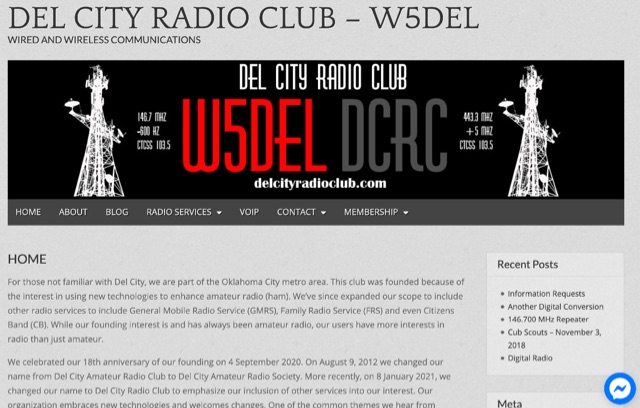 Showcases the Del City Amateur Radio Club (W5DEL), an organization serving the amateur radio community in Del City, Oklahoma. The club facilitates local ham radio activities and provides a platform for members to connect. It emphasizes community engagement through various events and resources, supporting the interests of local operators. The club's online presence, while functional, appears to be a repurposed template, with some content not directly relevant to amateur radio. Members can access information on club dues, upcoming events, and community guidelines. The site mentions a focus on VoIP, suggesting an interest in **digital voice modes** and **internet-linked radio systems**. Although specific technical projects or operating achievements are not detailed, the club aims to foster camaraderie and provide a local point of contact for hams in the Del City area.
 -
 The K5BSA Venturing Crew 73 resource, intended for a ham radio club based in Richardson, Texas, currently presents a 404 "Page Cannot Be Found" error. This status indicates the original content, which likely detailed club activities, membership information, or amateur radio projects, is no longer accessible at the specified URL. The page provides general information about _QSL.net_ hosting services, noting it supports over 30,000 websites for amateur radio operators and organizations. The error message suggests contacting the website owner directly or using an internet search to locate the intended content. It also clarifies that QSL.net cannot assist in finding specific missing pages hosted by individual users, as each site is independently maintained. The platform offers its email and web services without cost to the amateur radio community. Despite the error, the page includes links to general QSL.net resources such as "About QSL.net," "The Help Page," and "EMail Mailing Lists." It also features a prominent "Make a Donation" option, emphasizing that while services are free, user contributions are encouraged to support the hosting infrastructure.
 -
 High Speed Multimedia (HSMM) radio, as introduced by John Champa, K8OCL, represents a significant advancement in amateur radio's digital capabilities, moving beyond traditional keyboard modes like packet radio. This initiative, driven by ARRL's Technology Task Force, focuses on developing high-speed digital radio networks capable of up to 20 megabits per second. HSMM primarily facilitates digital voice (DV) and digital video (ADV), enabling real-time video transmission from emergency scenes to an EOC without expensive ATV gear, often requiring only a laptop, a PCMCIA card, a digital camera, and a small antenna. The working group's initial efforts concentrate on cultivating microwave skills within the amateur community to build and support portable and fixed high-speed radio-based local networking, or **RLANs**. These networks prove invaluable for RACES and ARES organizations, as well as homeland security and other emergency communications. Field Day exercises and simulated emergency tests (SETs) are encouraged to hone skills in rapid site surveys and deploying broadband HSMM microwave radio networks, with examples like linking Field Day logging stations or antenna test results at the Midwest VHF-UHF Society Picnic 2003. Getting started with HSMM often involves adapting off-the-shelf **IEEE 802.11** (WiFi) equipment to comply with amateur radio regulations, typically operating in the 2.4 GHz ISM bands. While consumer WiFi gear has range limitations under Part 15 rules, proper setup under amateur regulations can extend coverage significantly, with test networks like the Hinternet achieving 5-15 mile ranges at 54 M bit/s using small mast-mounted dish antennas. Careful selection of equipment with external antenna ports, high transmit power, and low receive sensitivity is crucial, along with using low-loss coaxial cable like LMR-400 for optimal performance at these frequencies.
 -
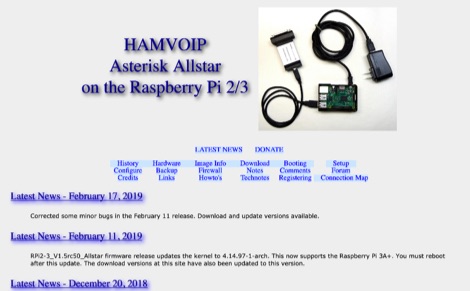 Reference site of the HAMVOIP AllstarLink AllstarLink provides hams with a means of connecting radios, repeaters or simplex links, over the internet. It is built upon the asterisk open source PBX and runs on Linux
 -
 This article will introduce total beginners to Amateur Radio, more commonly known as ham radio or DXing. That includes the basic definition - what DX is, where it came from, and the couple primary types (passive and active DXing). A Very Historical Past Radio Home!! The different kinds of DXing are well separated, indicating that you are either just listening to more distant stations, or engaging in a direct communication with another amateur. Ham Radio DXers: Importance of the Internet While the article glosses over the technical aspects of Ham radio equipment much like several of his articles, it does touch on how important the internet is to DXers. These include link to locate active stations, learn signal proagation, and be a part of the Ham community online.