Search results
Query: simple logging
Links: 11 | Categories: 0
-
 MRP40, a successor to the well-regarded MRP37, offers robust Morse code decoding capabilities by processing analog audio signals via a sound card and displaying the decoded text on a computer monitor. My own field tests with similar sound card decoders confirm that the quality of the audio input and proper signal conditioning are paramount for achieving reliable decoding, especially with _weak signals_. The program also facilitates CW transmission, converting keyboard input into Morse code to key a transceiver, a feature I've found useful for practicing sending or for quick contest exchanges. Beyond its core CW functions, MRP40 incorporates a convenient mini-logbook, which automatically checks for prior contacts and allows for quick logging by double-clicking callsigns in the receive window. This integration streamlines the logging process, a significant advantage during busy operating sessions where every second counts. The software also generates Morse tones using the sound card, a handy utility for testing tone sequences or for basic code practice. Additionally, the suite includes a DTMF decoder and generator, which can be used for decoding telephone dial tones or data transmissions over amateur radio frequencies. It also features MF-TeleType, a sound card-based audio data modem for transmitting text via radio, utilizing a principle similar to DTMF for encoding and decoding, offering a simple method for digital text communication.
 -
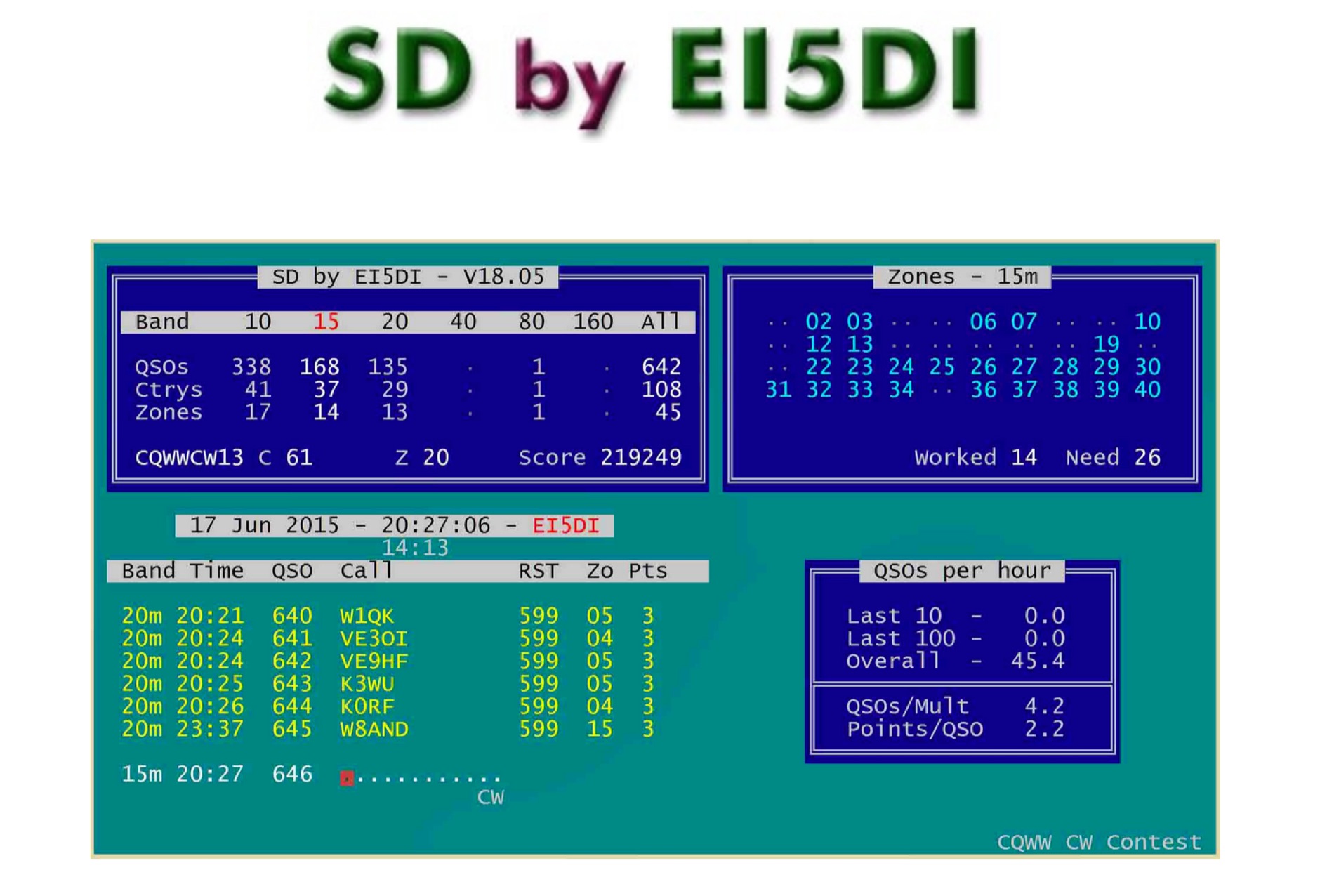 SD sets the standard for fast, simple logging and editing in the major international contests and in dozens of others worldwide. SD by EI5DI is a free HF contest logger for windows.
 -
 Simple PSK31 and RTTY program based on the AE4JY PSK engine. Logging inlcudes 10-10 and VP number. Exports to ADIF and CSV.
 -
 Simple, low cost interface between Kenwood serial ports and contest logging programs by Bob Wolbert, K6XX
 -
 Optimizing DX chasing efforts, this software provides a refined approach to monitoring the DXCluster. It allows operators to configure specific filtering criteria, ensuring that only relevant DX spots are displayed, thereby reducing clutter and focusing attention on desired entities or bands. The application integrates alarm functionalities, notifying the user when a spot matching their predefined parameters appears on the cluster, which is particularly useful for working rare DX or specific band slots. Spot supports both macOS and Windows operating systems, offering a cross-platform solution for a broad user base. Its design emphasizes user control over the displayed information, moving beyond a simple stream of cluster data to an actionable intelligence system for DXers. This client aims to streamline the process of identifying and pursuing DX opportunities. While the software was previously a commercial product, the developer, K3NC, has retired and made registration files for DXBase 2007 available for free, along with a utility to generate registration keys for that specific version. This allows continued use of the DXBase 2007 logging software, though it's important to note the 64-bit OS compatibility modification required for generated registration files.
 -
 Demonstrates how to construct an automatic band decoder, moving beyond manual selector switches for antenna and filter control. It addresses the challenge of varying band data outputs from different transceivers: Icom rigs provide voltage values, Yaesu rigs use Binary Coded Decimal (BCD), and Kenwood rigs lack direct band data output. The resource highlights a clever solution utilizing logging software like _CT (K1EA)_ and _DX4WIN_ to emulate Yaesu's BCD output via a PC's printer port, making the decoder compatible with any rig. The author details experiences building decoders based on designs by Bob _K6XX_ and Guy _ON4AOI_, noting K6XX's simple TTL chip design and ON4AOI's more comprehensive, opto-isolated unit capable of controlling ten outputs and bandpass filters like the _Dunestar_. It also references a _W9XT_ board design, which Steve Wilson, G3VMW, modified with BD140 transistors for source drivers, emphasizing safety. The author successfully cased an ON4AOI-based decoder in an old modem case, connecting it to an FT1000MP or a PC printer port to drive remote relays and a Dunestar Band Pass Filter.
 -
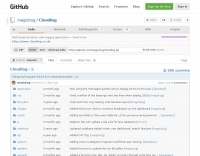 Cloudlog is a web-based amateur radio logging application built with PHP and MySQL, supporting station logging activities from HF to microwave. It integrates with companion tools for CAT control and automation, offering a flexible solution for managing QSO data. The application provides a self-hosted platform for amateur radio operators to maintain their logbooks, facilitating interaction with various ham radio operations. Its open-source nature allows for community contributions and customization, enhancing its utility for diverse operating preferences. Originally started by Peter, **2E0SQL**, Cloudlog was designed to enable simple interaction with the Ham Radio Deluxe logbook using MySQL.
 -
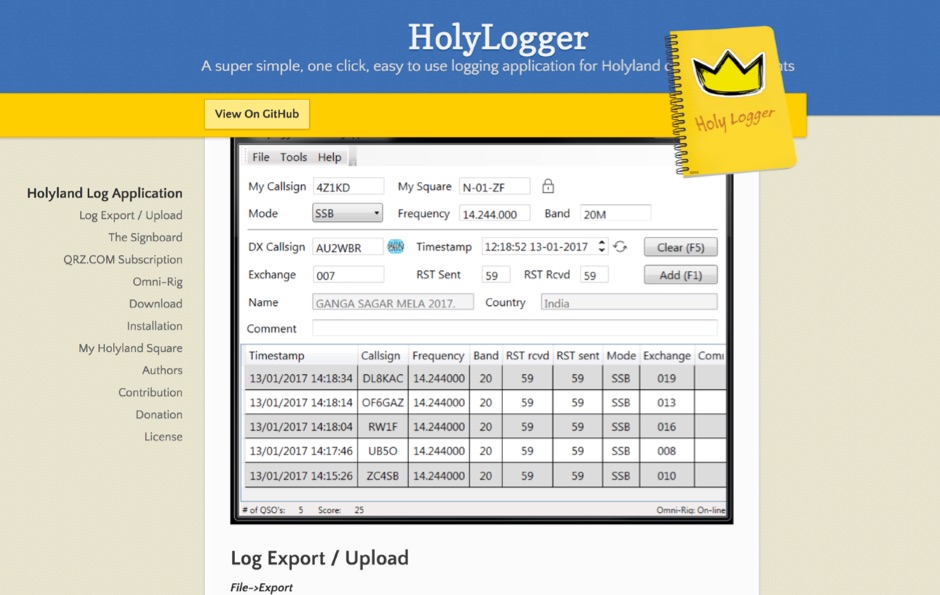 Holyland Log Application, a super simple, one click, easy to use logging application for Holyland contest participants.
 -
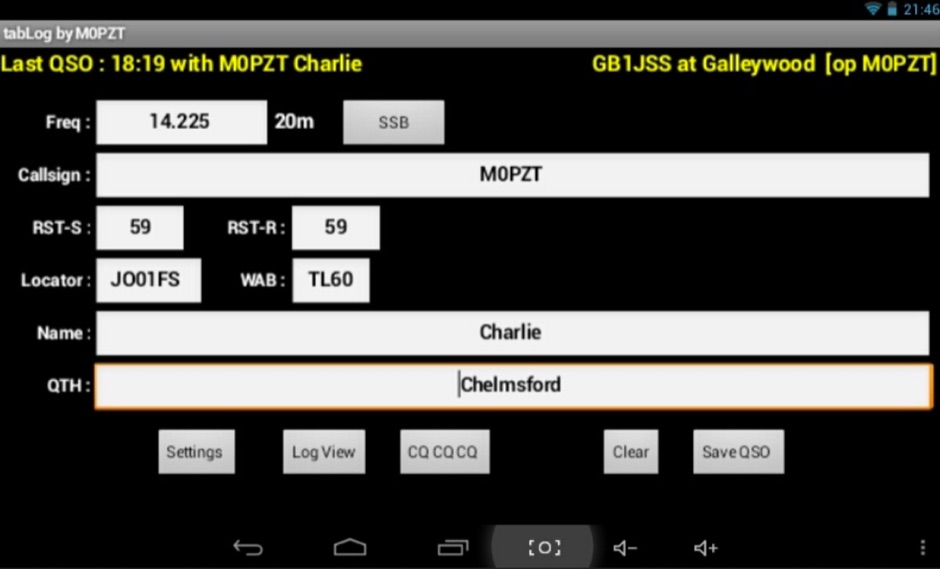 tabLog has been written to offer basic logging when /P and allows for easy import into your Shack-based log via ADIF. Best performance is with a tablet in landscape mode and using a small Bluetooth/micro-USB QWERTY keyboard – QSO entry via this method is simple, and efficient.
 -
 A simple, portable logger tailored for activities like Parks on the Air, Field Day, and more. HAMRS is a fast, user-friendly logging program designed for portable ham radio activities such as POTA, SOTA, and ARRL Field Day. Developed by Jarrett Green, it features an intuitive interface optimized for small screens and multiple platforms, including macOS, Windows, Ubuntu, Raspbian, iOS, and Android. HAMRS provides dedicated logging fields for portable operations, ensuring efficiency in the field. The desktop versions are free, while mobile apps require a small purchase. Its simplicity, cross-platform compatibility, and ease of use make it a valuable tool for amateur radio operators in portable settings.
 -
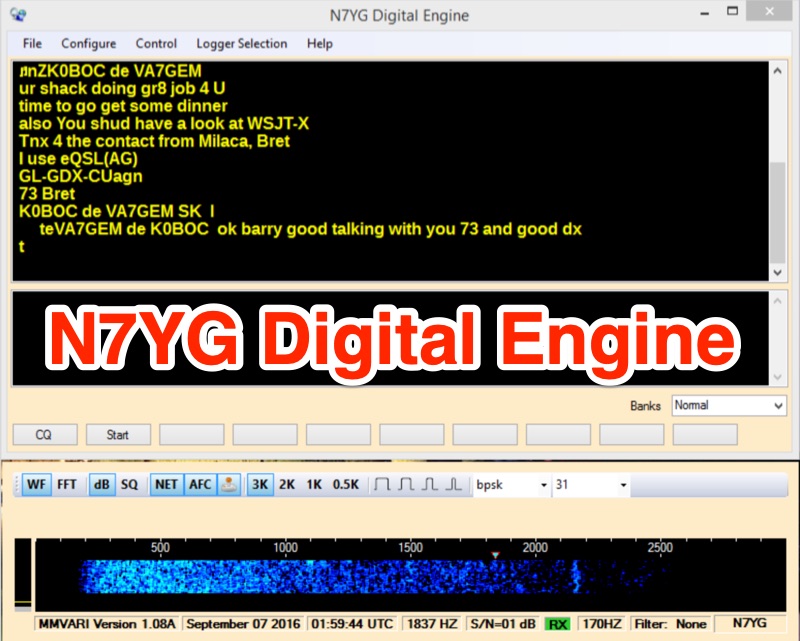 The N7YG Digital Engine, functions as a streamlined digital modem, supporting **PSK**, **RTTY**, and **MFSK** modes. It eliminates many ancillary logging and awards features found in other software, focusing instead on providing a dedicated digital interface. The software is specifically engineered to complement the N3FJP logging suite, offering a simple digital modem with a floating waterfall display that can coexist on the same screen as the logger. The application includes support for PSK Reporter, EXTFSK, TinyFSK, and K1EL Winkey FSK, enhancing its utility for various digital operations. Key features comprise a separate waterfall window, a main GUI with operational controls, receive and transmit display areas, and 10 Macro Buttons across 10 user-definable macro banks, totaling 100 macros for general and contesting use. Configuration options include sound card selection, digital gain (0-32767), AFC Level (0-100), AFC Width (in Hz), and COM Port TX keying for VOX/SignaLink or direct port control. Input and Output Mixer buttons provide direct access to OS audio mixer controls for precise level adjustments. The software is digitally signed with a security certificate, aiming to prevent conflicts with antivirus programs.