Operating Analog Amateur Radio Satellites
Find information and resources for communicating via analog amateur radio satellites, including operational status and technical details.

Analog satellites provide hams with opportunities for QSOs using traditional voice and Morse code modes. These amateur radio satellites, often in low Earth orbit, offer a unique challenge for operators to track their passes and make contacts on various bands. Unlike digital modes, analog satellite operation requires precise tuning and antenna pointing to achieve clear signals, reminiscent of early space communication efforts.
Many hams enjoy the thrill of working DX through these orbiting repeaters. Operators often use specialized software to predict satellite passes and calculate Doppler shift, which is crucial for maintaining frequency lock during a QSO. While newer digital satellites are becoming more common, the analog birds, like the venerable Fuji-OSCAR 20 (FO-20) and JAS-2 (Fuji-OSCAR 29 or FO-29), continue to be popular for their simplicity and directness, allowing for phone, CW, and even packet BBS communication.
-
 Provides the current operational status of the Fuji-OSCAR 20 (FO-20) amateur radio satellite, detailing power system performance and eclipse periods.
 -
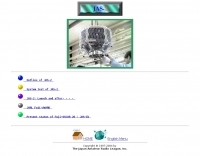 JAS-2 is prepared to succeed the communication of JAS-1b launched in February 1990 and still working. So JAS-2 is also capable of phone,CW and packet BBS.