Search results
Query: 26 tube
Links: 2 | Categories: 0
-
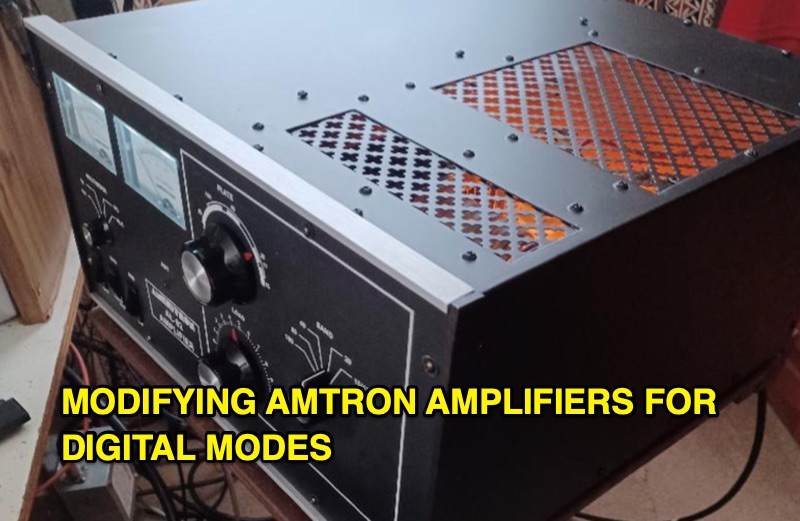 This resource details **cooling modifications** for Ameritron AL82, AL1200, and AL1500 HF amplifiers, specifically addressing heat issues encountered during high-duty-cycle digital mode operation. The author, WD4NGB, observed excessive heat in the tank area and band switch on an AL82, attributing it to insufficient exhaust over the 3-500 tubes and a complete lack of exhaust over the tank area. The modifications aim to prevent common failures such as damaged band switches and deformed insulating materials by increasing airflow and exhaust area. The page describes adding five holes to the chassis for enhanced cooling to the band switch and tank area, alongside enlarging the exhaust area over the inner 3-500 tube and the tank area on the amplifier cover, utilizing expanded metal for safety and RF shielding. The original cover featured 26.25 square inches of exhaust; the modified version significantly increases this to 48.5 square inches over the tubes and introduces an additional 15 square inches over the band switch. These changes are intended to resolve heating problems encountered during heavy, 100% duty cycle use in modes like RTTY or long SSB contests, which typically generate substantial heat. The article also discusses upgrading to a higher output fan, such as the G2E085-AA05-21, and modifying tube sockets for improved airflow and reduced back pressure, citing Tom Rauch (W8JI) of CTR Engineering as a source for parts.
 -
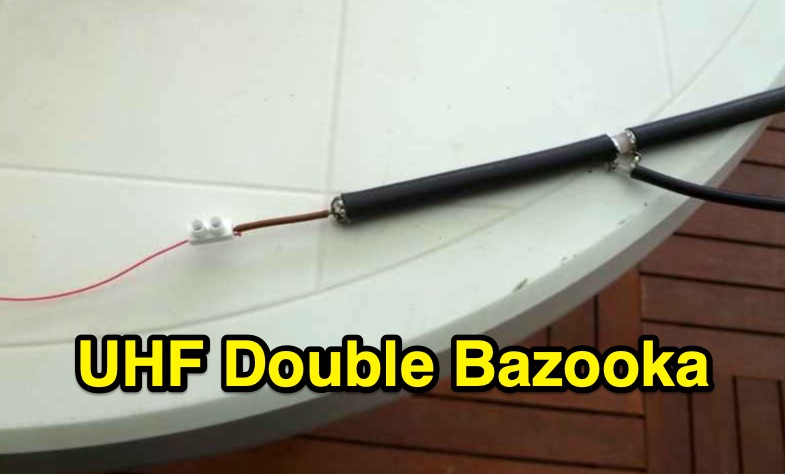 This article details the construction of a double bazooka antenna for the UHF band, specifically targeting 435 MHz. It describes a simple design that can be built from a length of good quality coaxial cable, intended for vertical polarization. The article provides formulas for calculating the total length of the radiating element (140.208 / F (MHz)) and the coaxial cable (99.06 / F (MHz)). Step-by-step images illustrate the construction process, starting with cutting RG213 coaxial cable, short-circuiting extremities, interrupting the braid at the center, and attaching an insulating support. It covers preparing the definitive mounting with a quality coaxial feedline (RG58 mentioned as a temporary option) and weatherproofing using PVC electrician's tube, glue, adhesive tape, or heat-shrink tubing. The antenna is designed to be mounted on a small aluminum mast, with the cable passing inside. The article reports a very satisfactory SWR measurement, with approximately +/- 3% HF return.