Search results
Query: foreign
Links: 22 | Categories: 0
-
 This page discribes microphone wiring connections for most UK and foreign radios. Most U.S. radios are "Code Type 2".
-
 Large collection of audio clips of foreign radio stations, with identification announcements in various languages, signature tunes and jingles, and of course interval signals.
-
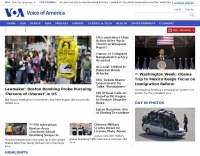 The Voice of America (VOA) website serves as a primary digital platform for its international news and information services, broadcasting in 44 languages. The resource presents a wide array of current events, geopolitical analyses, and cultural reports, reflecting a global perspective on news originating from the United States. Content spans various regions, including Africa, Asia, the Middle East, and specific country-focused reports from VOA's language services, such as VOA Uzbek, VOA Kurdish, and VOA Russian. The site features top stories, special reports, and sections like "All About America" and "VOA Explains," providing in-depth context on US-related topics and global issues. The VOA platform offers a continuous stream of updated news articles, covering political developments like government shutdowns, diplomatic relations, and international conflicts, alongside social and economic issues. It also includes sections for "Worth Watching" videos and "From VOA's Language Services," highlighting the breadth of its multimedia output. The content is designed to inform a worldwide audience, often presenting multiple perspectives on complex international events and US foreign policy, making it a significant reference for those monitoring global news and shortwave broadcast content.
-
 Collection of audio clips of foreign radio stations, with identification announcements in various languages, signature tunes and jingles, and of course interval signals
-
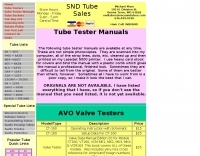 For radio amateurs and electronics enthusiasts maintaining vintage tube gear, having accurate documentation for tube testers is crucial. Michael Marx, WB0SND, through SND Tube Sales, provides high-quality reproductions of these essential manuals. These aren't mere photocopies; each manual is digitally scanned, cleaned of imperfections, and professionally printed on a _Laserjet 5000_ with heavy card stock covers and plastic comb binding, often making them difficult to distinguish from originals. The catalog includes instruction manuals, schematics, and roll chart supplements for a wide array of classic tube testers. Operators can find documentation for popular models such as the _Hickok 539B/C_, _AVO CT-160_, and _B&K 700_, along with military-grade testers like the _TV-7_ and _USM-118_. Many listings also offer specialized supplements for obsolete or foreign tubes, ensuring comprehensive coverage for diverse tube collections. WB0SND's offerings extend to calibration instructions and data for specific adapters like the _Hickok CA-4_ and _CA-5_, providing critical support for precise tube testing.
-
 Amateur radio multi language QSO with translation in several languages. How to conduct a QSO in a foreign language including english
-
-
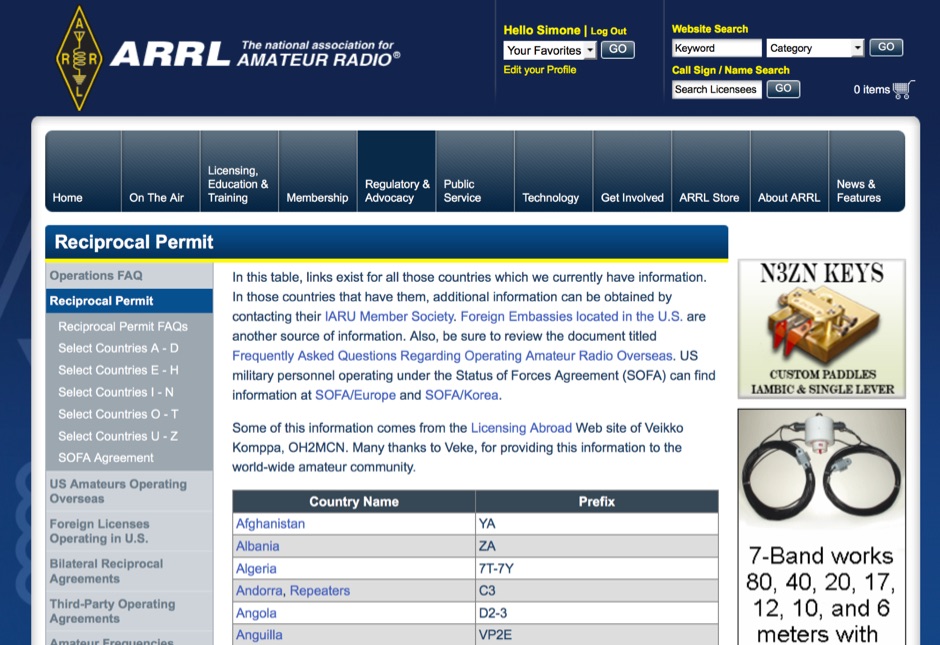 The ARRL Reciprocal Permit page addresses international amateur radio operating privileges, specifically focusing on how a US-issued amateur radio license can be recognized and validated for operation in foreign jurisdictions. It outlines the process for obtaining reciprocal operating permits, which are essential for US hams wishing to transmit legally while abroad, ensuring compliance with local telecommunications regulations. The resource details the specific requirements and agreements between the United States and other nations regarding amateur radio licensing. This information is crucial for DXpeditioners and traveling amateurs to understand the legal framework governing their operations outside their home country. It clarifies which countries have reciprocal agreements or require specific temporary permits, preventing unauthorized transmissions. The page serves as a central point for US licensees to research the necessary steps before embarking on international travel, covering aspects like application procedures and required documentation for foreign operating authorization.
-
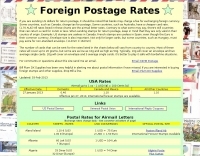 Updated list of postage costs and conditions in different parts of the world by K4HB
-
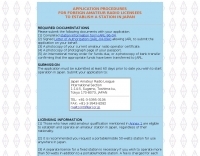 The Japan Amateur Radio League (JARL) outlines the application process for foreign amateur radio operators seeking to establish a station in Japan. Required documentation includes a completed JARL-96-04 station information form, a signed JARL-04-09A Letter of Authorization, photocopies of the current amateur radio operator certificate, passport or Residence Card, and proof of bank transfer or PayPal payment. Applications must be submitted at least 60 days prior to the desired operation start date to the JARL International Section in Tokyo. Licensing information specifies eligibility for those with valid amateur qualifications listed in Annex 1, regardless of nationality. A portable/mobile 50W station license is recommended for nationwide operation, costing JPY 2,750. Fixed station licenses for output power exceeding 50W but not more than 200W cost JPY 5,400. Licenses are granted for the authorized stay period, up to five years, and are renewable for JPY 1,700. Operations exceeding 200W require a different procedure involving direct submission to the Ministry of Internal Affairs and Communications (MIC) and an on-site inspection. Radios without a 'Technical Standard Certification Number' require assurance by JARD, incurring a JPY 5,500 fee for the first radio and JPY 1,100 for each additional unit. Payment options include bank transfer to MUFG Bank, Ltd., Komagome Branch, or PayPal. The document also details guest operation rules, allowing validly licensed foreign amateurs to operate local stations under specific conditions, including host presence and identification with the host's callsign followed by their own.
-
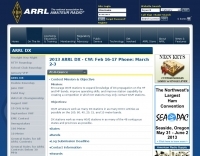 W/VE amateurs work as many amateur stations in as many DXCC countries of the world as possible on 160, 80, 40, 20, 15, and 10 meter bands. Foreign amateurs (also including KH6, KL7, CY9, and CYØ) work as many W/VE stations in as many of the 48 contiguous states and provinces as possible.
-
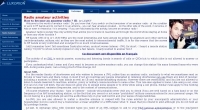 How to become an amateur radio ? by ON4SKY Review of general conditions to get licensed, examinations, regulation, CW, foreign calls, and more
-
 Maritime Mobile Service Net for disaster help on high seas on foreign lands
-
 More than 130 currencies are supported by the _Universal Currency Converter_, a digital utility designed for real-time foreign exchange rate calculations. This tool is particularly useful for radio amateurs traveling internationally for DXpeditions, contests, or hamfests, allowing them to quickly ascertain local currency values against their home currency, which can be crucial for budgeting and transaction planning in unfamiliar territories. The platform also facilitates international money transfers to over 190 countries, providing features like rate alerts and historical currency rate analysis. Users can track exchange rate trends over days, weeks, or years, and receive daily market analyses via email updates. Additional functionalities include an IBAN calculator for validating bank account numbers and an API for integrating real-time currency data into other applications. The service is widely trusted, with **4.8** ratings on both the App Store and Google Play, reflecting its reliability for global financial transactions.
-
 A photographic reference for wire and wireless telegraph key collectors and historians
-
 Navigating international travel for amateur radio operations, such as DXpeditions or IOTA activations, often requires meticulous attention to passport and visa requirements. While not directly about radio, the services offered by Bucktown Visas & Passports, Inc. address a critical logistical component for operators planning to transmit from foreign soil. They specialize in expediting United States passports and various travel visas, with processing times as short as **24-48 hours** from their Chicago, Illinois office. This can be particularly useful for hams needing rapid document turnaround for last-minute travel opportunities or unexpected operational changes. The company, led by _John J. Luna_, a U.S. Navy veteran, provides services for new passports, renewals, and assistance with lost or damaged documents, which are essential for maintaining legal travel status.
-
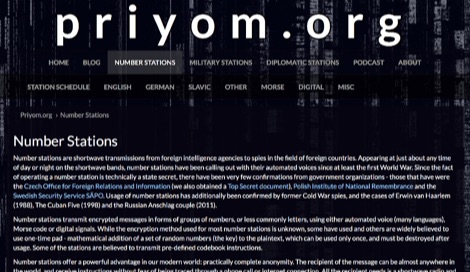 Number stations are shortwave transmissions from foreign intelligence agencies to spies in the field of foreign countries.
-
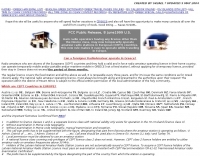
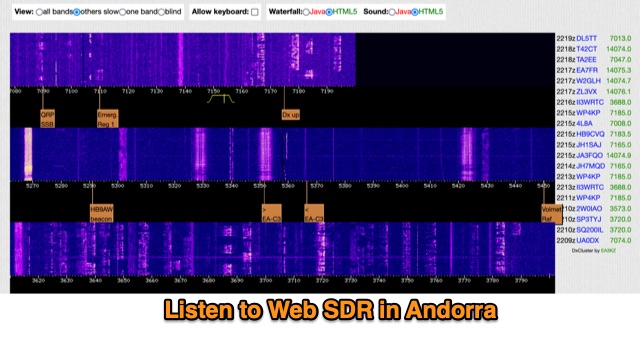 Presents a web software defined radio service hosted by the ARDAM amateur radio club in Ordino, Andorra, situated at an altitude of 1,400 meters in the Pyrenees. The system incorporates four FunCubeDonglePro+ receivers, providing access to the 60m, 40m, 20m, and 80m amateur bands. These receivers are connected to a dipole antenna oriented East/West, enabling users to monitor signals, check their own transmissions, or simply enjoy general ham radio listening from this unique QTH. The interface provides a waterfall display, frequency tuning, and signal strength plotting, with options for both Java and HTML5 WebAudio, though Java is noted as a requirement for full functionality on some browsers. The resource details the operational aspects, crediting PA3FWM for the underlying software and C31CT and EA3KZ for system operation and maintenance, ensuring 24/7 availability. It also includes a significant section outlining the ARDAM association's ongoing disputes with the URA (Unió de Radioaficionats Andorrans) regarding amateur radio regulations, CEPT licensing for foreign visitors, and the installation of a VHF-DMR repeater, highlighting the challenges faced by ARDAM in promoting amateur radio in Andorra.
-
 The VKFAQ page on Visitors' licences in VK outlines the process for foreign amateur radio operators to obtain reciprocal operating privileges in Australia. It details the varying requirements based on the visitor's home country, ranging from direct use of a home callsign with a VK suffix (e.g., G3PHO/VK1) to needing a full Australian amateur radio license. The resource emphasizes consulting the Australian Communications and Media Authority (ACMA) website for the most current conditions and application procedures, noting that agreements are subject to change. Specific conditions are mentioned for countries with recognized license qualifications, allowing for corresponding Australian licenses. For other countries, a restricted license might be issued, typically permitting 146-148 MHz FM operation with a maximum of 10 watts output. Japanese operators with specific 'telephone or telegraph' licenses may receive privileges for bands above 30 MHz, phone only, also with a 10-watt power limit. Visitor licenses are not automatically renewable but can be extended upon request, provided all conditions are met.
-
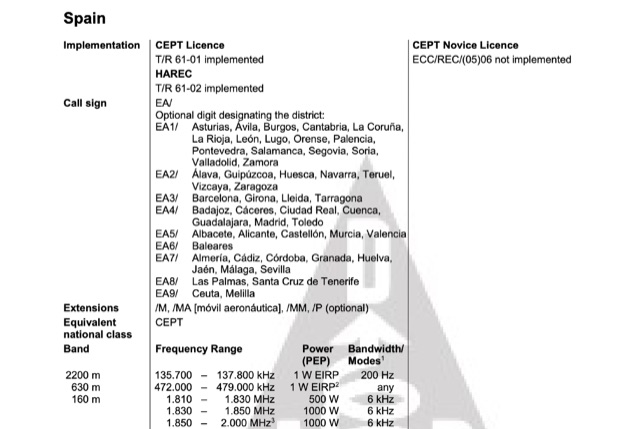 A document that includes a list of all countries implementing CEPT licence, with detailed information on licence types like standard CEPT, CEPT Novice and HAREC. A full list of frequencies, and call signs schemas to be used by foreign operators, compiled by Hans Schwarz, DK5JI
-
 Procedure for foreign ham radio licensees to establish a station in Japan
-
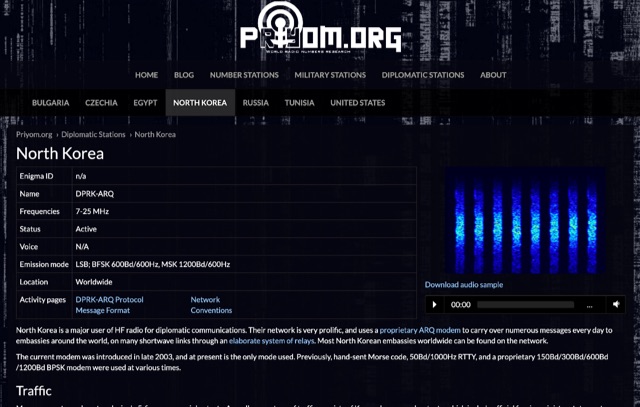 The resource details active HF radio networks maintained by foreign ministries for diplomatic communications, specifically listing operational schedules and frequencies. It currently covers networks for Bulgaria, Czechia, Egypt, North Korea, Russia, Tunisia, and the United States. The content provides specific operational parameters for these government-run shortwave stations. Information includes details on _legacy modes_ of operation and specific transmission times. The site also includes schedules for various _number stations_ which often utilize similar HF spectrum allocations. The data presented aids in identifying and monitoring these unique, non-amateur radio signals across the shortwave bands. Specific sections are dedicated to the networks of North Korea and the United States, offering granular data for each.