Search results
Query: space exploration
Links: 5 | Categories: 0
-
 Presents a collection of articles and project logs from ST2NH, focusing on various aspects of amateur radio, including satellite communications and DIY electronics. The blog details experiences with tracking the _International Space Station_ (ISS) and other orbital assets, providing insights into the operational challenges and successes encountered in these specialized modes. Documents several homebrew radio projects, offering construction details and discussions on circuit design for various amateur radio applications. Content often touches upon software-defined radio (SDR) implementations and related software tools, demonstrating practical applications for hams interested in digital signal processing and flexible radio architectures. Explores topics relevant to QRP operation and general amateur radio news, reflecting the author's engagement with the broader ham community. The blog serves as a personal chronicle of amateur radio activities and technical explorations.
-
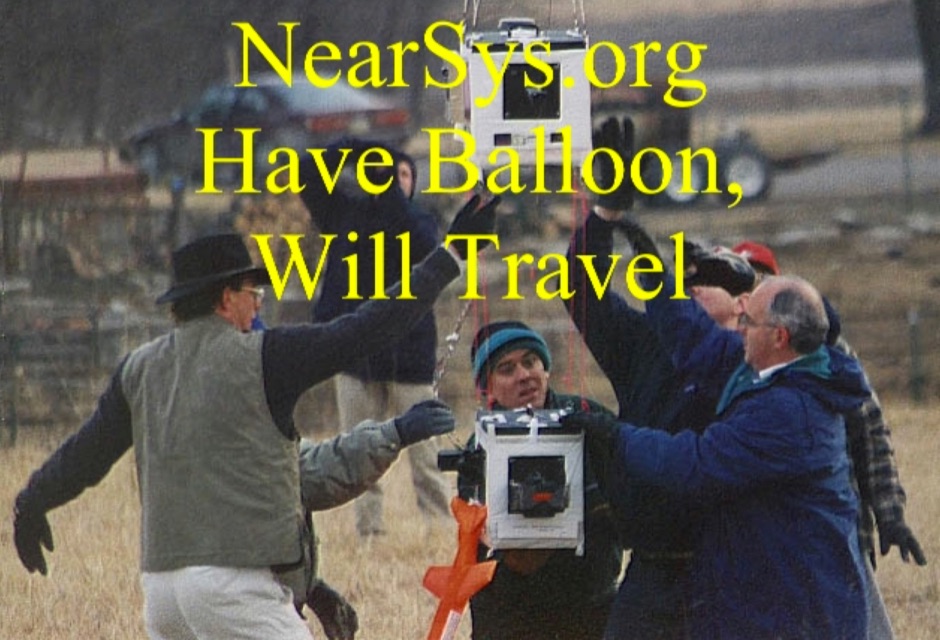 NearSys (Near Space Systems) is a multifaceted organization, with interests in near space exploration, microcontrollers, robotics, space, and astronomy. Includes a section dedicsated to Amateur Radio High Altitude Ballooning
-
 Fram2, the first human spaceflight in polar orbit, launches spring 2025 aboard SpaceX's Falcon 9. Inspired by the polar exploration ship Fram, the mission highlights innovation and exploration. Four astronauts from Europe and Australia will orbit Earth for 3–5 days, including ham radio operator Rabea Rogge, who will transmit SSTV images for an educational competition. Open to students aged 16–25, the contest challenges teams to identify polar-related sites. Fram2 collaborates with ARISS to inspire STEAM learning through space communications.
-
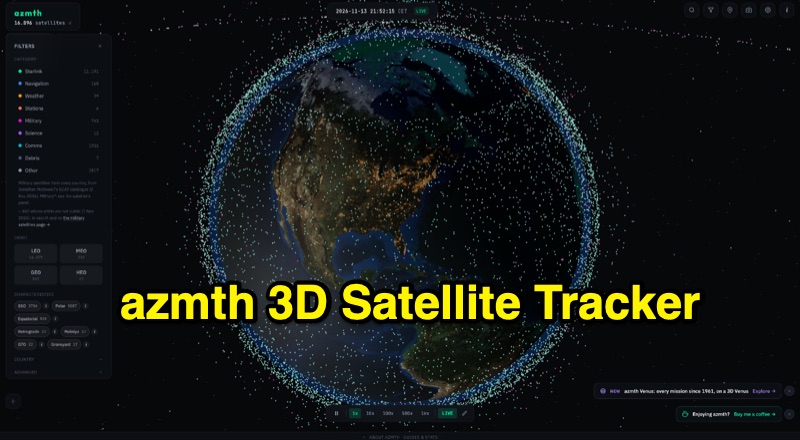 Demonstrates a sophisticated, free 3D globe in the browser that visualizes every active satellite live, leveraging CelesTrak orbital data for precise positioning. This interactive tool enables users to track a vast array of satellites, from the International Space Station (ISS) and Starlink constellations to dedicated amateur radio satellites like SO-50, RS-44, and GreenCube. The platform provides real-time orbital paths and allows for detailed observation of satellite movements relative to Earth. Users can input their specific location to generate accurate pass predictions and determine visibility windows for any selected satellite, a crucial feature for satellite operators planning contacts. The interface is designed for intuitive exploration, allowing manipulation of the 3D globe and selection of individual satellites for detailed information. The tracker's ability to display over 16,800 active satellites simultaneously offers a comprehensive view of the orbital environment, aiding in understanding satellite dynamics and optimizing amateur radio satellite operations.
-
 The Llanelli Amateur Radio Society (LARS) website details the club's offerings for both licensed operators and those new to amateur radio, including shortwave listeners and individuals pursuing Foundation, Intermediate, or Full licenses. It highlights opportunities to learn radio techniques, explore digital modes such as C4FM, D-Star, DMR, and FreeDV, and participate in contests and social events. The club aims to foster a supportive environment for experimentation and knowledge sharing among its members. Member testimonials illustrate practical applications, such as a new licensee making a 1000km contact via a repeater after being inspired by space exploration, and another quickly passing the RSGB Foundation exam. The site also features accounts of members progressing to Intermediate and Full licenses, with one Full license holder continuing to learn new modes like CW and digital, and engaging in activities like Parks on the Air (POTA).