Building and Using Open Wire Feed Lines for Antennas
Find resources and guides for constructing and implementing open wire and ladder line feed systems for various amateur radio antenna projects.

Open wire feed lines, often called ladder line, are a classic choice for hams building multiband wire antennas, especially for HF operation. These balanced lines offer very low loss, making them efficient for feeding dipoles and other wire arrays across many bands, even when the antenna presents a high SWR to the line. Operators frequently use open wire lines with antenna tuners that provide a balanced output, allowing a single antenna to work effectively from 80 meters up to 10 meters or higher.
Many hams choose to homebrew their own open wire lines, fabricating custom lengths and spacing for specific antenna projects. Resources in this category provide practical guides for constructing ladder line, discussing conductor types and spacer designs. Operators can also find calculators to design parallel transmission lines for a desired characteristic impedance, and discussions comparing open wire lines to coaxial cable for various station setups. There are also articles addressing specific operational concerns, such as the impact of moisture on ladder line performance.
-
 K2HYD illustrate how to home made ladder line
 -
 Why Multi-band Dipoles Need HEAVY Open Wire Line by Tom, K1JJ
 -
 1000 feet of open wire line
 -
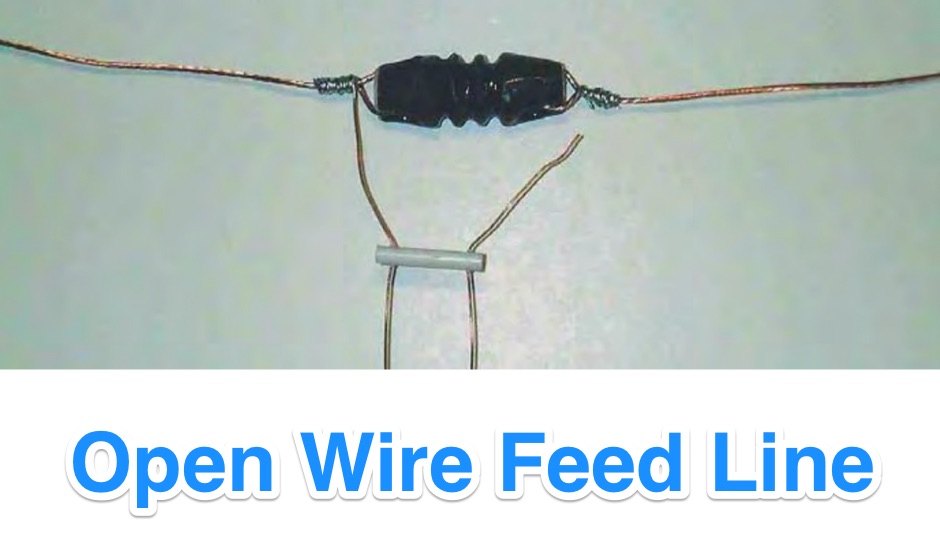 Put up the longest dipole you can fit, feed it with open wire line, connect it to the balanced output of your tuner and poof! Instant multiband antenna. Is life really that simple?
 -
 How to make 450 ohm open feeder
 -
 Homebrew Light-weight Open-wire feedline for Portable Ops by N5ESE
 -
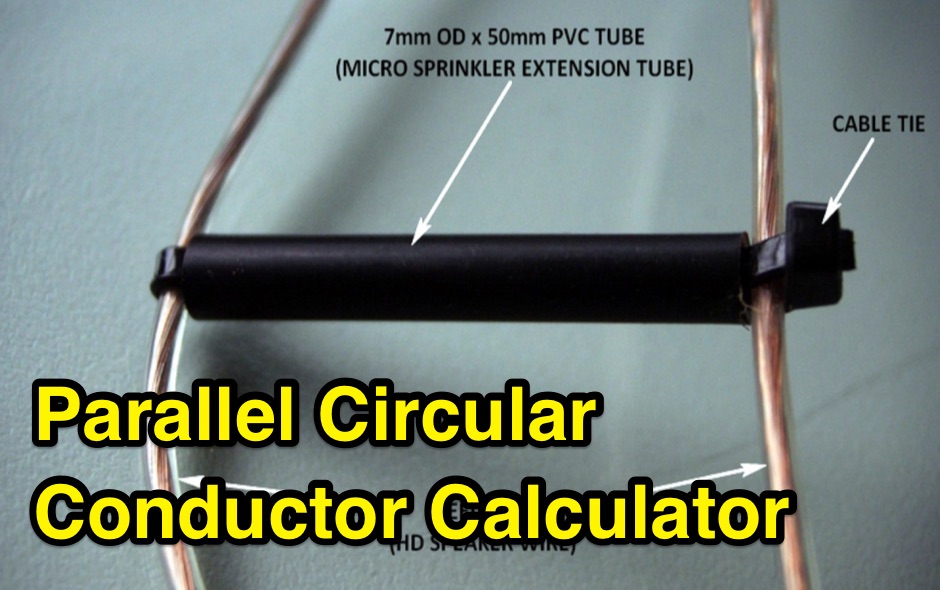 Design a parallel circular wire balanced transmission line with this online calculator. This calculator is a tool for designing balanced transmission lines with a specific desired characteristic impedance Zc and made of parallel circular conductors of a given diameter d.
 -
 Article on various type of transmissium medium, like parallel lines, twisted pairs, shielded pairs, coax lines
 -
![[TowerTalk] Coax Vs Open Wire Line](https://www.dxzone.com/dx19148/towertalk-coax-vs-open-wire-line.jpg) Discussion at towertalk about coax cable feed lines vs Open Wire Lines
Discussion at towertalk about coax cable feed lines vs Open Wire Lines -
![[TowerTalk] Open Wire Line](https://www.dxzone.com/dx19141/towertalk-open-wire-line.jpg) Discussion about open wire line on tower talk
Discussion about open wire line on tower talk -
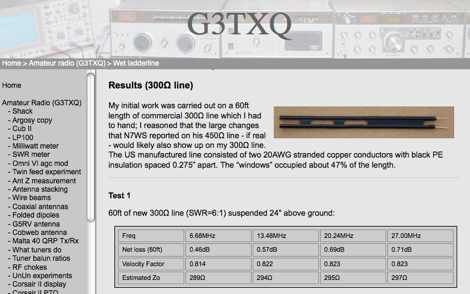 Article that try to answer to questions that arises about losses in the ladderline, and how they change when the line is wet by g3txq