Radio Scanning Information and Frequency Databases
Find essential reference materials, frequency assignments, and technical guides for radio scanning operations.

Radio scanning allows operators to listen in on a wide range of radio activity beyond the amateur bands. This includes public safety, business, and utility communications, offering a unique perspective on local radio traffic. Hams often use scanners to monitor local repeater activity, track propagation conditions, or simply to stay informed about what's happening on other frequencies.
Many resources help operators identify active frequencies and understand various radio systems. Websites like RadioReference.com provide extensive databases of conventional frequency assignments and trunked radio system information, including talkgroups. Additionally, hams interested in decoding signals from common wireless devices, such as those operating on 433 MHz, can find guides for using software-defined radio (SDR) to analyze these transmissions.
-
 RadioReference.com, scanner frequency and radio communications reference source, with complete conventional frequency assignments, trunked radio system information, frequencies, and talkgroups, FCC License assignments and maps, 10-Code Lists, agency maps, files, downloads, links, and detailed agency information for most public safety, military, and local government activities.
 -
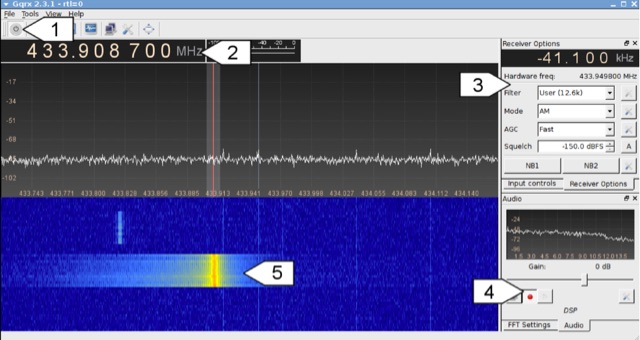 A guide to receiving and manually decoding 433 MHz On-Off Keying (OOK) radio signals from wireless devices using SDR software and audio editors.
 -
 Decoding 433MHz-transmissions with software-defined radio.