Search results
Query: 2026 DXpedition
Links: 10 | Categories: 1
-
 The 3Y0K Log Online provides a detailed logsearch interface for the **3Y0K** DXpedition to Bouvet Island, scheduled for February 2026. This web-based tool, hosted on _Club Log_, allows users to access real-time QSO statistics and leaderboards. The interface includes interactive features such as a map for checking real-time propagation and colored boxes that reveal mode and time breakdowns when hovered over. The service supports HF bands and provides a structured overview of QSOs, including band/mode breakdowns and continent-specific data. Users can report logging inquiries and QSL requests exclusively through the M0OXO Online QSL Request System (**OQRS**). The site also offers additional resources like band plans, operating practices, and FT8 advice. The leaderboard feature, which includes clubs and Contest Club, ranks stations based on the number of band slots worked, with duplicate QSOs being discouraged. The expedition's impact on users' totals is also tracked, providing insights into new bands, modes, and DXCC entities worked. DXZone Focus: 3Y0K DXpedition | Club Log | Bouvet Island
 -
 The 3Y0K website is the official platform for the Bouvet Island DXpedition scheduled for February 2026. It serves as a comprehensive resource for amateur radio operators, providing essential information about the expedition, including updates on operations, band availability, and communication modes such as FT8 and CW. The site aims to keep the amateur radio community informed about the expedition's progress and activities, encouraging participation and support. Users can find details on how to donate to the expedition and contact information for inquiries, as well as links to social media for real-time updates and community engagement. In addition to operational details, the 3Y0K site offers various resources for those interested in DXpeditions. It highlights the significance of Bouvet Island as a rare DXCC entity and outlines the logistical challenges faced by the team. The website is designed to be user-friendly, featuring a clear layout that allows visitors to navigate easily through the information. Overall, the 3Y0K website is a valuable resource for amateur radio operators looking to engage with the Bouvet Island DXpedition and enhance their understanding of amateur radio operations.
 -
 The RI1FJL DXpedition to Franz Josef Land, planned for August 2026, will deploy at least five high-power stations operating 24/7 across all **HF bands** for 15 days. The team of six operators, including R7AL and UA3QLC, will depart Murmansk on August 7, 2026, aboard a 20-meter sailing yacht, aiming for Heiss Island (IOTA: EU-019, QTH Loc.: LR80tn, CQ zone: 40, ITU zone: 75). Operating modes will encompass CW, SSB, and FT8, with specific FT8 frequencies like 1836.0 kHz and 14095.0 kHz designated for MSHV software. Equipment includes EE SUNSDR2 DX and Elecraft K3 transceivers, paired with Expert 1.3K-FA power amplifiers, and a variety of antennas such as Spiderbeams and phased GPs for 40m, 80m, and 160m. The expedition emphasizes working distant regions and low-power stations, acknowledging the challenging Arctic conditions with average temperatures around 1-3°C below zero. The logistical planning includes securing accommodation at the Geophysical Polar Observatory on Heiss Island and navigating potential ice conditions for zodiac landings. QSL information specifies ClubLog uploads at least daily, with OQRS available for direct and bureau QSLs. Donors contributing $10 or more receive fast LoTW confirmation and direct QSL cards, while Platinum Donors of $100+ will have their callsigns featured on the QSL card. A special plaque is offered for two QSOs with RI1FJL on different bands or modes.
 -
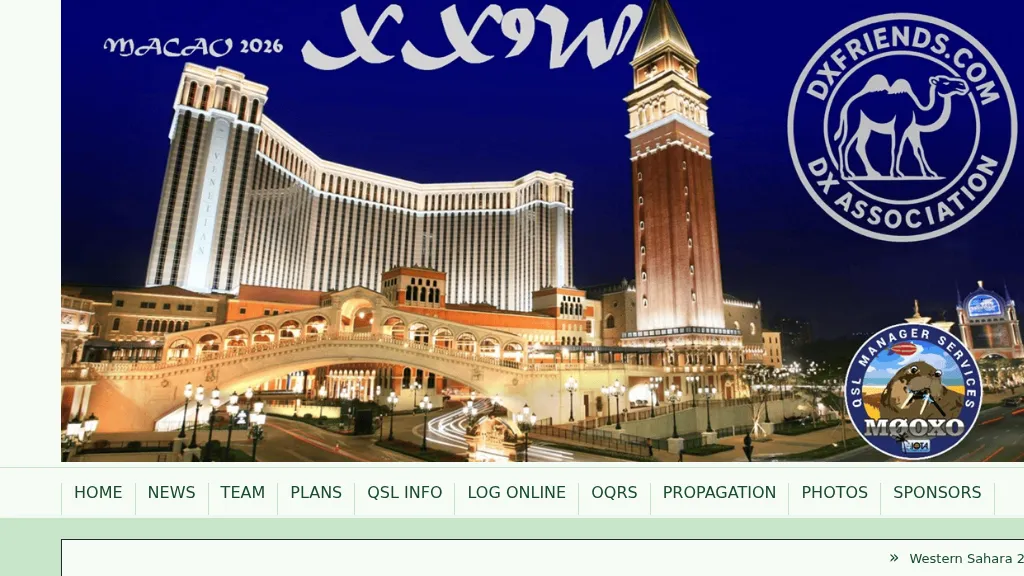 Documents the operational planning for the **XX9W** DXpedition to Macao, a **DXCC** entity. This resource outlines the team composition, identifying 14 operators from various IARU regions, including EA1CJ, F2JD, and JH4RHF. It details the expedition's objective to activate Macao, officially the Macao Special Administrative Region of the People's Republic of China, emphasizing its distinct blend of Portuguese and Chinese cultures, historic architecture, and urban landscape. The site also provides information on how to support the DXpedition through donations, facilitating contributions via PayPal. Macao operates under the "one country, two systems" principle, with Chinese (Cantonese) and Portuguese as official languages, and a population exceeding 680,000. The content highlights the region's geographical location on the southern coast of China, across the Pearl River Delta from Hong Kong, and its historical background as a Portuguese colony.
 -
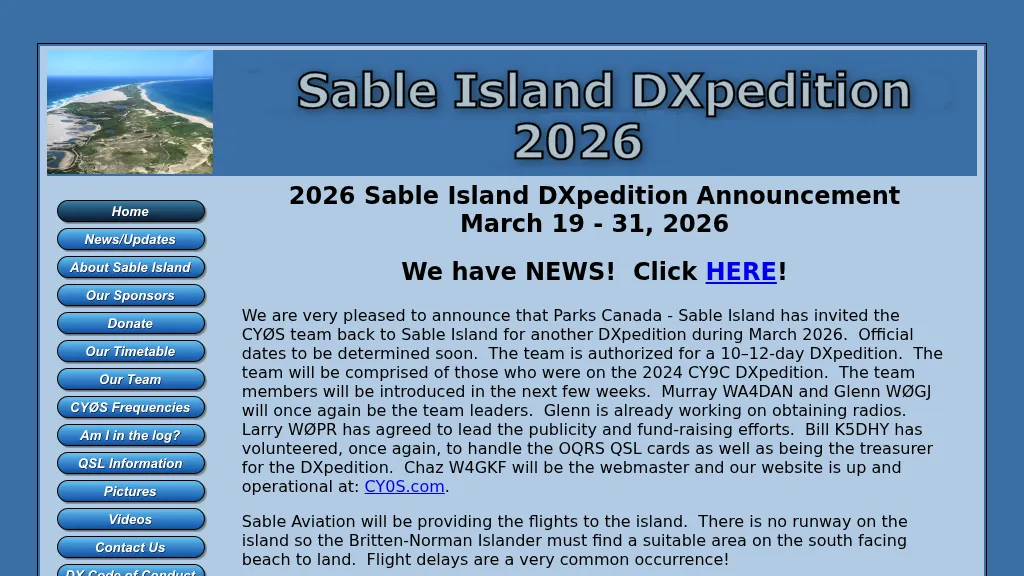 The 2026 Sable Island DXpedition (CY0S) announcement details an upcoming 10-12-day operation from March 19-31, 2026, following an invitation from Parks Canada - Sable Island. The team, largely drawn from the 2024 CY9C DXpedition, includes Murray **WA4DAN** and Glenn **WØGJ** as co-leaders, with Larry WØPR managing publicity and fundraising. Bill K5DHY will handle OQRS QSL cards and serve as treasurer, while Chaz W4GKF maintains the CY0S.com website. Logistical information specifies Sable Aviation will provide flights to the island, landing on a suitable south-facing beach area, acknowledging potential flight delays. Sable Island, located approximately 300 km east of Halifax, Nova Scotia, is described as a 40 km long, 1 km wide sand island with no trees, anticipating cold, windy, and snowy conditions during March. The resource also notes the availability of a dedicated Japanese website and accepts donations via the CY0S website.
 -
 Presents the S21WD DXpedition to Bangladesh (IOTA **AS-140**) scheduled for 2026, organized by the Next Generation DX Club e.V. It outlines the project's progress, including final hardware and systems testing, and the team's successful arrival and activation from the target location. The resource provides a concise summary of Bangladesh, covering its geography, cultural aspects, and economic landscape. The page includes the Clublog Most Wanted ranking for Bangladesh, categorized by continent and mode, as of January 2026. The DXpedition aims to achieve over 70,000 QSOs across CW, SSB, RTTY, and FT8 modes, with a specific focus on RTTY (targeting over 2,000 QSOs) and **lowband** operations. The team plans a Multi-Single entry in the ARRL CW 2026 contest. QSO data will be uploaded to Clublog and LoTW, with Clublog livestream and daily free LoTW uploads anticipated, contingent on stable internet connectivity. The S21WD callsign corresponds to CQ Zone 22 and ITU Zone 41. Further details include a preliminary bandplan, FT8 operating guidelines using MSHV software, a VOACAP DX Prediction link, and an azimuthal map centered on Bangladesh. QSL services are managed by DJ4MX via Clublog OQRS, offering direct, bureau, and LoTW options, with daily LoTW uploads expected.
 -
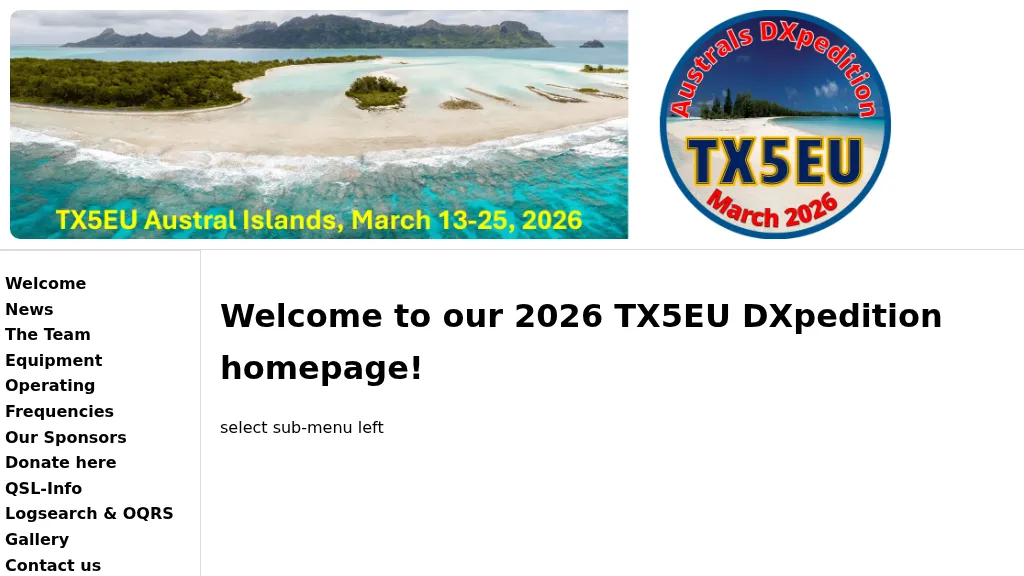 TX5EU 2026 DXpedition to Raivavae Island, **OC-114**, within the Austral Islands, providing a detailed account of the German/Dutch team's operations. The resource outlines the participation of operators such as DL2AWG Guenter, PA2KW Evert, and DK2AMM Ernoe, who engaged in CW, SSB, RTTY, and various digital modes. It documents the real-world challenges encountered, including significant equipment failures and antenna damage to 80/60m, 30m, and 10m verticals due to adverse storm conditions. The page offers timely news updates on the expedition's progress, noting repairs to a power amplifier's 10/12m bandpass filter, which enabled three stations to utilize amplification. Earlier reports highlighted power failures and the loss of multiple power amplifiers, necessitating one station to operate barefoot FT-8 with 100W. The team's persistent efforts to repair antennas as weather permits are also detailed, reflecting the dynamic nature of remote island operations.
 -
 The H49A DXpedition to the Solomon Islands (OC-047, IOTA OC-047) is scheduled for a 13-day operational period, commencing on October 9th and concluding on October 21st, 2026. This **DXpedition** will feature a six-member team, including Rolando (9A3MR) as Team Leader, Zrinko (DK8ZZ/YT3ZZ), Mladen (9A2NA), Frane (9A3CJY), Kristijan (9A4WY), and Livio (9A7Y). Operations are planned across all **HF bands** and 6 meters, utilizing CW, SSB, and FT8 modes. This activity provides a significant opportunity for radio amateurs worldwide to log the Solomon Islands, a sought-after DXCC entity. The team aims to maximize contacts across various bands and modes, contributing to global DXCC and IOTA awards. Specific QSL routes and logistical details are anticipated to be published closer to the operational dates.
 -
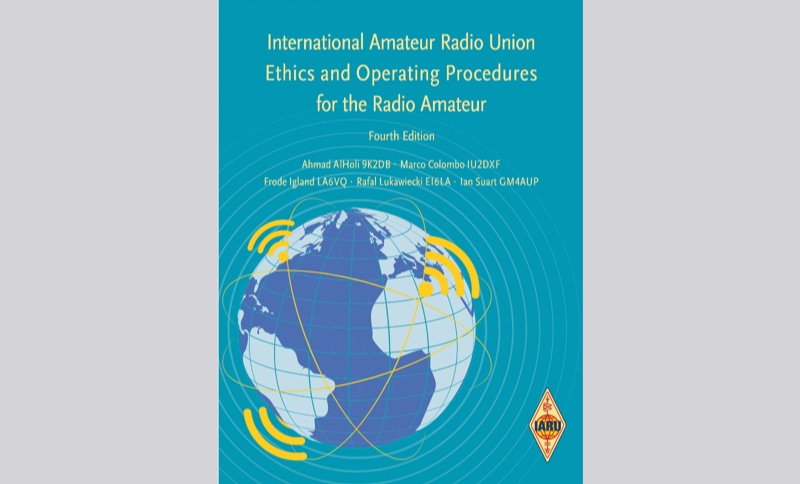 Presents the 4th edition of the IARU Region 1 Ethics and Operating Procedures for the Radio Amateur, a fully rewritten guide published in July 2026. It establishes a shared basis for respectful and effective communication within the amateur radio community, building upon over fifteen years of prior work. The document details the purposes of amateur radio, principles of non-interference, electromagnetic compatibility, and station safety. It specifies operating procedures, including listening practices, adherence to IARU and national band plans, appropriate transmission content, use of Q-codes, and the phonetic alphabet. The guide provides instructions for conducting QSOs across phone, CW, and various digital modes. Specific sections address managing pileups, participating in contesting, engaging in DX and DXpedition operations, operating portable or mobile, and conducting station testing. Further sections cover VHF and UHF operating considerations, ensuring a comprehensive resource for both experienced operators and those new to the hobby.
 -
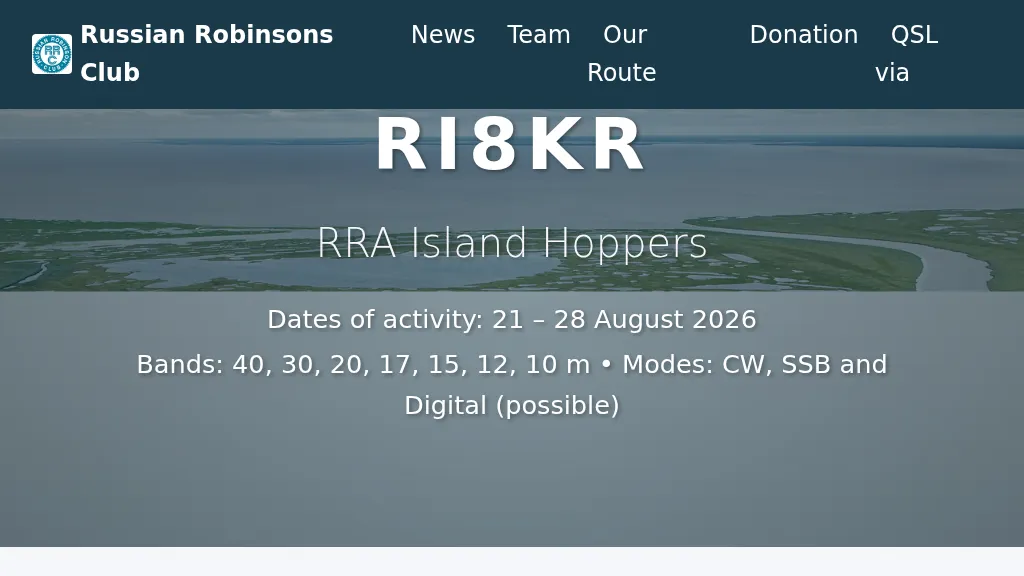 Presents the RI8KR RRA Island Hoppers DXpedition, detailing its schedule from August 21 to 28, 2026, and its objective to activate four new island groups in the Ob Bay of the Kara Sea. The expedition targets specific Russian River Club (RRC) references: RR-06-66 (Ob River Delta Islands West), RR-06-67 (Ob River Delta Islands North-West), RR-06-68 (Ob River Delta Islands North), and RR-06-69 (Ob River Delta Islands Center/North). Operators Vladimir, RK8A, and Igor, UA3EDQ, will operate on 40, 30, 20, 17, 15, 12, and 10-meter bands using CW, SSB, and potentially Digital modes. Three of these activations contribute to IOTA AS-109, an entity not activated since 2013. The page provides QSL information via RZ3EC (Eugene Shelkanovtsev, P.O. Box 70, Orel 302028) and online platforms including RRAWARD.RU, LoTW, RDAWARD.RU, and CFMRDA.RU. It lists supporters of the expedition, acknowledging contributions from various amateur radio operators. Recent updates confirm the purchase of airplane and boat tickets for the team's travel to Salekhard and Salemal/Panayevsk, indicating active preparation for the August 2026 operation.