Search results
Query: POTA widget
Links: 2 | Categories: 0
-
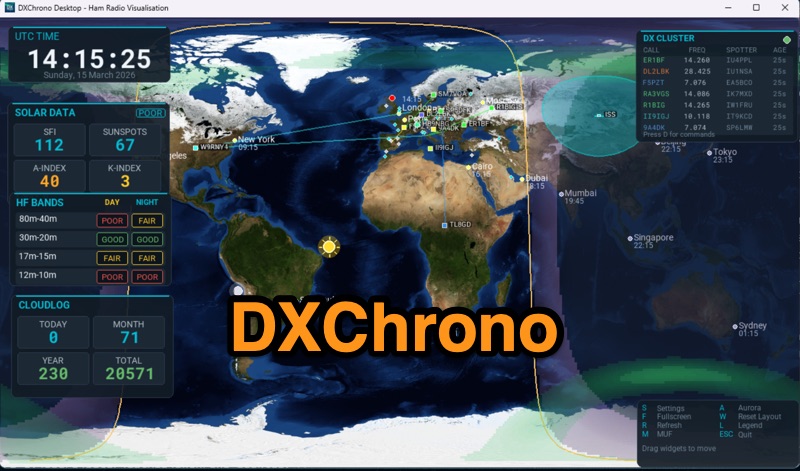 DXChrono Desktop presents a comprehensive suite of real-time amateur radio data, including NOAA solar indices, HF band conditions, and a worldwide _F5LEN tropo_ overlay for VHF openings. It integrates live spots from Telnet DX Cluster, PSK Reporter, and Reverse Beacon Network, displaying them on a dynamic 3D globe or 2D flat map. Additional features include aurora and MUF layers, QTH display with optional cities and grid/CQ/ITU layers, and dedicated support for SOTA and POTA activations. The software also offers a Watch List for callsign alerts and Sun/Moon Az/El widgets for satellite and EME operations. The application provides extensive contest and logging context through integration with _N1MM Logger+_ UDP, Cloudlog API, QRZ Logbook, and ADIF file support, allowing recent QSOs to be mapped directly. A Special Event mode is available for club stations, enhancing field day operations. DXChrono Desktop runs on Windows, macOS, Linux, and Raspberry Pi 4/5, requiring a 64-bit OS and at least 4 GB RAM for optimal performance, distinguishing it from simpler HamClock-style appliances.
-
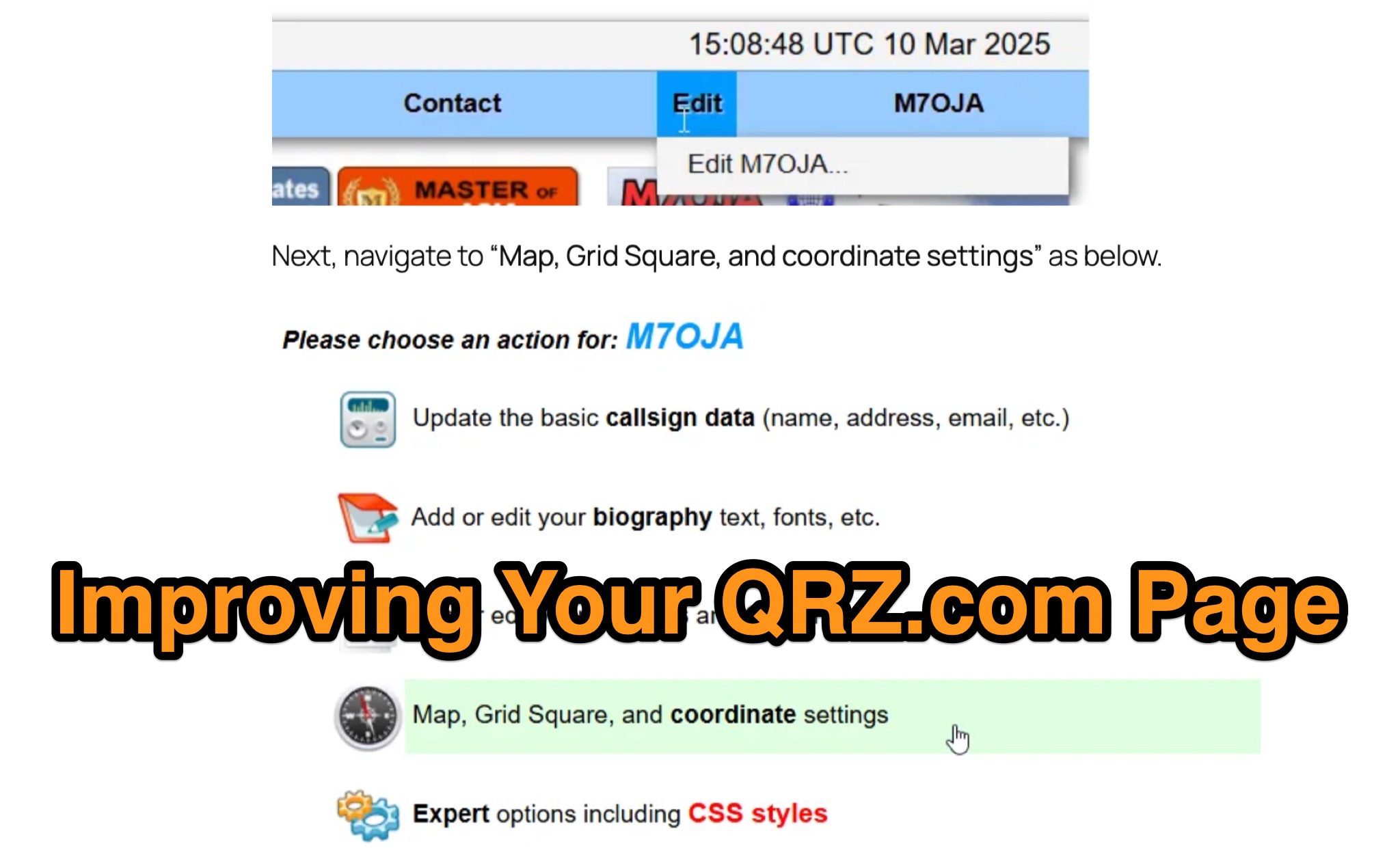 Optimizing a QRZ.com page involves adding essential callsign data, ensuring correct _Maidenhead Gridsquare_ and DXCC information in the Detail tab, and populating the Biography section with relevant station details. Operators should include their operating conditions, specific country references like WAB square, club affiliations, and detailed QSL information, specifying preferences for electronic confirmations (e.g., _LoTW_, Clublog) and paper QSLs (direct, bureau, SASE). The guide emphasizes the importance of accurate data for electronic logging software integration, which fetches Gridsquare, DXCC, and CQ/ITU zones to populate contact logs correctly. Further enhancements include leveraging the QRZ.com photo gallery for images and setting a primary image that logging software like _Log4OM_ can display. Advanced customization involves embedding external services via HTML source code. Examples include integrating HamAlert for DX Cluster spots, Clublog for log searches and Online QSL Requesting (OQRS), and Parks on the Air (POTA) statistics widgets from WD4DAN. Additionally, live weather information from Weather&Radar and solar data banners from HamQSL can be embedded, providing real-time environmental context for visitors to the QRZ page. These embedded tools require creating accounts on respective platforms and often involve copying specific source code snippets into the QRZ biography's HTML editor, ensuring callsign placeholders are updated.