Search results
Query: iambic circuit
Links: 4 | Categories: 0
-
 A simple keyer which can be built for as little as $6 with some junk box parts. Although this circuit is not a true iambic keyer, it is capable of producing perfectly sounding CW.
-
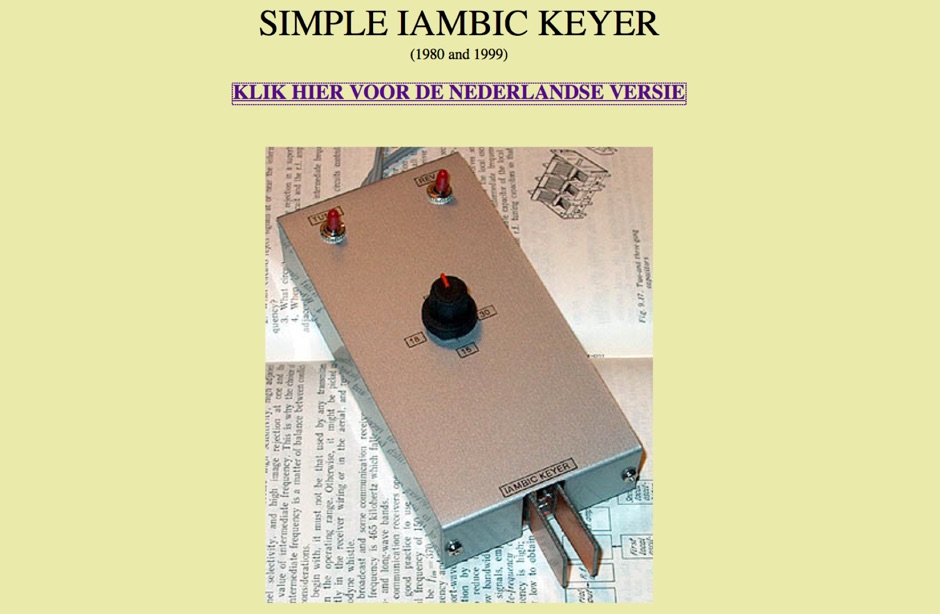 Iambic keyer with simple paddles and simple electronic circuit.
-
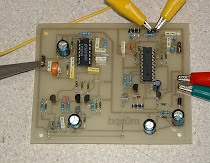 The m0xpd keyer project utilizes a PIC16F628A microcontroller, offering Iambic A and B modes, adjustable speed from 5 to 40 WPM, and variable weight control. It incorporates a sidetone generator with adjustable frequency and volume, along with a PTT output for transceiver control. The design includes a 16-pin DIL IC socket for the PIC, a 3.5mm stereo jack for the paddle, and a 3.5mm mono jack for the PTT output. Powering the keyer requires a 9V DC supply, which is regulated down to 5V for the PIC. The circuit board layout is designed for through-hole components, facilitating home construction. A detailed schematic and a parts list are provided, guiding builders through the assembly process. The project also discusses the firmware programming for the PIC16F628A, essential for the keyer's functionality. Construction details cover component placement and wiring, ensuring proper operation. The keyer's compact size makes it suitable for portable or shack use, providing a reliable CW interface.
-
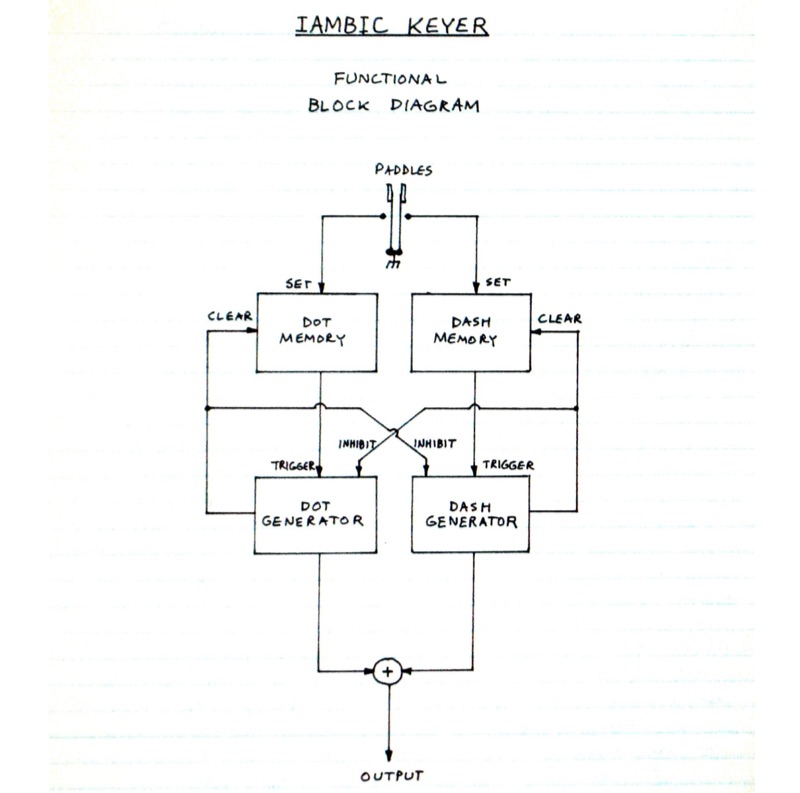 The design of a clockless iambic keyer is presented, detailing the circuit's operational principles for generating Morse code from dual-lever paddle inputs. It incorporates a 7805 regulator (U1) to provide a stable 5V supply to all integrated circuits. Dot and dash memory latches are implemented using NAND gates (U2A–U2D) to manage paddle input requests and ensure correct Morse element sequencing. Additional logic gates (U3, U4) provide inhibit functions, controlling dot and dash signal generation based on the keyer's operational state. Voltage-controlled current sources, utilizing transistors (Q1–Q4), regulate the charging rates of timing capacitors, while resistors (R1–R4) allow for adjustments to overall keying speed, individual dot and dash durations, and inter-element spacing. The circuit combines logic-based memory, signal control, and adjustable timing for consistent Morse code generation. The document provides a comprehensive schematic, component values, and a detailed explanation of how each section contributes to the keyer's functionality, including the sidetone oscillator and output keying stages. This design offers a robust solution for CW operators seeking a reliable iambic keyer without a microcontroller.