Search results
Query: maritime communication
Links: 11 | Categories: 4
-
 3 MHz to 30 MHz, the shortwave bands offer a vast array of international broadcast stations, maritime communications, and amateur radio signals, often heard far beyond the typical range of AM/FM. This resource introduces shortwave listening (SWLing) by explaining what shortwave radio is, how signals propagate via the **ionosphere**, and the general characteristics of different shortwave bands. It details how international broadcasters like Radio Australia and Deutsche Welle transmit in multiple languages, including English, and discusses the real-time nature of these over-the-air transmissions compared to internet streams. The guide provides practical tips for better reception, such as tuning between 9 MHz and 12 MHz during daylight hours and below 9 MHz at night, and notes the presence of amateur radio operators on the 75/80 meter band (3.5 MHz to 4.0 MHz) using **LSB** mode. It reviews popular portable shortwave receivers, specifically highlighting the Sangean ATS-505 and the Sony ICF SW 7600GR, comparing their features like synchronous detection and filter choices. The article also suggests audio enhancement methods, such as external amplified speakers or quality headphones, and briefly mentions high-end receivers like the AOR AR8600MKIIB for advanced monitoring.
 -
 Founded in 2000 by Jim Weidner, K2JXW, a licensed ham operator for over 50 years, the ARLHS is the only society of its kind devoted to Maritime Communications, Ham Radio, Lighthouses, and Lightships.
 -
 Club Russian Robinson for amateurs interested in radio communication from polar stations, islands and maritime mobile objects RRC founded in 1993. Goals are consolidation of radio amateurs, operating now or operated in the past on islands, drift-ice research, arctic and marine stations, signing their personal callsigns or as participants of DX-peditions.
 -
 Founded in 2000 by Jim Weidner, K2JXW, the ARLHS is the only society devoted exclusively to Maritime Communications and Ham Radio, Lighthouses and Lightships
 -
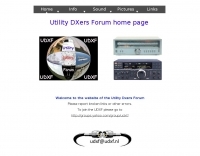 The Utility DXers Forum (UDXF) provides a centralized platform for exchanging news and information concerning utility radio stations and signals operating within the 0 to 30 MHz spectrum. It specifically excludes broadcasting, pirate, and amateur radio transmissions, concentrating instead on a diverse array of other signals. The resource details the types of stations covered, including maritime coastal and ship stations, aeronautical ground and aircraft communications (voice, HFDL, Selcalls, Volmet), military operations, various beacons (NDB, driftnet, propagation, pirate, high-frequency), fax transmissions, numbers stations, diplomatic communications, clandestines, and other unusual signals. Further content addresses radar systems such as Over-the-Horizon, Ocean Wave, and CODAR, alongside ionosondes, chirpsounders, ALE-systems, Selcall-systems, and tone calls. Experimental stations and standard frequency and time stations are also within its scope. The forum also acknowledges utility radio-related amateur events like the International Lighthouse Weekend and Night of Nights, providing a broader context for listeners. The site offers sections for modes, hardware, software, a utility radio archive, digital BC & HF conditions, and a utility radio club archive, along with QSLs and pennants.
 -
 Licensed since February 1991, IK1QBT Tony Gallo shares insights into his extensive amateur radio journey, highlighting his involvement in **DXpeditioning** and contesting. His page lists several callsigns he has operated under, including 3A/IK1QBT, TK/IK1QBT, IA5/IK1QBT, and as an operator for 4U9ITU and 4U0ITU, showcasing a broad range of international activity. Tony's background as an ex-Radio Officer in the Merchant Navy and a Radio Operator for the Italian Maritime Coast Radio Station "ICB/GenoaRadio" provides a unique perspective on radio communications. He is an active member of ARI, INORC, and HSC, and serves as secretary for the Marconi Club ARI LOANO, underscoring his deep engagement within the amateur radio community. His participation in multi-multi operator contest teams like IH9P in the CQWW-CW 2006 and the HQ Italian ARI Contest Team in the IARU HF (2004-05-06) demonstrates a strong commitment to competitive operating, primarily on **CW** and HF bands.
 -
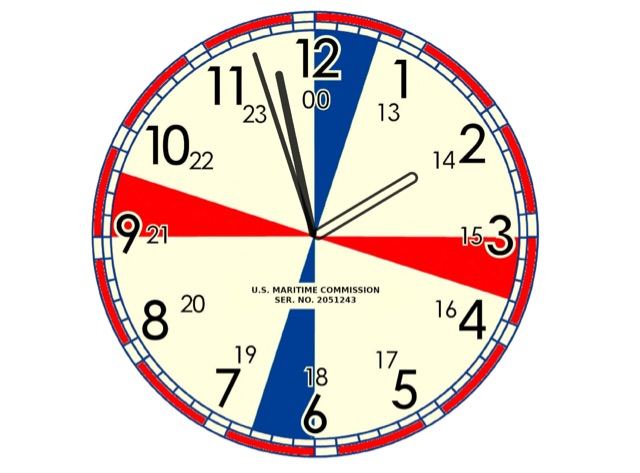 Before the advent of satellite communication, maritime communication adhered to an international protocol requiring ships and coastal stations to observe silent periods twice an hour, reserved specifically for emergencies. These silent periods were marked by red sectors on the 500 kHz frequency and green sectors on the 2182 kHz frequency. The 4-second red bars facilitated the manual transmission of the SOLAS distress signal.
 -
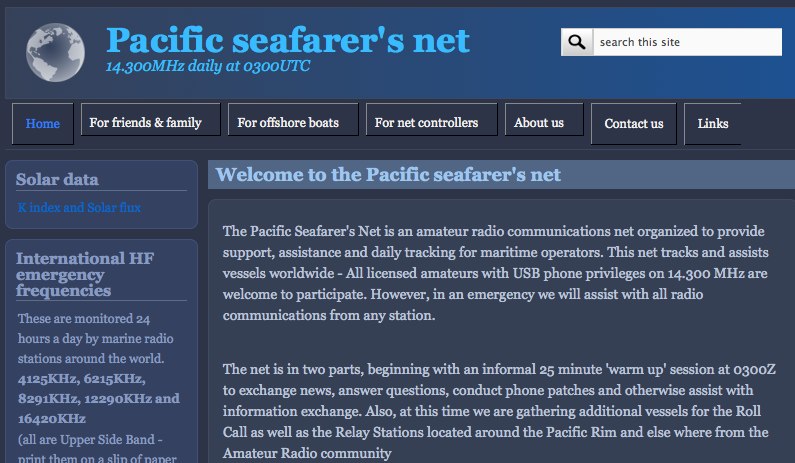 The Pacific Seafarer's Net is an amateur radio communications net organized to provide support, assistance and daily tracking for maritime operators.
 -
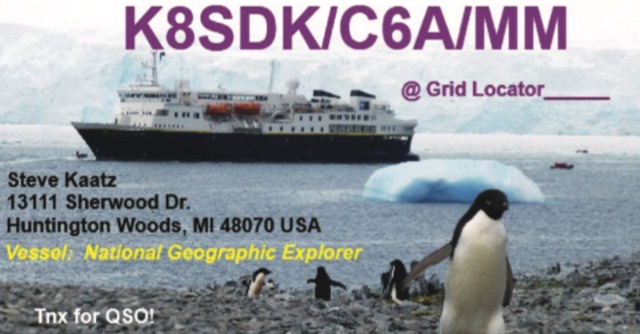 This **PDF report** documents a _maritime mobile_ DXpedition operating from the _Southern Ocean_ near Antarctica, detailing antenna deployment strategies on a sailing vessel. It addresses power management systems for remote operations and propagation characteristics specific to polar regions on **20m and 40m** bands. Operational strategies include managing high-density pileups using split frequency operation and maintaining signal integrity during periods of high aurora activity. Equipment considerations cover specific transceiver models like the Icom IC-7300, antenna types optimized for marine vessel installation, and battery power systems for extended periods without shore power. The resource also examines the use of satellite communication for real-time log uploads and QSL confirmation from remote locations, and discusses mitigating signal degradation from ice accumulation on antennas. DXZone Focus: PDF report | Maritime Mobile DXpedition | Polar Propagation | Split Frequency Operation
 -
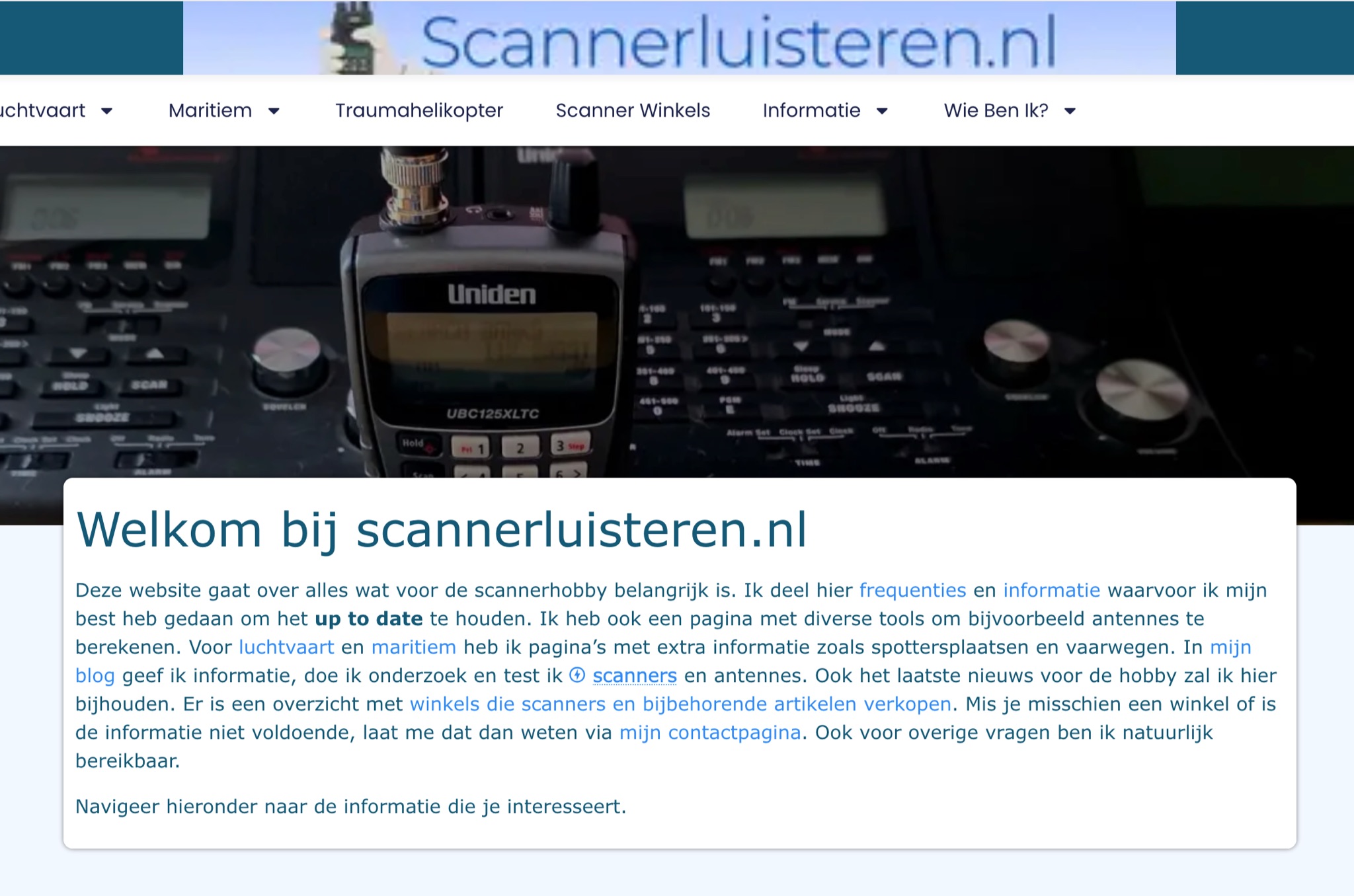 A Dutch website, with a translation option, about scanner radios, maritime, and aviation communication. With maps,a blog, free tools and calculators, and a large collection of Dutch frequencies.
 -
 This page provides information on how amateur radio, or 'Ham' radio, is used by the yachting and small boat community for communication and weather information. It explains the global operation of amateur radio, regulations within the U.S., and the role of the American Radio Relay League (ARRL) in licensing and training. The page also highlights maritime 'nets' where Hams exchange weather reports, using voice and digital modes. It encourages establishing webpages for nets and mentions the MAROB and SKYWARN Programs for marine observation and severe weather reporting. The content is useful for hams interested in maritime communications and weather reporting.