Search results
Query: sand cast
Links: 8 | Categories: 0
-
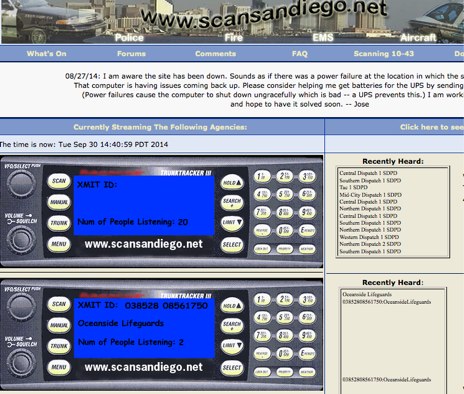 Three live police scanner streams are offered, broadcasting twenty-four hours a day from San Diego County. KE6CBF, the site's operator, provides real-time communications from agencies like the San Diego Police Department (SDPD), San Diego Fire-Rescue Department (SDFD), Sheriff, California Highway Patrol (CHP), and Air Traffic Control (ATC). Beyond the live audio, the platform includes a community forum for scanner enthusiasts. It also provides resources such as FAQs, _10-43_ information pages, and police codes to assist listeners in understanding the transmissions. The site aims for high-quality streaming audio with minimal downtime, supported by user donations. Powered by technologies like PERL, mySQL, ICECAST, APACHE, and LINUX, the site is designed for optimal viewing at **1024 x 768** resolution or higher.
 -
 Selecting an appropriate antenna system for shortwave broadcasting involves evaluating various types based on performance, cost, and operational parameters. This resource details the critical specifications for broadcast antennas, including average and peak power ratings, directivity, takeoff angle (TOA), horizontal beamwidth, and gain, emphasizing that a 100-kW transmitter requires an antenna rated for 150 kW average and 400 kW peak. It clarifies that low TOA signals travel thousands of kilometers, while high TOA is for local coverage, and nearly all modern shortwave broadcast antennas are horizontally polarized. The article explores specific antenna types, such as Log-Periodic Antennas (LPAs), which offer wide frequency ranges (e.g., 2-30 MHz) and directional patterns with 11 dBi gain, costing from $20K to over $100K for multi-curtain versions. Dipole arrays, also known as curtain antennas, are prevalent in international broadcasting, featuring steerable beams (±15° and ±30°) and mode-switching capabilities to alter TOA, with high/low pairs costing over $1 million. Fan dipoles are noted for omnidirectional patterns, smaller size, and lower cost for low-power applications, while rhombics, though simple, require resistive termination and incur several dB of I2R losses. Balun considerations are crucial, as most communications baluns are not rated for the higher average and peak powers of AM broadcast transmitters. Modern shortwave antennas utilize durable materials like Alumoweld wire rope for radiators and support elements, avoiding copper, fiberglass, or materials prone to stretching or deterioration. Feeder systems for high-power stations often require tapered-line baluns to convert 50-ohm unbalanced power to 300-ohm balanced for connection to the antenna.
 -
 A podcast devoted to long-distance radio reception on the AM broadcast band. AM, or Medium Wave (MW), signals can travel thousands of miles.
 -
 Low-frequency (LF) radio time signals, operating primarily in the 40–80 kHz range, are broadcast by national physics laboratories for precise clock synchronization. Transmitters like **JJY** (40 kHz, 50 kW; 60 kHz, 50 kW), RTZ (50 kHz, 10 kW ERP), MSF (60 kHz, 15 kW ERP), WWVB (60 kHz, 50 kW ERP), RBU (66.66 kHz, 10 kW), and DCF77 (77.5 kHz, 50 kW) cover vast geographic areas, often several hundred to thousands of kilometers. LF signals offer distinct propagation advantages over higher-band transmissions such as GPS. Their long wavelengths (3–6 km) enable effective diffraction around obstacles like mountains and buildings. The ionosphere and ground act as a waveguide, eliminating the need for line-of-sight and allowing a single powerful station to cover extensive regions. Ground wave propagation minimizes ionospheric variability effects on transmission delay, and signals penetrate most building walls effectively. Robust and low-cost receivers, often priced at 20–30 USD/EUR, are widely used in radio clocks. These receivers typically comprise a tuned ferrite core antenna, a receiver IC (e.g., Atmel T4227, U4223B, MAS1016) for amplification and AM detection, and a microcontroller for decoding the time signal and phase-locking a local clock. Specific components for DCF77, MSF, and WWVB are readily available from vendors like HKW Elektronik and Ultralink.
 -
 Over 25 years of experience in custom brass casting informs the production of personalized amateur radio call sign belt buckles. These solid brass buckles are crafted using traditional sand casting methods, ensuring a unique, durable product for radio operators. Each piece is hand-poured and polished in Washington State, reflecting a commitment to quality craftsmanship. The manufacturing process begins with a customer's idea, which is then translated into a graphic proposal. Upon approval, patterns are created for the custom edition. An antique foundry press compresses specially formulated sand around these patterns, followed by hand-pouring molten brass into the molds. After cooling, the castings are sandblasted, inspected, and meticulously polished by skilled craftsmen. Northwest Brass Works provides a lifetime guarantee on the buckle hardware, offering repair or replacement for any breakage. They also offer guidance on maintaining the polished luster of the brass using products like _Nevr-Dull_, ensuring the buckle's longevity and appearance for many years of wear.
 -
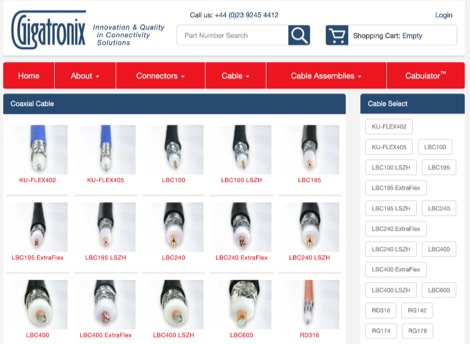 Gigatronix manufactures thousands of coaxial connector styles for stock, including cable fixing, PCB, panel mount, and adaptors. Precision 12G SDI Coaxial Connectors are designed to fit an extensive range of broadcast cables, compliant with **SMPTE ST2082-1 4K single channel** specifications. The company offers an online configurator, "Cabulator," for custom coaxial cable assemblies, streamlining specification and purchase. This includes **IPX / UFL micro-coaxial cable assemblies** configurable with SMA, TNC, and BNC panel fixing connectors. Stock assemblies, tooling, and accessories like strain relief boots are also available. The Resource Hub provides articles, product focus information, and general reference materials for technical details.
 -
 100 Watts and a Wire is a ham radio talk show was originally launched as an audio podcast on June 22, 2015. Today, you can see the show on YouTube. It features topical conversation, interviews and ham radio news. You can listen anytime by subscribing wherever you get podcasts.
 -
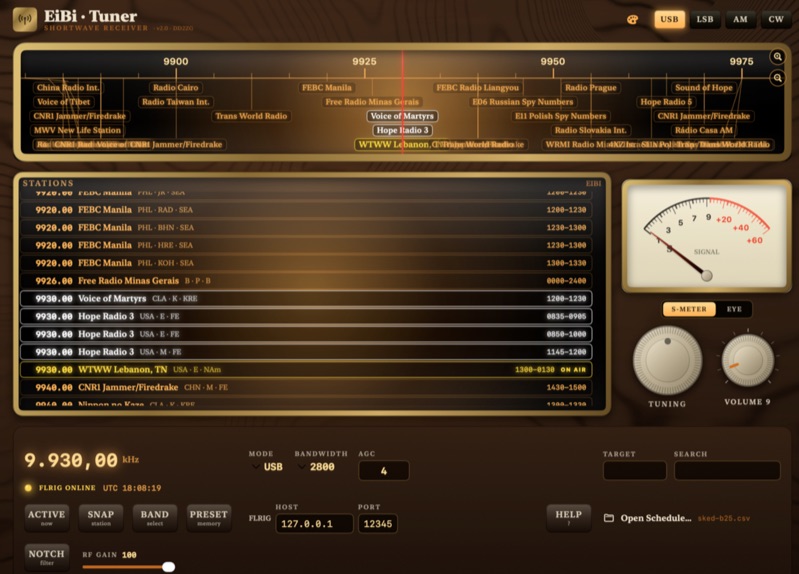 EiBi-Tuner-v2 is an open-source macOS application designed to control amateur radio transceivers via the FLRIG interface, leveraging the EiBi-list for frequency management. This software provides a graphical user interface that emulates an older radio, allowing operators to tune their rigs based on the extensive EiBi database of broadcast stations and utility frequencies. The application is specifically compiled for macOS, offering a native experience for users of Apple's desktop operating system. The software's primary function is to simplify frequency selection and rig control by integrating the EiBi-list, which contains thousands of known frequencies, with FLRIG's robust transceiver control capabilities. This integration allows for rapid QSY to documented frequencies, potentially enhancing DXing and SWL activities by providing quick access to a vast array of signals. The open-source nature permits community contributions and modifications, ensuring adaptability and ongoing development for specific amateur radio operational needs.