Evaluate Ham Radio Performance with Log Analysis Tools
Utilize specialized software to analyze contest logs and general QSO data for operational insights and performance improvement.

Log analysis in amateur radio involves the systematic examination of recorded contacts (QSOs) to derive insights into operational performance, contest strategy, and station effectiveness. Specialized software tools, often referred to as contest post-processors or log evaluators, enable operators to review their log files, typically in formats like Cabrillo or ADIF. These tools facilitate score calculation, identify missed multipliers, visualize contact patterns on maps, and compare individual results against aggregated contest data. Understanding log analysis is crucial for improving future operating techniques, optimizing antenna systems, and refining contest participation strategies.
These analytical applications provide functionalities ranging from basic log viewing to advanced statistical breakdowns. Many support the import and export of various log formats, allowing for interoperability with different logging programs. Key features often include graphical representations of QSO distribution, band-by-band performance metrics, and tools for identifying unique contacts or confirming DXCC entities. Some platforms also offer online services for visualizing ADIF logs via mapping applications like Google Earth, enhancing the understanding of global contact reach.
-
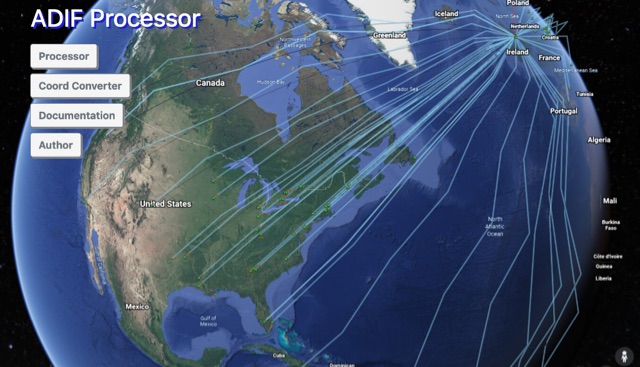 The ADIF Processor is an online application that visualizes amateur radio contacts from an ADIF log file using Google Earth. SOTA CSV log files can also be used. As well as allowing you to view and explore your contacts in Google Earth, you will be able to see a Markdown or text table of contacts, use the output ADIF file which contains QRZ.com data, accurate contact distances and fields populated from comments in the input file. Print QSL labels. One of the benefits of using the ADIF Processor before uploading/storing your ADIF file is detecting errors in callsigns and activity references (e.g. POTA or SOTA references).
 -
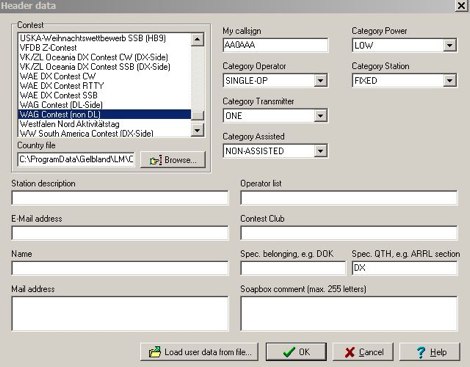 LM is a program to edit contest logs afterwards, a so-called contest post processor. With help of LM you can convert row data to many different file formats. Allow a quick input interface, and contest score for several contest. Can import & export a batch of logs and to create result lists.
 -
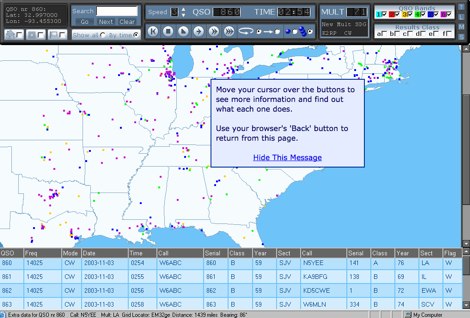 LogView is a free post-contest log-visualisation tool, for analysing contest performance. It plots the QSOs in a Cabrillo-format contest-log on to one of 8 different maps by finding the position of each QSO from an online database of about 970,000 W/VE callsigns.
 -
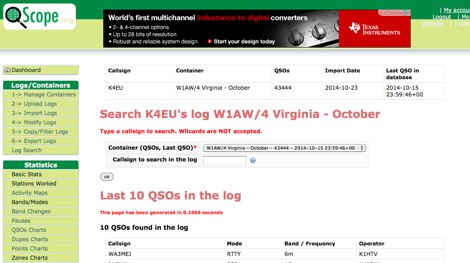 QScope.org is an advanced statistics online application with innovative features for HAM Radio operators logs. While designed with amateur radio contesters score improvements in mind, it can help any HAM to have a better visibility over its logbook. You can import ADIF or Cabrillo logs and have various statistics like QSOs per band, mode, operator; QSOs Rate; Operating Time...