Toroid Cores and Winding Techniques for Radio Projects
Find resources on selecting, winding, and calculating parameters for toroids used in amateur radio inductors, transformers, and chokes.

Toroids are essential components in many ham radio projects, from building baluns and ununs to creating efficient RF chokes and inductors for filters. Operators use them to manage common-mode currents, suppress RFI, and optimize impedance matching for antennas and transceivers across various bands. Understanding how different ferrite and iron powder materials behave at RF frequencies is key to successful homebrew equipment.
This category provides practical guidance on selecting the correct toroid material and size for specific applications. Hams can find online calculators to determine the required turns for a given inductance, like the Amidon ferrite toroids calculator, and charts that simplify the winding process. There are also resources discussing winding techniques for chokes and baluns, along with measured data for common HF ferrite chokes, helping operators build effective stations.
Related Categories
-
 Common mode currents are those currents that flow in the same direction on a wire bundle, as opposed to the currents that flow
 -
 Measurements that show it doesn't make much difference
 -
 Ferrite Toroidal Cores, Magnetic Properties of Ferrite Materials, EMI - RFI Suppression Design Considerations, Ferrite Beads, Ferrites for RFI Ferrite Cores for RFI Suppression by CWS ByteMark
 -
 A new method of feeding a dipole with toroids.
 -
 Online calculators for toroid coil, air-core coil inductance, XL, XC, and more.
 -
 Winding Toroids can be a real hassle for those of use who are left-handed or not so dexterous as we once were.
 -
 Dispels myth about choke balun winding method
 -
 A Guide to safely wind toroidal cores by vu2fd
 -
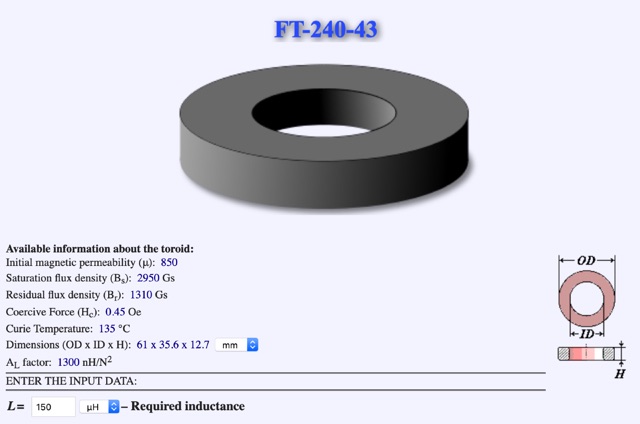 Select the toroid by material type and dimension of the toroid, the desired inductance and you will get the numbers of turns
 -
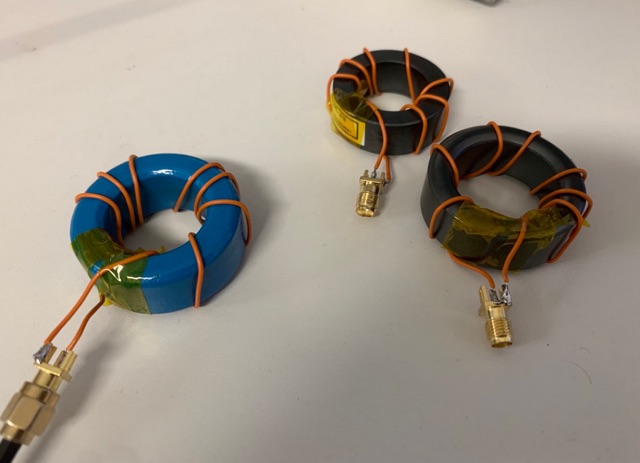 Finding the the best ferrite material for a common-mode choke. How to create efficient ferrite cores and how to measure them
 -
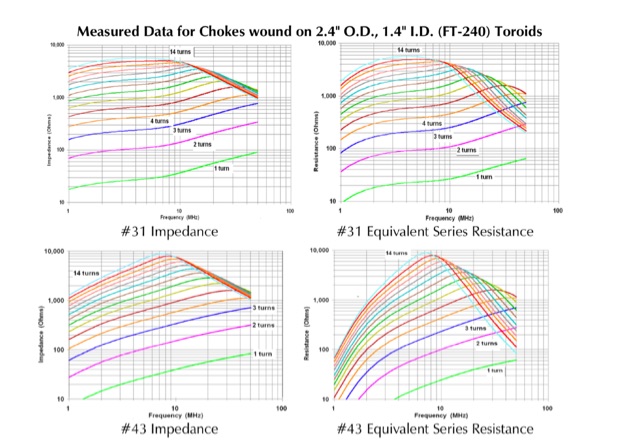 FT-240 toroids measurements. The data was measured using well-calibrated HP instrumentation. All plots have been adjusted to a frequency range of 1-100 MHz on the horizontal axis and a resistance/impedance range of 10-1,000 ohms on the vertical axis. This adjustment facilitates comparison among different materials and aids in determining their suitability for use on the HF ham bands.
 -
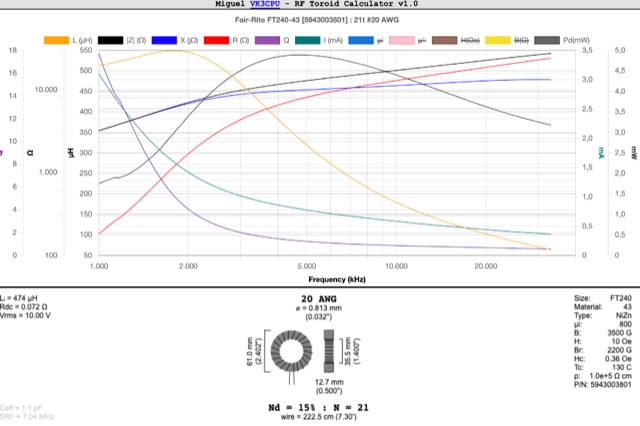 This RF Toroid Calculator provides graphical calculator used to determine the inductance and other parameters of ferrite and powdered-iron toroids. It simplifies the process of selecting the appropriate toroid for use in radio frequency (RF) circuits
 -
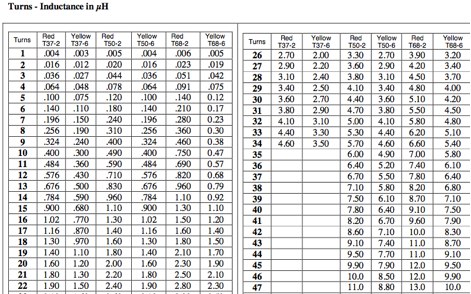 To save a little time from calculating and experime nting when winding toroid cores here a chart of the most commonly used cores
 -
 Are you confused when it comes to using toroids? The tips given in this article may simplify your next project. Comprehensive article about choosing the proper toroid.