The very first DX
Examining Guglielmo Marconi's pioneering transatlantic wireless signal on December 12, 1901.
Description
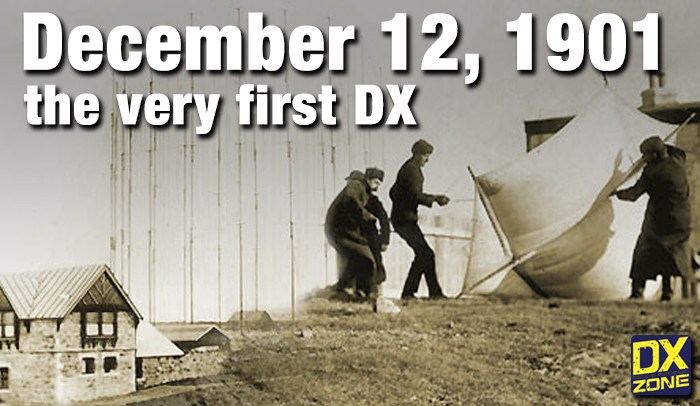
On December 12, 1901, Guglielmo Marconi successfully received the first transatlantic wireless communication, a Morse code "S" (three dots), at 04:30 GMT. This article details the setup for this groundbreaking experiment, noting Marconi's receiver in St. John’s, Newfoundland, Canada, utilized a coherer and an antenna elevated by balloons and kites. The transmitting station at Poldhu, Cornwall, England, featured twenty-four 200-foot ships' masts and a 25-kilowatt alternator.
The resource explains how this contact disproved contemporary beliefs about radio wave limitations due to Earth's curvature, later understood through ionospheric propagation. It frames Marconi's achievement as the "very first DX" in amateur radio terms, defining DX as telegraphic shorthand for distance and DXing as the hobby of receiving distant signals.
The article also provides external links for further reading on Marconi's experiments and the science behind transatlantic radio signal reception.