Search results
Query: classes license
Links: 12 | Categories: 1
Categories
-
 Explains the Federal Communications Commission (FCC) vanity call sign program, outlining the specific rules and procedures for amateur radio operators in the United States to obtain a personalized call sign. It details the eligibility requirements based on license class, the application process using FCC Form 605, and the various group formats (e.g., _1x2_, _2x1_, _2x2_) available to different license classes, such as Extra and Advanced. The resource clarifies the priority system for vanity call sign requests, including previous holders and close relatives, and discusses the typical processing times for applications. It also provides insights into how the FCC assigns available call signs and offers practical advice for increasing the likelihood of securing a desired call, referencing the _ARRL Letter_ for updates.
 -
 Managing extensive QSO data efficiently requires robust logging software capable of handling diverse operational needs, from casual ragchewing to competitive contesting. HAM OFFICE provides a comprehensive solution for amateur radio operators, integrating essential logging functionalities with advanced features for analysis and award tracking. It supports detailed QSO entry, offers various display and evaluation options, and includes helpful functions to guide users through its interface, ensuring a smooth workflow for both new and experienced hams. The software's design emphasizes user-friendliness while incorporating a wide array of functions, making it suitable for different screen sizes and operating preferences. It features innovative databases for enhanced data protection, improved handling despite increased functionality, and significant speed gains from new background calculations. The program runs stably on Windows XP through 11 (32 and 64 bit) and offers a mobile app for QSO entry and analysis on _tablet PCs_ and smartphones. HAM OFFICE is widely adopted, with an estimated **80%** of German contests logged using the software, and it is utilized by amateurs in **58** DXCC entities. The program supports various aspects of amateur radio, including contest logging, detailed evaluations, and integration with internet resources and shack equipment. It also provides specific support for new license classes like DN9 and actively supports initiatives such as the recognition of _Morse Telegraphy_ as a cultural heritage.
 -
 The UK amateur radio licensing scheme features three distinct tiers: Foundation, Intermediate, and Full, each granting specific operating privileges. For instance, the **Foundation Licence** permits a maximum of 10 watts output power on most allocated bands, with restricted band access. The Intermediate Licence allows up to 50 watts, while the **Full Licence** grants access to the maximum UK legal power limits and all available amateur radio band allocations. UK call sign prefixes and formats provide insights into the licensee's class and the approximate issuance date. For example, M3, M6, and M7 prefixes with three letters denote Foundation Licences issued from 2002, 2008, and 2018 respectively. Intermediate Licences, often starting with "2E0" or "2E1" followed by three letters, were issued from 1991 onwards. Full Licences encompass a broader range of prefixes like G2, G3, G4, G0, and M0, with varying letter counts indicating different historical license classes and issuance periods, such as G3 plus three letters issued between 1946 and 1971. Special prefixes like GB are reserved for repeaters, beacons, data mailboxes, and special event stations, with specific numerical sequences (e.g., GB3 for repeaters, GB7 for data repeaters/mailboxes) indicating their function. Optional prefixes such as GC, GD, GI, GM, and GW denote specific UK countries (e.g., Wales, Isle of Man, Northern Ireland, Scotland, England) and can also signify club stations.
 -
 Effectively teaching amateur radio licensing classes requires more than just technical knowledge; it demands strong pedagogical skills and organizational acumen. This guide addresses the practical aspects of conducting successful amateur radio courses, emphasizing the instructor's role as an educational manager rather than merely a knowledge dispenser. It explores various class organizational structures, including traditional weekly sessions and _hybrid_ full-day formats, noting that many small meetings are often preferable for student engagement. The resource also provides strategies for finding suitable class locations, from public libraries and community centers to navigating public and private school systems, highlighting the importance of stressing the public service aspect of amateur radio to potential hosts. Key sections delve into effective classroom management, stressing the importance of preparation, a structured routine, and creating a comfortable learning environment. It details the VARK learning styles (Visual, Aural, Read/write, Kinesthetic), advocating for teaching methods that engage multiple senses to enhance student comprehension. The guide also offers advice on breaking down complex technical material, defining unfamiliar vocabulary, and making theoretical concepts practical through real-world examples. It includes a sample entry-level license syllabus covering topics like the nature of amateur radio, technical basics, transmitter/receiver fundamentals, and antennas, providing a framework for instructors to build their curriculum.
 -
 Operating on the 146.880 MHz repeater, the Inland Empire VHF Radio Amateurs (IEVHFRA) hosts a weekly net, providing a consistent on-air gathering for amateurs within Eastern Washington and Spokane County. My experience with similar regional VHF nets confirms their value in fostering local ham radio community and sharing information, often covering topics from equipment troubleshooting to upcoming hamfests. The club, active for over **50 years**, also organizes the _Inland Empire VHF Tailgate Swap_, an event featuring vendors, emergency communication demonstrations by Spokane ARES-ACS, and POTA/SOTA activity setups. Such events are crucial for hands-on learning and direct interaction, which I've found invaluable for new licensees and seasoned operators alike. Beyond on-air activities and events, IEVHFRA supports the hobby through amateur radio classes and testing, facilitating new license acquisition and upgrades. They also maintain an online messaging group for members, ensuring continuous communication and information exchange.
 -
 The Triple A Amateur Radio Association (TAARA) is identified as an ARRL-affiliated Special Service Club, operating within Beaver County, Pennsylvania, approximately 28 air miles northwest of Pittsburgh. The organization provides a community hub for amateur radio operators in its service area, focusing on local engagement and support for the hobby. While the QSL.net hosting platform indicates a 404 error for the specific page, the club's stated affiliation with the _ARRL_ and its designation as a _Special Service Club_ suggest a commitment to public service, education, and promoting amateur radio. Such clubs typically engage in activities like license classes, field day operations, and emergency communications support within their local communities.
 -
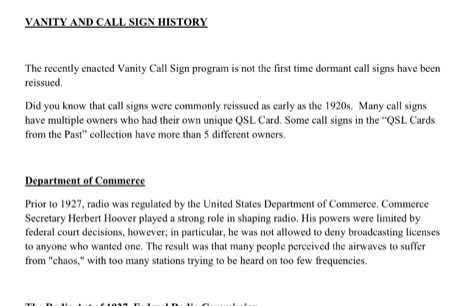 This resource provides a historical analysis of amateur radio call sign assignment policies in the United States, detailing regulatory shifts from the Department of Commerce to the Federal Radio Commission (FRC) and subsequently the Federal Communications Commission (FCC). It documents the evolution of call sign issuance, from early reissuance practices in the 1920s to the implementation of the Group Call Sign Assignment System on March 24, 1978. This system categorized call signs (e.g., 1x2, 2x1, 1x3, 2x3 formats) into groups A, B, C, and D, correlating with license classes such as Extra, Advanced, General, and Novice, and specifying prefixes for contiguous U.S. and territorial areas (e.g., _AH_, _KP_, _KL_). The document further details the legislative process leading to the modern Vanity Call Sign program, initiated by a petition in June 1990 and formalized by the Omnibus Budget Reconciliation Act of August 10, 1993. It outlines the FCC's adoption of final rules on December 23, 1994, and the subsequent fee structure, with the first vanity call sign issued on May 31, 1996, at a cost of **$30.00** for a ten-year term. The ARRL's proposed "starting gates" implementation strategy is also described, which phased in eligibility for vanity call signs based on license class and prior holder status. DXZone Focus: Historical Document | Regulatory Analysis | Call Sign Formats | Fee Structure
 -
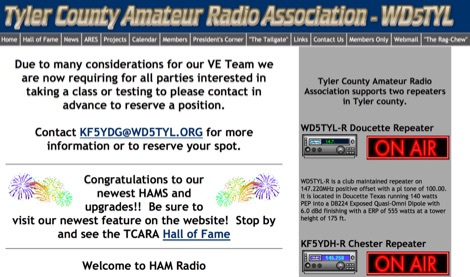 The Tyler County Amateur Radio Association (TCARA) serves as a focal point for amateur radio operators in Woodville, Texas, and surrounding areas, emphasizing knowledge sharing and skill advancement among its members. The association actively participates in public service communications, including _ARES_, _RACES_, and _Skywarn_ initiatives, demonstrating a commitment to community support through amateur radio. Regular meetings are held on the first Thursday of each month at 6 PM at Calvary Baptist Church, 909 N Magnolia St, Woodville, TX, providing a consistent venue for fellowship and operational planning. TCARA facilitates amateur radio license examinations, offering testing sessions for all license classes, from Technician to Amateur Extra. This commitment to education supports new hams entering the hobby and existing operators upgrading their privileges. Prospective members or individuals interested in licensing, Technician classes, or general club activities are encouraged to reach out via email for further information, indicating a direct channel for engagement.
 -
 A modern, free online study tool for US amateur radio exams. It provides current NCVEC question pools for all license classes (Technician, General, and Extra). Features include a smart practice mode that tracks your weak areas and provides detailed explanations to help you pass faster.
 -
 AA9PW offers free practice exams for all three US license classes plus international licenses like Canadian and Australian. The site generates random tests from the current question pools, simulating the actual exam experience. You can choose between online exams or printable PDF versions for offline study. The site maintains a simple, no-frills interface that loads quickly even on slow connections. Practice tests provide immediate feedback with score reports highlighting areas needing improvement.
 -
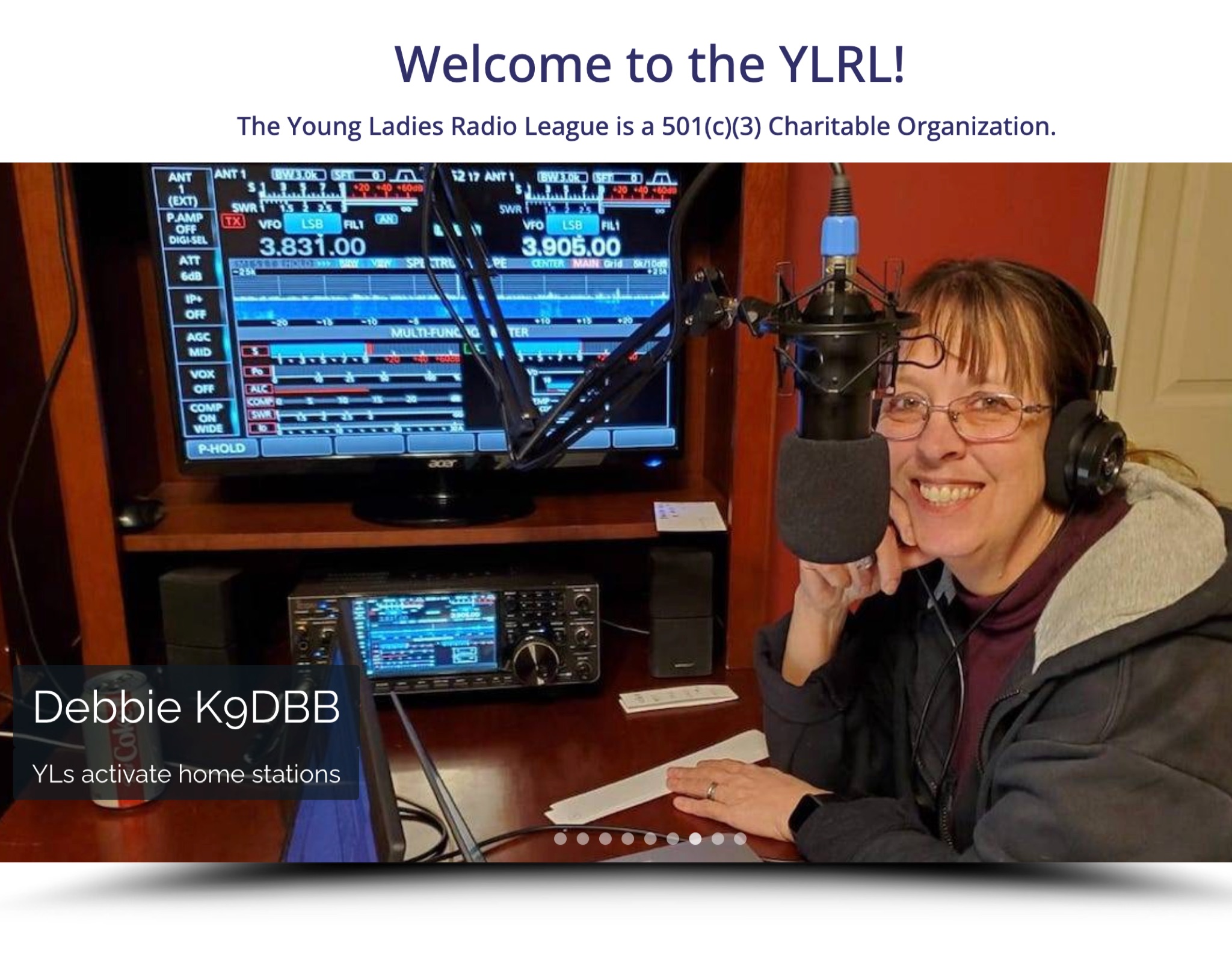 The Young Ladies' Radio League, also known as YLRL, is an organization founded by women in 1939 with the goal of connecting and supporting female ham radio operators worldwide. From beginner classes to scholarships, YLRL offers resources and a community for women of all ages and backgrounds interested in ham radio. The website provides information on membership, upcoming events, and helpful tips for renewing licenses and getting on the air. Whether you're a seasoned ham or just starting out, YLRL is dedicated to empowering and supporting women in the world of amateur radio.
 -
 official website for DLARC. operates the W3OK repeater, offers license classes and tests, a net, assistance in ARES and RACES nets and activities, and participation in ARRL activities and competitions.