Search results
Query: pile-ups
Links: 6 | Categories: 0
-
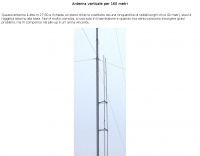 This high antenna require a large ground composed by 40 radials. It's not very handy expecially in windy situations but is very powerfull in pile-ups. In italian
-
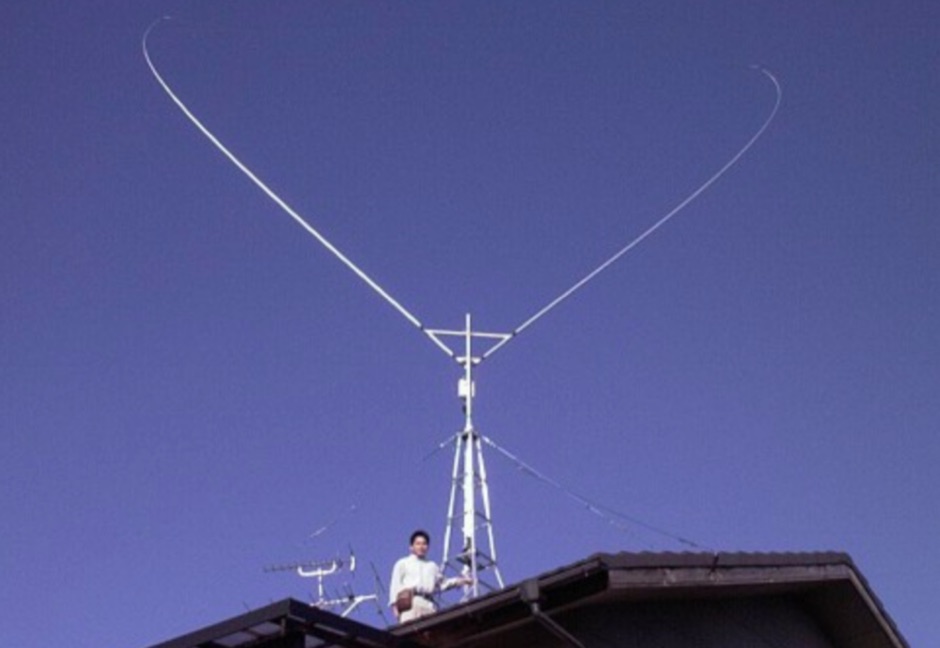 JJ0DRC's HF multi-band delta loop antenna project, initially conceived during the waning peak of Cycle 23, addresses the common challenge of achieving effective DX operation from a small residential lot in Japan. Dissatisfied with a ground plane antenna's performance in SSB pile-ups, the author sought a beam-like solution without a tower, drawing inspiration from a JJ1VKL article in CQ Ham Radio Sep. 2000. The antenna, constructed in October 2000, employs two 7.2-meter fishing rods (37% carbon fiber, reinforced with cyano-acrylate glue and aluminum tape) and 1mm enameled wire, fed by an Icom AH-4 external antenna tuner. While the exact beam pattern remains unmeasured, JJ0DRC observed a significantly higher callback rate compared to dipole antennas, particularly on higher bands. The system's circumference length of 15-20m is crucial for maintaining a good beam pattern across HF bands, though performance on lower bands like 80m, 40m, and 30m becomes less directional as the length deviates from a full wavelength. Ongoing maintenance addressed degradation issues, including aluminum tape cracking and wire breakage at connection points due to strong winds (often exceeding 10-15m/s in winter). The author reinforced rod connections with IRECTOR PIPE SYSTEM components and INSU-ROCK ties, and improved wire attachment methods using Cremona rope and epoxy bond to enhance durability.
-
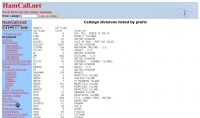 The HamCall.net database offers a detailed listing of amateur radio callsign divisions, organized by prefix, which is crucial for DXers and contesters to quickly identify the geographical origin of a station. Each entry includes a specific callsign prefix, the total count of callsigns registered under that prefix, and the associated DXCC country or entity, such as "AL9Z 43203 USA" or "3AOH9MM 237 MONACO." This structured data allows operators to rapidly ascertain the DXCC entity for a given callsign, aiding in QSL verification and award tracking. This information is particularly useful for confirming rare DX entities during contests or for logging contacts for awards like DXCC. For example, an operator hearing a "3Y0C" callsign can immediately identify it as Bouvet Island, a highly sought-after entity. The inclusion of callsign counts provides a sense of the activity level within each prefix, which can be helpful for anticipating pile-ups or assessing the likelihood of making a contact. The data presented reflects a snapshot of the HamCall database, offering practical insights into global amateur radio demographics.
-
 Francisc Grunberg, YO4PX, shares his insights and translations on various amateur radio topics through his blog. Content includes historical perspectives on ham radio, detailed accounts of _DXpeditions_, and discussions on ethical operating practices for DXing and contesting. The site also offers practical advice, such as suggestions for navigating pile-ups and improving contesting strategies. The blog delves into the intricacies of the hobby, providing guidance for operators aiming to improve their skills and understanding. It covers subjects like Codes of Conduct for amateur radio and lists the **most wanted DXCC entities**, offering a valuable resource for those pursuing awards. Francisc's contributions reflect his extensive experience, providing a unique perspective on the amateur radio landscape.
-
 Presents a dedicated logging solution for amateur radio DXpeditions, addressing the unique operational demands of remote or temporary stations. This freeware Windows application provides essential tools for managing QSO data, ensuring accurate record-keeping during high-volume operations. The software supports efficient entry and retrieval of contact information, crucial for verifying DXCC credit and submitting contest logs. It streamlines the process of logging contacts, which is vital when operating from rare entities or during intense pile-ups, helping operators maintain focus on making contacts rather than complex data management. The application aims to simplify the logistical challenges associated with DXpedition logging.
-
 SAT filters ensure effective full-duplex satellite QSOs by mitigating interference between 145 MHz uplink and 435 MHz downlink signals. Custom coaxial and SMD-based filters address transmitter harmonic interference and improve receiver isolation, achieving over 70 dB suppression in the undesired band. Designed for simplicity, these filters maintain optimal VSWR and are housed in shielded brass enclosures. Practical implementations with Yagi antennas demonstrate compatibility with SDR systems, enabling seamless communication even in challenging satellite conditions, such as low-elevation passes and DX pile-ups.