Radio Scanning: Getting Started for New Operators
Find essential guides and resources to begin your journey in radio scanning, covering rules, equipment, and setup.

New operators often start their journey in radio by listening to local activity on various bands. Understanding the basics of radio scanning, from selecting the right equipment to knowing the regulations, helps new hams get on the air and enjoy the hobby responsibly. This includes learning about different types of receivers, how they work, and what frequencies are commonly used for amateur radio activity and other services.
This section provides essential guidance for newcomers, covering topics like choosing a police scanner or a general-purpose receiver, and selecting appropriate antennas for optimal reception. Operators can find information on scanning rules and regulations, especially in the USA, and practical advice on setting up a station. Resources also include frequency guides, such as the ARRL's band plan, and tips for connecting multiple receivers to a single antenna, like the SWL Antenna Distribution System.
Related Categories
-
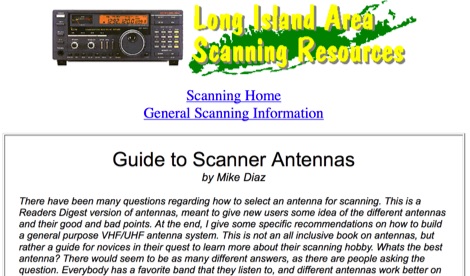 How to select an antenna for scanning. This is a Readers Digest version of antennas, meant to give new users some idea of the different antennas and their good and bad points.
 -
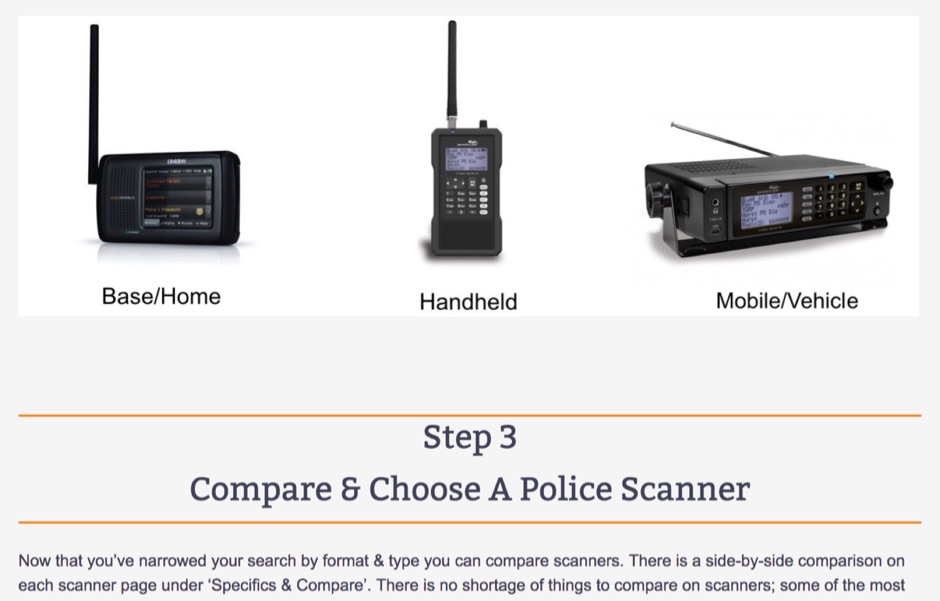 Police scanner buying guide gives you everything you need to buy the best police or radio scanner. Includes, images, helpful links & more.
 -
 Scanning information and frequencies by Clay Irving N2VKG
 -
 Typical question about scanning from a prospective new operator
 -
 Informations about Scannings, with frequencies, information about scanning, hardware and software reviews
 -
 Laws, rules and regulation on scanning expecially in the usa
 -
 An ARRL guide to where on the HF bands various modes and activities are generally found.
 -
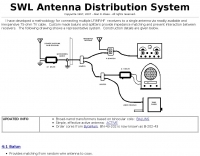 a methodology for connecting multiple LF/MF/HF receivers to a single antenna via readily available and inexpensive 75-ohm TV cable.