Search results
Query: digital communications
Links: 65 | Categories: 2
-
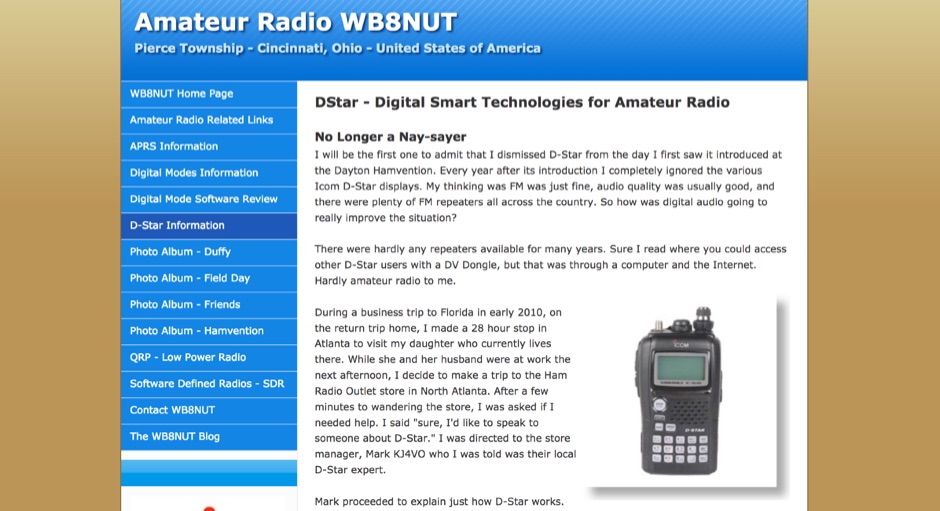 General informantion and introduction to D-Star explaining what is for D-Start and the practical usage of D-Star in amateur radio communications
 -
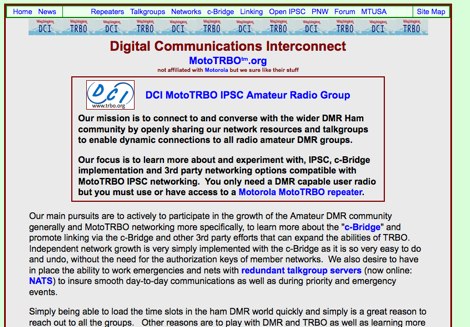 The Digital Communications Interconnect (DCI) resource details the operational philosophy and technical implementation of an open _MotoTRBO_ IPSC network, emphasizing the use of _c-Bridge_ technology for interconnecting DMR repeaters and talkgroups. It outlines the group's mission to facilitate dynamic connections within the regional DMR amateur radio community by openly sharing network resources and talkgroups, promoting independent network growth and exploring the capabilities of c-Bridge linking. The site provides insights into the technical advantages of c-Bridges, such as breaking the finite peer slot limitation of simple IPSC networks and enabling more flexible talkgroup routing beyond two timeslots. This legacy asset, last updated in October 2022, also reflects on the group's history and challenges encountered in national DMR efforts, citing political divisiveness among major c-Bridge groups. It discusses the practical application of c-Bridges for emergency communications and nets, ensuring redundant talkgroup servers for smooth day-to-day operations and priority events. The resource encourages other c-Bridge operators to adopt international talkgroups like "_iCall Talkgroup_" and a nationwide "Emergency Talkgroup," while also offering guidance on affiliating repeaters or IPSC networks with DCI's open network.
 -
 Explains the fundamental purpose of a repeater, detailing how these automated relay stations overcome distance and terrain limitations for VHF/UHF communications. It traces the historical development from early Bell Telephone Labs "relay" stations in 1922 to Art Gentry, W6MEP's, pioneering K6MYK amateur radio repeater in the mid-1950s, which remains active today. The resource clarifies the distinction between simplex and duplex operation, including the unique function of a "parrot repeater" for single-frequency recording and playback. Delving into the internal workings, the guide breaks down a repeater into its core components: the antenna system, feedline (often _Heliax_ or hardline for minimal loss), duplexer, receiver, transmitter, and controller. It emphasizes the critical role of the duplexer in preventing receiver desensitization by isolating transmit and receive signals, even with distinct frequencies. The discussion highlights the importance of high-performance, durable antennas and low-loss feedlines, citing examples of equipment installed in the 1960s and 1970s that are still in perfect working order. Operating a repeater is also covered, with an explanation of frequency offset (e.g., the 600 kHz standard for 2 meters) and the function of _CTCSS_ (PL tone) for access. It outlines standard input/output offsets for various bands, from 6 meters to 23 centimeters, while noting regional variations. The guide also touches on features like autopatch and Digital Voice Recorders (DVRs), providing a solid foundation for understanding repeater technology and usage.
 -
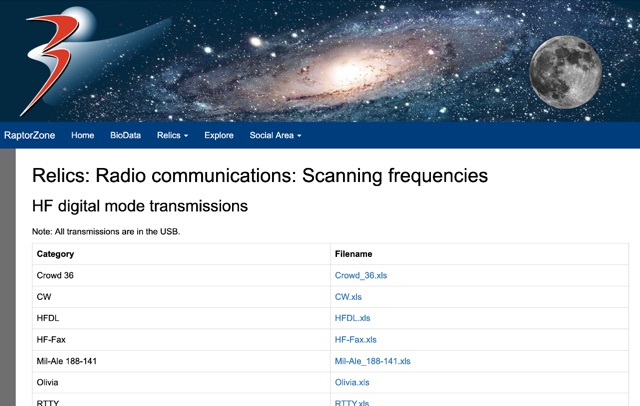 HF digital mode transmissions, voice transmissions in HF and VHF Bands collected in several XLS files by Relic Radio communications
 -
 Ribbit is a novel digital text messaging mode for VHF/UHF communications for recreational and emergency use which radically increases the density of information transmitted by spectrum used. It leverages the computing power of the modern smartphone to increase the capabilities of any Handy Talkie without requiring any additional hardware or cable. A Ribbit message is fixed in duration at 1250 milliseconds. It is sent over audio modulation with a 2kHz bandwidth centered on 1.5kHz. It is preceded by 400ms of white noise to open analog squelch circuits.
 -
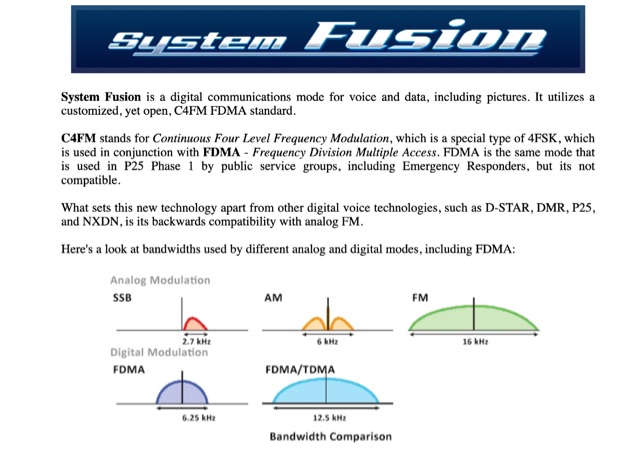 System Fusion is a digital communications mode for voice and data, including pictures. It utilizes a customized, yet open, C4FM FDMA standard. An introduction to Yaesu System Fusion by Wireless Society of Southern Maine
 -
 Presents the digital edition of "The Communicator," a journal from Surrey Amateur Radio Communications (SARC), offering a curated collection of articles, technical deep dives, and operational reports. Each issue, such as the July-August 2026 edition, details specific **homebrew projects** like an NTP Dual Clock, a True RMS to DC Converter, and an Arduino NANO automation mod for the Yaesu FH-2. It also covers historical accounts, including the legacy of SSB pioneer Nicolaas Kooman and the mystery of the Lagercrantz suitcase radio, alongside practical operating advice and contest summaries like Field Day 2026 and the RAC Canada Day contest. The journal consistently features diverse content, from exploring the capabilities of modern transceivers like the Icom IC-9700 for digital modes to discussions on antenna theory, such as building a vertical HF antenna without radials. It also addresses contemporary issues, exemplified by an article unpacking the FAA's "CW interference" directive concerning Boeing 787 transponders, clarifying that the interference is not related to amateur radio Morse code but rather unmodulated carrier signals impacting aviation frequencies around 1030 MHz and 1090 MHz. Furthermore, the publication includes lighter fare like "No-ham Recipes," club meeting minutes, and member profiles, providing a holistic view of the amateur radio community. It offers multiple access options for each issue, including full and lower-resolution PDF downloads, an online magazine reader, and an experimental AI-LLM audio podcast version, making its extensive content readily accessible to a global audience in over 165 countries.
 -
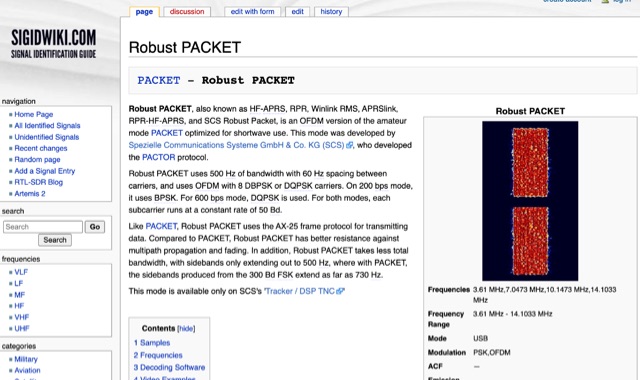 Robust PACKET, developed by Spezielle Communications Systeme GmbH & Co. KG (SCS), is an OFDM variant of the amateur PACKET mode specifically engineered for HF operation. This mode utilizes a 500 Hz bandwidth with 60 Hz carrier spacing, employing OFDM with 8 DBPSK or DQPSK carriers. It supports 200 bps using BPSK and 600 bps with DQPSK, with each subcarrier operating at a constant rate of 50 Bd. Robust PACKET leverages the AX-25 frame protocol for data transmission, similar to standard PACKET. Compared to traditional PACKET, Robust PACKET demonstrates enhanced resilience against multipath propagation and fading effects, critical for reliable HF communications. It also exhibits a more efficient spectral footprint, with sidebands extending only to 500 Hz, whereas 300 Bd FSK PACKET can produce sidebands up to 730 Hz. Operational frequencies for Robust PACKET include 3.61 MHz, 7.0473 MHz, 10.1473 MHz, and 14.1033 MHz, with specific regional frequencies also documented. Decoding software options for Robust PACKET include Wavecom W-Code and Wavecom W-Spectra. The mode is primarily supported by SCS's 'Tracker / DSP TNC' hardware.
 -
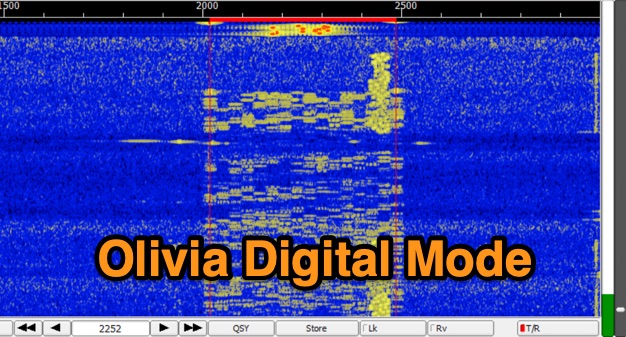 The Olivia digital mode, a **Multi-Frequency Shift Keying (MFSK)** radioteletype protocol, is specifically engineered for robust communication under difficult propagation conditions on shortwave radio bands from 3 MHz to 30 MHz. Developed by Pawel Jalocha in 2003, Olivia signals can be decoded even when the noise amplitude exceeds the digital signal by over ten times, making it highly effective for transmitting ASCII characters across noisy channels with significant fading and propagation phasing. Early on-the-air tests by Fred OH/DK4ZC and Les VK2DSG on the Europe-Australia 20-meter path demonstrated intercontinental contacts with as little as one-watt RF power under favorable conditions. Common Olivia modes are designated as X/Y, where X represents the number of tones and Y is the bandwidth in Hertz, with examples including 8/250, 16/500, and 32/1000. The resource clarifies that Olivia, unlike some other digital modes, produces a constant envelope, allowing RF power amplifiers to achieve greater conversion efficiencies and making it less prone to non-linearity. Operators are advised that **Automatic Level Control (ALC)** can be set higher than no meter movement for MFSK modulation, as long as it's not driven past its high limit, contrary to common misinformation about other digital modes. The Olivia community encourages voluntary channelization on suggested calling frequencies, such as 14.0725 MHz for 8/250, to facilitate initial contacts, especially for signals below the noise floor. The Olivia Digital DXers Club provides links to Groups.io, Facebook, and Discord for community engagement and offers details on QSO parties.
 -
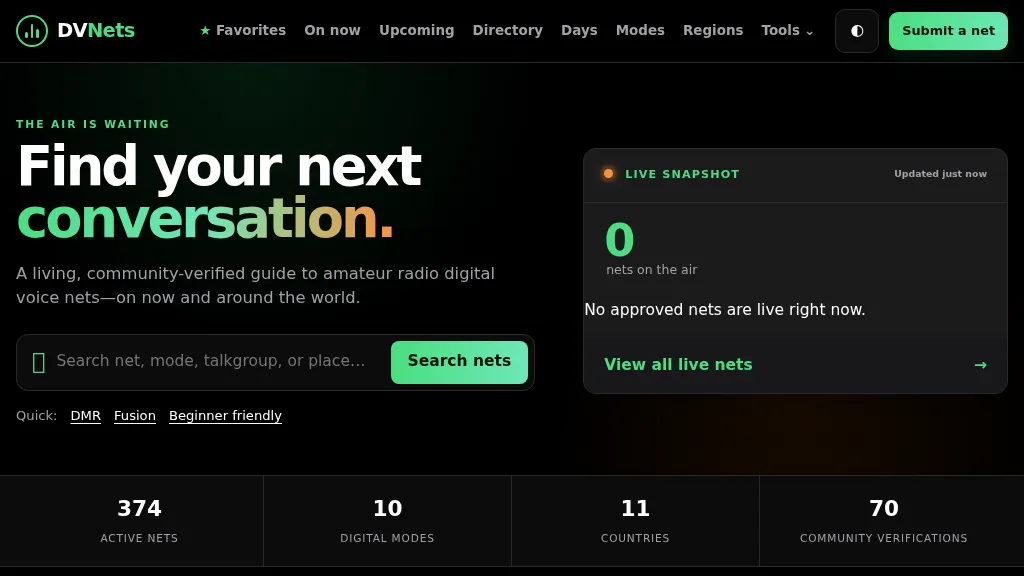 For amateur radio operators seeking to engage in digital voice communications, DVNets provides a centralized, community-verified directory of active nets. It organizes net schedules by **digital mode**, day, region, and access details, covering systems such as DMR, BrandMeister, D-STAR, System Fusion (YSF/C4FM), AllStar, EchoLink, M17, P25, NXDN, Wires-X, IRLP, and FreeDV. The platform offers specific connection information including talkgroups, reflectors, and rooms to facilitate participation in these digital voice activities. DVNets currently lists 374 active nets across 10 digital modes and 11 countries, with 70 community verifications ensuring accuracy. Users can browse nets by specific digital voice mode, view a weekly schedule, or explore listings by region, including the United States (142 nets), Canada (38 nets), and the United Kingdom (27 nets). The directory also features a "Happening soon" section, displaying nets active or starting shortly in the user's local timezone.
 -
 This page provides information on how amateur radio, or 'Ham' radio, is used by the yachting and small boat community for communication and weather information. It explains the global operation of amateur radio, regulations within the U.S., and the role of the American Radio Relay League (ARRL) in licensing and training. The page also highlights maritime 'nets' where Hams exchange weather reports, using voice and digital modes. It encourages establishing webpages for nets and mentions the MAROB and SKYWARN Programs for marine observation and severe weather reporting. The content is useful for hams interested in maritime communications and weather reporting.
 -
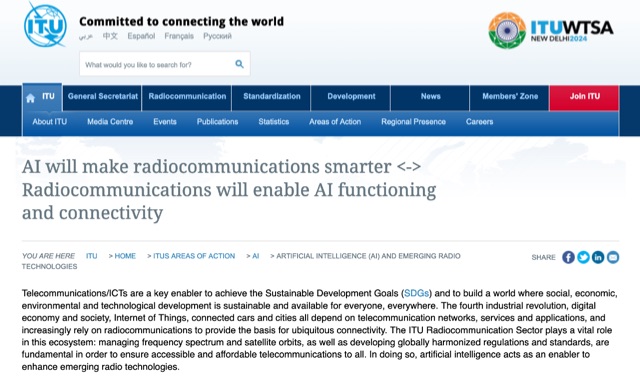 Explore the pivotal role of artificial intelligence in advancing emerging radio technologies, facilitating ubiquitous connectivity essential for sustainable development, the digital economy, and the Internet of Things, guided by ITU's harmonized regulations and standards.
 -
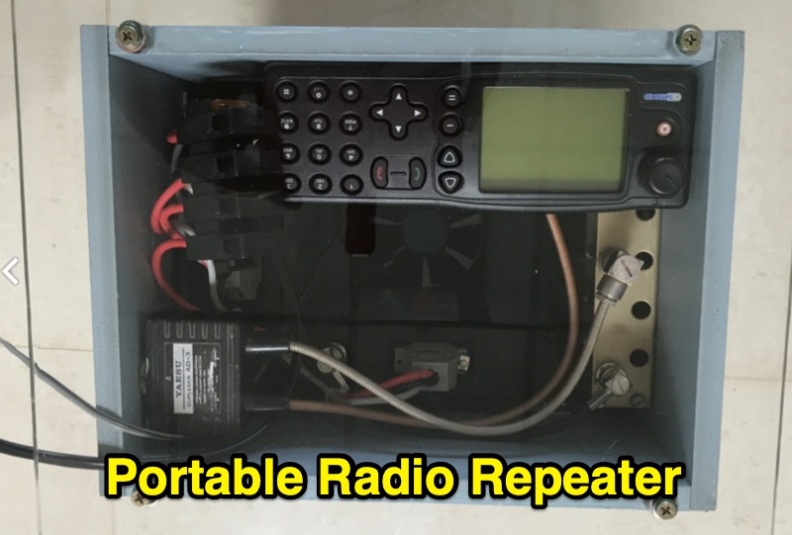 Demonstrates the construction of a portable 2-meter repeater system utilizing a **Yaesu DR-1X** transceiver, configured for both analog FM and C4FM digital voice operation. The design emphasizes portability, robustness, and effective thermal management, incorporating a "wind tunnel" airflow system with a fan to maintain transmit module temperatures at 38 degrees Celsius during continuous operation. The system integrates a diplexer, control head, and is housed in a compact, lightweight case weighing under 8kg, designed for single-person deployment. Covers practical considerations for field deployment, including power sources, antenna types, and the overall system architecture for public service events and emergency preparedness. The resource details the modular "wrap around" construction, showing how components like thermal switches for fan control and Anderson Powerpole connectors are integrated. It highlights the system's ability to provide reliable communications support for club activities and emergency communications.
 -
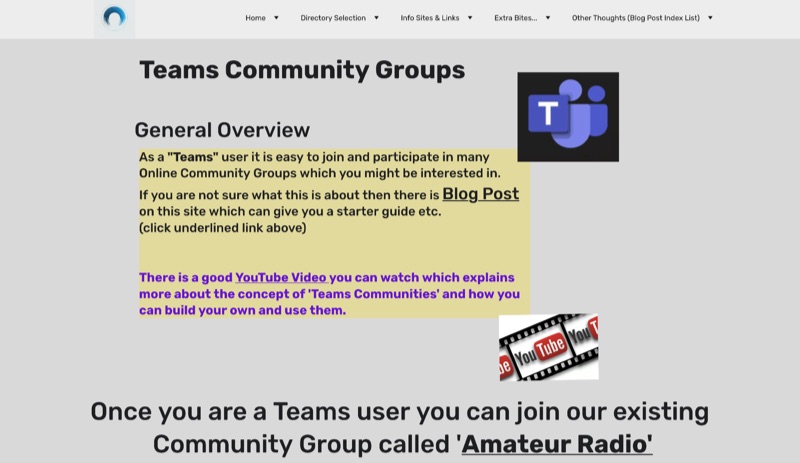 The **Amateur Radio** community on Microsoft Teams provides a platform for hams to connect through chat and video calls. It features five distinct channels, facilitating structured discussions on various topics, akin to a community forum without advertisements. Users can schedule events for group video chats or engage in one-on-one calls, with user status indicators showing availability. The platform supports sharing messages, files, and both video and audio communications within a defined group. An open video chat room is also available, accessible even to non-community members, allowing broader participation. The resource details how to join the existing 'Amateur Radio' community group and provides links to a blog post and a YouTube video for new users to understand Teams Communities.
 -
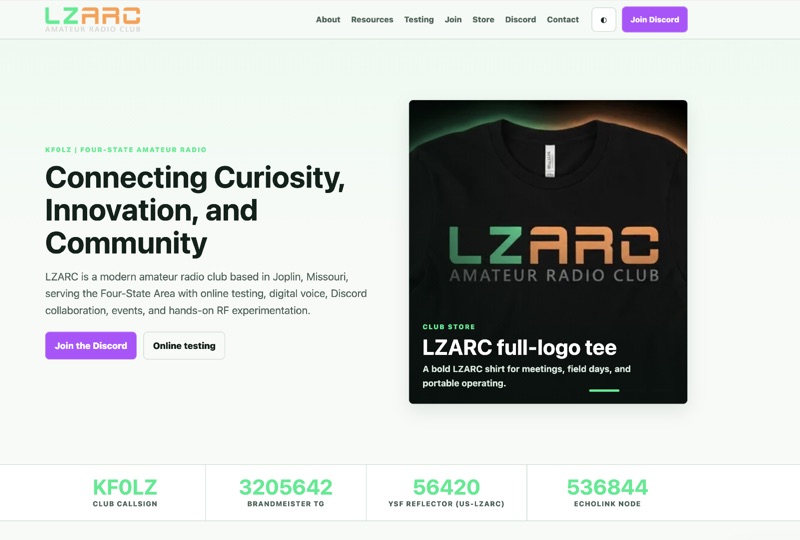 The LZ Amateur Radio Club (LZARC) operates with the club callsign **KF0LZ** and utilizes BrandMeister Talkgroup 3205642, YSF Reflector 56420 (US-LZARC), and EchoLink node 536844 for digital voice communications. This club, based in Joplin, Missouri, provides online FCC amateur radio license testing for Technician, General, and Amateur Extra class licenses, facilitating entry into the hobby. LZARC actively promotes hands-on RF experimentation, mesh networking with **Meshtastic**, and participation in **Parks on the Air** (POTA) activations. LZARC hosts regular events including the N0NMS Youth Net on 145.350 MHz (PL 91.5), the LZMesh Net on the LZMesh Meshtastic Channel, and the LZARC Digital Voice Net (CHAOS Net) via BrandMeister TG 3205642. The club maintains an active Discord server with over 300 members for daily conversations, project discussions, and quick support. Recent updates highlight member upgrades and participation in local hamfests, demonstrating a focus on community engagement and operator development across Missouri, Arkansas, Oklahoma, and Kansas.