Search results
Query: HF portable
Links: 207 | Categories: 8
Categories
- Radio Equipment > HF Portable Antenna
- Radio Equipment > VHF-UHF Mobile
- Radio Equipment > HF Transceivers > Elecraft KX2
- Radio Equipment > HF Transceivers > Elecraft KX3
- Antennas > Mobile
- Radio Equipment > HF Portable Antenna > Super Antennas MP-1
- Radio Equipment > HF Portable Antenna > TransWorld Antennas TW2010
- Radio Equipment > HF Transceivers > XIEGU G90
-
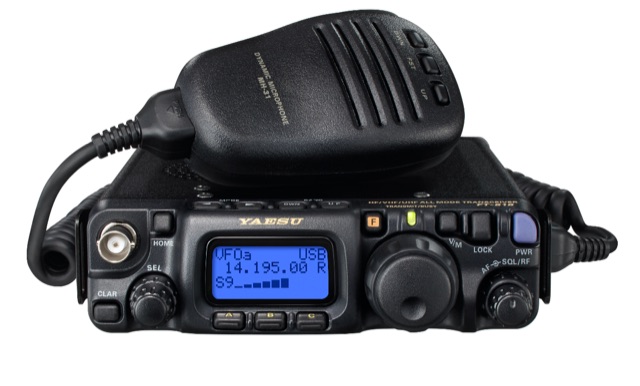 Yaesu FT-818ND HF VHF UHF All mode portable transceiver. Announced in 2018, production of this QRP all mode portable transceiver has been discontinued some years later.
-
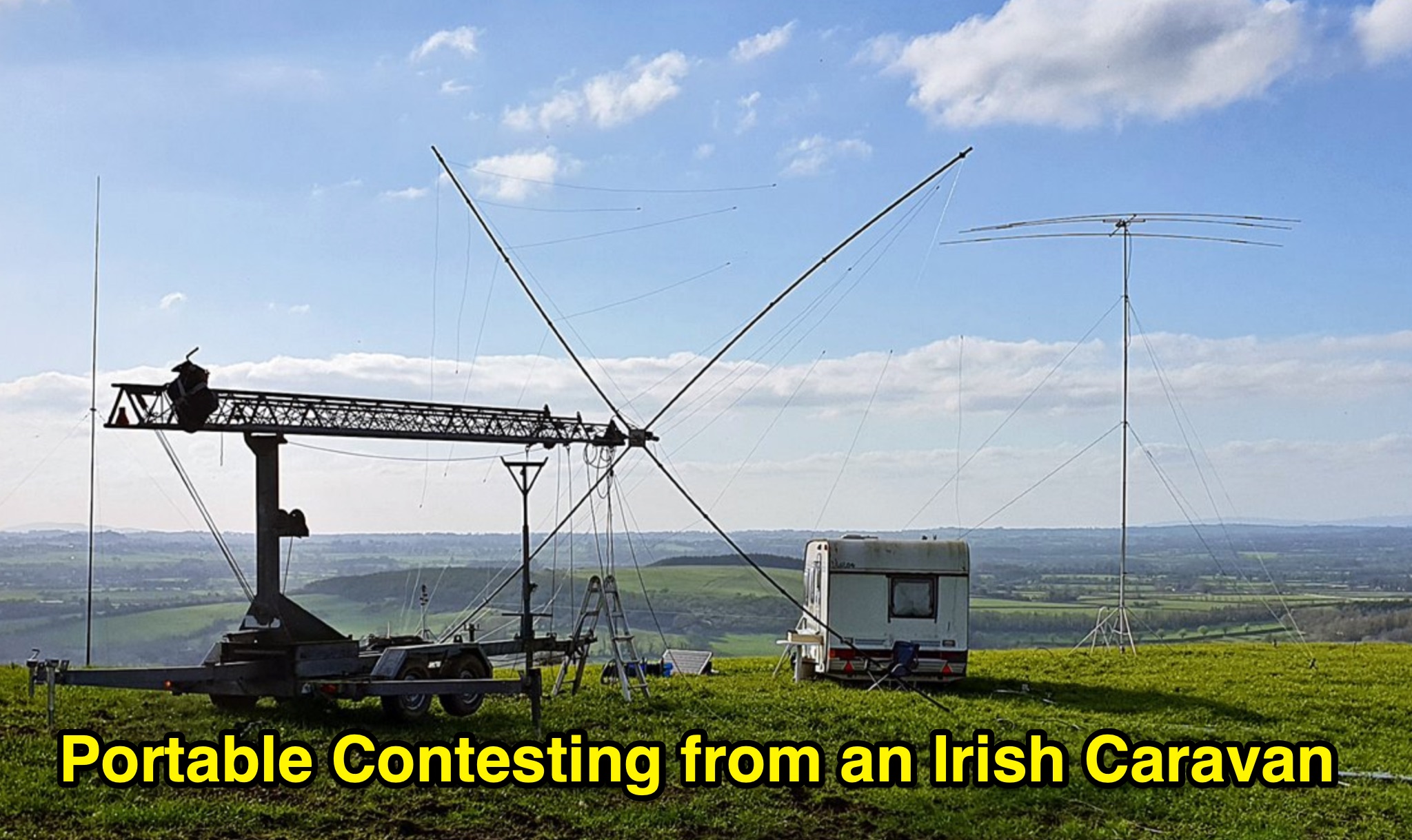 This blog chronicles over a decade of portable HF contesting from rural Ireland (2008–2019) by Olivier, operating under callsigns EI/ON4EI, EI8GQB, EI1A, and EI7T. Using only green energy from a caravan, he achieved top-tier results in major international contests—including 1st World in the 2018 IARU HF Championship (SSB LP) and multiple 1st-place finishes in CQ WW and CQ WPX SSB Europe. Operating in the demanding Single Operator All Band Low Power and SO2R categories, he deployed up to five antennas across five bands, often in remote or emergency-style conditions. The narrative blends technical detail, fieldcraft, and personal reflection, documenting triumphs, setbacks (including carbon monoxide poisoning), and the logistical challenges of sustainable portable operation—culminating in his decision to transition to team-based contesting and future DXpeditions.
-
 The blog and website of English amateur radio operator G0RIF, located near Lichfield in central England. Favourite aspects of the hobby are DXing, RTTY, portable operating and experimenting with wire antennas.
-
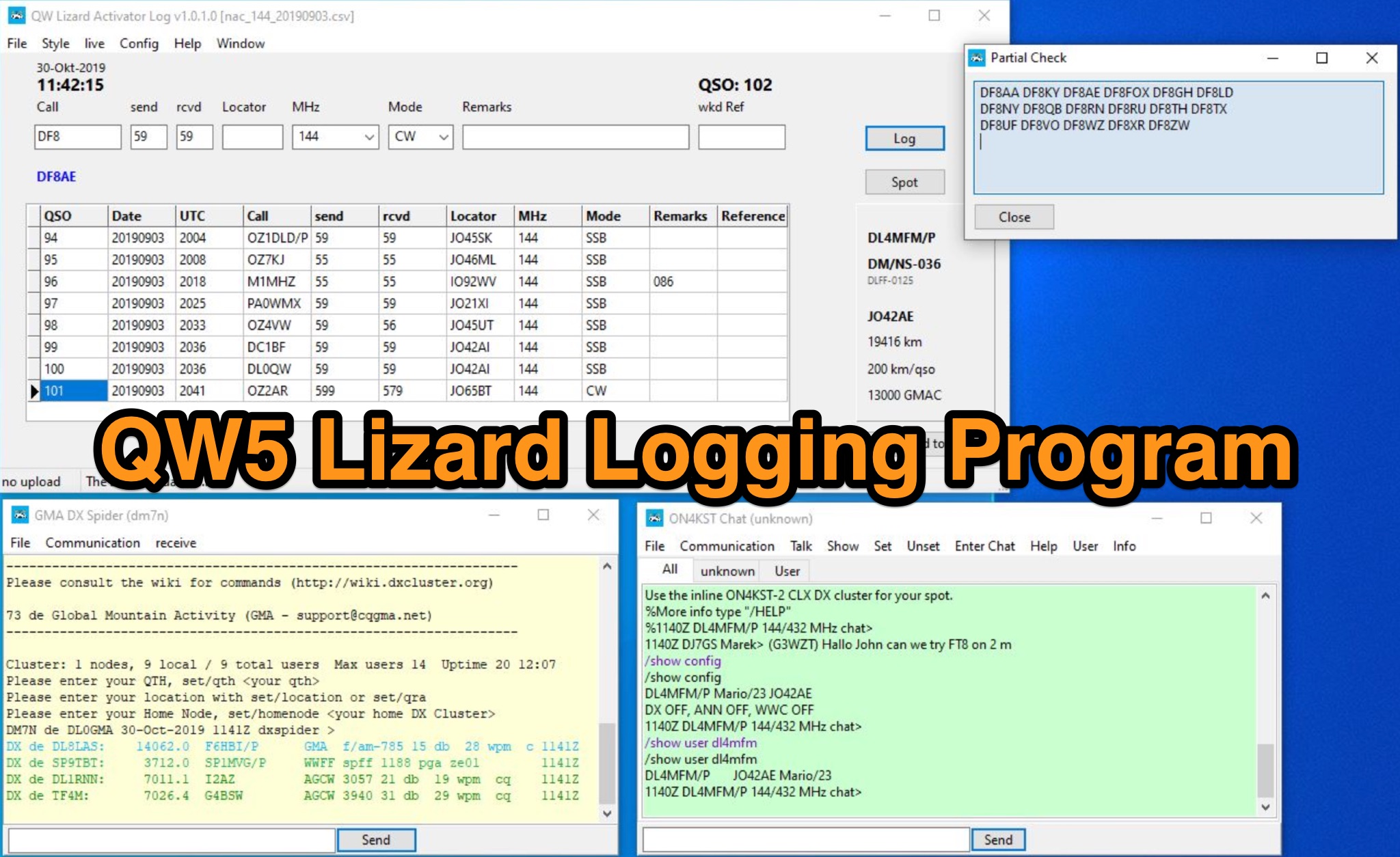 Version 1.0.1.0 of QW5 Lizard, released on September 21, 2019, is a specialized logging program designed for Windows notebooks, particularly for outdoor operations and contest participation. It supports individual configuration and input masks, making it suitable for various HF and VHF/UHF contests. The software prioritizes data security, with a planned feature for live upload directly to the GMA database, catering to activations of references such as mountains, WCA, lighthouses, and WWFF. This logging tool offers robust export capabilities, including EDI for NAC and IARU Region 1 Contests, as well as standard ADIF and Cabrillo formats. The program has undergone extensive testing and deployments by various stations, demonstrating its utility in real-world contest scenarios, such as the Holzhammer Contest. Future extensions for specific contests are also anticipated, enhancing its versatility for the competitive ham radio operator.
-
 Presents the 4th edition of the IARU Region 1 Ethics and Operating Procedures for the Radio Amateur, a fully rewritten guide published in July 2026. It establishes a shared basis for respectful and effective communication within the amateur radio community, building upon over fifteen years of prior work. The document details the purposes of amateur radio, principles of non-interference, electromagnetic compatibility, and station safety. It specifies operating procedures, including listening practices, adherence to IARU and national band plans, appropriate transmission content, use of Q-codes, and the phonetic alphabet. The guide provides instructions for conducting QSOs across phone, CW, and various digital modes. Specific sections address managing pileups, participating in contesting, engaging in DX and DXpedition operations, operating portable or mobile, and conducting station testing. Further sections cover VHF and UHF operating considerations, ensuring a comprehensive resource for both experienced operators and those new to the hobby.
-
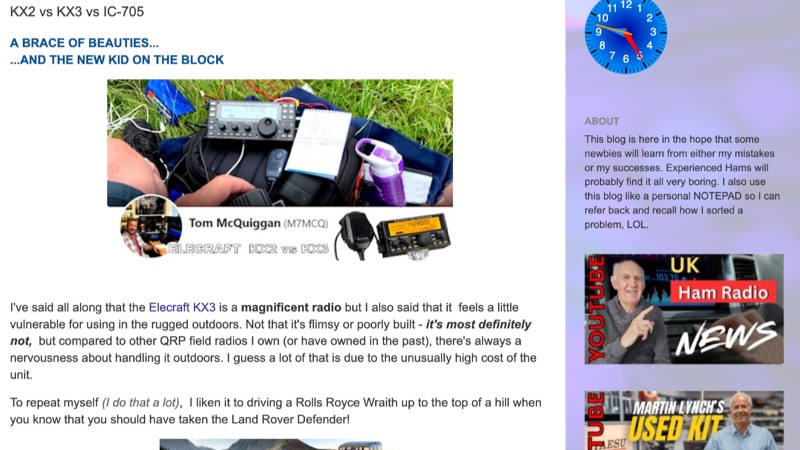 Evaluating portable QRP transceivers for field operations often involves weighing trade-offs in size, features, and power consumption. This resource provides a direct comparison of three popular models: the Elecraft **KX2**, Elecraft KX3, and the Icom **IC-705**. It systematically examines their physical attributes, operational suitability for portable use, and core feature sets, including band coverage, optional accessories like roofing filters and internal ATUs, and specific capabilities such as the KX3's VHF Transverter option and IQ-Out for panadapter connectivity. The analysis details the KX3's broader band coverage, extending to 160 meters and 6 meters, in contrast to the KX2's more limited band complement. It also highlights differences in physical characteristics, noting the KX2's lighter weight and lower idle current drain, which are critical factors for extended battery operation in the field. Speaker audio quality is also mentioned as a comparative point between the Elecraft models. This comparison offers practical insights for operators considering these transceivers for their portable or SOTA/POTA activations, focusing on real-world performance aspects rather than just specifications. It helps clarify which model might better suit specific operational requirements based on the presented data.
-
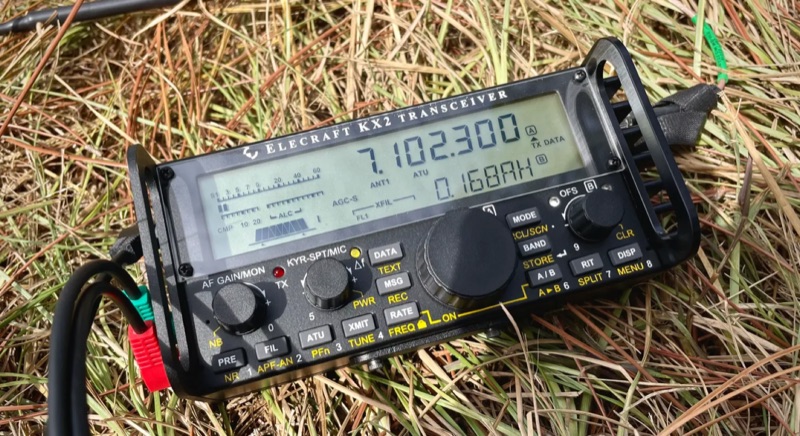 The Elecraft KX2 portable HF transceiver, weighing exceptionally light due to its stamped sheet metal exoskeleton, integrates a 2.5 AH internal lithium-ion battery and an internal tuner, significantly reducing the need for external accessories in a portable HF kit. An add-on board released earlier allows for internal charging, enhancing convenience for field operations. The transceiver's power consumption is efficient, making the internal battery practical for extended use, and its compact form factor is a key advantage for operators prioritizing minimal weight and bulk. Initial user interactions with the KX2 involved familiarization with controls and resolving an audio distortion issue, which was traced to a monitor function left active by a previous owner, quickly rectified by consulting the well-written manual. The resource also notes a Digirig interface issue, resolved by correcting jumper settings, enabling serial rig control. The KX2's data mode operation, while described as an afterthought, is found usable, though it shares mic gain settings between the hand mic and data interface, requiring careful computer audio output adjustment. A notable characteristic of the KX2's data handling is the lack of receive audio monitoring when a data mode interface is connected via the headphone jack, necessitating reliance on waterfall displays for channel clearance. This contrasts with traditional methods of listening for clear channels. The article also mentions the KX2's use of pin diode switching for silent TX during data operations and suggests further work on TX/RX EQ and voice compression settings to optimize 10W voice performance.