Search results
Query: tin can antenna
Links: 310 | Categories: 0
-
 HAMgpt offers a personalized amateur radio experience, leveraging AI to provide real-time operational guidance. It integrates live propagation data, current band conditions, and operator-specific context, including callsign, QTH, license class, and station equipment, to deliver relevant answers. The system can identify open HF, VHF, and UHF bands, suggest workable DXpeditions and POTA/SOTA activations, and provide accurate repeater offsets and CTCSS/DCS tones for local repeaters. Unlike general-purpose chatbots, HAMgpt avoids fabricating frequencies or license privileges, instead relying on actual data for its responses. It supports antenna design calculations for various types like Yagi, dipole, vertical, and magnetic loop antennas, offering to-scale dimensions. The platform also assists with license exam preparation and provides satellite pass predictions tailored to the user's location. It supports multiple countries, including the United States (FCC Technician, General, Extra), Canada, the United Kingdom, Australia, Japan, and Argentina, incorporating their specific band plans and power limits.
-
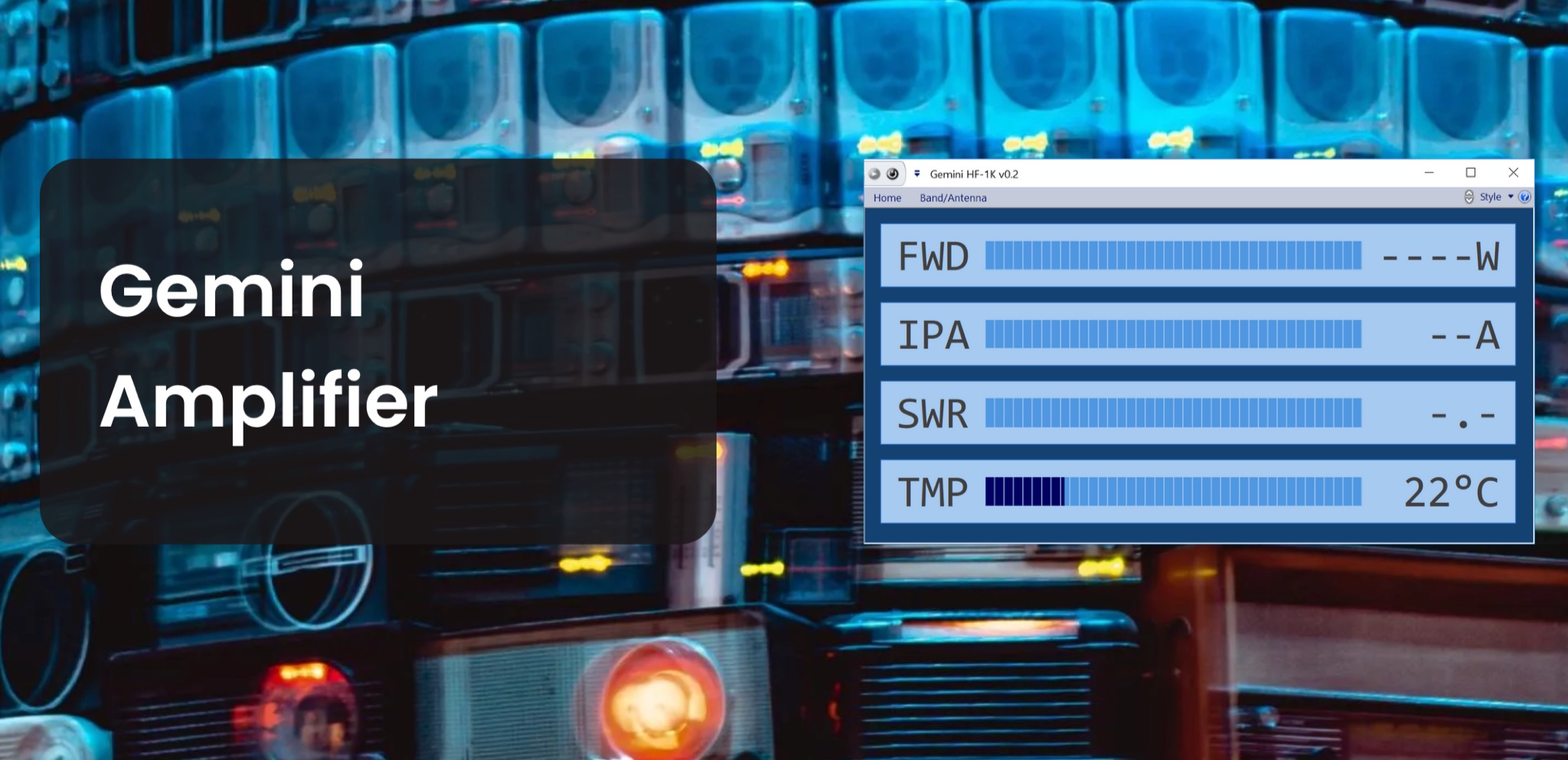 The Gemini Amplifier Remote Control software operates on Windows 7 and above, facilitating remote management of the Gemini HF-1K and DX-1200 amplifiers. Users connect via Ethernet, configuring the amplifier's IP address through the front panel. The software allows seamless band and antenna selection, saving settings for each band without requiring transmission. Integration with _OmniRig_ from Afreet Software, Inc. enables automatic band adjustments based on the radio's frequency changes. Users can configure serial or virtual serial connections, with tracking options accessible through the ribbon bar. The software supports speech functionality, enhancing accessibility for operators. Firmware updates, such as version 2.5Ee, introduce features like background datalogging and power output control, uploaded via FTP. Version 1.2.0 allows users to offload internal parameter data for support purposes. The firmware upload process requires the amplifier's IP address and port 21, taking approximately 90 seconds. Users are encouraged to upgrade to the latest firmware for improved performance and remote diagnostics.
-
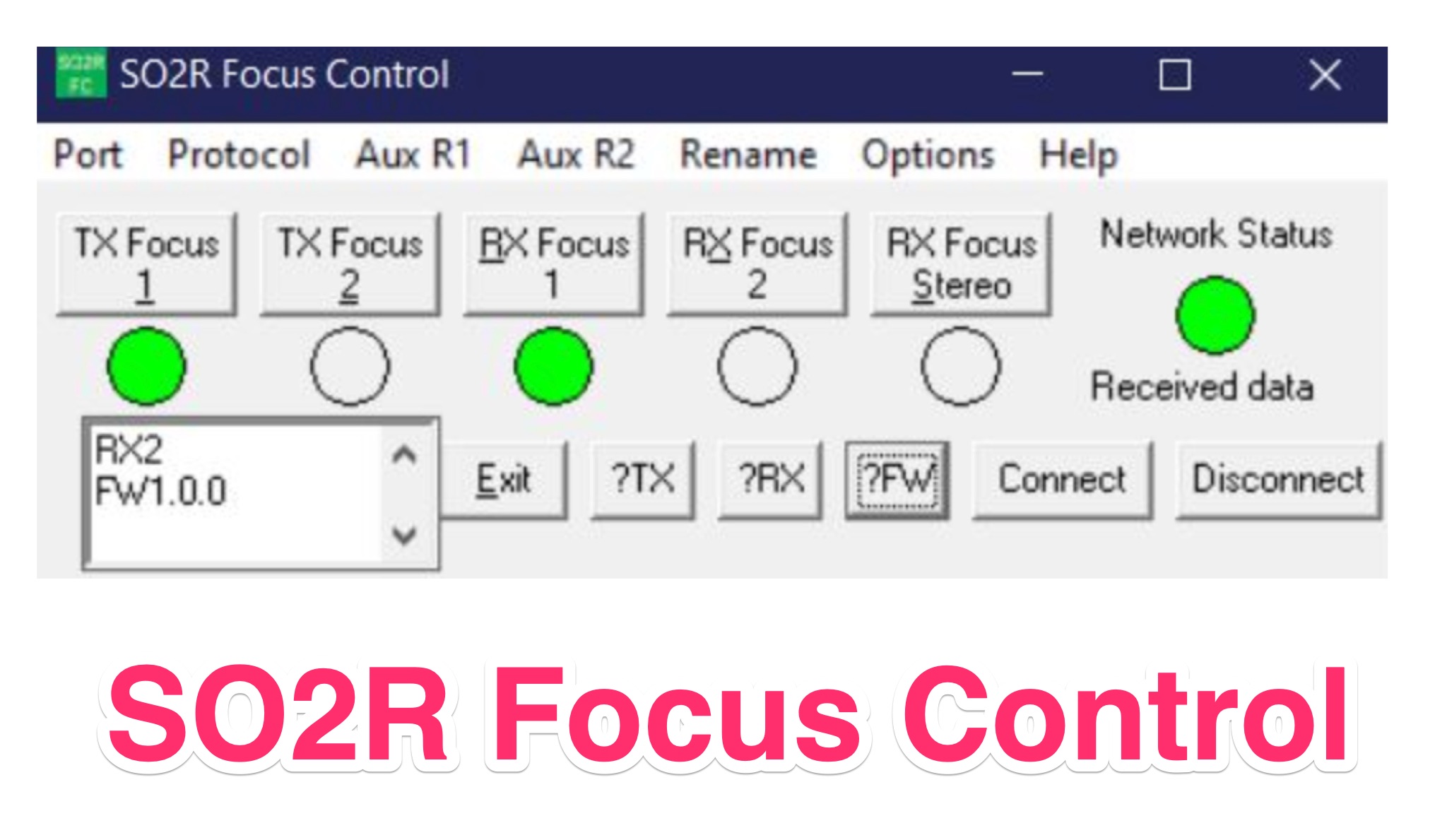 SO2R Focus Control and SO2R FC Server are freeware VB6-based tools enabling remote or local control of modern SO2R controllers (supporting OTRSP and MK2R protocols) outside contest logging sessions. The client (SO2R Focus Control) manages serial-connected controllers and can interface remotely via LAN or internet using the optional SO2R FC Server, which supports up to two concurrent clients. Key features include AUX port control with customizable labels, interlock options, AES-256 encrypted network communication, and compatibility from Windows XP through Windows 11. Designed for operators needing flexible station control—especially for remote antenna switching—both programs install cleanly via NSIS and uninstall completely.
-
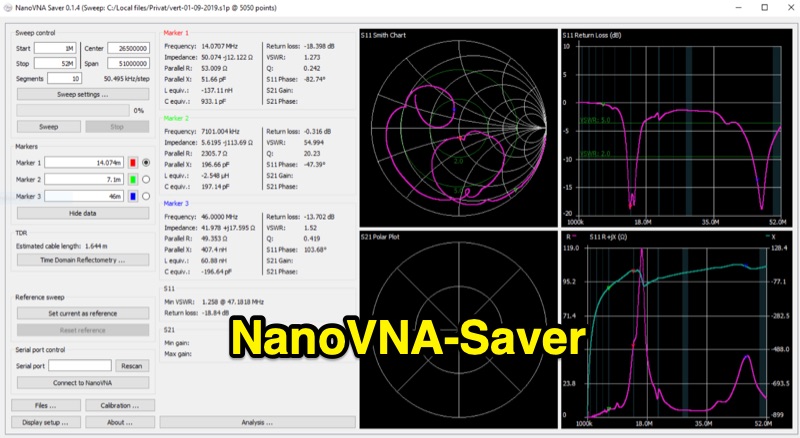 Facilitates interfacing with various NanoVNA models, including NanoVNA-H, NanoVNA-H4, NanoVNA-F, AVNA, and LiteVNA, to extract and display measurement data on a computer. The application supports splitting frequency ranges into multiple segments, increasing resolution beyond the standard 101 data points, with reported tests achieving up to 10,000 points for detailed analysis. Data averaging is also implemented to improve measurement accuracy, particularly beneficial at higher frequencies where noise can be more prevalent. Displays data across several chart types, such as Smith, LogMag, Phase, and VSWR charts, for both S11 and S21 parameters. Markers provide specific readouts for impedance, VSWR, Q factor, and equivalent capacitance or inductance at selected frequency points. Users can define and display customizable frequency bands as reference overlays on the charts. Developed in Python 3 (specifically >=3.10), the software leverages pyside6 for its graphical user interface, numpy for numerical operations, and scipy for scientific computing. This robust framework ensures stable performance and accurate data processing for amateur radio operators and electronics enthusiasts performing antenna and circuit characterization.
-
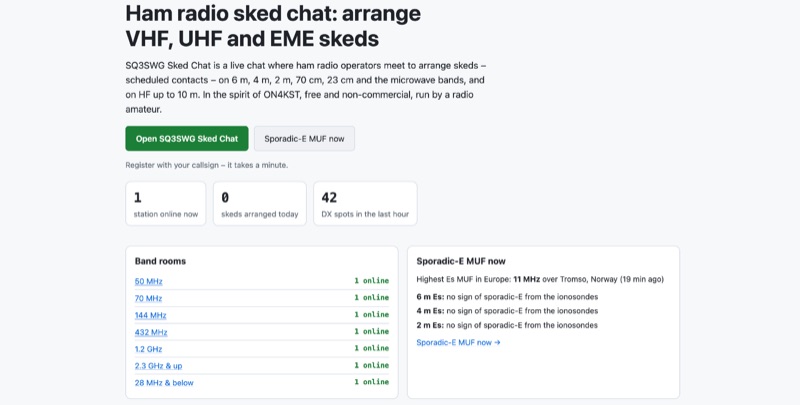 Facilitates real-time coordination of scheduled contacts (skeds) for weak-signal modes on VHF, UHF, and microwave bands, including meteor scatter, tropo, sporadic-E, and EME. The platform features dedicated band rooms for 50 MHz, 70 MHz, 144 MHz, 432 MHz, 1.2 GHz, 2.3 GHz & up, and 28 MHz & below, displaying online users with their locator, distance (QRB), and beam heading (QTF). Users can propose skeds specifying frequency, mode, and UTC time, receiving a countdown and antenna pointing instructions. It integrates propagation alerts, including solar data and Sporadic-E MUF from ionosondes, indicating potential band openings for 6m, 4m, or 2m. DX spots from clusters and users are sorted into band rooms, offering a "Sked" button for online stations. A station map displays users with Maidenhead grid squares and great-circle paths. Verified callsigns through QRZ.com enhance trust among operators. The service is free, non-commercial, and operates without advertising or tracking.
-
 The XW4DX DXpedition website documents the amateur radio operation from Laos, a country ranked #98 on Clublog's Most Wanted list. This resource provides insights into the planning and execution of a significant DXpedition, including antenna choices like _Hexbeams_ at 14m, a 4-square for 40m, and a top-loaded vertical for 160m. The team, comprising operators such as _F4BKV Vincent_ and _F2DX Patrick_, focused on challenging paths, particularly towards the North American East Coast, where Laos is #41 most wanted. Operational constraints included prohibitions on 6m, 30m, 60m, and 80m bands within Laos, necessitating a focus on other HF frequencies, especially 160m and 40m. The expedition utilized up to five stations simultaneously, with equipment transportation being a major logistical challenge, partially mitigated by direct shipments from _Spiderbeam_ and donor support. The expedition ran from November 16th to 27th, 2023, with the complete XW4DX log uploaded to LoTW by December 23rd, 2023. This site serves as a historical record of their efforts to put Laos on the air for DXers worldwide.
-
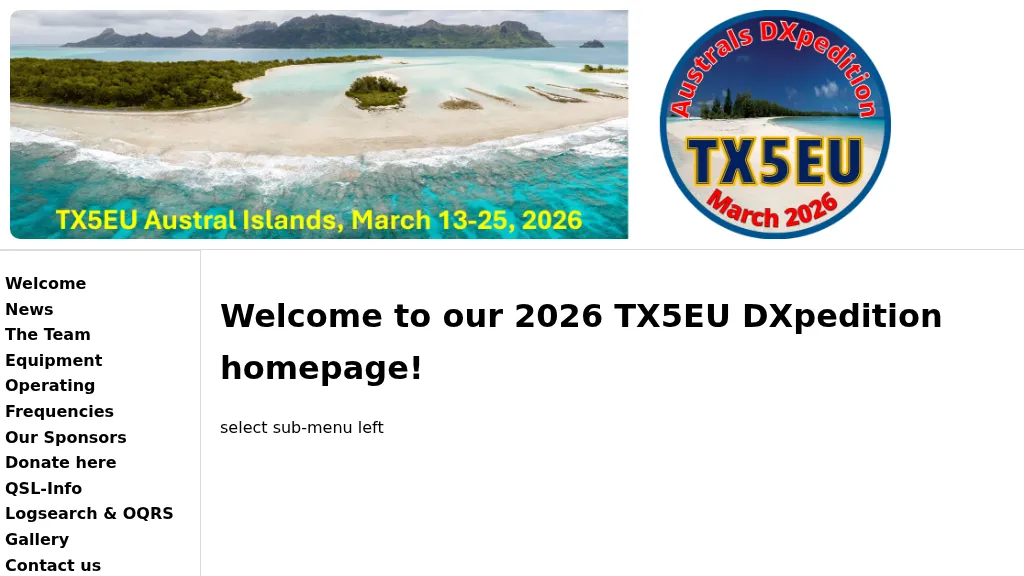 TX5EU 2026 DXpedition to Raivavae Island, **OC-114**, within the Austral Islands, providing a detailed account of the German/Dutch team's operations. The resource outlines the participation of operators such as DL2AWG Guenter, PA2KW Evert, and DK2AMM Ernoe, who engaged in CW, SSB, RTTY, and various digital modes. It documents the real-world challenges encountered, including significant equipment failures and antenna damage to 80/60m, 30m, and 10m verticals due to adverse storm conditions. The page offers timely news updates on the expedition's progress, noting repairs to a power amplifier's 10/12m bandpass filter, which enabled three stations to utilize amplification. Earlier reports highlighted power failures and the loss of multiple power amplifiers, necessitating one station to operate barefoot FT-8 with 100W. The team's persistent efforts to repair antennas as weather permits are also detailed, reflecting the dynamic nature of remote island operations.
-
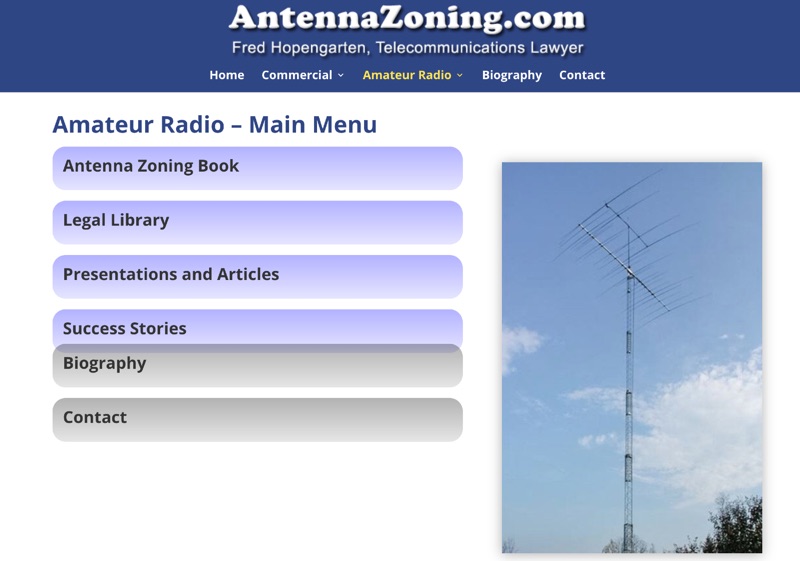 Navigating the complex legal landscape of **antenna zoning** and permit acquisition for amateur radio installations requires specific knowledge, which Fred Hopengarten, K1VR, provides through his resource. This content details the essential steps and regulatory considerations for securing permits for antenna support systems and towers. It focuses on the legal and procedural requirements, offering insights into local ordinances and federal regulations that impact amateur radio operators seeking to erect significant antenna structures. K1VR's expertise as a telecommunications lawyer is evident in the practical advice offered, drawing from real-world scenarios in permit applications. The resource equips hams and their legal counsel with the information needed to successfully navigate municipal zoning boards and secure necessary approvals, contrasting with purely technical antenna design guides by emphasizing the administrative and legal pathways to installation.
-
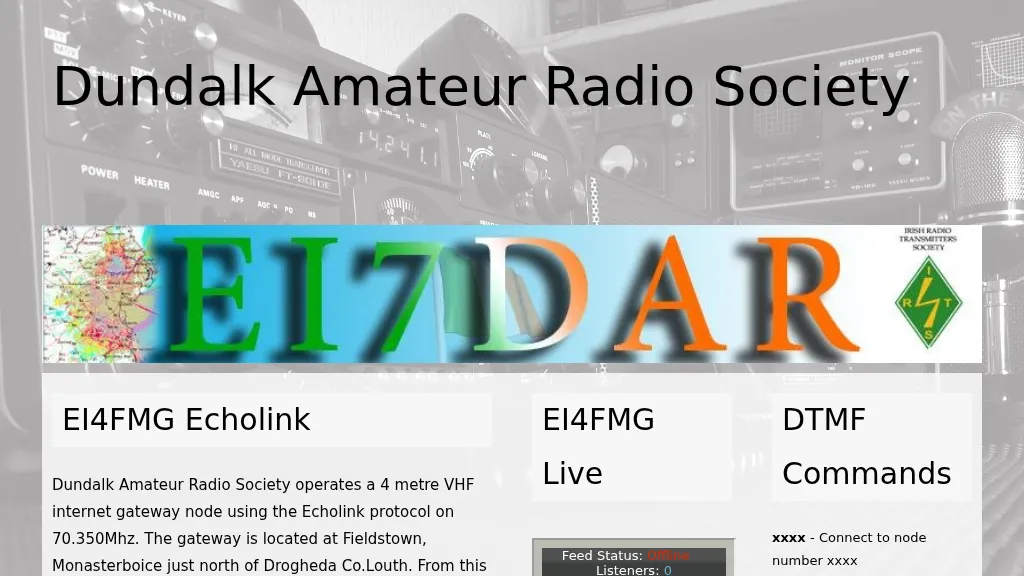 Operating an **Echolink** gateway on the 4-meter band presents unique opportunities for extending VHF communications, as demonstrated by the EI4FMG node. Situated at Fieldstown, Monasterboice, this gateway provides coverage across a significant portion of Ireland's east coast, leveraging a Tait TM8100 radio and an EI4JR Echolink interface logic. My own experience with similar setups confirms the importance of strategic site selection for maximizing reach, particularly with a 122-meter elevation above sea level. Access to the EI4FMG gateway, identified by node 57006, requires a **CTCSS** tone of 88.5 Hz, a standard practice for managing access and minimizing interference on shared frequencies. The system transmits with 15 watts of power and utilizes a Sigma CAT70 @5MAGL antenna, a configuration well-suited for regional VHF coverage. The gateway also features an auto-ID every 8 minutes, ensuring compliance and clear station identification. Users can interact with the gateway using various DTMF commands, allowing for connections to specific nodes, random repeater/link or conference nodes, and managing disconnections. These functionalities streamline the process of linking into the broader Echolink network, enabling local VHF operators to communicate globally through the internet backbone.
-
 Eight specific user interface limitations are identified in the Yaesu FTdx10 transceiver's firmware, drawing on the author's extensive software engineering background and experience with Icom IC-705 and IC-7300 interfaces. The analysis highlights issues such as the main dial Lock button disabling the RX/TX Clarifier, which impedes net control and pile-up operations. It also points out the FTdx10's spectrum scope display modes lack a "Scroll-F" equivalent for efficient band scanning, a feature common in Icom radios. Further points address the inability to access screen-based settings during transmit, the need for improved antenna tuner behavior with an option to reset settings and intelligent segment recall, and limitations when using an external mouse, such as the scroll wheel not functioning as the main dial or function knob. The author also notes the lack of automatic power reduction when using external LDG tuners and the CW decoder's all-caps display, which hinders readability. These observations aim to guide Yaesu in enhancing the FTdx10's user experience, leveraging its strong receiver performance and advanced features.