Search results
Query: arduino cw decoder
Links: 7 | Categories: 0
-
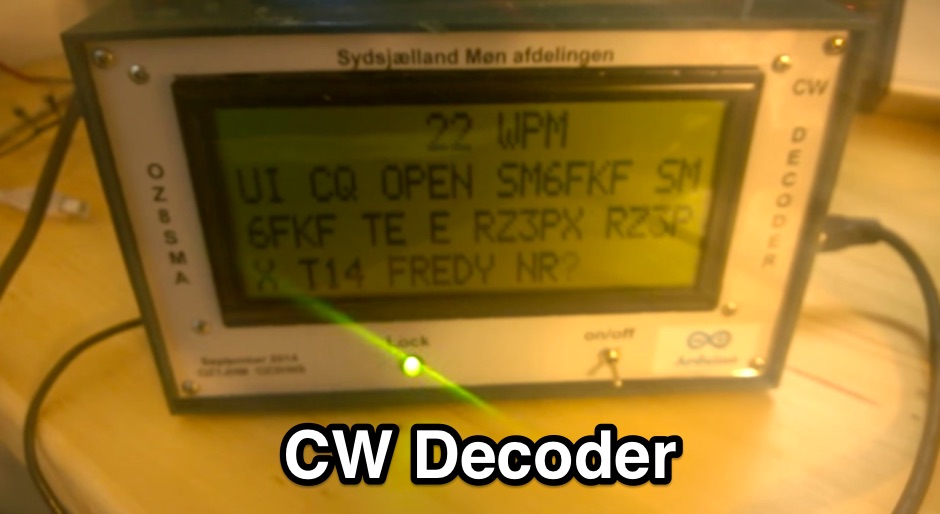 If you want to build a cw decoder without using other active components than an atmel 328 - Arduino UNO , then this is sure something for you.
-
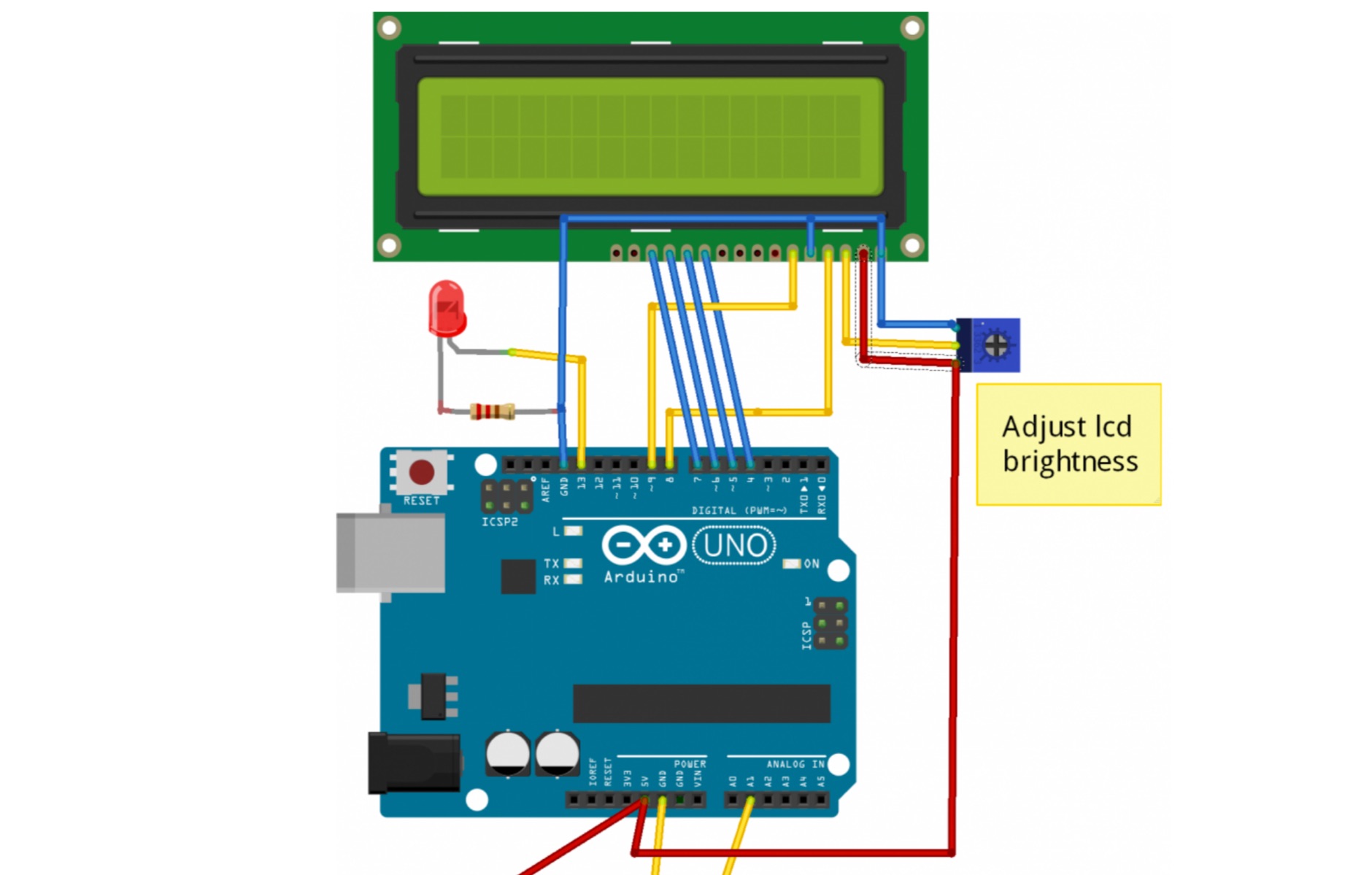 Easy to build CW decoder based on DSP Goertzel code. If you want to build a cw decoder without using other active components than an atmel 328, Arduino UNO, then this is sure something for you.
-
 An Arduino-Based Solution for 5-35 WPM Signals. Explore the circuit, controls, and setup of this innovative device designed by Allen Baker (KG4JJH). Decode Morse code efficiently, providing a valuable tool for operators, from novices to veterans, and offering a hands-on experience with Arduino technology.
-
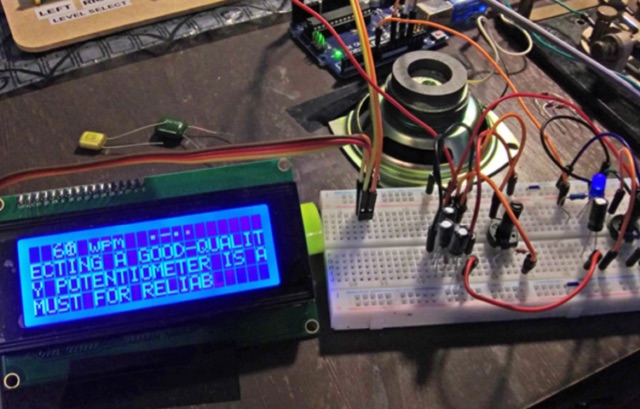 While there are quite a few standalone Morse Code or CW decoders out there, I wanted to tackle the problem myself and end up with both a great Arduino learning project and a decent portable decoder for when I'm out in the field operating QRP
-
 Details the history and evolution of **Continuous Wave (CW)** radiotelegraphy, tracing its origins from 1800s railroad telegraphy using Samuel F.B. Morse's electrical code pulses to its exclusive use with spark-gap transmitters in early radio. Explains how vacuum tube oscillators enabled pure, efficient CW signals, forming the backbone for modern digital communication modes. The resource emphasizes that Morse code remains relevant in amateur radio, valued for its ability to penetrate adverse atmospheric conditions and its role in QRP operations. It outlines effective Morse code learning methodologies, specifically endorsing the **Koch** and **Farnsworth** methods, which prioritize learning by sound at higher character speeds (e.g., 20 WPM) with extended inter-character spacing (e.g., 5 WPM). The content stresses the importance of mastering individual characters with 90% accuracy before progressing. It also provides an extensive overview of CW key types, including the Straight Key, Side-Swiper (Cootie), Semi-Automatic Key (Bug), Dual-Lever Paddle (Iambic), and Single-Lever Paddle, detailing their operational characteristics, typical sending speeds (e.g., 20-100+ WPM), and construction considerations. Furthermore, the page presents several homebrew projects, such as a $10 Cootie key, an ultra-simple code oscillator, an Arduino-based CW decoder capable of 70 WPM, and a 4-stage CW audio filter. It also highlights QRP rig builds like the SW+40 and portable setups for POTA/SOTA, and lists prominent CW clubs like the Straight Key Century Club (SKCC) and the American QRP CW Club (NAQCC).
-
 M2 CW decoder Kit, is an Arduino based morse code decoder, kit produced and delivered by WB7FHC
-
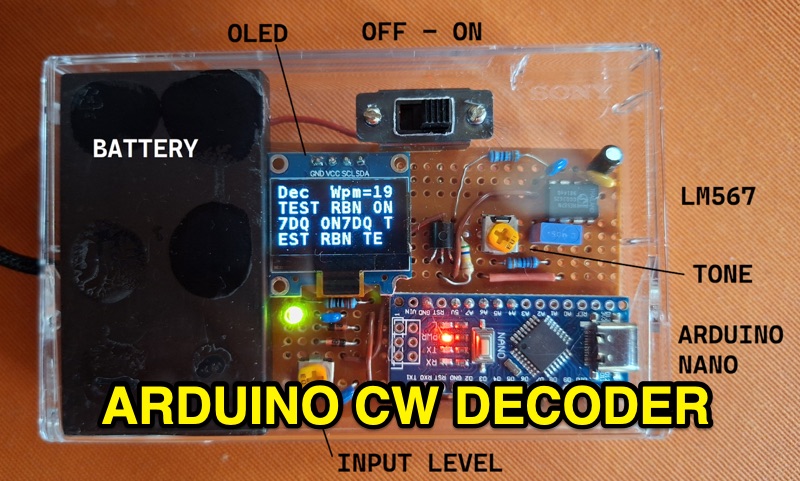 The project details the construction of a small, portable **CW decoder** built around an Arduino Nano and an LM567 tone decoder circuit. It integrates an OLED display for output and is powered by a 1200 mAh Li-Po battery. The Arduino Nano is programmed with a modified version of the OST Morse Box firmware, originally based on Budd, WB7FHC's work, provided as a HEX file for flashing. The LM567 output connects to Arduino pin D2, while pins A6 and A7 are grounded due to the absence of potentiometers, simplifying the circuit. Standard I2C connections are used for the OLED: SDA to A4 and SCL to A5. The entire assembly, including the Arduino, OLED, and decoder circuit, is mounted on a perfboard to fit precisely within an old cassette tape box. This design emphasizes portability and compact form factor. Parameters for the decoder can be adjusted using a dedicated Windows Control program, offering flexibility in operation. The resource provides practical insights into adapting existing firmware for specific hardware constraints and achieving a self-contained, battery-powered **Morse code** decoding solution.