Search results
Query: internal tuner
Links: 11 | Categories: 0
-
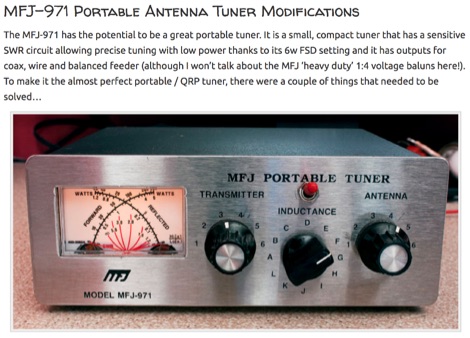 The MFJ-971 portable antenna tuner, as stock, lacks a bypass switch and sufficient inductance for efficient 1.8 MHz operation. This modification addresses these limitations by integrating a DPDT switch for direct signal bypass, enhancing operational flexibility. Furthermore, the guide details the addition of a T130-2 iron powder toroid, wound with **29 turns** of enamelled copper wire, to augment the tuner's internal inductance. This increases the maximum inductance from approximately 17µH to around **27µH**, enabling effective impedance matching on the _160-meter band_. The modification involves cutting the wire after the 'L' tap on the original inductor and inserting the additional toroid, ensuring the entire original coil plus the new inductance is engaged when 'L' is selected. This preserves the functionality of other inductance settings while extending low-band performance. The article also highlights a potential RF burn hazard from the variable capacitor nuts on the MFJ-971, even at QRP power levels.
-
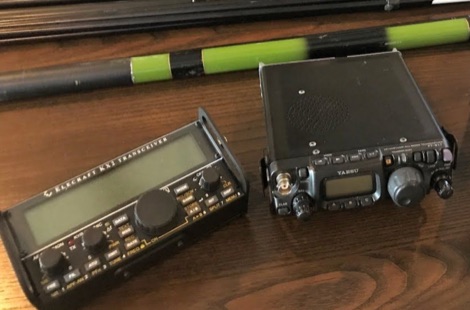 Selecting a portable QRP transceiver for field operations or SOTA activations often involves weighing trade-offs between size, power output, and feature sets. This article directly compares the _Elecraft KX2_ and the _Yaesu FT-818_, two popular choices among QRP operators. It examines key specifications such as receiver sensitivity, transmit power levels, and battery life, providing practical insights into their on-air performance. The comparison delves into user interface differences, discussing the ergonomics of controls, display readability, and menu navigation for each rig. It also touches upon integrated features like internal antenna tuners and digital mode capabilities, which are crucial for efficient portable operation. The author shares personal experiences with both transceivers, highlighting their respective strengths and weaknesses in real-world scenarios. Specific attention is given to the form factor and weight, critical considerations for backpackers and those operating from remote locations. The article concludes with a summary of which transceiver might be better suited for different operating preferences.
-
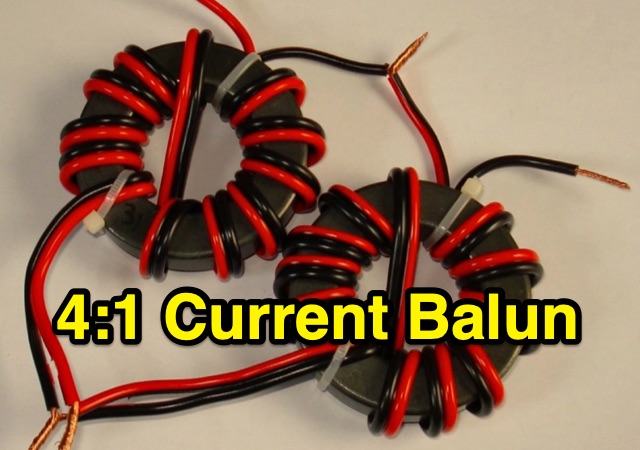 This blog post details the construction and usage of a 4:1 current balun, using two FT240-31 ferrite cores and 12 bifilar turns. It clarifies common misconceptions about using 4:1 baluns with G5RV antennas and ladder-line to coaxial cable connections. M0PZT emphasizes the importance of proper measurements and the limitations of internal baluns in manual antenna tuners. Detailed instructions and considerations for winding and deploying the balun are provided, along with advice on choosing suitable cores and wire for various power levels and frequency ranges.
-
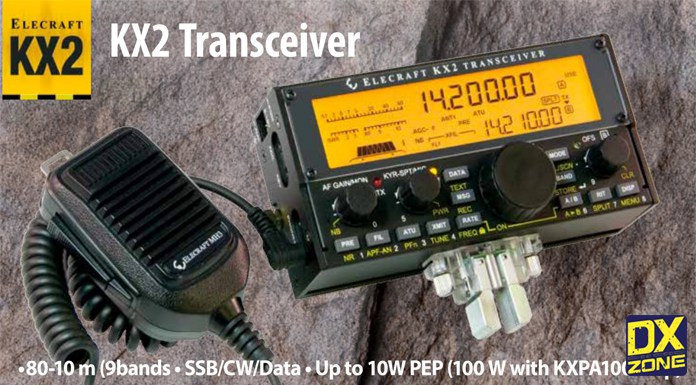 The Elecraft KX2 is presented as a highly portable QRP transceiver, covering 80-10 meters with SSB, CW, and data modes. Key specifications include its remarkably light weight of only **13 ounces** (0.3 kg), an optional internal 2.6 Ah Li-ion battery, and an internal wide-range automatic antenna tuner (ATU). This _software-defined radio_ (SDR) architecture incorporates advanced DSP features such as dual watch, noise reduction, noise blanking, and autonotch, alongside built-in PSK31/RTTY data mode operation without requiring an external PC. Designed for maximum portability, the KX2 measures 5.8 x 2.8 x 1.5 inches and delivers up to **10 watts** of output power. Its low current drain of 135 mA allows for up to 8 hours of typical operation on a single battery charge, making it suitable for field deployment. The transceiver also features a built-in microphone for HT-style use and is compatible with the KXPA100 amplifier, offering versatility for various operating scenarios from desktop to mobile or handheld.
-
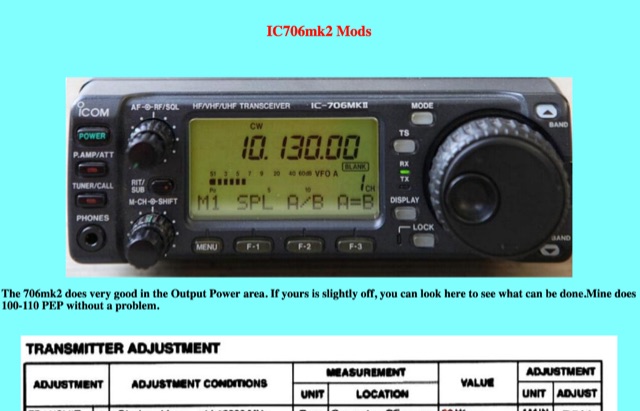 Presents two distinct hardware modifications for the Icom IC-7300 transceiver, detailing the necessary steps for each. The first modification, a _MARS_ transmit expansion, involves the physical removal of specific surface-mount diodes (D422) from the main board, enabling transmit capabilities across a broader frequency range, including out-of-band frequencies. It specifies the diode location on US versions of the IC-7300 and suggests using small diagonal cutters if a soldering iron is not preferred or available. The second modification focuses on the internal antenna tuner, aiming to provide wider impedance matching capabilities. This involves adding a **100k ohm** resistor to a designated point within the tuner circuit. The resource also briefly mentions a microphone modification for the _HM219_ and a general power increase, though without specific instructions for the latter two. It emphasizes safety precautions, such as disconnecting power and inspecting the work area.
-
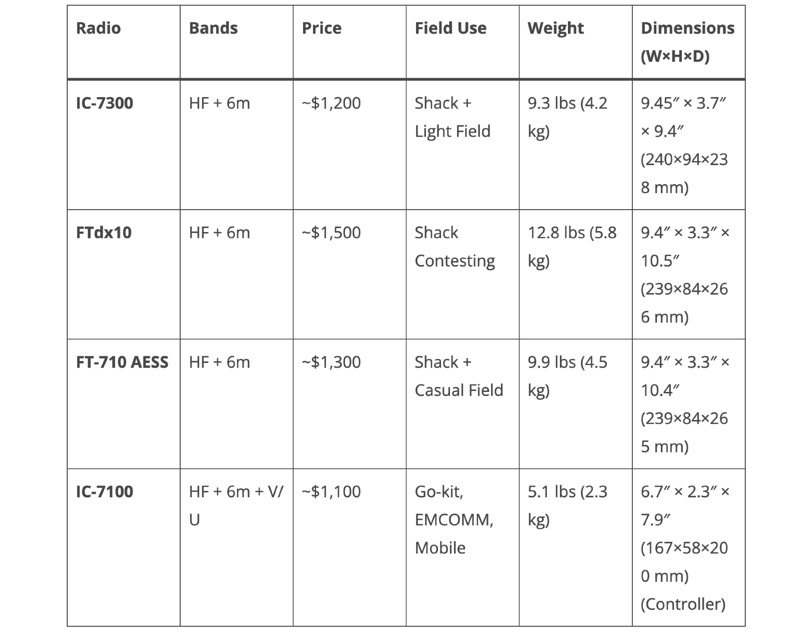 The page presents a collection of blog posts tagged with "yaesu-ftdx10" from the VE3IPS WordPress site. It serves as an index for content related to the Yaesu FTdx10 transceiver, often in comparison with other popular HF rigs like the Icom IC-7300 and Yaesu FT-710 AESS. The aggregated content details specifications such as 100W output power and various SDR architectures. Specific articles linked from this tag page likely delve into operational aspects, including receiver performance, audio clarity, and user interface characteristics of these transceivers. Mentions of features like the IC-7300's real-time spectrum scope and USB integration, or the FTdx10's roofing filters and contest-proven Contour and DNR filters, indicate a focus on technical distinctions. The resource also highlights limitations, such as the basic 3:1 internal tuner in some models and the absence of VHF/UHF coverage in the IC-7300. The Yaesu FTdx10's superheterodyne and SDR approach, along with its placement on the Sherwood Engineering receiver performance list, are key points of discussion within the linked posts.
-
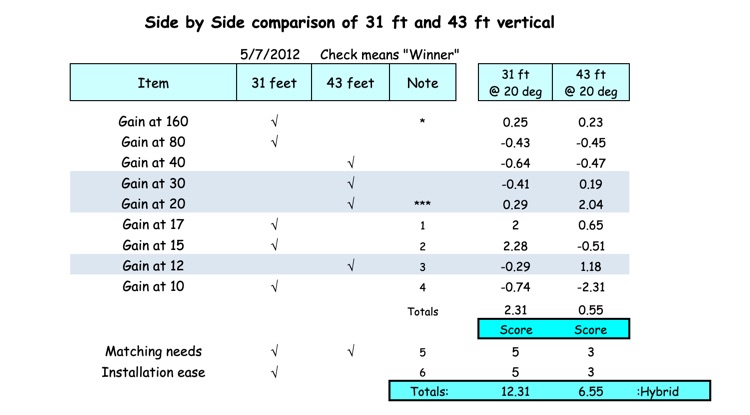 VE1ZAC's analysis details the performance of **MFJ927** and **SGC239** autotuners with portable HF vertical antennas, specifically comparing 31 ft and 43 ft configurations. The resource originated from challenges encountered during a Maritime QSO Party roving operation, necessitating a lightweight and easily deployable antenna system. Target bands for the contest included 80, 40, 20, 15, and 10 meters, with a maximum power handling of 100 W CW. The author utilized a 30-foot carbon fiber push-up pole to support a vertical wire element, noting its 2 lb weight and reliability. EZNEC modeling was employed to predict performance, showing favorable results for a 30-foot vertical with elevated radials, particularly on 40 and 20 meters. Feedpoint impedance measurements, taken with an AIM4170C, are presented for various HF bands, both with and without a 41-foot RG6 stub designed to reduce reactance on 80 and 20 meters. The stub significantly improved matching on these bands, easing the tuner's workload. Operational tests revealed issues with the MFJ927's reliability during contest setup, leading to reliance on the K3's internal tuner. The SGC239, tested post-contest, performed flawlessly. A detailed side-by-side comparison covers mechanical aspects, connection options, power bias, impedance range, board quality, and documentation. Modifications to the MFJ927, including a new aluminum case, white paint for heat reduction, and upgraded impedance-measuring resistors, are also described.
-
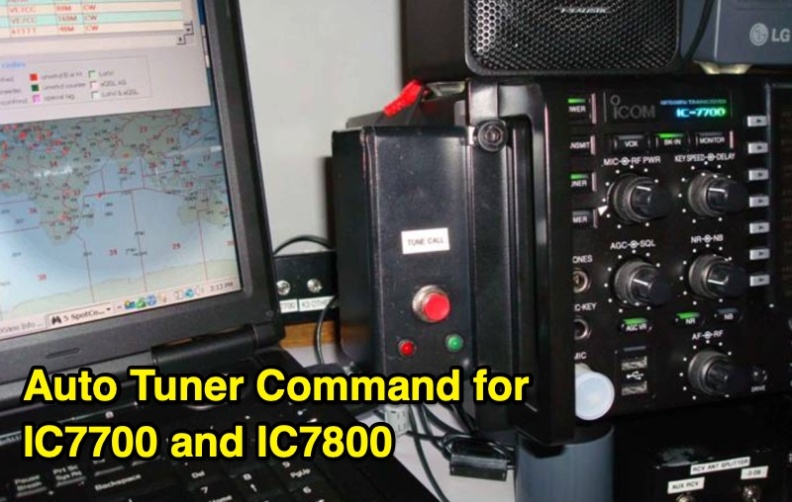 An Arduino-based interface provides a remote tuner call command for Icom **IC7700** and **IC7800** transceivers, addressing the lack of a built-in function for external tuners such as the MFJ 998RT. This setup initiates a low-power transmit signal, typically 15 watts, allowing the remote autotuner to perform its matching sequence. The article details the required CI-V line communication and modifications to existing Arduino code, specifically referencing contributions from Jean-Jacques ON7EQ for improved Icom interrogation routines. The system involves a sequence of steps: storing the transceiver's current mode and power, disabling the internal autotuner, activating a control relay to interrupt the amplifier line, switching to RTTY mode at low power, and initiating transmit. The transmit duration is manually controlled by the operator, observing the SWR meter until a low SWR is achieved, then a second button press stops the transmission. A built-in 4-second transmit limit provides a safety measure. After tuning, the routine restores the original mode and power settings, re-enables the internal autotuner, and performs a brief 2-second RTTY transmission for internal tuner adjustment. The circuit diagram includes a Panasonic form 2 relay for amp control and emphasizes critical delays in the Arduino code for stable operation at 9600 baud CI-V communication. Compatibility with logging software like DXLab, N1MM, and N3FJP is noted, with specific interrogation time settings required to avoid conflicts.
-
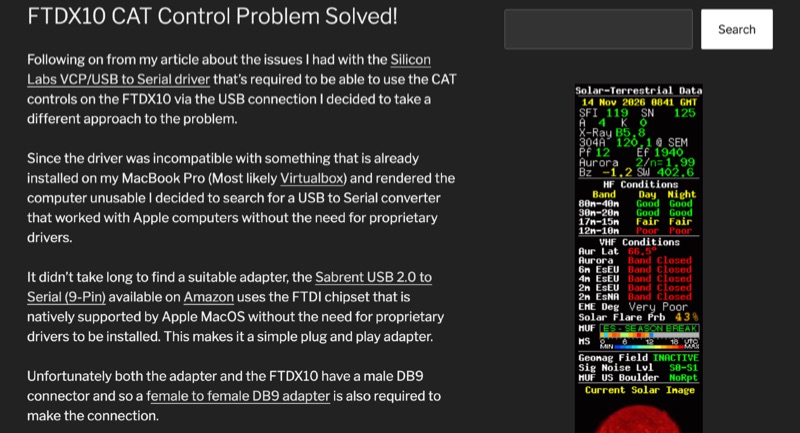 The Yaesu FTDX-10 transceiver features a hybrid receiver design, integrating a dual superheterodyne front end with an SDR chip for advanced DSP. This architecture aims to mitigate front-end overload, a critical consideration for HF operations. Performance data indicates a Reciprocal Mixing Dynamic Range (RMDR) that places the FTDX-10 at number two on Sherwood Engineering's ranking, highlighting its strong signal handling capabilities. The unit includes a 5-inch TFT touch screen and an internal antenna tuner effective up to 3:1 SWR, covering receiver frequencies from 30 kHz to 75 MHz. Operational aspects include a spectrum scope with 2D and 3DSS display modes, offering adjustable frequency spans from 1 kHz to 1000 kHz and five waterfall speeds. The review evaluates the efficacy of the noise blanker and Digital Noise Reduction (DNR) functions, essential for mitigating interference in various operating environments. Connectivity is supported via USB drivers for N1MM and HRD software, alongside DVI output for external display mirroring. The Multi-Purpose VFO Outer Dial (MPVD) enhances user interaction. The FTDX-10's design and features cater to serious amateur radio operators seeking high performance in a compact HF/50 MHz platform.
-
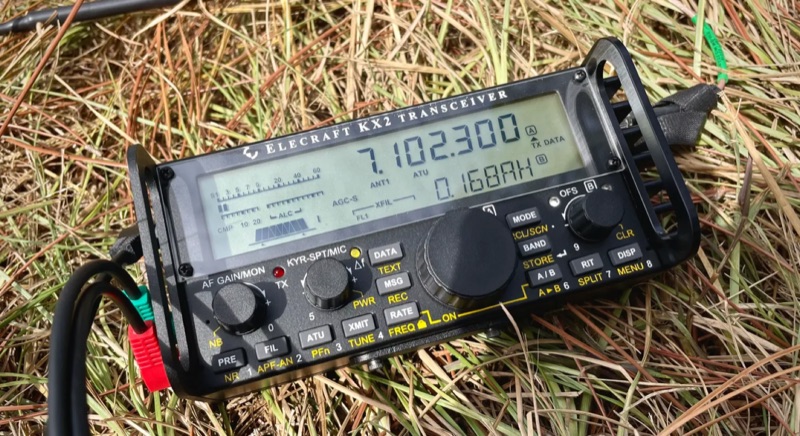 The Elecraft KX2 portable HF transceiver, weighing exceptionally light due to its stamped sheet metal exoskeleton, integrates a 2.5 AH internal lithium-ion battery and an internal tuner, significantly reducing the need for external accessories in a portable HF kit. An add-on board released earlier allows for internal charging, enhancing convenience for field operations. The transceiver's power consumption is efficient, making the internal battery practical for extended use, and its compact form factor is a key advantage for operators prioritizing minimal weight and bulk. Initial user interactions with the KX2 involved familiarization with controls and resolving an audio distortion issue, which was traced to a monitor function left active by a previous owner, quickly rectified by consulting the well-written manual. The resource also notes a Digirig interface issue, resolved by correcting jumper settings, enabling serial rig control. The KX2's data mode operation, while described as an afterthought, is found usable, though it shares mic gain settings between the hand mic and data interface, requiring careful computer audio output adjustment. A notable characteristic of the KX2's data handling is the lack of receive audio monitoring when a data mode interface is connected via the headphone jack, necessitating reliance on waterfall displays for channel clearance. This contrasts with traditional methods of listening for clear channels. The article also mentions the KX2's use of pin diode switching for silent TX during data operations and suggests further work on TX/RX EQ and voice compression settings to optimize 10W voice performance.
-
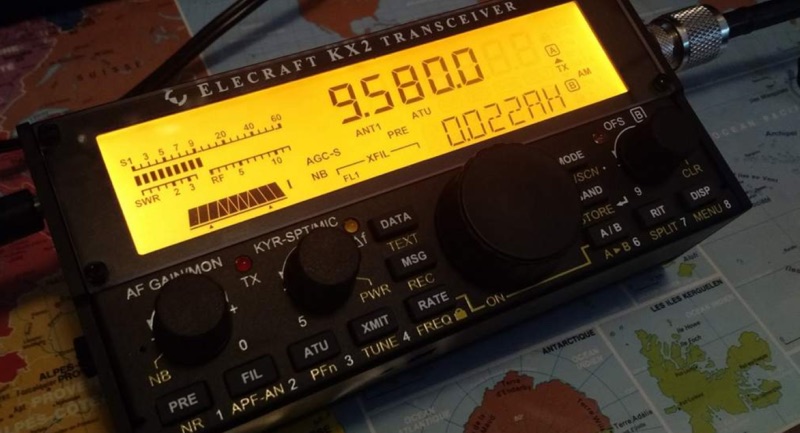 Operating the Elecraft KX2 in the field reveals its strengths as a **QRP transceiver**, particularly for activations like NPOTA. The author, K4SWL, recounts his initial skepticism about acquiring a KX2, already owning both the KX1 and KX3, but ultimately found its compact form factor and feature set compelling for portable use. He details the process of learning the KX2's menu system, noting differences from the KX3, and praises the comprehensive Elecraft owner's manual for navigating these nuances. K4SWL's experiences with the KX2 during numerous NPOTA activations highlight its quick deployment and effective internal options, such as the LiPo battery and the **KXAT2 internal ATU**. He shares an anecdote from the W4DXCC conference where the KXAT2 successfully matched a 20-meter hex beam on 40 meters at 10 watts, a task the Icom IC-7300's internal tuner could not accomplish. This demonstrates the KX2's robust tuning capabilities for varied field antenna setups. The review also touches on the KXPD2 keyer paddle, noting its improved design over the KX1's primitive paddles, despite a higher price point. K4SWL provides audio comparisons of the KX2's general coverage receiver in AM mode against an LnR Precision LD-11, showcasing its impressive shortwave broadcast listening capabilities, while acknowledging its designed limitations for mediumwave reception.