Search results
Query: measure rf volts
Links: 3 | Categories: 0
-
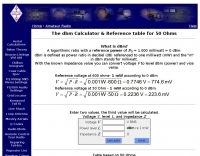 Understanding power measurements in RF systems is crucial for amateur radio operators, particularly when evaluating antenna performance or transmitter output. This online resource provides a _dBm calculator_ and a comprehensive reference table specifically tailored for 50 Ohm impedance environments. The calculator allows users to convert between dBm, milliwatts (mW), and volts (V), facilitating quick power level assessments. It clarifies that dBm represents a logarithmic ratio with a reference power of **1.000 milliwatt**, equating to 0 dBm. The accompanying reference table extends this utility by presenting a range of pre-calculated values, which can be particularly useful for field operations or rapid design checks without needing to perform manual calculations. The resource distinctly focuses on the practical application of dBm in amateur radio contexts.
-
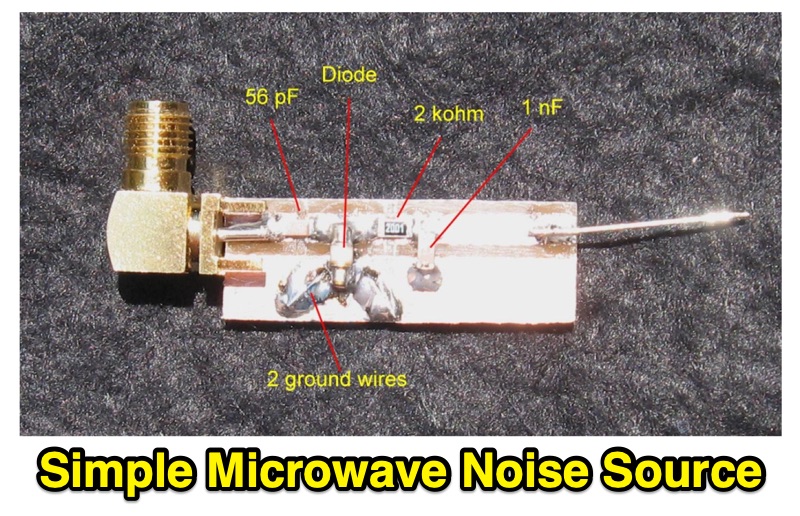 This document outlines the construction of a simple microwave noise source, leveraging mixer diodes, potentially from _John Watson, VE3EZP_'s collection. The design provides a basic schematic for a noise generator, primarily intended for go/no-go receiver sensitivity checks and comparative noise figure assessments. It produces noise levels approximately 20 dB above thermal noise, making it suitable for AM/SSB/CW receivers, but it is not calibrated for absolute noise figure measurements. The construction utilizes surface-mount components on 1/16 inch FR4 PC board, demonstrating functionality up to at least 10 GHz. An alternative version incorporating a _1N21_ diode is noted to operate effectively up to 5.76 GHz. The resource specifies that any microwave detector diode with a reverse breakdown voltage of a few volts is suitable for this application, providing practical guidance for replication.
-
 The ICOM IC-R75, introduced in 1999, operates on 13.6 Volts DC and measures 241 by 94 by 229 mm. Its coverage spans from 30 kHz to 60 MHz, making it a versatile receiver for various bands. The review details available accessories, including optional filters and the **UT-106 DSP module**, which significantly enhances signal processing capabilities. Performance comparisons are drawn against other notable receivers such as the Drake R8B and earlier ICOM models, providing context for its audio quality and overall functionality. User feedback is integrated, offering practical insights into its daily operation and reception characteristics across the spectrum. This analysis offers an in-depth look at the IC-R75's technical capabilities and features, serving as a valuable reference for operators interested in this **legacy receiver**.