RF Probe Circuits and Projects for Amateur Radio
Find schematics and construction guides for RF probes to measure signal presence and strength in ham radio setups.

RF probes are essential tools for hams building and testing radio equipment. They allow operators to measure RF voltage levels at various points in a circuit, helping to tune filters, check amplifier stages, and troubleshoot issues in transmitters or antenna matching networks. These simple, yet effective, devices convert high-frequency AC signals into a DC voltage that can be read by a standard multimeter, extending the capabilities of common test gear for amateur radio activity.
Many hams build their own RF probes, often using designs like the classic N5ESE RF Probe, to check for the presence of RF signals and measure their strength across HF and UHF bands. Beyond basic voltage measurement, operators also construct sensitive RF field strength meters, sometimes inspired by designs such as VK3YE's "The Squeakie," to evaluate antenna radiation patterns and compare the performance of different antenna projects. These homebrew test instruments are invaluable for optimizing station performance and ensuring proper operation of transceivers and antennas.
-
 Special test lead that converts your regular DC voltmeter to a RF reading voltmeter
 -
 A sensitive RF probe is very useful in a situation where an oscilloscope is not available
 -
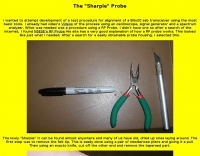 The Sharpie Probe, homemade with simple tools and few resistors
 -
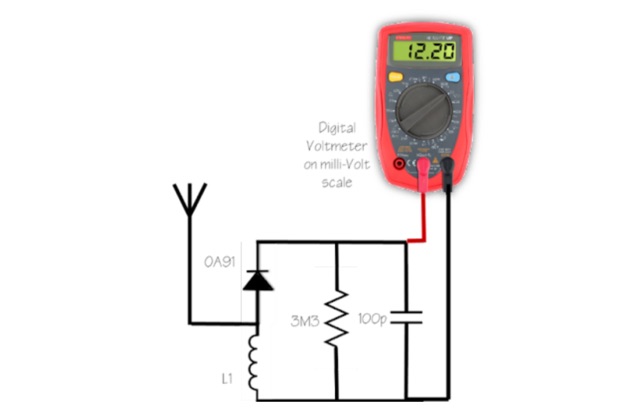 Mad your own simple FS meter. It is the simplest thing to make and is good enough to see if the antenna under test is radiating more power than your old ground plane, old mobile vertical or just radiating at all in a particular direction or in all directions.
 -
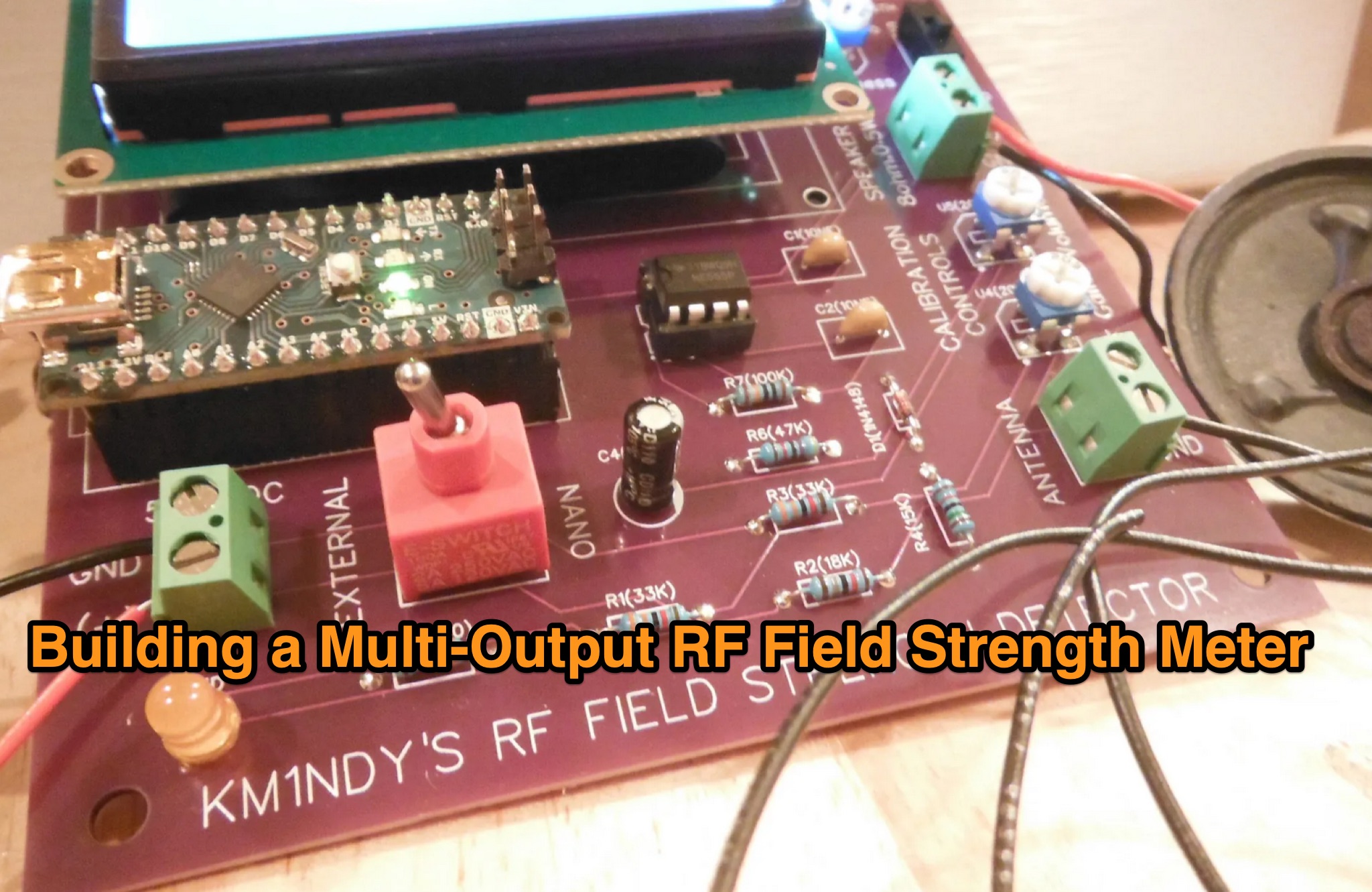 This article describes a DIY RF field strength meter project inspired by VK3YE's "The Squeakie" design. The device, built around a 555 timer IC and a 1N4148 diode, converts RF signal strength into audible tones with proportional pitch. The author enhanced the original design by adding volume control, LED indication, and digital readout capabilities using an Arduino Nano and LCD display. The completed project functions as a versatile RF detection tool, suitable for antenna testing and fox hunting, while offering multiple output methods: audio, visual, and digital measurement display.
 -
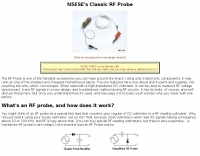 An RF Probe project by N5ESE
 -
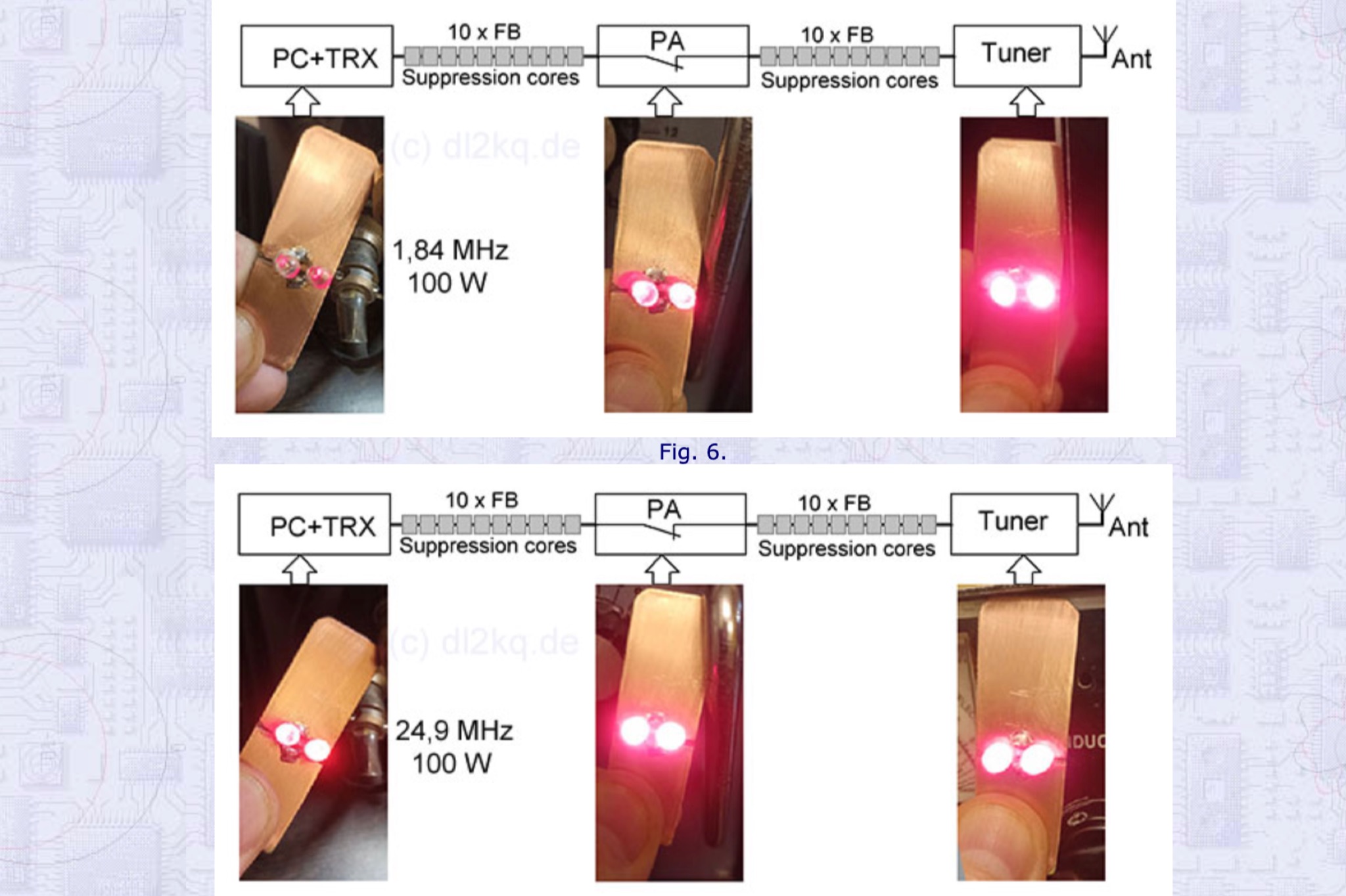 A DIY LED RF V-probe design offering enhanced sensitivity over traditional neon lamps for detecting stray RF voltages on grounds, chassis, and cables.
 -
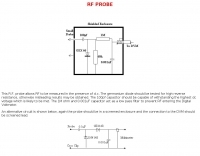 This RF probe circuit allows RF to be measured in the presence of DC
 -
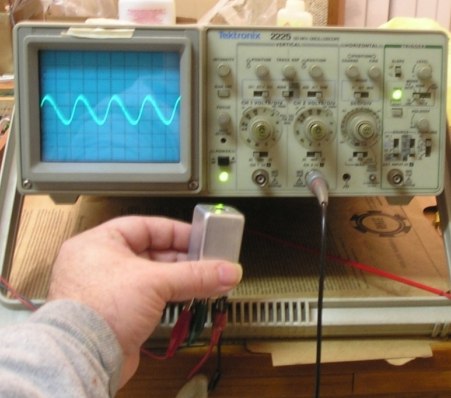 Build you own RF probe, measure the level of RF voltage present at a particular point.
 -
 A RF Probe circuit for the RADIO frequency experimenter to check the presence of a RF signal and also to measure its strength
 -
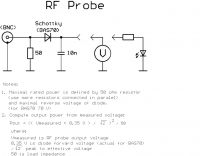 A simple RF probe diagram
 -
 Making RF probes with parts you already have