Conventional Use of Transmission Line
Understanding TEM Mode, Feeder Balance, and Common-Mode Current in RF Systems
Description
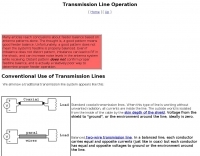
The resource, "Conventional Use of Transmission Line," meticulously details the operational principles of transmission lines, emphasizing the Transverse Electromagnetic (TEM) mode of energy transfer. It clarifies that for a line to function purely as a transmission line, all currents must be confined internally, with external fields ideally zero. The discussion differentiates between balanced and unbalanced lines, asserting that while both require equal and opposite currents within the conductors, the key distinction lies in the voltage relationship of each conductor to the surrounding environment. It highlights that a good antenna pattern does not inherently confirm proper feeder balance, and that common-mode currents can lead to RF in the shack and increased noise levels, even without pattern distortion.
The article further explains that a transmission line can become a radiating conductor if energy is applied in a non-TEM mode, leading to common-mode issues. It cites classic texts like Jordan and Balmain's "Electromagnetic Waves and Radiating Systems" and Kraus's "Antennas" to support its definitions of TEM mode operation. The content also explores non-transmission line applications of parallel or concentric conductors, such as coaxial dipoles and folded dipoles, which intentionally operate in non-TEM modes for antenna functionality. The author, W8JI, stresses that simply measuring equal currents is insufficient to confirm a balanced feeder; phase and voltage balance to ground are equally critical.