Search results
Query: digital
Links: 610 | Categories: 57
Categories
- Manufacturers > Digital and Packet Radio
- Operating Modes > Digital ATV
- Technical Reference > Digital ATV projects
- Manufacturers > Digital Mobile Radio
- Operating Modes > Digital Modes
- Ham Radio > Clubs > Technical Specialty > Digital Modes Clubs
- Operating Modes > Satellites > Digital Satellites
- Software > Digital SSTV
- Operating Modes > Digital Voice
- Software > Digital Voice
- CB Radio > Packet and Digital
- Software > Digital Amateur Television
- Radio Equipment > Amateur Radio Accessories
- Operating Modes > APRS > APRS in USA
- Operating Modes > Chip64
- Operating Modes > Packet Radio > Clubs
- DX Resources > Contest Calendars
- Operating Modes > D-STAR
- Software > D-STAR
- Operating Modes > D-STAR > D-Star Clubs
- Software > Decoders
- Software > DRM
- Operating Modes > DSP
- Software > Filter Design
- Internet and Radio > Forums
- Operating Modes > Hellschreiber
- Software > Hellschreiber
- Manufacturers > Interfaces
- Operating Modes > JT65
- Operating Modes > JT9
-
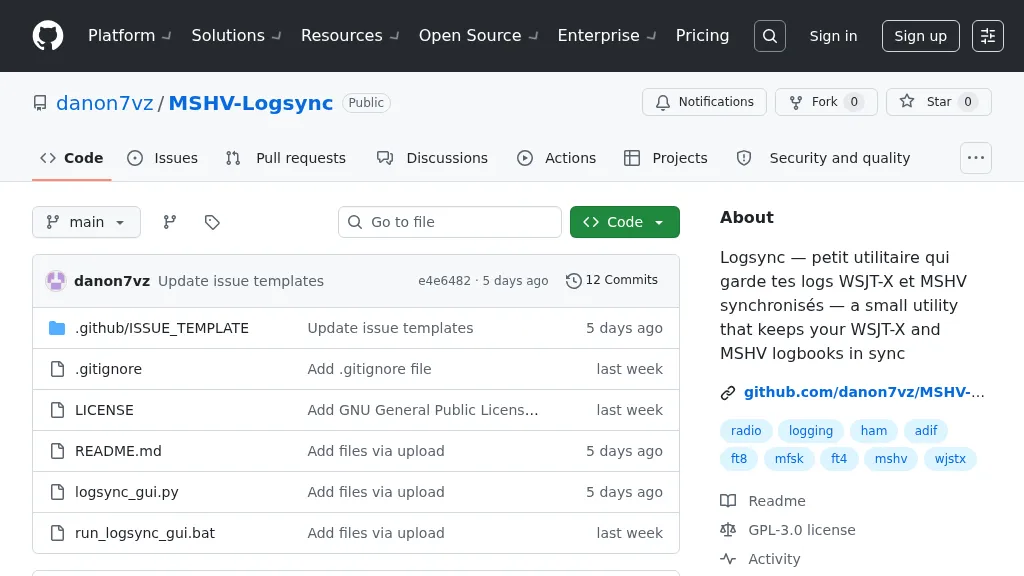 Manages log consistency across multiple digital mode applications, specifically addressing the common issue of log divergence between _MSHV_ and _WSJT-X_ for FT8, FT4, and other weak-signal modes. This prevents duplicate contacts and ensures accurate DX tracking when using both programs. The utility computes a deduplicated union of entries from both `_mshvlog.edim` and `_wsjtx.log` files, then updates each log with missing QSOs. It supports a deduplication key based on callsign, date, time (to the minute), band (derived from frequency), and mode. The tool is available as a standalone Windows executable or a Python version requiring Python 3 with _Tkinter_. Users select log folders, close both applications, and initiate the 'Merge' function. The process includes automatic timestamped backups of log files before any modifications, safeguarding QSO data.
-
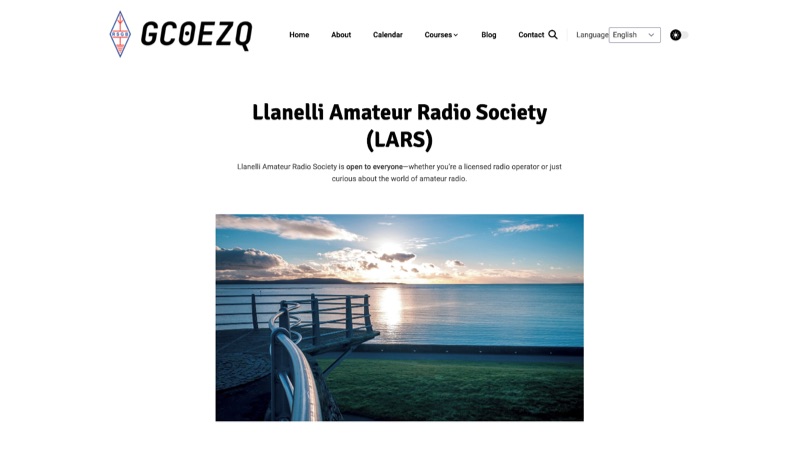 The Llanelli Amateur Radio Society (LARS) website details the club's offerings for both licensed operators and those new to amateur radio, including shortwave listeners and individuals pursuing Foundation, Intermediate, or Full licenses. It highlights opportunities to learn radio techniques, explore digital modes such as C4FM, D-Star, DMR, and FreeDV, and participate in contests and social events. The club aims to foster a supportive environment for experimentation and knowledge sharing among its members. Member testimonials illustrate practical applications, such as a new licensee making a 1000km contact via a repeater after being inspired by space exploration, and another quickly passing the RSGB Foundation exam. The site also features accounts of members progressing to Intermediate and Full licenses, with one Full license holder continuing to learn new modes like CW and digital, and engaging in activities like Parks on the Air (POTA).
-
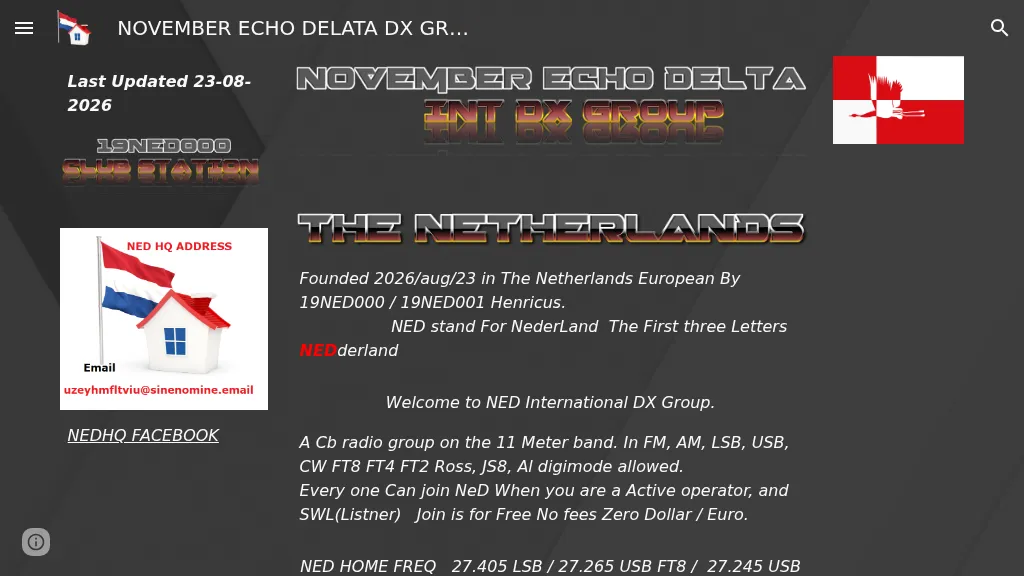 Presents the NED International DX Group, a **CB radio** organization established in the Netherlands on August 23, 2026, by 19NED000 and 19NED001 Henricus. The group primarily operates on the **11-meter band**, utilizing various modes including FM, AM, LSB, USB, CW, FT8, FT4, FT2 Ross, and JS8, with all digital modes permitted. Membership is free and open to active operators and SWLs. Key operating frequencies include 27.405 LSB, 27.265 USB for FT8, and 27.245 USB for JS8. The group also maintains activity on PMR Channel 10 at 446.11875 MHz FM. The organization is actively seeking volunteers for roles such as webmaster (proficient in PHP, MySQL, and security), digital eQSL and paper QSL card management, logo and banner design, and country/province directors.
-
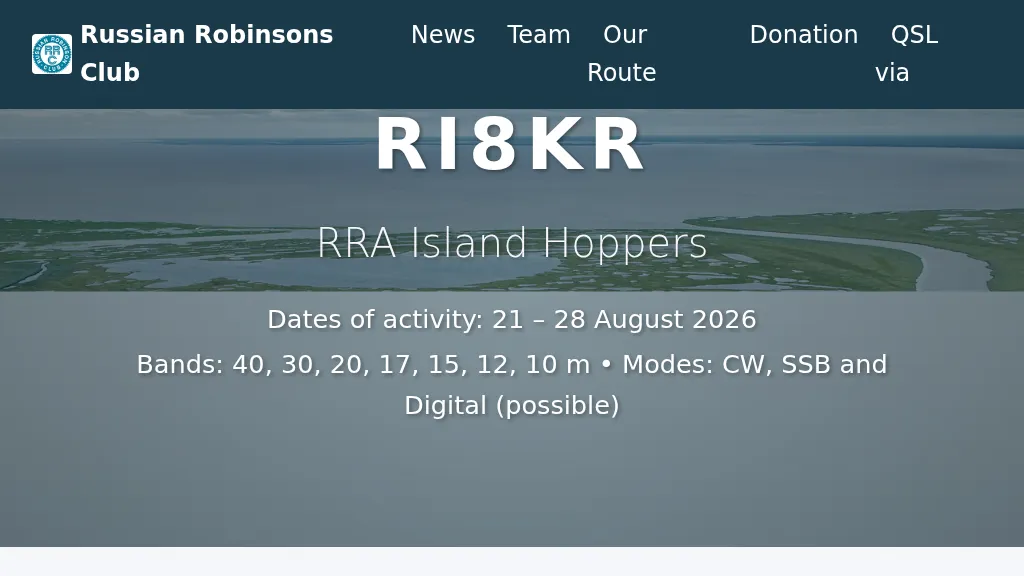 Presents the RI8KR RRA Island Hoppers DXpedition, detailing its schedule from August 21 to 28, 2026, and its objective to activate four new island groups in the Ob Bay of the Kara Sea. The expedition targets specific Russian River Club (RRC) references: RR-06-66 (Ob River Delta Islands West), RR-06-67 (Ob River Delta Islands North-West), RR-06-68 (Ob River Delta Islands North), and RR-06-69 (Ob River Delta Islands Center/North). Operators Vladimir, RK8A, and Igor, UA3EDQ, will operate on 40, 30, 20, 17, 15, 12, and 10-meter bands using CW, SSB, and potentially Digital modes. Three of these activations contribute to IOTA AS-109, an entity not activated since 2013. The page provides QSL information via RZ3EC (Eugene Shelkanovtsev, P.O. Box 70, Orel 302028) and online platforms including RRAWARD.RU, LoTW, RDAWARD.RU, and CFMRDA.RU. It lists supporters of the expedition, acknowledging contributions from various amateur radio operators. Recent updates confirm the purchase of airplane and boat tickets for the team's travel to Salekhard and Salemal/Panayevsk, indicating active preparation for the August 2026 operation.
-
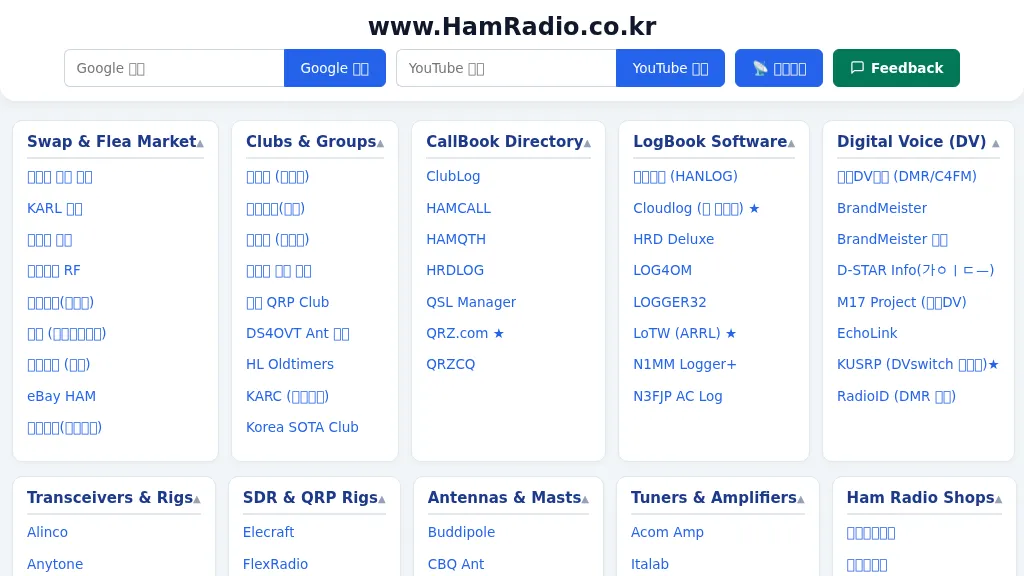 The HamRadio.co.kr portal, maintained by HL3LFB, serves as a comprehensive link directory for amateur radio operators, primarily in South Korea. It categorizes external resources covering a wide array of technical subjects, including SDR and QRP rigs like uBITX and Hermes-Lite 2+, antenna designs from CBQ Ant and JK Antennas, and tuner/amplifier manufacturers such as Acom and LDG. The site also provides links to digital mode software like WSJT-X for FT8/FT4, MMSSTV, and MMTTY, alongside resources for CW operation, electronic components from Digi-Key, and various homebrew project sites like AA5TB Projects and Hans Summers Lab. Practical applications are supported through links to antenna and RF calculation tools, including SimSmith for Smith charts, Coil64 for coil calculations, and calculators for HB9CV, J-Pole, and Magnetic Loop antennas. The portal facilitates operating activities by linking to DX clusters (DX Heat, DX SUMMIT), propagation beacons (IARU HF Beacon, NCDXF Beacon), and award programs like POTA, SOTA, IOTA, and WCA/COTA. It also includes references to official organizations such as KARL and ARRL, QSL managers like LoTW and Cloudlog, and various online marketplaces for ham gear.
-
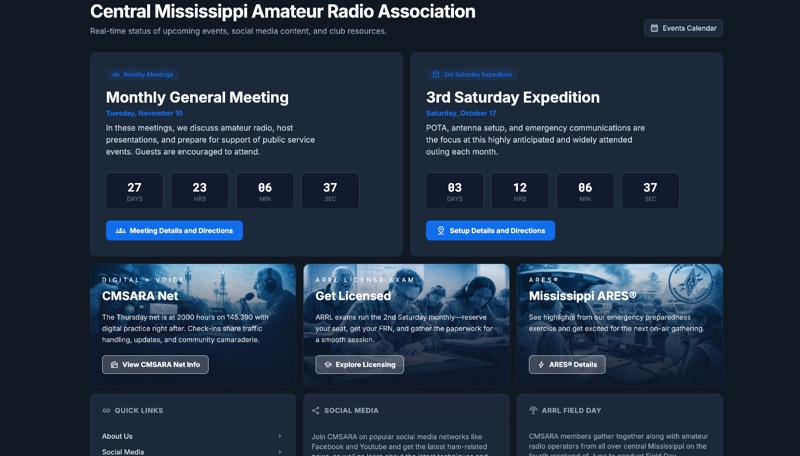 Illustrates the activities of the Central Mississippi Amateur Radio Association (CMARA), a vibrant club fostering amateur radio in central Mississippi. The organization regularly convenes for monthly general meetings, which feature discussions on various ham radio topics and presentations, alongside planning for public service support. A notable recurring event is the "3rd Saturday Expedition," focusing on _POTA_ (Parks On The Air) activations, antenna deployment, and practical emergency communications drills. CMARA maintains a consistent on-air presence with a weekly Thursday net at 2000 hours local time on 145.390 MHz, incorporating both voice and digital modes for traffic handling updates and community building. The club also facilitates _ARRL_ license examination sessions on the second Saturday of each month, providing essential guidance on reservations, obtaining an FRN, and required documentation. Furthermore, the resource highlights Mississippi _ARES_® (Amateur Radio Emergency Service) activities, showcasing emergency preparedness exercises and upcoming on-air gatherings. The site provides quick access to club information, including "About Us," "Social Media," and "Field Day" operations, specifically mentioning CMARA members' participation in _ARRL Field Day_ each June, making contacts across North America.
-
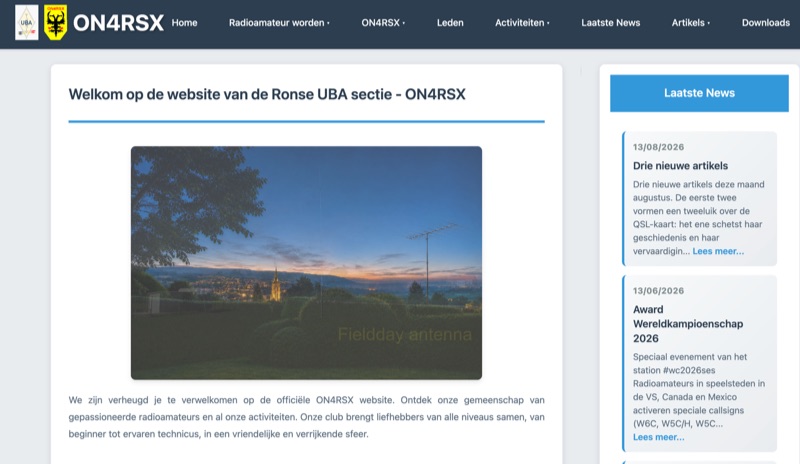 The ON4RSX website serves as the official online presence for the UBA Ronse/Renaix amateur radio club, providing information on its community and activities. It outlines the club's engagement across various amateur radio facets, including **HF**, VHF, UHF, digital modes, antenna construction, propagation studies, and general electronics. The site highlights past DXpeditions, such as the _OJ0V Market Reef_ operation, and mentions participation in contests, offering insights into the club's operational focus and technical interests. The resource details the club's commitment to fostering a welcoming environment for operators of all experience levels, from beginners to seasoned technicians. It implicitly compares the breadth of activities available to members, covering both theoretical knowledge development and practical application in areas like antenna building. The site's content structure suggests it functions as a central hub for club news, event announcements, and potentially educational materials, supporting members in expanding their radio knowledge and sharing their passion.
-
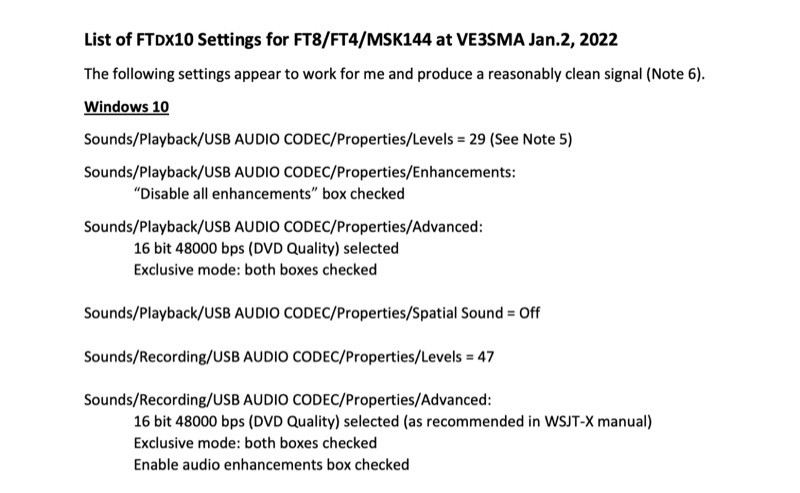 Configuring a Yaesu FTDX10 transceiver for digital modes like FT8, FT4, and MSK144 requires precise adjustments across both the operating system and the digital mode software. This resource details specific Windows 10 audio codec settings, including playback levels at 29 and recording levels at 47, along with advanced 16-bit 48000 bps (DVD Quality) selections for optimal signal fidelity. It also specifies checking the "Disable all enhancements" box for playback and enabling audio enhancements for recording. The document outlines critical WSJT-X v.2.5.1 parameters, such as setting the Rig to FTDX-10, a 1-second poll interval, and a 38400 baud rate for CAT control. The PTT method is configured to RTS, with Split Operation set to "Fake It" or "None." Audio input and output are directed to the USB AUDIO CODEC, with a recommended WSJT-X Pwr Slider setting of -32.0 dB, adjusted to ensure ALC meter readings remain within the white segment on the FTDX10. Transceiver-specific settings include a CAT RATE of 38400 bps, AMC RELEASE TIME set to MID, and DATA SHIFT (SSB) at 1500 Hz. The RPORT GAIN is specified at 70, with notes suggesting lower values (e.g., 30) can also yield clean signals. Transmit bandwidth selection is discussed, recommending 50-3050Hz for wideband modes like MSK144, while suggesting 400-2600Hz for FT4/FT8 to mitigate second harmonics and improve signal purity. The guide also references discussions with W5AJ, DO1YHD, AC6BW, and W9RTB.
-
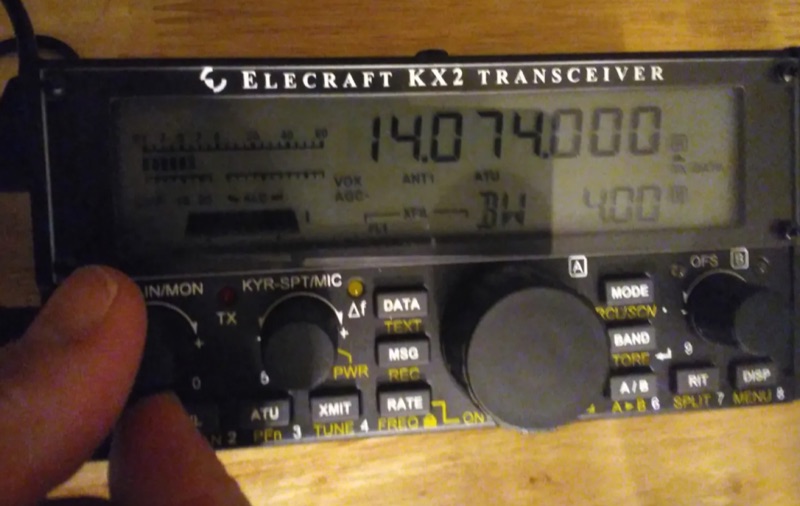 Approximately 15 watts of RF output can be achieved by carefully adjusting the **Elecraft KX2** transceiver's settings for digital mode operation with **WSJT-X**. This configuration guide focuses on direct integration with a Windows 10 laptop, eliminating the need for an external soundcard. It details the precise menu settings within the KX2, such as Menu 38 (DATA A), Menu 39 (DATA B), and Menu 40 (DATA C), which control audio input, output, and data mode activation, respectively. The process also covers critical adjustments within WSJT-X, including selecting the correct audio input/output devices and configuring the CAT control interface for the KX2. Successful setup involves verifying proper transmit power on the KX2's RF meter and troubleshooting common issues like incorrect SSB transmission settings. The guide emphasizes using the KX2's internal soundcard capabilities, leveraging its USB interface for audio and CAT control. Specific attention is given to ensuring the KX2's internal soundcard is recognized and properly selected within Windows 10 sound settings and WSJT-X. This methodology enables operators to establish a functional FT8 station with minimal external hardware, streamlining the setup for portable or QRP operations. It provides step-by-step instructions for both radio and software adjustments, ensuring reliable digital mode communication.
-
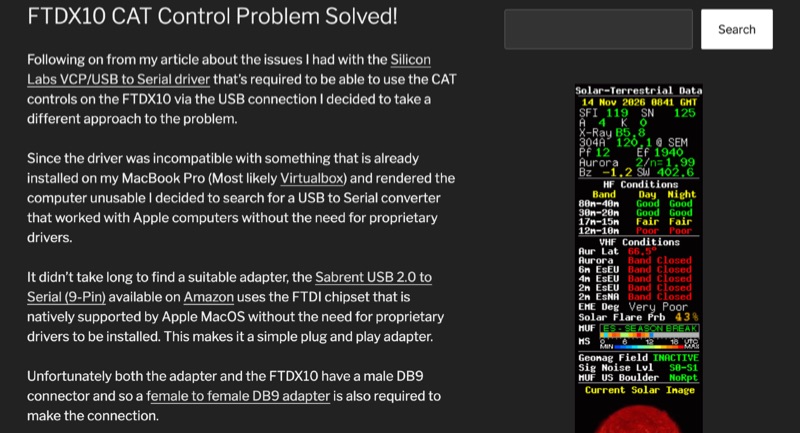 The Yaesu FTDX10 transceiver, a popular HF/50 MHz rig, often presents CAT control challenges on macOS systems due to driver incompatibilities. This resource addresses a specific issue encountered with Silicon Labs VCP/USB to Serial drivers causing system instability on a MacBook Pro running macOS 11.6.2 (Big Sur). The author details a robust solution involving a Sabrent USB 2.0 to Serial (9-Pin) adapter, which incorporates an FTDI chipset, ensuring native driver support within the macOS environment. This setup facilitates direct control of the FTDX10 without requiring proprietary driver installations. Configuration specifics include connecting the Sabrent adapter to the FTDX10 via a female-to-female DB9 adapter, setting the RS232 port to 38400 baud on both the radio and the WSJT-X software. For digital mode audio routing, a standard USB lead connects the FTDX10 directly to a second USB port on the MacBook, leveraging the transceiver's integrated sound card, which macOS natively recognizes. This dual-USB approach separates CAT control from audio I/O. The methodology was successfully validated through FT8 operation on the 30-meter band, confirming stable CAT communication and proper audio interfacing. This guide provides a practical workaround for macOS users seeking reliable digital mode operation with their FTDX10, avoiding common driver-related frustrations.