Search results
Query: peter
Links: 59 | Categories: 0
-
 New generation Hex Beam Antennas. VHQ HEX Products, located in Peterborough, NH, is owned and operated by David M. Lavoie. Our products are designed to solve issues encountered in Ham radio applications and move with todays configurations in an ever changing climate
-
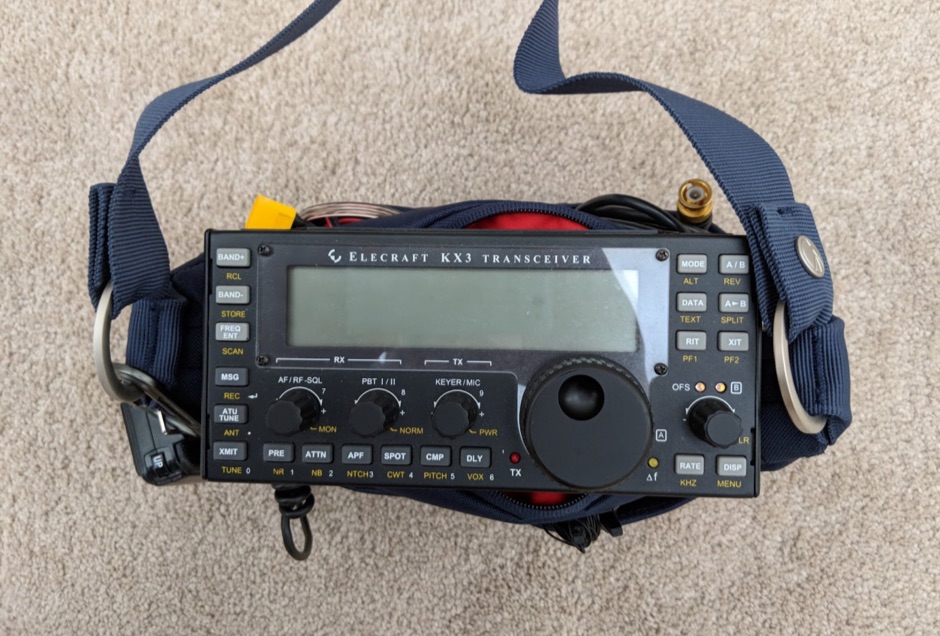 Manfrotto shoulder bag Amica 25W can be used as a low cost carry bag for Elecraft KX3.
-
 PT0S DX pedition Nov 10 to Nov 22 , 2012
-
 A Radio Society of Great Britain affiliated club
-
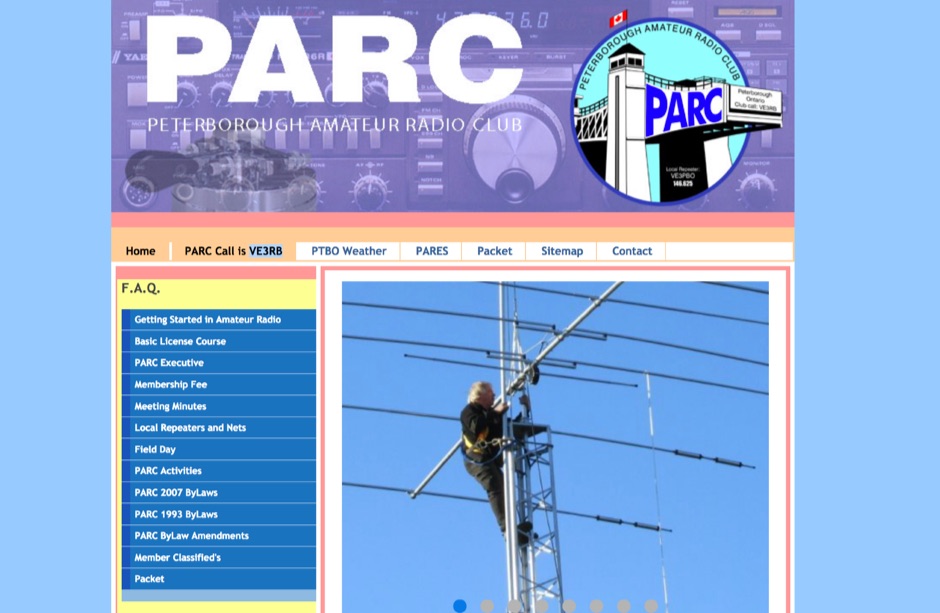 Starting March 23rd, the Peterborough Amateur Radio Club (PARC) conducts a virtual licensing class via Google Meet, led by Mark, VE3SB. This course comprises seven two-hour lessons, held on Mondays at 7 PM EST, focusing specifically on material required to pass the ISED exam. The registration fee of $60 covers the course, including in-person or remote exams, and grants participants a PARC membership for the remainder of the calendar year. Outside participants are welcome to join the virtual class, with exam options available upon completion. While recommended study material can be purchased separately, Peterborough-area participants have the option to arrange for a loaned copy of the book. The club emphasizes practical learning for exam success.
-
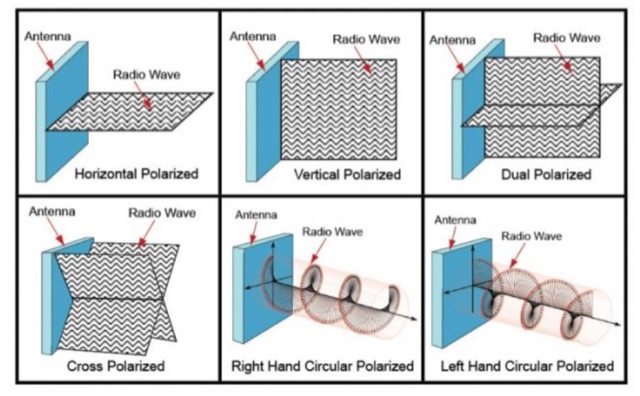 What is antenna polarization, and why does it matter. Horizontal versus Vertical versus Circular polarization. Undestanding how antennas perform better with different polarizations.
-
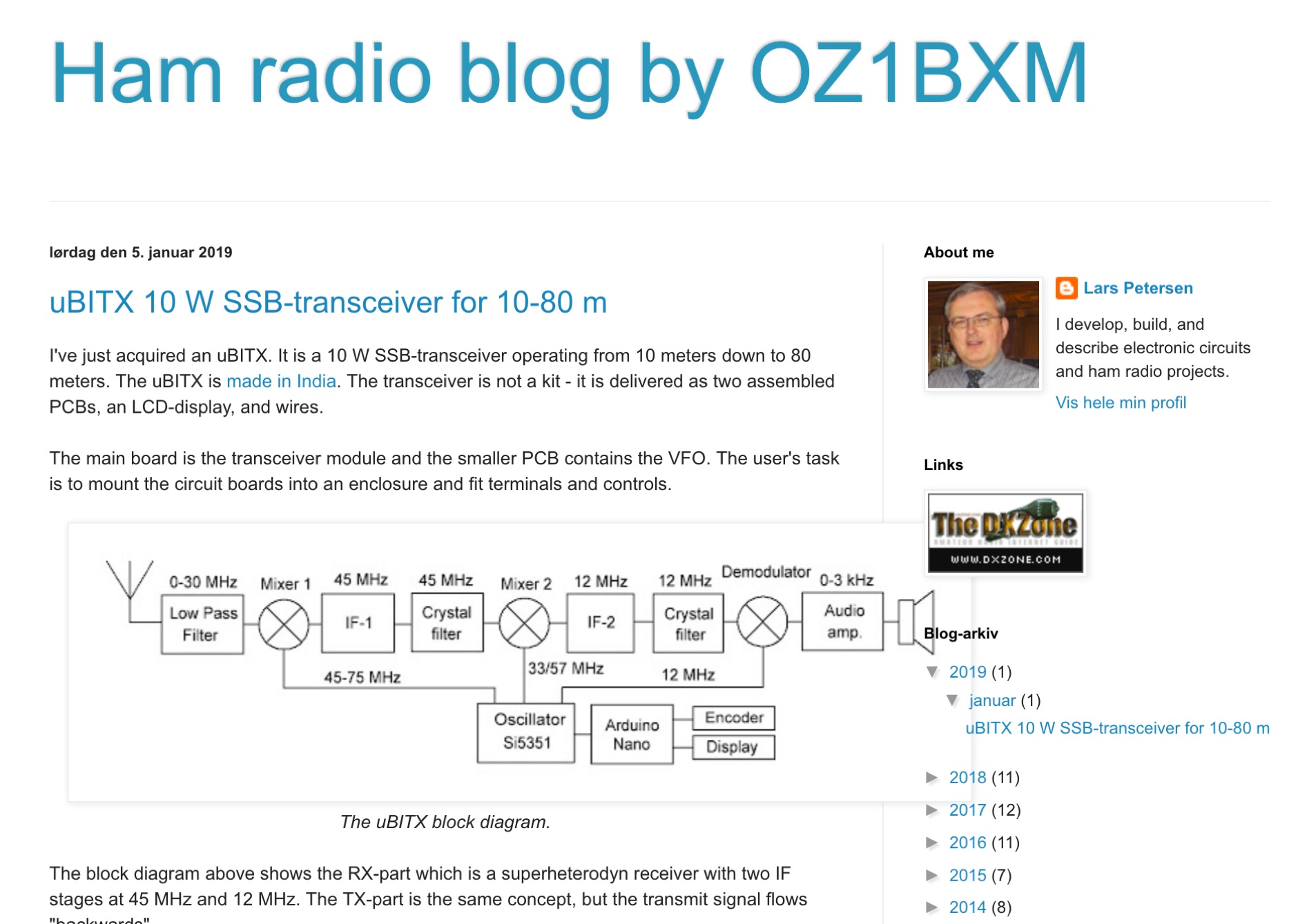 A nice QRP, EME, satellites, VHF DX, Amateur radio blog by Lars Petersen OZ1BXM
-
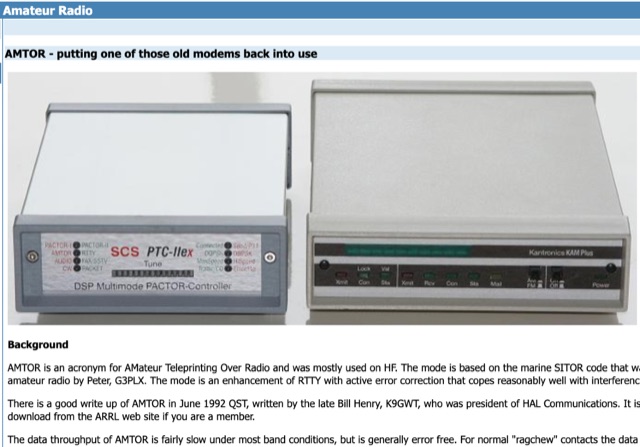 Putting one of those old modems back into use.AMTOR is an acronym for AMateur Teleprinting Over Radio and was mostly used on HF. The mode is based on the marine SITOR code that was introduced to amateur radio by Peter, G3PLX. The mode is an enhancement of RTTY with active error correction that copes reasonably well with interference and fading.
-
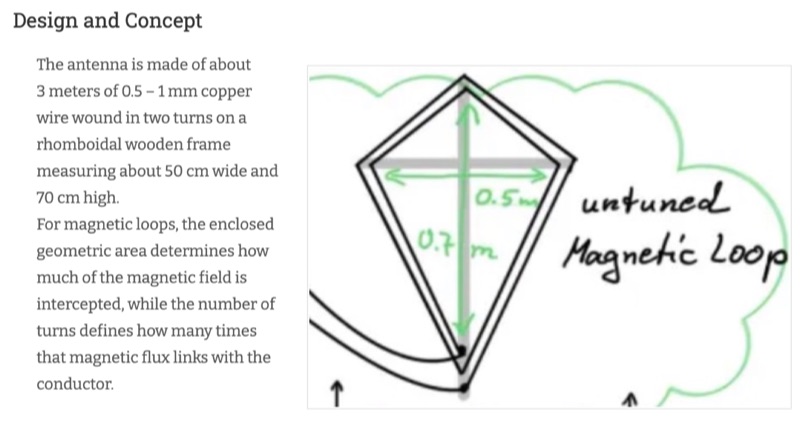 This resource details the construction and performance of a compact broadband magnetic loop antenna designed for portable receiving applications with devices like the _ATS MiniRadio_. The antenna utilizes approximately 3 meters of 0.5–1 mm copper wire wound in two turns on a rhomboidal wooden frame, measuring 50 cm by 70 cm. It connects via a modified 9:1 unun, where the primary center tap is isolated from ground to improve common-mode noise rejection. The design provides untuned operation across a frequency range from the longwave band up to approximately 25 MHz. Performance characteristics include observable directivity for noise suppression and the ability to connect directly to a radio or via a 50 coaxial cable for remote operation. The article specifies the unun's 3:1 turns ratio and its SMA output for connectivity. The methodology focuses on practical construction and observed reception quality.