Search results
Query: Practice
Links: 154 | Categories: 9
Categories
- Ham Radio > Exams > Exam Practice
- Operating Modes > Morse code > Morse Code Practice Audio Files
- Operating Modes > Morse code > Clubs
- Ham Radio > Exams
- Technical Reference > Grounding
- Software > Ham Exam
- Operating Aids > History
- Operating Modes > Morse code > Learning Morse Code
- Software > Morse Code Training
-
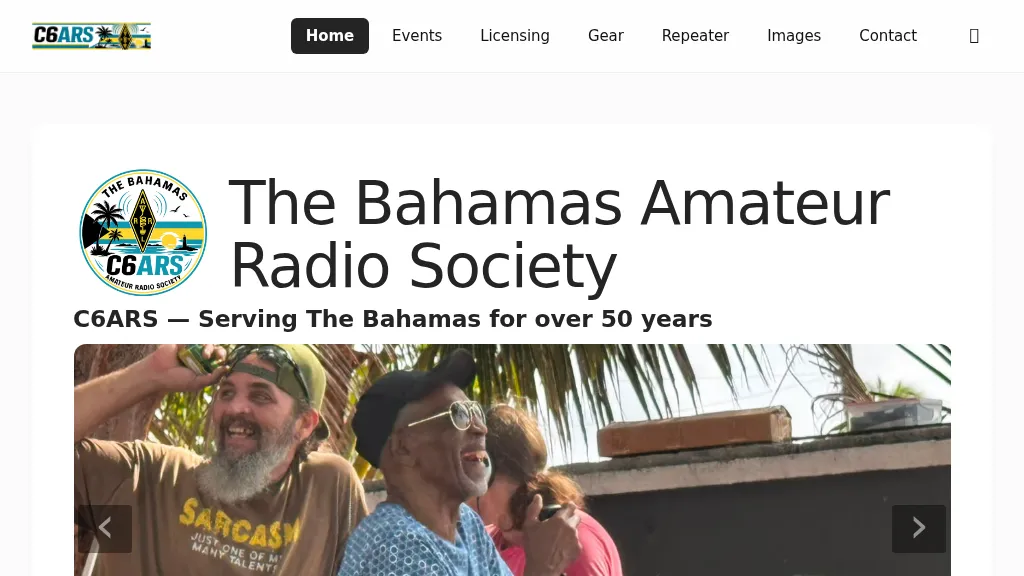 The Bahamas Amateur Radio Society (C6ARS) serves as the primary amateur radio club for the Bahamian archipelago, providing a hub for operators interested in DXing, portable operations, and emergency communications. The society actively participates in Parks on the Air (POTA) activations monthly, deploying portable stations to various parks and protected areas to put The Bahamas on the air for global hunters. Additionally, C6ARS engages in the annual ARRL Field Day, setting up off-grid stations powered by batteries, solar, and generators to practice emergency preparedness and operating skills. C6ARS also offers licensing assistance and mentorship for new operators, highlighting amateur radio's role as a STEM education platform through practical applications in physics, electronics, mathematics, and computing. The club emphasizes resilient emergency communication, particularly crucial for an island nation in the hurricane belt, demonstrating how trained operators can maintain vital communication links when conventional infrastructure fails. Their regular off-grid activations serve as rehearsals, ensuring readiness for disaster response.
-
 Over 44,000 square kilometers of Scotland's natural beauty provide a unique backdrop for the _GMFF_ award program. Designed for amateur radio operators who thrive on portable operations, this program encourages activators to set up stations in designated flora and fauna areas. Participants engage in _SSB_ and _CW_ modes, making contacts from these scenic locations, which are part of the _WorldWide Flora and Fauna_ network. Activators and chasers alike benefit from the program's structure, which awards points for successful contacts. The _GMFF_ program is part of a larger global initiative, allowing operators to contribute to conservation awareness while enjoying their hobby. With a focus on environmental preservation, the program aligns amateur radio activities with ecological interests, promoting responsible and sustainable operating practices. The program's website provides resources for participants, including maps of designated areas and guidelines for operation. By participating, operators not only enjoy the challenge of portable operation but also support the conservation of natural habitats. The _GMFF_ program thus combines the thrill of amateur radio with a commitment to environmental stewardship.
-
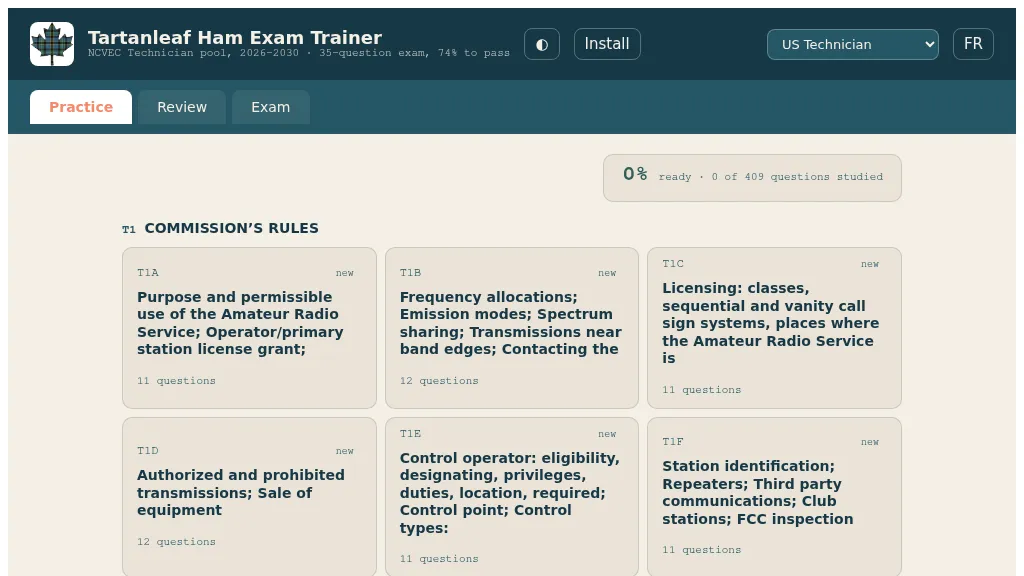 Facilitates preparation for amateur radio licensing exams in Canada (Basic and Advanced) and the United States (Technician, General, Extra). This web application provides a structured environment for self-study, offering question practice, review sessions, and full mock exams. The trainer tracks user progress locally on the device, enabling personalized study paths and highlighting areas needing improvement. Its offline-first design allows for continued study without an internet connection after the initial download, making it a flexible tool for hams on the go. The application's architecture leverages modern web technologies, ensuring accessibility across various devices and operating systems. The source code is openly available on GitHub, promoting transparency and community contributions to its development. This open-source approach allows for verification of the question pools and algorithms, fostering trust among users preparing for their licensing examinations.
-
 For radio amateurs learning or practicing _International Morse code_, this web-based utility provides a straightforward method to convert plain text into Morse code and vice-versa. Users can input a short message, generate its corresponding Morse code sequence, and listen to the audio timing directly in the browser. The tool adheres to standard Morse timing conventions, including dot, dash, and inter-element, inter-letter, and inter-word spacing, using the _PARIS_ word convention for speed control. It also supports decoding written dots and dashes back into text, requiring explicit letter boundaries for accurate translation. The primary output includes printable practice sheets, which can feature the translated message along with an optional reference sheet for the full alphabet, numbers, and punctuation. This functionality is particularly useful for instructors conducting listening exercises, allowing them to play a message and distribute the sheet for checking. The translator does not support microphone input for audio decoding or implement operational _prosigns_ like a combined SOS distress signal, focusing instead on foundational code practice. Output can be downloaded as PDF, PNG, or SVG, with options for customizing ink color and print settings.