Understanding Radio Wave Propagation for Amateurs
Learn the fundamentals of radio wave propagation, ionospheric effects, and solar indices to improve your ham radio communication.

Understanding radio wave propagation is fundamental for amateur radio operators seeking to enhance their communication across various bands. This category focuses on the principles governing how radio signals travel through the atmosphere, particularly emphasizing ionospheric propagation and its effects on high-frequency (HF) communications. Resources here explain the formation and role of ionized layers, the impact of solar activity, and the different paths radio waves can take from transmitter to receiver. These guides also cover how radio signals get propagated through the atmosphere, including tropospheric ducting, single-hop, multi-hop, and sporadic E propagation.
The resources within this collection serve to demystify complex atmospheric phenomena, providing foundational knowledge for both new and experienced operators. They offer insights into factors like solar flux, Kp, and Ap indices, which are crucial for predicting current and future band conditions. Operators can utilize this information to comprehend signal behavior, anticipate optimal operating times, and interpret space weather data to improve their long-distance HF contacts. This understanding is key to maximizing chances of working rare stations and making sense of solar indices.
-
 Comprehensive guide and real-time tool for HF skywave propagation, covering fundamentals, solar effects, ionospheric dynamics, and practical monitoring
 -
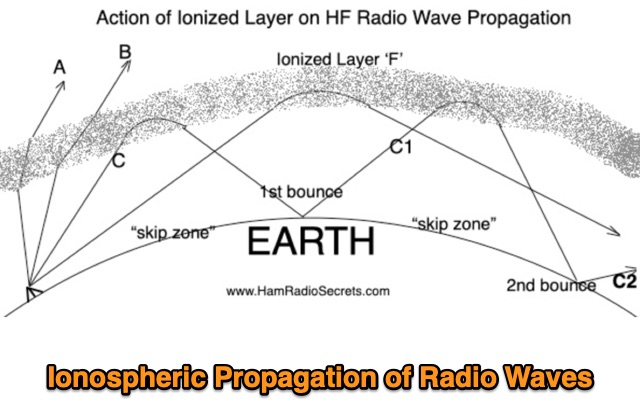 Ionospheric Propagation of Radio Waves in Action, How Do Ionized Layers Form to Enable Ionospheric Propagation of Radio Waves, the foundamental role of F layer, and the role of the other ionized layers
 -
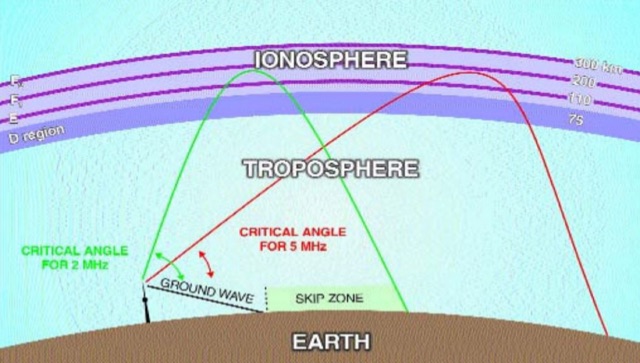 This article will help to unravel some of the mysteries as well as giving useful operating tips to maximize your chances of working that rare station
 -
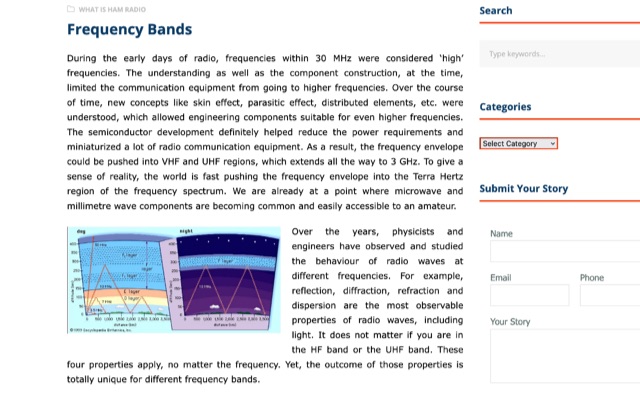 During radio's early days, high frequencies were under 30 MHz due to technical limitations. As understanding grew, components improved, allowing for higher frequencies like VHF and UHF up to 3 GHz. The HF band's long wavelengths provide unique propagation challenges influenced by solar activity. VHF and UHF bands face diffraction and reflection issues but offer diverse applications, from amateur radio to 5G and GPS technologies.
 -
 This PDF file provides detailed information on HF propagation for ham radio operators. It covers the principles of how radio signals travel over long distances, including factors that affect signal strength and propagation. The content is useful for hams looking to improve their understanding of radio communication and optimize their transmissions. Whether you're a beginner or an experienced operator, this resource offers valuable insights into HF propagation that can enhance your communication skills and efficiency on the airwaves.
 -
 Undesrtanding three band conditions indicators to undestand current and future propagation conditions, solar flux, Ap and Kp indices
 -
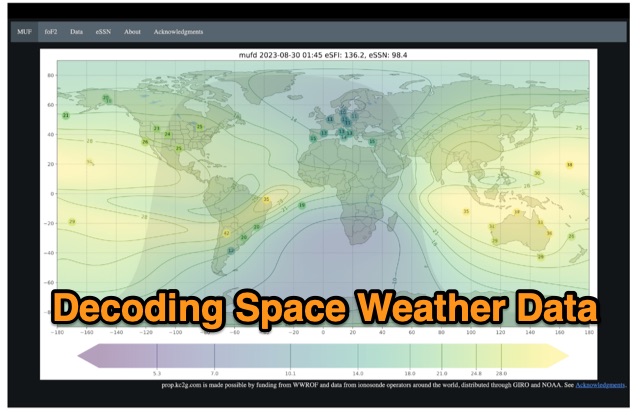 The article enlightens radio amateurs on utilizing real-time space weather data to optimize HF communication. Navigating through Hp30 index, MUF, f0F2, and eSFI metrics, it explains their significance in band selection and propagation forecasting. With essential links and practical insights, enthusiasts learn to discern optimal conditions for high-band DX, low-band DX, and NVIS operations. The author's observations and antenna optimization tips enrich understanding for effective HF operations.
 -
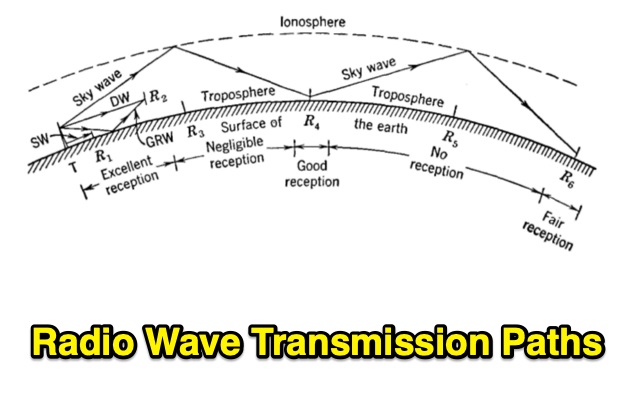 Radio transmission is affected by the presence of the earth. Also, the upper atmosphere of the earth is a rarefied, ionized, conducting region that influences transmission considerably. Undertanding Wave Diffraction, Wave Refraction and Absorption