Search results
Query: amateur radio travel
Links: 24 | Categories: 1
Categories
-
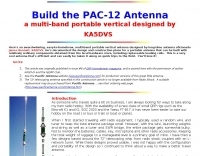 Optimizing antenna portability for QRP field operations often involves trade-offs between efficiency and physical footprint. The PAC-12 antenna project addresses this by presenting a **multi-band portable vertical** design, specifically tailored for amateur radio operators who travel frequently and utilize compact QRP transceivers like the Elecraft K1/K2 or Yaesu FT-817. This design emphasizes ease of homebrewing using readily available hardware store components, allowing for customizability and repair in the field. The project details the construction of a sectional aluminum rod base, interchangeable loading coils for various HF bands, and a telescoping whip. Key components include 1/4-inch aluminum rod, PVC risers for coil forms, and a BNC feedpoint insulator. The design prioritizes a breakdown length of 12 inches or less, making it highly packable for travel, while still achieving competitive efficiency, as demonstrated by its first-place finish in the HFPack antenna shootout at Pacificon 2001 against a 1/4-wavelength wire vertical. Comprehensive instructions cover whip preparation, **loading coil construction** with specific dimensions for bands from 40m to 10m (with an untested 80m approximation), base section fabrication, and feedpoint insulator assembly. The resource also includes guidance on radial deployment, threading aluminum rod, and showcases various PAC-12 builds by NJQRP Club members, illustrating its adaptability and widespread adoption among QRP enthusiasts.
-
 CHIRP is a free, open-source, cross-platform radio programming tool that supports a large number of transceivers from manufacturers such as Icom, Kenwood, Yaesu, Alinco, Wouxun, Puxing, and Baofeng. Chirp radio software run on Windows, Linux, and macOS, enabling users to exchange data between different radio models and interface with multiple data sources and formats. The program streamlines the configuration of memory channels, frequencies, and various settings for amateur radio handhelds. Specific models supported include the _Icom IC-7300_, _Kenwood TH-D74_, and _Yaesu FT-818_, among many others. CHIRP provides compatibility with various file formats, including Generic CSV, RT Systems CSV, ARRL Travel Plus (.tpe), and manufacturer-specific formats like Kenwood KPG-44D (.dat) and Icom Data Files (.icf). Additionally, it integrates with the DMR-MARC Database for enhanced programming capabilities. Users can download CHIRP for their platform and access extensive documentation, including a FAQ and a mailing list for support. The project encourages users to consult existing documentation and open/closed tickets before submitting new bug reports or feature requests.
-
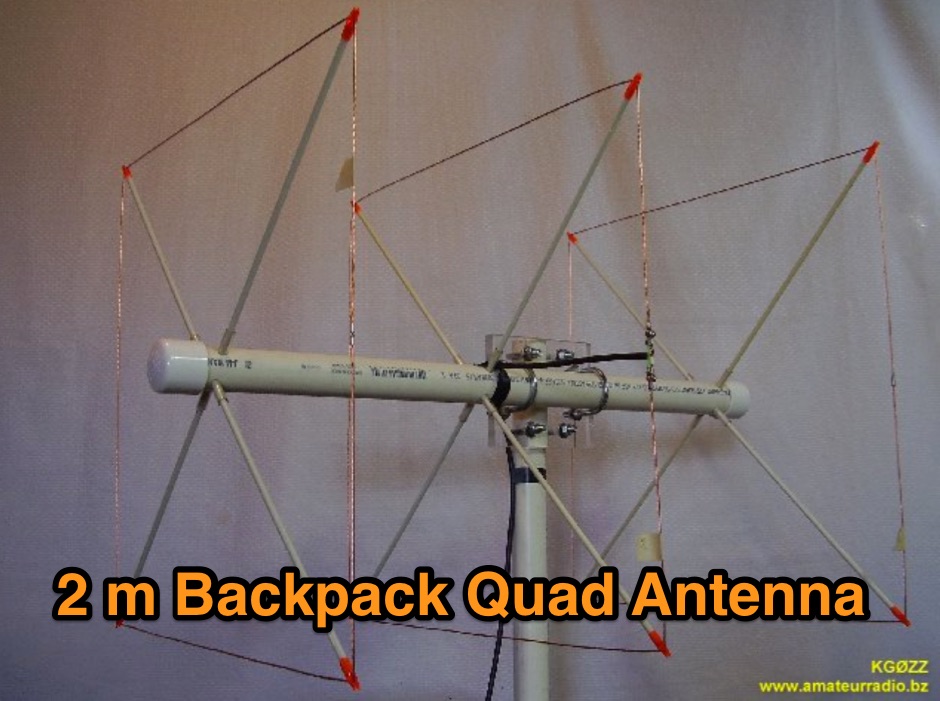 This 2 meter 3 element cubical quad antenna is small, light weight and portable. A backpack antenna that is easy to put together in just minutes and parts store inside the boom making it ready for travel or storage.
-
 The IndyScan website functions as a personal blog, documenting the author's experiences across various aspects of daily life, including travel, culinary adventures, and media consumption. Content frequently details personal trips, dining experiences in Indiana and other locations, and reviews of books, television shows, and products. The site also includes reflections on local events and personal purchases, providing a snapshot of the author's interests and activities. While the site's primary focus is personal narrative, it occasionally touches upon amateur radio, such as mentions of operating during a trip to Brookville, Indiana, or capturing a weather fax via shortwave radio. These ham radio-related entries are integrated within broader lifestyle updates, offering a glimpse into the author's engagement with the hobby rather than providing technical guides or detailed operational information. The resource serves as a personal journal, not a dedicated technical reference for amateur radio.
-
 We are a group of Amateur Radio Operators who travel around the country in Recreational Vehicles and host radio nets to keep in touch with one another
-
 The "Time Zone Map" is presented as a JPEG image file, providing a visual representation of standard time zones across the globe. This resource directly supports amateur radio operations by enabling quick conversion between local times and Coordinated Universal Time (UTC), which is essential for logging contacts, participating in contests, and scheduling DX operations. The map delineates the various time offsets from the prime meridian, offering a practical reference for hams worldwide. Its utility extends to planning international contacts, understanding propagation windows relative to different geographical regions, and ensuring accurate timekeeping for QSL card exchanges. The visual format of the map allows for rapid identification of time differences between a station's location and potential DX targets, simplifying complex time calculations. This specific image file serves as a straightforward, readily accessible operating aid, directly addressing the need for time zone awareness in the amateur radio community. It is categorized under Operating Aids for Travelling, Time, and Maps, reflecting its broad applicability.
-
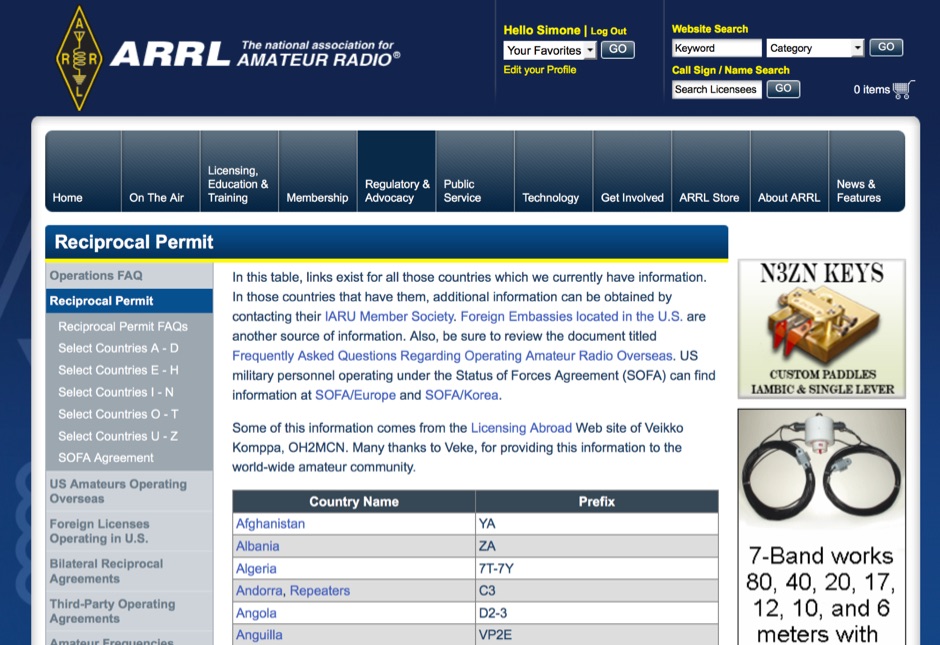 The ARRL Reciprocal Permit page addresses international amateur radio operating privileges, specifically focusing on how a US-issued amateur radio license can be recognized and validated for operation in foreign jurisdictions. It outlines the process for obtaining reciprocal operating permits, which are essential for US hams wishing to transmit legally while abroad, ensuring compliance with local telecommunications regulations. The resource details the specific requirements and agreements between the United States and other nations regarding amateur radio licensing. This information is crucial for DXpeditioners and traveling amateurs to understand the legal framework governing their operations outside their home country. It clarifies which countries have reciprocal agreements or require specific temporary permits, preventing unauthorized transmissions. The page serves as a central point for US licensees to research the necessary steps before embarking on international travel, covering aspects like application procedures and required documentation for foreign operating authorization.
-
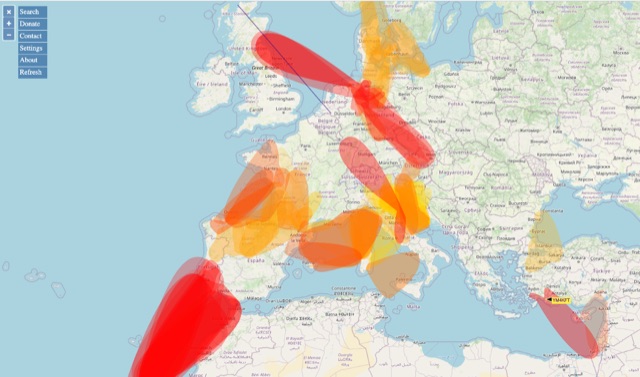 VHF – Based on realtime APRS reports. This map shows real-time radio propagation from stations operated near 144 MHz. It uses data gathered by Automatic Packet Reporting System-Internet Service (APRS-IS) from packet stations in the amateur radio service. The map shows activity from the past hour. Paths are smoothed to create a color-coded footprint indicating the distance VHF signals are likely to be traveling.
-
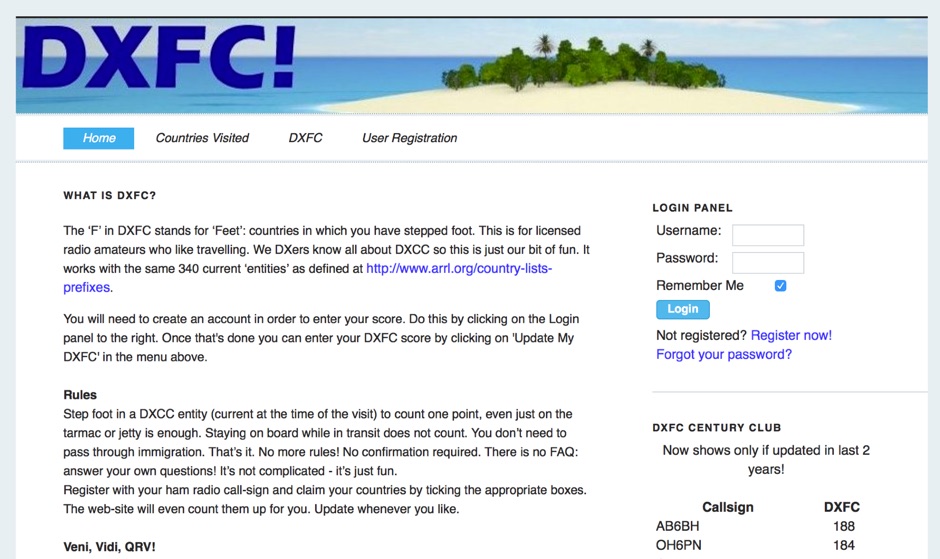 Presents the DXFC (DX Feet Century) award program, a unique operating activity for licensed radio amateurs who enjoy international travel. The program defines a 'visit' as physically stepping foot in a _DXCC entity_, aligning with the ARRL's 340 current entities list. Users register with their callsign and log their visited entities, with the website automatically calculating their score. The resource details the rules for counting entities, such as tarmac or jetty visits being sufficient, while remaining onboard a vessel in transit does not qualify. It also includes an optional scoring column for being _QRV_ (ready to operate) in each entity. The site provides historical updates on DXCC entity changes, including additions like _St Barthelemy_ (FJ) and _Kosovo_ (Z6), and deletions such as _Kingman Reef_ (KH5K). Furthermore, the page showcases the "DXFC Century Club," listing callsigns of operators who have visited over 100 entities and updated their records within the last two years, demonstrating active participation in this travel-oriented amateur radio pursuit.
-
 More than 130 currencies are supported by the _Universal Currency Converter_, a digital utility designed for real-time foreign exchange rate calculations. This tool is particularly useful for radio amateurs traveling internationally for DXpeditions, contests, or hamfests, allowing them to quickly ascertain local currency values against their home currency, which can be crucial for budgeting and transaction planning in unfamiliar territories. The platform also facilitates international money transfers to over 190 countries, providing features like rate alerts and historical currency rate analysis. Users can track exchange rate trends over days, weeks, or years, and receive daily market analyses via email updates. Additional functionalities include an IBAN calculator for validating bank account numbers and an API for integrating real-time currency data into other applications. The service is widely trusted, with **4.8** ratings on both the App Store and Google Play, reflecting its reliability for global financial transactions.
-
 Navigating international travel often requires specific documentation, and this service addresses the need for expedited visa and passport processing. It streamlines the often complex requirements for entry into numerous countries, a critical consideration for DXpedition planning or any amateur radio operator traveling internationally for contests or activations. The service focuses on efficiency, aiming to reduce the lead time for obtaining necessary travel documents. Travel Docs offers assistance with visa applications for destinations such as Russia, China, India, and Brazil. This can be particularly useful for hams organizing activations in remote or less frequently visited entities, where visa acquisition might otherwise present a significant logistical hurdle. The platform aims to simplify the bureaucratic process, providing a clear path to securing travel authorization. Their expertise covers various visa types, including tourist and immigration visas, alongside passport services. This specialized support helps ensure that operators can focus on their radio objectives rather than getting bogged down in administrative details, potentially saving weeks of processing time.
-
 Maintaining vintage Eddystone receivers often presents unique challenges, as detailed by Victor Jenkins in his refurbishment of an EA12, where his deep understanding of RF circuits ensures optimal performance for daily shortwave listening. Similarly, Gerry O’Hara VE7GUH, a prolific contributor to the EUG website and a trustee, meticulously documented his restoration of an Eddystone S830/2, even addressing an unusual instability issue with a follow-up postscript article and YouTube videos demonstrating the fix. His work, along with numerous other articles on the "Restorations" page, showcases a master's approach to bringing vintage sets back to factory specifications or better. Beyond technical restorations, the EUG also shares compelling historical narratives. One such story recounts the discovery of a long-lost 78rpm recording featuring Eddystone Radio Ltd.'s founder, George Stratton Laughton, and other key figures discussing the company's wartime and post-war contributions to shortwave communications. This six-minute BBC production, transcribed into an MP3 file by Peter Carney, offers a rare auditory glimpse into the company's legacy, highlighting its role in supplying equipment to police, ministries, and expatriate British workers. The community aspect thrives through shared experiences, like Roger Trickett's anecdote about his Eddystone EC10, which has been continuously powered for 50 of its 54 years, traveling across continents and enduring various modifications. Another intriguing account from Roy GM4VKI details the "S640 Identity Crisis," where a seemingly standard S640 receiver turned out to be a masterfully engineered 80/20-meter SSB transceiver built into the original chassis by GI3ZX, showcasing incredible ingenuity from a bygone era of amateur radio.
-
 Examines common health challenges encountered during air travel, offering practical advice for mitigating risks and maintaining well-being. It addresses issues such as _deep vein thrombosis_ (DVT), dehydration, and jet lag, providing actionable strategies for prevention and management. The resource details specific exercises to perform in-flight, recommends hydration techniques, and suggests methods for adjusting sleep cycles to new time zones. It also covers considerations for travelers with pre-existing medical conditions, emphasizing the importance of consulting healthcare providers before long-haul flights. Practical tips for packing essential medications and managing stress during travel are included, aiming to ensure a smoother and healthier journey. The site emphasizes proactive health measures, helping travelers arrive at their destination feeling refreshed and ready for activity, whether for business or pleasure. It does not contain amateur radio content.
-
 XieGu Tech manufactures quality amateur radio transceivers and amplifiers designed by BG8HT. Xiegu focus is portable and self contained transceivers perfect for your next SOTA, hiking trip or travel experience.
-
 Navigating international travel for amateur radio operations, such as DXpeditions or IOTA activations, often requires meticulous attention to passport and visa requirements. While not directly about radio, the services offered by Bucktown Visas & Passports, Inc. address a critical logistical component for operators planning to transmit from foreign soil. They specialize in expediting United States passports and various travel visas, with processing times as short as **24-48 hours** from their Chicago, Illinois office. This can be particularly useful for hams needing rapid document turnaround for last-minute travel opportunities or unexpected operational changes. The company, led by _John J. Luna_, a U.S. Navy veteran, provides services for new passports, renewals, and assistance with lost or damaged documents, which are essential for maintaining legal travel status.
-
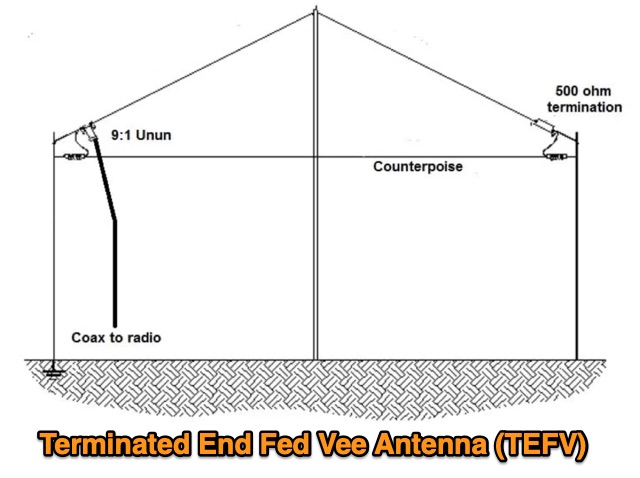 The Terminated End Fed Vee Antenna (TEFV) is a travelling wave antenna with constant current distribution. Unlike traditional resonant antennas, TEFV operates without standing waves, using a terminating resistor for broadband efficiency. With a combination of vertical and horizontal polarization, it offers wide bandwidth from 1.8 MHz to 30 MHz, eliminating the need for a tuner. Key components include a 9:1 unun transformer and a 500-ohm terminating resistor. Grounding and counterpoise enhance performance, and it can handle power losses of up to 30%. TEFV provides an effective, versatile antenna solution for amateur radio and broadcast applications.
-
 Amateur radio operators often seek opportunities to combine their passion for radio with social activities and travel. This resource introduces a travel group specifically for hams, facilitating shared holiday experiences where members can connect with fellow operators. The group aims to organize stays in hotels, fostering camaraderie among participants and their families, often referred to as **XYLs**. The initiative focuses on creating a relaxed environment where members can enjoy their holidays while also having opportunities for radio operation. The group endeavors to arrange **shack rentals** at various destinations, allowing members to engage in DXing or bring their own portable radio equipment. This setup provides a social framework for hams to meet new friends, akin to an extended eyeball QSO, while exploring new locations.
-
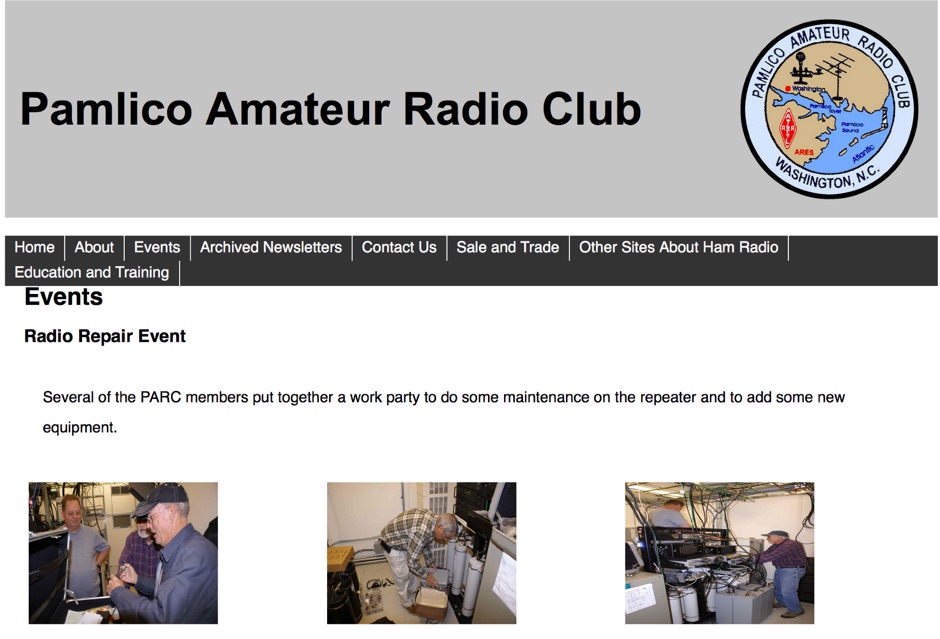 The Pamlico Amateur Radio Club (PARC), founded in 1994 and incorporated as a 501(c)(3) non-profit, provides a community hub for amateur radio operators in the Inner Banks region of North Carolina. Affiliated with the _ARRL_ since 2011, PARC supports local ham radio activities and offers resources for those living or traveling near the Pamlico River. The club maintains an active presence, participating in events like Field Day and offering various operating opportunities. Members engage in diverse aspects of the hobby, from DXing to emergency communications, fostering skill development and camaraderie. The club's focus extends to public service, providing communication support when needed within its operational area. PARC's commitment to the amateur radio community is evident through its long-standing presence and continuous engagement, reflecting over **30 years** of service since its establishment.
-
 Effective operation of amateur radio repeaters, particularly in high-density areas, relies on coordinated frequency assignments to prevent interference. This resource from the _Illinois Repeater Association_ (IRA) serves as the official frequency coordination body for the state of Illinois, providing essential information for repeater owners and users. It details coordination policies, guidelines, and application forms for new and existing repeaters, ensuring fair and consistent spectrum utilization. The site also includes a comprehensive band plan, last revised in 2006, and a selective access policy (PL/Squelch Plan) updated in 2015, which are critical for maintaining orderly operations. The IRA website offers various repeater directories, sortable by frequency, city, and region, including a dedicated section for digital systems. These directories are invaluable for hams traveling through Illinois or setting up new repeater projects, helping them identify available frequencies and coordinated systems. The resource also provides meeting minutes, newsletters, and links to other regional repeater councils, demonstrating its role in fostering inter-state coordination. This structured approach to frequency management helps ensure reliable communications and minimizes QRM across the state, supporting thousands of repeater contacts annually.
-
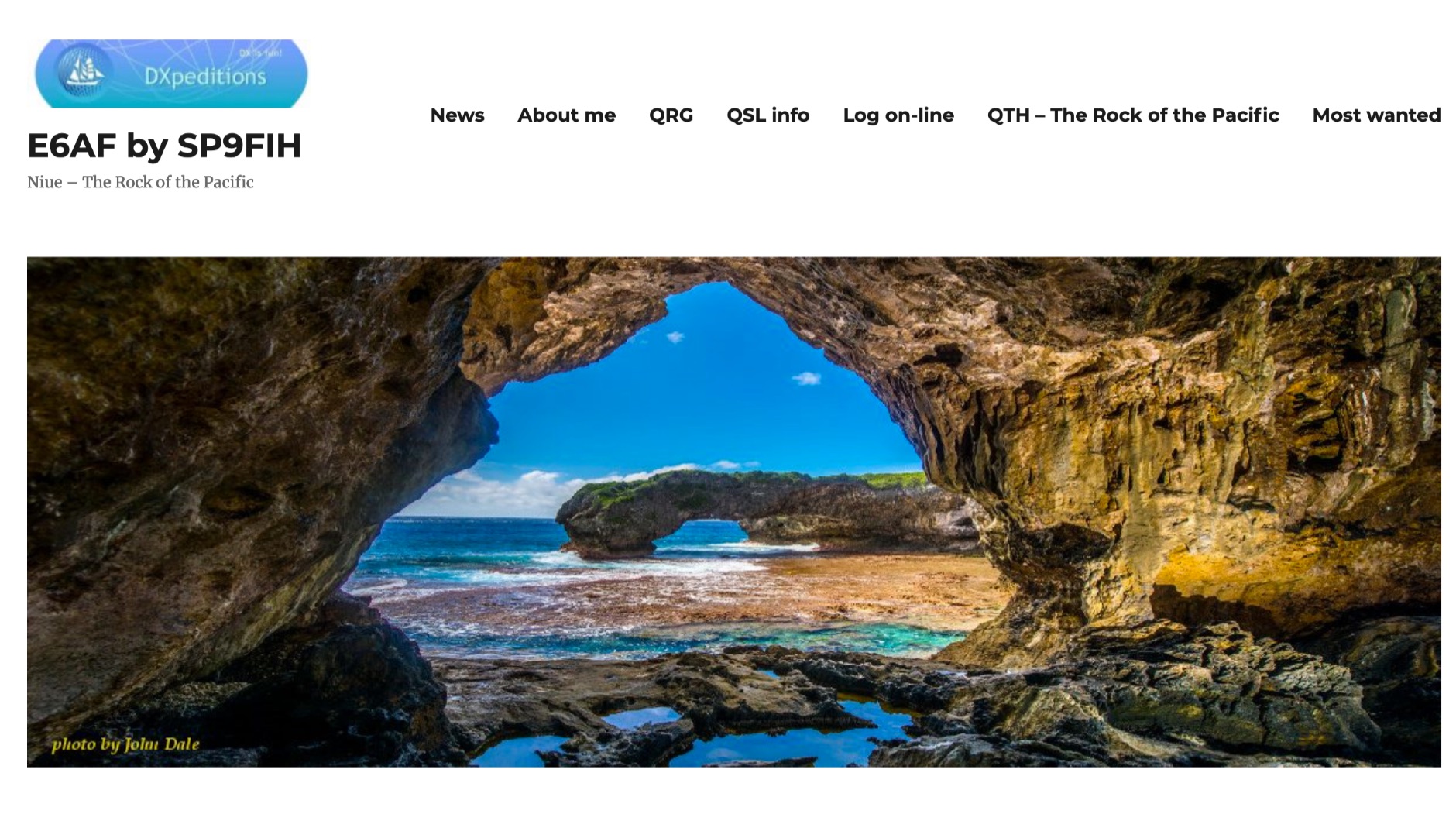 The E6AF DXpedition to Niue (OC-040) in 2019 successfully activated a rare DXCC entity, providing thousands of contacts for the global amateur radio community. Operations focused on maximizing QSOs across various **HF bands** and modes, significantly contributing to the DXCC program. The team, led by SP9FIH, meticulously planned antenna deployments and station setups, including a specific focus on **Fox-Hound mode** for digital operations, to ensure robust signal paths and efficient pile-up management. Operational details included specific schedules for CW, SSB, and digital modes, aiming to accommodate different time zones and propagation windows. QSL information and log search functionalities were made available post-operation, facilitating confirmation for thousands of contacts. The expedition encountered logistical challenges, including power supply failure and strict COVID-19 travel restrictions that delayed licensing. Despite these hurdles, the E6AF and E6CI stations provided valuable contacts from Niue, a sought-after location for many DXers.
-
 This document serves as a thorough guide to amateur radio nets throughout Australia and includes some international (DX) nets. It outlines key information like frequencies, schedules, and the people responsible for managing these nets. Among the nets covered are Ron's 10 A.M. net, the Australian Travellers Net, and several others, each operating on different bands and regions. Additionally, it offers technical details about repeaters, such as frequency, offset, and CTCSS tones where applicable. Any updates are clearly marked, and further details are included for linked repeater systems and network connections.
-
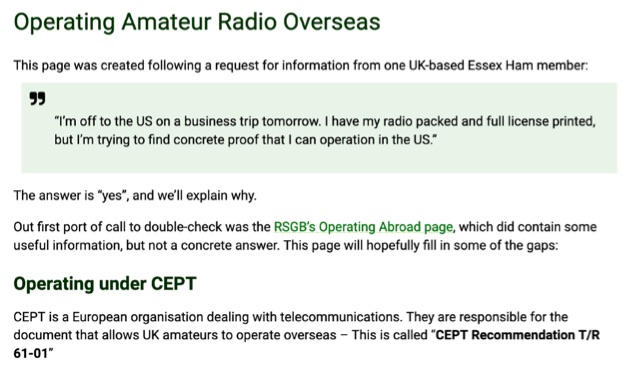 Explains the procedures for UK-licensed radio amateurs to operate their stations while traveling internationally. It clarifies the **CEPT** operating rules, which permit operation in many European countries and beyond, often without needing a separate license. The resource specifically addresses operating in the United States, confirming that UK Full licensees can operate under **reciprocal agreements** by simply carrying their UK license. The content outlines the specific requirements for operating in the US, including the need to append the appropriate US call area to one's UK callsign (e.g., G0XYZ/W1). It also touches upon obtaining a permanent overseas license, providing guidance for those relocating rather than just visiting. The information is presented clearly, drawing from common inquiries from the Essex Ham community regarding international amateur radio privileges.
-
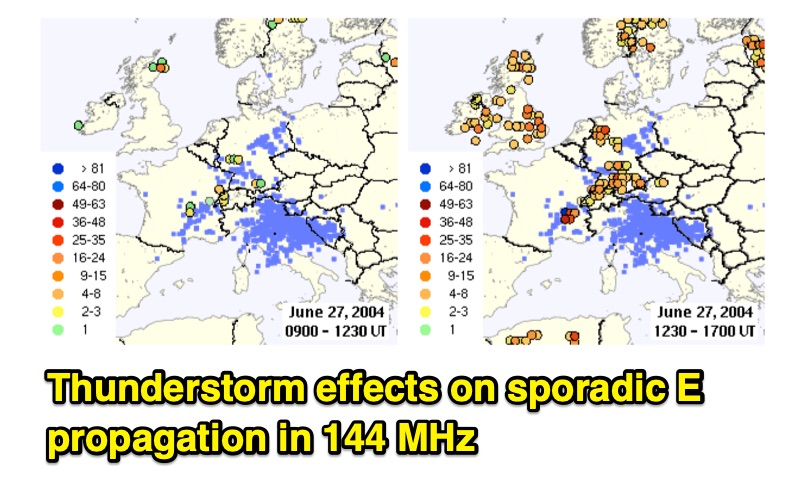 The paper examines the potential effects of thunderstorms on ionospheric _sporadic E_ propagation at **144 MHz**. It addresses community skepticism by considering scientific investigations into travelling ionospheric disturbances and spread-F irregularities, suggesting that thunderstorm effects on the ionosphere cannot be generally excluded. A model is presented where thunderstorm-triggered gravity waves travel from the troposphere and stratosphere into the ionosphere, potentially causing wind shears at E region level, which are considered a cause of mid-latitude sporadic E layers. The _GPS/MET radio occultation experiment_ and OH nightglow measurements support this model by showing a correlation between convectively generated gravity waves and electron density irregularities in the E region. A ham radio project analyzed the spatiotemporal correlation between 144 MHz sporadic E long-distance communication and VLF radio emissions from lightnings (sferics). The June 27, 2004 event showed a correlation between sferic and sporadic E scatterer positions, motivating further analysis. The paper proposes a data analysis method for amateur radio propagation studies, contingent on scientific observatories providing raw data.
-
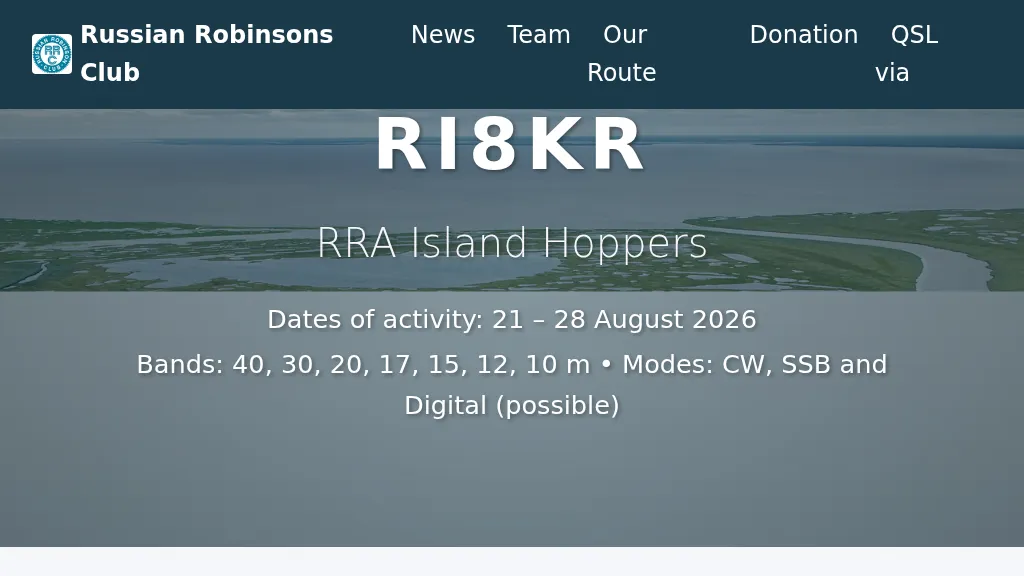 Presents the RI8KR RRA Island Hoppers DXpedition, detailing its schedule from August 21 to 28, 2026, and its objective to activate four new island groups in the Ob Bay of the Kara Sea. The expedition targets specific Russian River Club (RRC) references: RR-06-66 (Ob River Delta Islands West), RR-06-67 (Ob River Delta Islands North-West), RR-06-68 (Ob River Delta Islands North), and RR-06-69 (Ob River Delta Islands Center/North). Operators Vladimir, RK8A, and Igor, UA3EDQ, will operate on 40, 30, 20, 17, 15, 12, and 10-meter bands using CW, SSB, and potentially Digital modes. Three of these activations contribute to IOTA AS-109, an entity not activated since 2013. The page provides QSL information via RZ3EC (Eugene Shelkanovtsev, P.O. Box 70, Orel 302028) and online platforms including RRAWARD.RU, LoTW, RDAWARD.RU, and CFMRDA.RU. It lists supporters of the expedition, acknowledging contributions from various amateur radio operators. Recent updates confirm the purchase of airplane and boat tickets for the team's travel to Salekhard and Salemal/Panayevsk, indicating active preparation for the August 2026 operation.