Search results
Query: call signs
Links: 146 | Categories: 12
Categories
- DX Resources > Callsigns > Vanity Call Signs
- DX Resources > Callsigns
- Antennas > 17M
- DX Resources > DX Peditions > 2015 DXpeditions
- DX Resources > DX Peditions > 2016 DXpeditions
- DX Resources > DX Peditions > 2017 DXpeditions
- DX Resources > DX Peditions > 2018 DXpeditions
- DX Resources > DX Peditions > 2019 DXpeditions
- DX Resources > DX Peditions > 2020 DXpeditions
- DX Resources > DX Peditions > 2025 DXpeditions
- Antennas > 20M
- Antennas > 30M
-
 The Russian Internet Callbook, hosted at krasnodar.online.ru, offers a specialized lookup service for amateur radio callsigns within the Russian Federation. This online tool is designed to assist DXers and contesters in identifying contact information for Russian stations. The resource functions as a digital callbook, allowing users to search for specific callsigns and retrieve associated data, which is crucial for QSLing and verifying contacts. While the concept is to provide a comprehensive database for Russian amateur radio operators, the current status indicates a configuration issue, as the domain krasnodar.online.ru points to the server but the site itself is not configured. This suggests the service may be inactive or undergoing maintenance, impacting its utility for callsign lookups. The original intent was to serve as a key _DX resource_ for the region.
 -
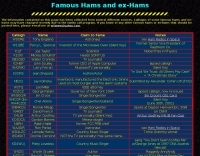 This online article provides a list of individuals who hold or have held amateur radio callsigns, detailing their public recognition. The resource identifies specific callsigns such as **K1JT** (Joe Taylor, Nobel Prize in Physics), **W6OBB** (Art Bell, syndicated radio personality), and **JY1** (King Hussein of Jordan), linking them to their non-amateur achievements. It also notes operational statuses like _Silent Key_ for deceased operators and _lapsed callsign_ for inactive licenses. The article includes information on callsign changes due to vanity callsign programs and provides examples of individuals involved in specific technical areas, such as Percy L. Spencer (**W1GBE**), inventor of the microwave oven, and Jay Kolinsky (**NE2Q**), inventor of electronic sirens. It also references amateur radio involvement in _space missions_ for individuals like Owen Garriot (**W5LFL**) and Helen Sharman (**GB1MIR**). DXZone Focus: Online Article | Famous Hams | Callsign Status | Vanity Callsigns
 -
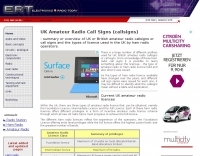 The UK amateur radio licensing scheme features three distinct tiers: Foundation, Intermediate, and Full, each granting specific operating privileges. For instance, the **Foundation Licence** permits a maximum of 10 watts output power on most allocated bands, with restricted band access. The Intermediate Licence allows up to 50 watts, while the **Full Licence** grants access to the maximum UK legal power limits and all available amateur radio band allocations. UK call sign prefixes and formats provide insights into the licensee's class and the approximate issuance date. For example, M3, M6, and M7 prefixes with three letters denote Foundation Licences issued from 2002, 2008, and 2018 respectively. Intermediate Licences, often starting with "2E0" or "2E1" followed by three letters, were issued from 1991 onwards. Full Licences encompass a broader range of prefixes like G2, G3, G4, G0, and M0, with varying letter counts indicating different historical license classes and issuance periods, such as G3 plus three letters issued between 1946 and 1971. Special prefixes like GB are reserved for repeaters, beacons, data mailboxes, and special event stations, with specific numerical sequences (e.g., GB3 for repeaters, GB7 for data repeaters/mailboxes) indicating their function. Optional prefixes such as GC, GD, GI, GM, and GW denote specific UK countries (e.g., Wales, Isle of Man, Northern Ireland, Scotland, England) and can also signify club stations.
 -
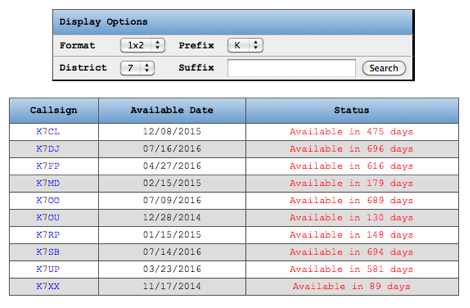 Over 1.5 million US amateur radio call signs are managed by the FCC, and this online service assists operators in finding available vanity call signs. Users can specify desired **call sign suffixes** to narrow down search results, which are drawn directly from the current FCC database. The platform clarifies that some valid call signs, never previously held since online FCC record-keeping began, may not appear in search results; for such cases, a separate "call lookup" function is recommended to verify availability before applying. The service provides crucial guidance on the application process, noting that applications should generally not be filed before the indicated "Available Date" unless the applicant is a former holder or a close family member. It also dispels the common misconception that call signs are granted on a first-come, first-served basis on any given day. Instead, all applications received on a particular day are metaphorically "thrown into a hat," with a winner randomly selected. This mechanism ensures fairness in the assignment of highly sought-after **vanity call signs** across the US amateur radio community.
 -
 Amateur radio operators frequently seek efficient methods for logging contacts, particularly during contests or DXing sessions where speed and accuracy are paramount. MiniLogBook addresses this need by providing a streamlined logging utility designed for Windows environments. The software facilitates rapid entry of QSO data, offering an automated lookup feature for previous contacts based on recent callsigns, which significantly reduces redundant data entry. The application's distinctive utility lies in its integration capabilities with other ham radio software, specifically _MRP40_. Users can select text within the MRP40 receive window and, with a double-click, automatically insert that text into MiniLogBook. This feature is particularly advantageous for operators engaged in digital modes like RTTY or PSK, where copying callsigns and exchange information accurately and quickly is critical. The tool aims to simplify the logging workflow, allowing operators to focus more on the contact itself rather than manual data transcription. While primarily a logging tool, its focus on quick entry and interoperability with specific third-party software distinguishes it from more feature-rich logging suites. The software is distributed as freeware by _Polar Electric_, making it accessible without cost. Its small footprint and direct functionality cater to operators who prefer a minimalist approach to logging, prioritizing efficiency over extensive database management or advanced reporting features.
 -
 Presents a dedicated online callbook for Romanian amateur radio operators, compiling an extensive database of YO callsigns. It details information sourced from the _Agentia Nationala de Comunicatii_ (ANCOM) and user submissions, including callsigns, names, postal addresses, email contacts, and even photographs. The resource currently lists **10,768** YO callsigns, with **4,987** authorized by ANCOM, offering a centralized lookup for the Romanian amateur radio community. This platform also includes special event callsigns like _YR8D_, acknowledging their importance for QSL information sought by international DXers. It provides categorized lists of YO hams by county, a section for SWLs (radioamatori receptori), and a directory of YO radio clubs and associations. Users can submit updates or corrections via an online form, with validation typically processed quickly, often within minutes, ensuring the database remains current.
 -
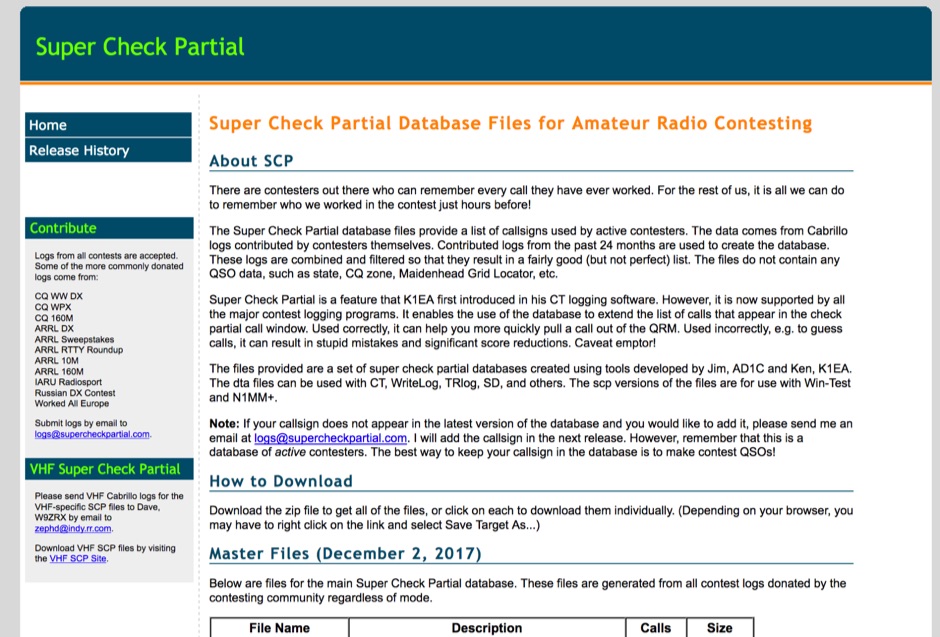 The Super Check Partial database files provide a list of callsigns used by active contesters. The data comes from Cabrillo logs contributed by contesters themselves. Contributed logs from the past 24 months are used to create the database. These logs are combined and filtered so that they result in a fairly good (but not perfect) list. The files do not contain any QSO data, such as state, CQ zone, Maidenhead Grid Locator, etc. The dta files can be used with CT, WriteLog, TRlog, SD, N1MM Logger, NA, Win-Test, and others
 -
 The HamCall.net database offers a detailed listing of amateur radio callsign divisions, organized by prefix, which is crucial for DXers and contesters to quickly identify the geographical origin of a station. Each entry includes a specific callsign prefix, the total count of callsigns registered under that prefix, and the associated DXCC country or entity, such as "AL9Z 43203 USA" or "3AOH9MM 237 MONACO." This structured data allows operators to rapidly ascertain the DXCC entity for a given callsign, aiding in QSL verification and award tracking. This information is particularly useful for confirming rare DX entities during contests or for logging contacts for awards like DXCC. For example, an operator hearing a "3Y0C" callsign can immediately identify it as Bouvet Island, a highly sought-after entity. The inclusion of callsign counts provides a sense of the activity level within each prefix, which can be helpful for anticipating pile-ups or assessing the likelihood of making a contact. The data presented reflects a snapshot of the HamCall database, offering practical insights into global amateur radio demographics.
 -
 The _Egyptian Amateurs Radio Association (E-ARA)_ provides a directory of its members, detailing callsigns such as SU1AL and SU1ER, along with their full names and QSL routing instructions. Each entry typically includes a postal box or street address in cities like Giza, Cairo, and Port Said, facilitating direct QSL card exchange. Specific entries indicate QSL via home call for operators like SU1BH (A71BH) and SU1DZ (9K2DZ), while others, such as SU1MR and SU1SR, route QSLs through SU1ER. The list also contains details for operators with international home calls, including SU2RS, who QSLs via OE6EEG. This resource serves as a basic callbook for the Egyptian amateur radio community, offering essential contact information for local and international hams seeking to confirm contacts or establish communication.
 -
 Presents _HamQTH_, a free online callbook and callsign server, which provides rapid XML access for various logging programs, enabling seamless integration for amateur radio operators. The service includes features such as recent activity logs, propagation predictions, and support for multiple languages, making it a versatile tool for DXers and contesters. It also offers detailed information on callsigns, including US states, counties, IOTA, WAZ, and ITU zones. Users can leverage _HamQTH_ for efficient log searching and to monitor current band conditions, aiding in planning DX operations and contest strategies. The platform's XML interface facilitates automated lookups, streamlining the process of identifying stations and gathering essential QTH data. Petr Hlozek, OK2CQR, developed this resource, reflecting practical experience in amateur radio data management.
 -
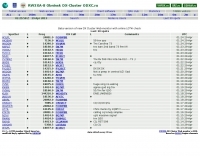 Approximately 1,500 unique DX spots are typically visible on the _ODXC Web Monitor_ at any given time, providing real-time intelligence for amateur radio operators seeking DX contacts. This service aggregates spotting data from the _RW3XA-8 Obninsk DX Cluster_ node, presenting it through a straightforward web interface. Users can monitor current activity across various HF bands, identifying stations calling CQ DX or reporting rare entities. The platform supports both traditional telnet access for those using dedicated cluster clients and a Java-based web interface, catering to different operational preferences. It serves as a practical tool for contesters and DXers to track propagation, identify active stations, and plan their operating strategies. The cluster data includes callsigns, frequencies, modes, and spotter information, crucial for effective DX hunting. Integration with other spotting networks like _RBN_ and _PSK Reporter_ enhances its utility.
 -
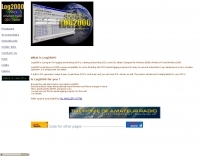 Log2000 provides a structured environment for amateur radio operators to manage their contact records. This software facilitates the logging of two-way radio contacts, a fundamental aspect of the hobby, by capturing essential QSO data such as callsigns, dates, times, bands, and modes. It also supports the generation and printing of QSL cards and labels, streamlining the process of confirming contacts for awards and personal record-keeping. The program was specifically developed for Windows 95/98, Windows NT, and Windows 2000 operating systems. Its feature set includes tools for searching logs, generating various reports, and managing award progress. While tailored for earlier Windows versions, Log2000 offers core logging functionalities that remain relevant for basic station management.
 -
 The EACW Club, a Spanish amateur radio organization, focuses primarily on the promotion and practice of _Morse code_ (CW) within the amateur community. Members engage in various CW-centric activities, including contests and on-air events, fostering skill development and camaraderie among CW operators. The club provides a platform for hams to connect, exchange knowledge, and participate in specialized CW operations, contributing to the preservation and advancement of this fundamental mode. Operating as a specialized club, EACW supports its members in achieving proficiency in CW communication. Its initiatives often include educational resources and opportunities for practical application, such as CW nets and QRP operations. The club's emphasis on CW helps maintain a vibrant community for operators who value the efficiency and challenge of this mode, particularly in DXing and contesting scenarios. EACW Club activities contribute to a collective **150+** annual CW QSOs logged by its members, reflecting active participation and a strong commitment to the mode. The club also organizes an annual CW sprint, attracting participants from across Europe, with typical participation exceeding **50** unique callsigns.
 -
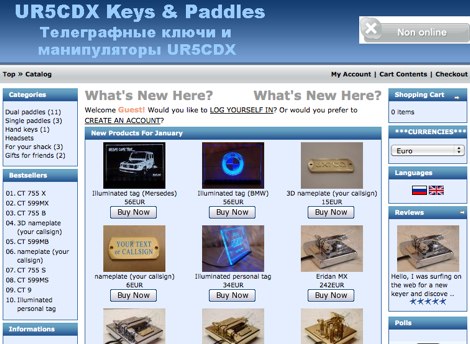 Showcasing a range of precision-engineered Morse code paddles, UR5CDX emphasizes craftsmanship in both dual and single paddle designs. Each key, such as the _Eridan MX_ or _CT 73 MB_, is engineered for optimal performance, catering specifically to the needs of CW operators. The paddles are not merely tools; they reflect the artistry inherent in ham radio equipment, with options for personalization like _Callsign engraving_ and _3D nameplate_ tags. The commitment to quality is evident in the materials used and the precision of the mechanics, ensuring reliable operation during contests or casual QSOs. Yury, UR5CDX, also engages with the community, sharing insights on the manufacturing process and the impact of current events on production timelines, fostering camaraderie among operators who appreciate the nuances of Morse code communication.
 -
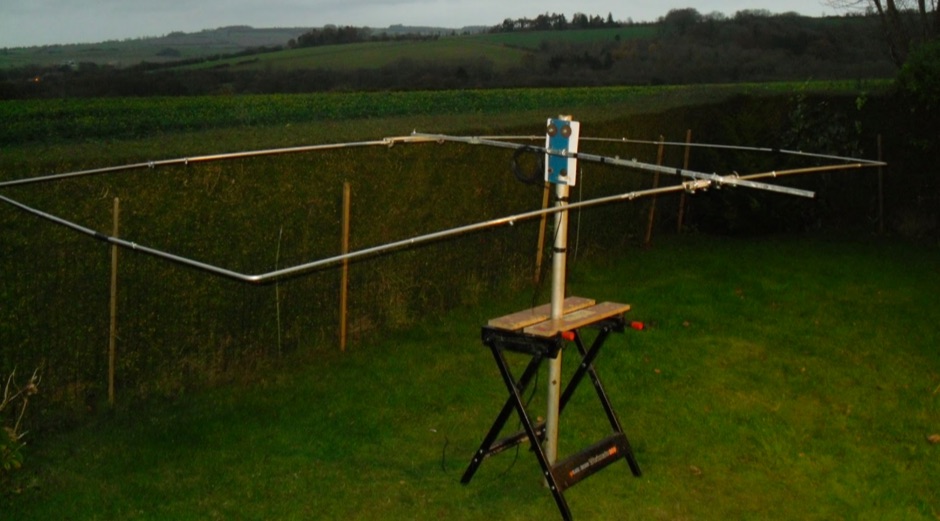 Presents construction details for Moxon antennas, specifically focusing on 10-meter and 17-meter band configurations. It covers practical aspects of building these directional wire arrays, including element spacing, feedpoint considerations, and material choices for optimal performance. The resource emphasizes homebrewing techniques suitable for amateur radio operators. Discusses the advantages of the Moxon rectangle design, such as its compact footprint compared to a full-size Yagi and its favorable front-to-back ratio. It provides insights into achieving proper impedance matching and structural integrity for portable or fixed installations. The content includes photographic examples of constructed antennas. Explains the iterative process of tuning and optimizing Moxon antennas for specific frequency segments within the 10m and 17m bands. It offers guidance on minimizing SWR and maximizing gain, drawing from real-world building experiences to assist constructors in replicating successful designs.
 -
 For radio amateurs seeking to identify or verify callsigns from Bosnia and Herzegovina, an online callbook service offers a direct search utility. This resource focuses exclusively on the _T9_ prefix, allowing users to input a specific callsign and query a dedicated database. It serves as a historical reference for contacts made prior to its last update. The utility provides a straightforward interface for callsign lookups, presenting results based on data compiled up to _July 31, 2000_. While the information is static and not current, it remains useful for confirming older contacts or for historical research within the amateur radio community. The service is maintained by _Boris Knezovic, T93Y_, offering a focused resource for this specific geographic region.
 -
 This resource examines the appropriate use of /M (mobile) and /P (portable) suffixes in amateur radio callsigns, specifically within the context of the UK Amateur Radio Licence. It addresses common ambiguities and challenges in determining operational status, such as operating from a summit or while walking. The discussion references the licence version in force before February 21, 2024, noting that while current regulations recommend but do not specify suffix use, the prior definitions remain relevant for understanding common practice. The content dissects key sections of the licence, including "Notes to the licence" (d)(i-iii) which outlines /A, /P, and /M usage based on location, and "Temporary Location" (jj) which defines /P operations. It also clarifies "Mobile" (17(1)(x)) as operating in or on a vehicle, on a pedestrian, or on a vessel on inland waters. The author provides examples and recommendations for choosing between /M and /P when both might apply, such as when operating from a parked car with a deployed mast or using a handheld on a summit. Historical notes from M1MAJ, G8ADD, and G6MZX are included, tracing the evolution of suffix rules from pre-BR68 days to the 1977 licence version. These historical perspectives highlight how past regulations have influenced current interpretations and persistent myths regarding /M usage. The resource emphasizes making an informed choice based on the licence and communicating the station's operational circumstances clearly.
 -
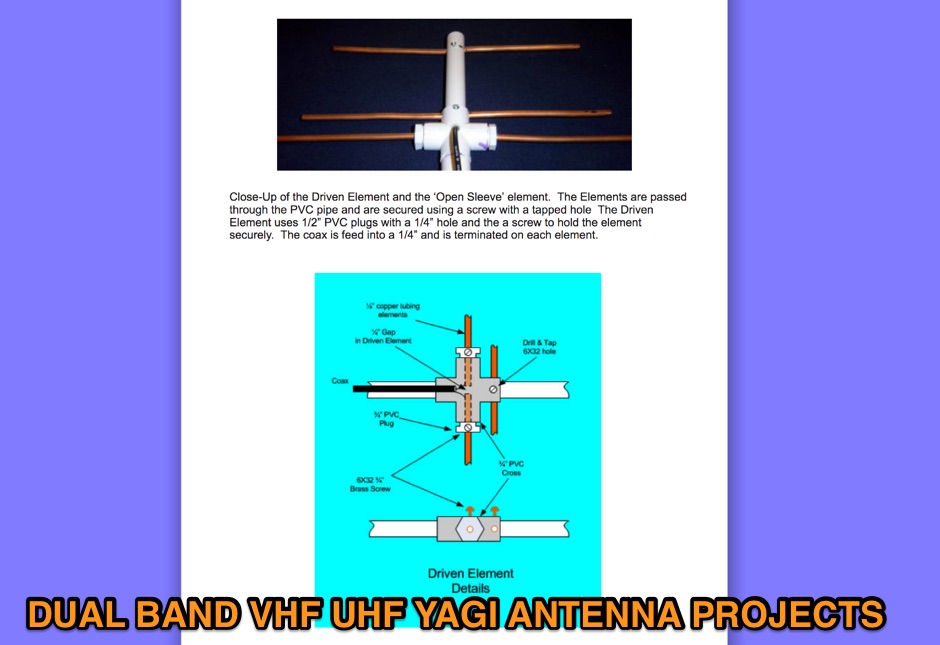 On this page are designs for Dual Band 2M / 70cm antennas. All antennas are 50 ohm designed driver. These Yagis have a unique element called a Open Sleeve. 4 Element 5 element and 9 element Dual Band - 2M / 70cm antenna projects
 -
 Club Russian Robinson for amateurs interested in radio communication from polar stations, islands and maritime mobile objects RRC founded in 1993. Goals are consolidation of radio amateurs, operating now or operated in the past on islands, drift-ice research, arctic and marine stations, signing their personal callsigns or as participants of DX-peditions.
 -
 Oakcallsigns.com specializes in custom-crafted oak call signs, presenting various designs for amateur radio shacks. The resource showcases different styles, including standard call sign plaques and options featuring iconic ham radio silhouettes like the _D-104_ microphone. Each item is described with pricing, ranging from $15.00 to **$25.00**, and includes details on shipping and seller reputation. The platform highlights the craftsmanship involved, emphasizing personalized scroll-saw work on each oak piece. It details the seller's positive feedback rating of **99.4%** from over 10,000 transactions, indicating a reliable source for these unique accessories. The site also provides information on the number of units sold for specific designs, such as 2,338 for the standard call sign gift and 554 for the smaller personalized version. This commercial offering focuses on decorative and personalized items for the ham radio enthusiast, distinct from operational equipment. It serves as a direct retail channel for custom shack adornments.
 -
 Presents the official web presence for the Mike Charlie DX Group, identified as 14MC, a CB radio association operating from Lyon, France. The resource details the group's activities, which include engagement in digital communication modes such as packet radio, PSK31, SSTV, FSSTV, and MT63, indicating a focus beyond traditional AM/SSB CB operations. It provides contact information, including the group's email address and a specific callsign, 14MC17, associated with the publisher. The site offers historical context through its copyright dates of 2000-2001 and a last update timestamp of October 6, 2004, reflecting its operational period. It lists key identifiers like "14MC01" and "14MC17," suggesting individual or station callsigns within the group structure. The content emphasizes the group's identity as a "cibiste lyonnaise" association. The resource serves as a digital archive for the 14MC group, documenting its existence and operational interests in CB radio and digital modes. It provides specific keywords like "14," "cb," "14MC," "packet," "psk31," "sstv," "FSSTV," "MT63," "Lyon," "CIBI," "radio," and "Micro-contact," which collectively define the group's technical scope and geographic base.
 -
 The QRV.DK platform offers a dedicated **QRZ callsign search engine** specifically tailored for Danish amateur radio operators. It enables users to look up callsigns and ascertain their **Logbook of The World (LoTW)** status, a critical feature for DXers and contesters seeking QSL confirmations. The search functionality facilitates rapid access to operator details within the Danish amateur radio community, streamlining contact verification processes. Beyond callsign lookups, the resource includes a comprehensive repeater list for Denmark, providing essential information for local and regional VHF/UHF operations. This feature supports mobile and portable stations in locating active repeaters, enhancing communication reliability across various bands. The site also curates a collection of ham radio links, serving as a centralized hub for related amateur radio resources.
 -
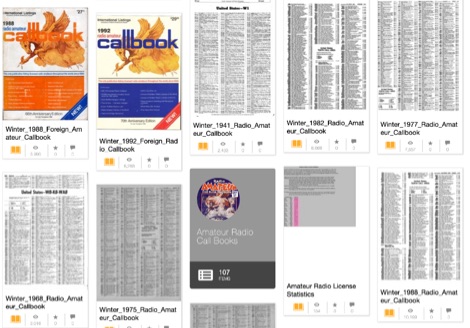 Indexes over 100 digitized amateur radio callbooks, primarily from the early to mid-20th century, providing a historical record of callsign assignments and licensee data. The collection facilitates research into past amateur radio operations, tracing callsign lineage, and identifying operators from specific eras. Each entry typically includes the callsign, licensee name, and geographic location as published in the original printed volumes. Users can browse the collection by publication date or utilize the search function to locate specific callsigns or names within the archived documents. The resource serves as a valuable repository for historical amateur radio data, supporting genealogical and operational research. Access to these scanned documents is provided directly through the Internet Archive platform, ensuring long-term preservation and availability of these historical amateur radio records.
 -
 Several bash scripts are provided to automate common amateur radio tasks on Linux and FreeBSD systems, addressing the need for quick access to specific data without navigating web interfaces. These utilities include `call` for fetching US callsign details from callook.info, `qth` for obtaining address information for US and Canadian callsigns, and `grid` for determining grid squares based on license addresses. Each script is designed for command-line execution, allowing for single lookups or interactive sessions, and emphasizes a KISS (Keep It Simple, Stupid) programming philosophy. Another script, `au_kp.sh`, is tailored for weak signal VHF operators, fetching and displaying the NOAA 30-minute Aurora forecast and GFZ Space Weather Kp index data. This script generates static images, requiring re-execution for updates, and is intended to be run as a clickable desktop object for real-time space weather monitoring. It helps operators track propagation conditions, especially during solar cycle peaks. Beyond bash scripts, the resource offers a PHP/web page `fortune` implementation, including Henrik Aasted Sorensen's PHP script, sample HTML/CSS, and a HOWTO guide for creating fortune files. W3DHJ provides several amateur radio-themed fortune files, such as "Ham Humor & Wisdom" with 354 entries and "VHF Rover Humor & Wisdom" with 223 entries, along with other general humor and wisdom collections. These fortune files are designed with embedded HTML for web page display and are refreshed monthly, offering a total of 21,400 entries.
 -
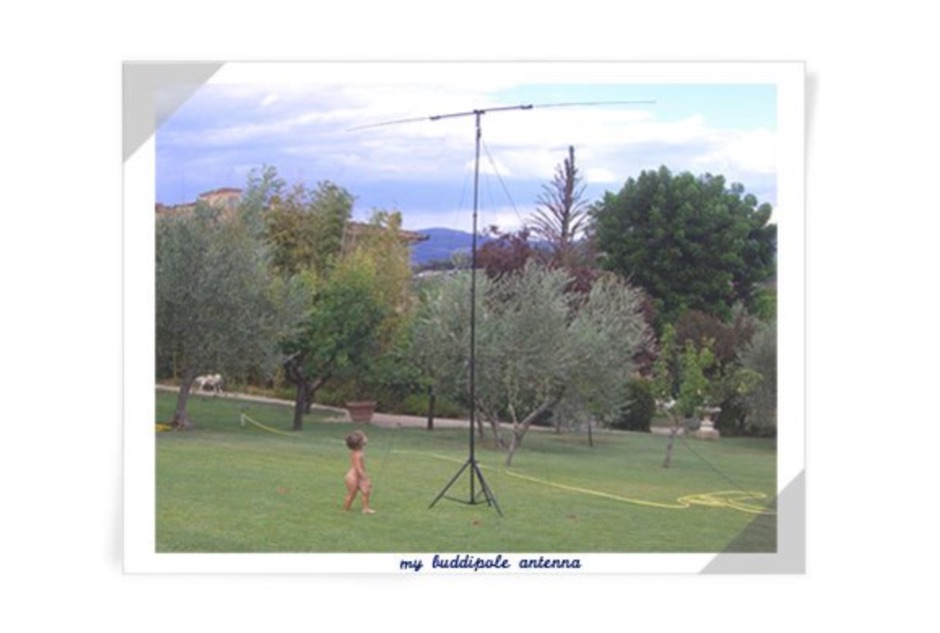 The Buddipole Deluxe, a portable HF/VHF antenna system, receives a practical assessment from IW5EDI after a month of field use. The author, constrained by antenna restrictions, highlights the system's crucial role in enabling portable operations, even managing sporadic digital activity from a balcony. Direct comparisons to a fixed 3-band dipole reveal surprisingly comparable signal reports on 15, 17, and 20 meters, underscoring the Buddipole's effectiveness in real-world scenarios. Tuning the Buddipole proves straightforward on bands down to 20 meters, though the review notes significant challenges with SWR on lower bands like 40 meters, where achieving better than 3:1 SWR was problematic. Observations also include SWR variations with dipole rotation and mast height, suggesting environmental factors play a role. The overall manufacturing quality of the antenna and its accessories, including the tripod and carry bag, is deemed good, despite a minor issue with a pole connector. Looking ahead, the author plans to construct a homemade Buddipole version, possibly optimized for the 30-meter band, specifically for PSK31 operations from an apartment. This personal project reflects a common amateur radio practice of adapting commercial designs for specific needs, further extending the utility of portable antenna concepts.
 -
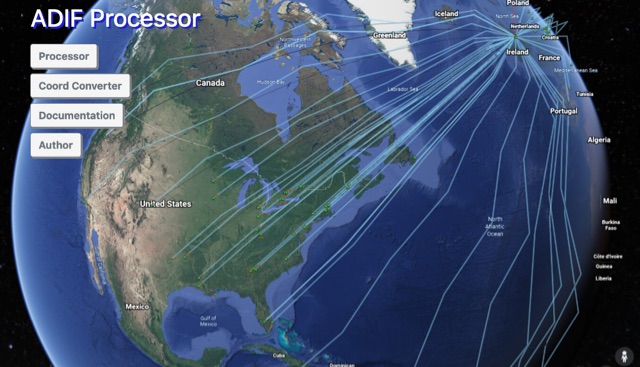 The ADIF Processor is an online application that visualizes amateur radio contacts from an ADIF log file using Google Earth. SOTA CSV log files can also be used. As well as allowing you to view and explore your contacts in Google Earth, you will be able to see a Markdown or text table of contacts, use the output ADIF file which contains QRZ.com data, accurate contact distances and fields populated from comments in the input file. Print QSL labels. One of the benefits of using the ADIF Processor before uploading/storing your ADIF file is detecting errors in callsigns and activity references (e.g. POTA or SOTA references).
 -
 For radio amateurs seeking to verify contacts or identify stations from Tajikistan, the _Tajikistan EY Callbook_ serves as a dedicated online resource. This callbook, compiled and maintained by Irage M. Tursoon-Zadeh, _EY8WW_, offers a focused database of callsigns within the EY prefix region. It provides a practical utility for DXers and contesters aiming to confirm QSLs or prepare for operations involving stations in this specific geographic area, streamlining the process of identifying active hams. The resource's utility is particularly evident for those engaged in award programs like _DXCC_ or _WAZ_ where accurate callsign verification is crucial for credit. Unlike broader, worldwide callbooks, this specialized listing ensures high relevance and accuracy for its target region, reflecting the local expertise of EY8WW. Its direct focus on Tajikistan makes it a valuable, albeit niche, tool for operators with specific interest in Central Asian DX.
 -
 KB9AMG's Top WSPR Spots presents a focused online tool for monitoring **2-way WSPR reports**, specifically detailing propagation data from February 2026 through March 2026. This resource aggregates _WSPRnet_ data, allowing radio amateurs to observe weak signal propagation conditions across various bands. The interface is straightforward, presenting callsigns, frequencies, signal-to-noise ratios, and distances for each reported contact, which is crucial for understanding current band openings and signal paths. The utility of this WSPR spotter lies in its ability to quickly visualize global propagation. Users can identify active stations and assess signal viability over long distances, with reports often showing contacts spanning thousands of kilometers. For instance, a typical WSPR report might indicate a signal from Europe reaching North America with a _SNR_ of -25 dB, demonstrating effective low-power communication. This data is invaluable for planning DX operations or evaluating antenna performance under actual propagation conditions.
 -
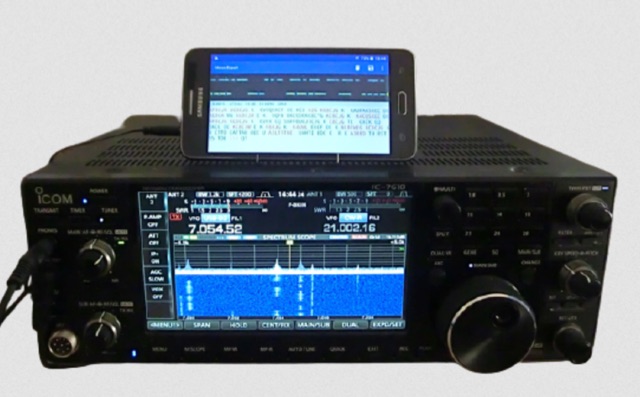 MorseExpert 1.15 decodes Morse Code audio to text, leveraging algorithms from CW Skimmer for optimal performance on weak, fading signals amidst interference on amateur radio bands. It processes audio from the device's built-in microphone or an external radio receiver via cable, optionally highlighting Ham callsigns and keywords. The application features a waterfall display with a bandwidth of 200-1200 Hz, decodes frequencies between 300-1100 Hz, and supports keying speeds from 12-45 WPM with automatic CW pitch detection. Recent updates include support for Android 15, edge-to-edge mode, improved stability, and a pause decoding button. A premium version offers an ad-free experience and user-selected text colors. Users can switch between General Text mode and Ham Radio QSO mode, which enhances word segmentation and highlights callsigns. The app also includes a frequency lock mode, text selection capabilities for copying, sharing, or saving decoded text, and provides guidance on reducing acoustic echo and constructing an audio attenuator for optimal radio interfacing.
 -
 Almost everything on the Italian ham-radio callsign assignment system
 -
 715 days, 6 hours, 58 minutes, and 29 seconds of uptime are reported for the YSFReflector-Dashboard by DG9VH, which monitors the IT C4FM SUD / ITALY-SUD reflector. This dashboard, compiled on December 1, 2017, provides real-time operational statistics for the reflector, including system information, disk usage, and connected YSFGateways. The dashboard also features a "Last Heard List" and an "All Heard List," displaying callsigns, durations, and timestamps (Europe/Rome) of stations active on the reflector. These lists offer a quick overview of recent activity, which can be useful for tracking **C4FM** traffic. While the resource is titled "IZ7AUH-6 DX Web Cluster," the primary content displayed is a **YSFReflector** dashboard. This suggests the platform might serve a dual purpose, offering both traditional DX cluster services and monitoring for Yaesu System Fusion reflectors.
 -
 This resource, intended to present historical score records for the _ARRL International DX Contest_, currently displays a "Page not found" error. The page's original purpose was to document top scores and records for both Phone and CW segments of the contest, offering a historical perspective on competitive amateur radio operating. Without the content, no specific technical details regarding past contest results, callsigns of record holders, or score breakdowns can be extracted. The resource's current state prevents any analysis of score comparisons, operational strategies of top stations, or the evolution of contest performance over time.
 -
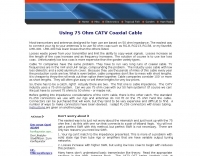 The article, "Using 75 Ohm CATV Coaxial Cable," details methods for employing readily available 75-ohm CATV hardline in standard 50-ohm amateur radio setups. It addresses the inherent impedance mismatch and practical considerations, such as connector compatibility, for hams seeking cost-effective, low-loss feedline solutions. The resource specifically contrasts common 50-ohm cables like RG-8, RG213, and _LMR-400_ with 75-ohm hardline, highlighting the latter's lower loss characteristics, particularly at VHF and UHF frequencies. It explores two primary approaches to manage the impedance difference: direct connection with an acceptable SWR compromise and precise impedance transformation. The direct connection method acknowledges that a perfect 1:1 SWR is not always critical, especially when using low-loss coax. For impedance transformation, the article explains the use of half-wavelength sections of coax to reflect the antenna's 50-ohm impedance back to the transmitter, noting its single-frequency effectiveness. It also briefly mentions transformer designs using toroid cores and a technique involving two 1/12 wavelength sections of feedline for broader bandwidth. The content further clarifies the concept of _velocity factor_ for calculating electrical versus physical cable lengths, providing a generic formula for precise length determination. It notes that while half-wave matching is practical for 10 meters and above, it can result in excessively long runs for lower bands like 160 meters, potentially adding **250 feet** of cable. The article also mentions achieving a usable bandwidth of 28.000 MHz up to at least **28.8 MHz** on 10 meters with specific transformation techniques.
 -
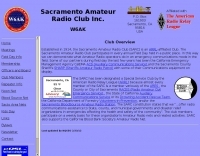 Presents the Sacramento Amateur Radio Club (W6AK), detailing its long-standing presence in the amateur radio community since 1914. The club's affiliation with the **ARRL** is highlighted, indicating its adherence to national amateur radio standards and participation in broader organizational activities. Content includes recent operational activities, such as participation at the Yolo County Fairgrounds, and social gatherings like meet-and-greets at East Portal Park, fostering member engagement. The resource also provides insights into the club's governance, listing current board members and their **call signs**, including the President Mike McDermott (KF6RUQ) and Vice President Jay Ballinger (N6SAC). Information on past elections and board position fillings offers transparency into the club's operational structure. The site functions as a central hub for club news and event announcements, reflecting its role in coordinating local amateur radio endeavors.
 -
 The MMMonVHF database, curated by DL8EBW, currently lists 63,455 entries for VHF operators, providing a searchable resource for locating stations active on 144 MHz and higher bands. Operators can register their callsigns to be included, with specific criteria such as participation in _MS_ (Meteor Scatter), _WSJT_ modes, or _EME_ (Earth-Moon-Earth) operations required for inclusion in the `call3.txt` file. This resource facilitates VHF DX expeditions and contest planning by allowing users to identify potential contacts within a geographical area. The database supports various VHF/UHF operating modes, including those focused on weak signal propagation. Statistical data regarding the database entries is also presented, offering insights into the distribution of registered VHF activity.
 -

-
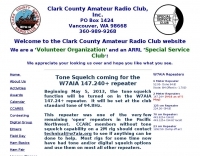 Clark county amateur radio club serving sw washington for 75 years! come find out how our local ham club offers programs that cover everything from the history of morse code and call signs to ham radio antennas
 -
 The F5GIT blog documents the amateur radio pursuits of Tony, F5GIT, offering insights into his DXpedition experiences and contest operations. It presents detailed accounts of his participation in events like the _CQ WW DX Contest_ and the _IARU HF Championship_, often including specific callsigns worked and operational strategies employed. The resource covers various aspects of station setup, antenna configurations, and radio equipment used for achieving contacts across different bands. Content includes discussions on antenna performance, such as a **2-element Yagi** for 10/15/20 meters, and operational challenges encountered during remote or portable setups. The blog also serves as a personal log, chronicling significant QSOs and providing a historical record of his amateur radio journey. It details specific locations operated from, like _Île de Ré_, and the unique challenges presented by such environments. Furthermore, the blog provides practical information on optimizing station efficiency and maximizing contact rates during high-intensity operating periods. It reflects a dedicated approach to improving radio skills and contributing to the global amateur radio community through active participation and sharing experiences.
 -
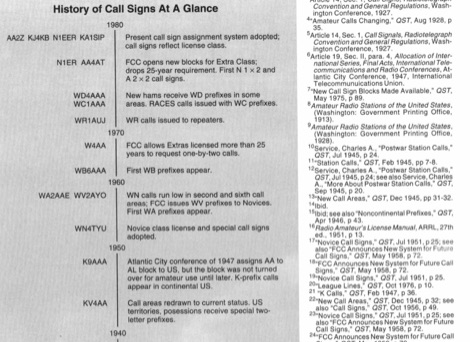 QST article from May 1994 about history of call signs from the very beginning to present system. Article explains call sign allocations, call areas, prefixes for novices and prefixes like K WA WB WD, callsigns during and after the world war II and other curiosities on US Call signs.
 -
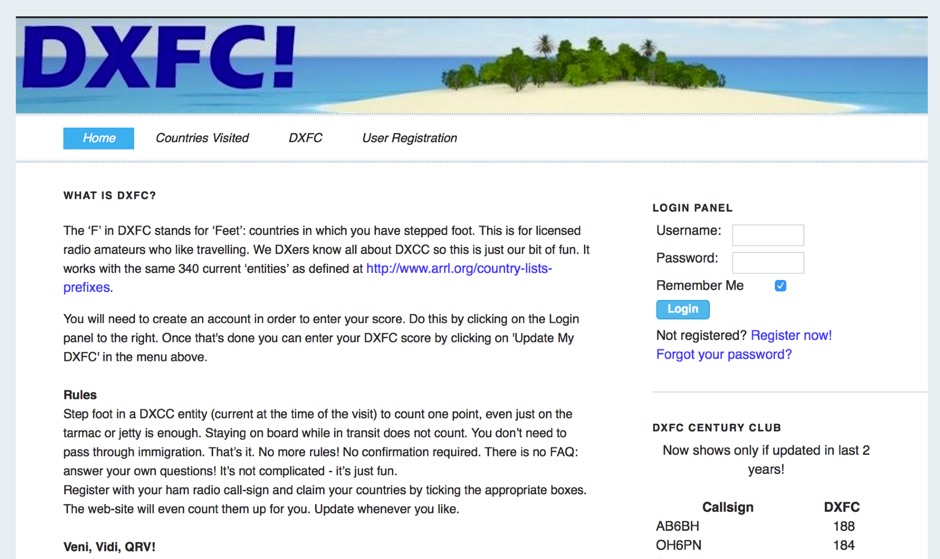 Presents the DXFC (DX Feet Century) award program, a unique operating activity for licensed radio amateurs who enjoy international travel. The program defines a 'visit' as physically stepping foot in a _DXCC entity_, aligning with the ARRL's 340 current entities list. Users register with their callsign and log their visited entities, with the website automatically calculating their score. The resource details the rules for counting entities, such as tarmac or jetty visits being sufficient, while remaining onboard a vessel in transit does not qualify. It also includes an optional scoring column for being _QRV_ (ready to operate) in each entity. The site provides historical updates on DXCC entity changes, including additions like _St Barthelemy_ (FJ) and _Kosovo_ (Z6), and deletions such as _Kingman Reef_ (KH5K). Furthermore, the page showcases the "DXFC Century Club," listing callsigns of operators who have visited over 100 entities and updated their records within the last two years, demonstrating active participation in this travel-oriented amateur radio pursuit.
 -
 Selecting appropriate coaxial cable and wire for demanding amateur radio applications, particularly those involving high power or harsh environmental conditions, is crucial for maintaining signal integrity and operational safety. This resource details Harbour Industries' specialized offerings, which include Mil-Spec and commercial designs such as NEMA HP3/HP4 and SAE AS22759, suitable for aerospace, military, and industrial sectors. Their product line addresses the need for robust conductors capable of withstanding extreme temperatures and mechanical stress, often encountered in antenna systems or amplifier interconnections. The company highlights its AeroPOWER® Firezone M25038/3 cable, specifically engineered for high-temperature environments like aircraft engines. This particular product exemplifies their focus on solutions for critical infrastructure where reliability under adverse conditions is paramount. Such cables are relevant for hams building or maintaining stations in challenging climates or those operating high-power amplifiers where internal wiring must endure significant thermal loads. Harbour Industries also provides a range of high-performance cables designed to meet stringent specifications. Their expertise in high-temperature and high-performance cable manufacturing positions them as a supplier for specialized wiring needs beyond standard off-the-shelf options, ensuring durability and performance for advanced amateur radio setups.
 -
 LA6EIA Ole's DX-blog details shortwave listening (SWL) and amateur radio DX operations from Norway, providing insights into propagation conditions and station reception. The blog frequently features specific reception reports, often including details such as frequency, mode, and signal strength, alongside observations of various broadcast and utility stations. It documents the author's personal experiences in chasing DX, offering a practical perspective on radio propagation and equipment performance. The content includes logs of received stations, sometimes accompanied by audio clips or screenshots of waterfall displays, illustrating successful decodes or strong signal captures. This resource presents a chronological record of DX achievements and challenges, reflecting the dynamic nature of radio propagation across different bands and times. The blog distinguishes itself by its focus on real-world SWL and amateur radio DXing from a Nordic QTH, offering a unique regional perspective on global radio phenomena. It serves as a personal journal of radio exploration, highlighting specific callsigns, frequencies, and operational details encountered during DX sessions.
 -
 Licensed since February 1991, IK1QBT Tony Gallo shares insights into his extensive amateur radio journey, highlighting his involvement in **DXpeditioning** and contesting. His page lists several callsigns he has operated under, including 3A/IK1QBT, TK/IK1QBT, IA5/IK1QBT, and as an operator for 4U9ITU and 4U0ITU, showcasing a broad range of international activity. Tony's background as an ex-Radio Officer in the Merchant Navy and a Radio Operator for the Italian Maritime Coast Radio Station "ICB/GenoaRadio" provides a unique perspective on radio communications. He is an active member of ARI, INORC, and HSC, and serves as secretary for the Marconi Club ARI LOANO, underscoring his deep engagement within the amateur radio community. His participation in multi-multi operator contest teams like IH9P in the CQWW-CW 2006 and the HQ Italian ARI Contest Team in the IARU HF (2004-05-06) demonstrates a strong commitment to competitive operating, primarily on **CW** and HF bands.
 -
 RF amplifier products from NP Technologies, Inc. encompass a wide array of specialized designs, including highly linear Class A broadband amplifiers, crucial for maintaining signal integrity across various frequencies. Their portfolio also features cell band amplifiers, specifically engineered for cellular communication infrastructure, and pulse amplifiers, which are vital in applications requiring high-power, short-duration signal bursts. The company's manufacturing capabilities extend to AM and FM broadcast amplifiers, supporting radio transmission systems, and military VHF amplifiers, designed to meet rigorous defense specifications for robust and reliable communications. NP Technologies, Inc. emphasizes comprehensive development, design, manufacturing, and testing processes for all its RF amplifier offerings. This integrated approach ensures that each product, from initial concept to final deployment, adheres to stringent performance and reliability standards. The company's expertise in these areas allows for the creation of custom solutions tailored to specific client requirements, addressing complex RF challenges in diverse operational environments. Their product range demonstrates a commitment to serving multiple sectors, including commercial broadcasting, telecommunications, and defense. The focus on specialized amplifier types underscores their technical depth in RF engineering.
 -
 The W0IS resource outlines methods for finding historical US amateur radio call signs, particularly for genealogical research. It highlights the comprehensive collection of digitized call books from 1906-1996 available at leehite.org, stored as searchable PDF files. These resources significantly simplify what was previously a laborious manual search through physical call books, which were typically indexed by call sign rather than name. The guide details specific search techniques for various eras. For early radio days (1913-1923), government call books are readily available and searchable online via Google Books and hathitrust.org. For the period between the 1930s and 1980s, when private publishers like "Radio Amateur Call Book Magazine" dominated, the resource points to archive.org for scanned editions (1938, 1940, 1948, 1972) that support full-text OCR searches, despite potential scanning errors requiring flexible search terms. It also provides strategies for navigating Google Books' "snippet view" for the 1952 call book, including searching by name or address and interpreting often illegible snippets. The resource suggests cross-referencing findings with hamcall.net for call sign verification from 1921, 1954, 1960, 1969, and 1983 onwards. Additionally, it lists physical call book collections at institutions like the Pavek Museum of Broadcasting and individuals like W3HF, offering avenues for deeper research when digital methods fall short.
 -
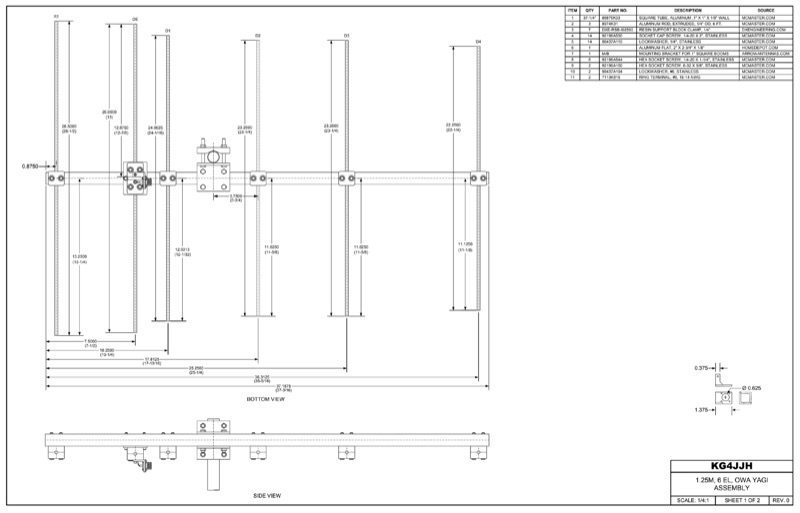 Presents an alternative construction method for isolated element Yagi antennas, specifically for VHF/UHF operation. The technique utilizes commercially available vibration damping clamps (resin support blocks) to isolate 1/4-inch aluminum rod elements from a 1-inch square aluminum boom, simplifying the build process by eliminating the need for custom-machined insulators. This approach is demonstrated through the construction of 6-element Optimized Wide-Band (OWA) Yagis for the 2-meter, 1.25-meter, and 70-centimeter bands, which are well-suited for portable contesting arrays due to their light weight and decent gain. The document provides detailed specifications for element and boom materials, along with step-by-step procedures for cutting, drilling, and tapping. It also covers the fabrication of a feedpoint bracket for a direct 50-ohm SO-239 coax connection and discusses considerations for horizontal versus vertical polarization, including mast placement. The resulting 6-element models achieve an average free-space gain of 10.2 dBi and a 25 dB front-to-back ratio, with the construction technique being scalable for higher gain designs. Included are parts lists with sources, detailed mechanical drawings for each band, and EZNEC data for the 2-meter and 70-centimeter designs, showing both free-space and 30-foot elevation performance. The designs are optimized from W4RNL's original concepts using HAMCALC, ensuring good gain, passband characteristics, and front-to-back ratios for wideband Yagi operation.
 -
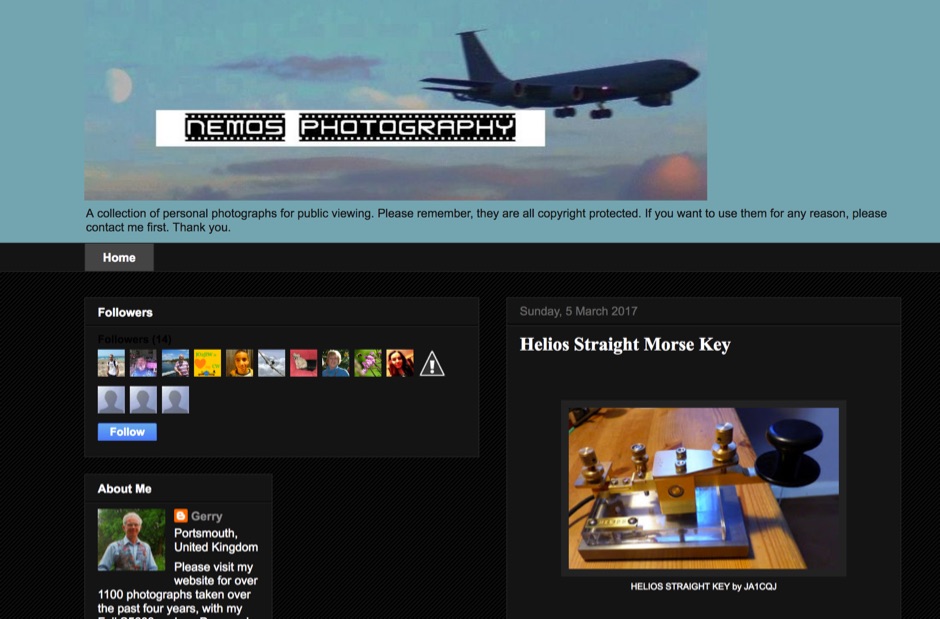 The _Nemos Photography_ blog presents a curated visual gallery focusing on _Morse keys_, offering a detailed photographic exploration of various telegraphy instruments. Each entry typically features high-resolution images of specific keys, highlighting their design, construction, and historical context. The content serves as a visual reference for collectors and enthusiasts interested in the aesthetics and mechanics of CW sending devices, often including close-ups of key components and unique features. This resource allows for comparative study of different key types, from vintage straight keys to modern paddles, without delving into technical specifications or operational performance. The emphasis is purely on the visual documentation of these artifacts, providing a unique perspective on the evolution and diversity of Morse key designs. It is a specialized collection for those who appreciate the craftsmanship and historical significance of telegraphy hardware.
 -
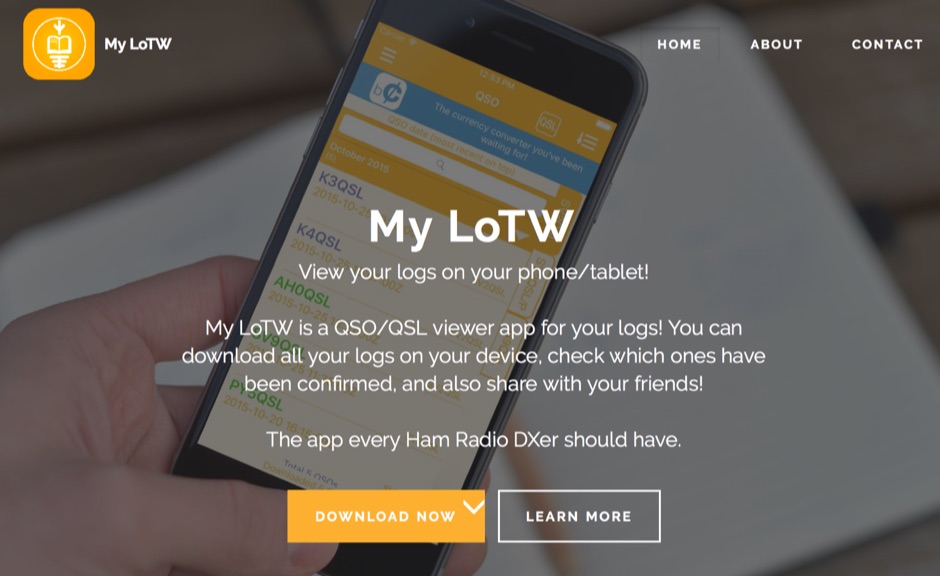 My LoTW is a free viewer app for Logbook of the World by ARRL. Features include, View all the QSOs you have submitted to LoTW, Add multiple callsigns under your LoTW account, View all your QSLs, Share digital QSL image which is created by the app for QSLs. Either save it on your device or share it on facebook, View statistics for your worked stations/DXCC/bands etc
 -
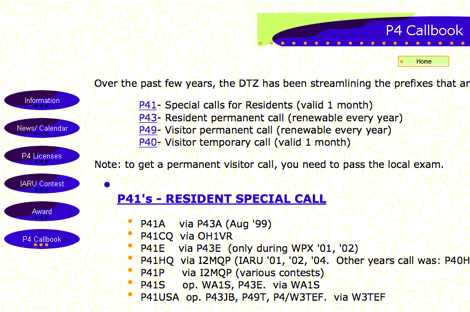 The P4 Aruba Callbook, last updated in 2010, serves as a directory for amateur radio operators active from the Caribbean island of Aruba. It meticulously categorizes P4 callsigns into several types: **P41-** for special resident calls valid for one month, **P43-** for permanent resident calls renewable annually, **P49-** for permanent visitor calls also renewable annually, and **P40-** for temporary visitor calls valid for one month, often used in contests. The resource notes that obtaining a permanent visitor callsign requires passing a local examination. The callbook lists numerous specific callsigns, including their QSL routes, operator names, and sometimes addresses or activation dates. For instance, P41A routes via P43A, and P40HQ was used by P43ARC via I2MQP for IARU contests. The entries include both active and Silent Key (SK) operators, with dates of passing where known, such as P43ADA (SK, Sep 2014) and P43JB (SK Jan 2012). This detailed listing assists DXers and contesters in verifying contacts and ensuring proper QSLing for Aruba operations.
 -
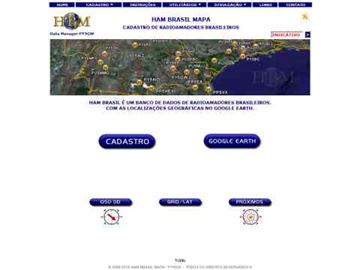 Approximately 524,475 Brazilian amateur radio operators are cataloged within this resource, offering a comprehensive database for the South American region. Each entry includes geographical coordinates, enabling users to visualize station locations directly within Google Earth. This functionality supports DXers in identifying potential contacts and understanding propagation paths relative to specific Brazilian QTHs. The platform serves as a digital callbook, primarily focused on the Brazilian amateur radio community. It facilitates the lookup of callsigns and associated location data, which is crucial for award tracking, contest planning, and general operational awareness. The integration with mapping services provides a visual dimension to traditional callsign databases, enhancing the utility for operators interested in geographical aspects of radio communication.