Search results
Query: arrl ss
Links: 170 | Categories: 1
Categories
-
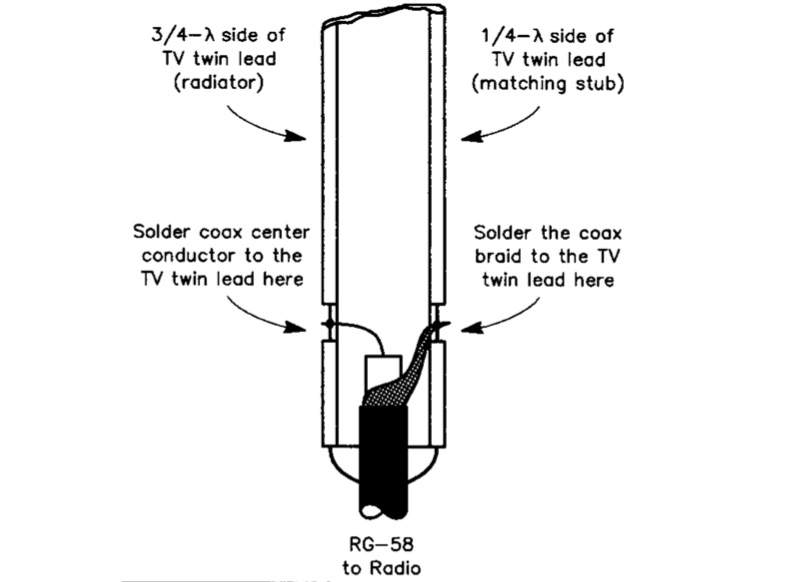 Addresses the common challenge of constructing effective dual-band antennas for VHF/UHF operations, specifically detailing a J-pole design. It covers the theoretical underpinnings, including calculations for quarter-wavelength radiator and stub sections, accounting for velocity factor and design frequency. The resource provides practical construction guidance using readily available materials like TV twin lead and coaxial cable, culminating in an antenna with a total length of approximately 52 inches. Performance metrics are presented, showing a measured SWR of 1.7:1 or better across most of the 2-meter band and less than 2:1 across the 70-cm band. These SWR measurements, referenced to 50-ohm impedance, were taken at the transmitter end of the feed line. The article also touches upon the necessity of a balun for proper impedance matching between the balanced J-pole and unbalanced coaxial feed line, suggesting a split-core cylindrical ferrite for this purpose.
 -
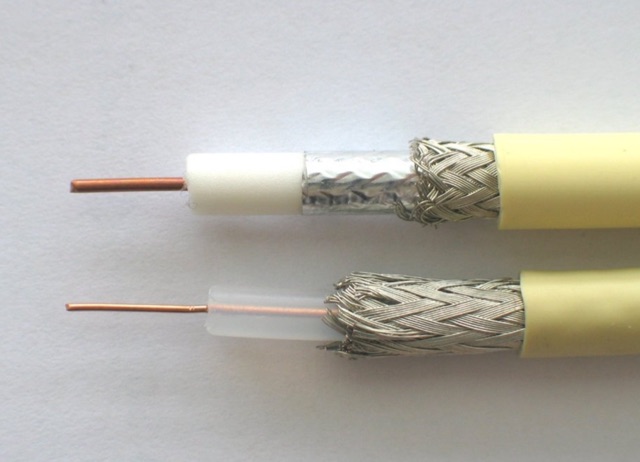 The feed line (also called the transmission line) is the RF power conduit between your radio and your antenna. The quality of your feed line is critical to your station. ARRL Article that explains differences among various commonly used feed line systems
 -
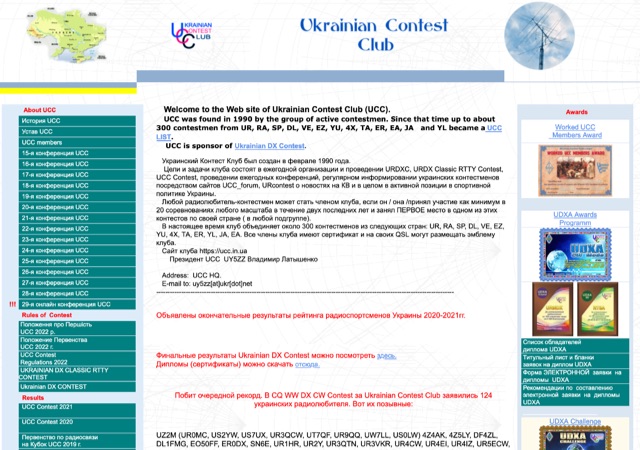 The Ukrainian Contest Club (UCC) website details contest activities, including a March 2026 contest calendar compiled by _UW3WF_ that excludes specific "exotic" tests, mini-tests, sprints, VHF competitions, and events organized by Russian entities. It lists major contests such as the ARRL International DX Contest, Stew Perry Topband Contest, and CQ WPX SSB Contest, providing dates, times, modes, bands (e.g., **10-160m**), organizers, log submission methods, and deadlines. The resource also highlights Ukrainian participation in various international contests, noting specific callsigns that represented the UCC, and acknowledges new Ukrainian records, such as UW5Y's new record in the ARRL DX CW Contest. The site presents contest results and rankings, including the top 20 Ukrainian contesters in the World Amateur Radio Contesting Association (WARCA) rating for 2019-2024, with _UW1M_ ranked #18 globally and #1 in Ukraine with **26,490.32** points. It also details the club's 12th place finish among 155 clubs worldwide in the CQ WPX Contest 2024 (CW + SSB). The resource includes information on WRTC 2026 participants from the club and lists members excluded due to collaboration with adversarial entities, reflecting the current geopolitical context.
 -
 Since December 2020, the FCC no longer prints paper amateur radio licenses. Licensees must obtain official electronic copies by logging into the FCC's Universal Licensing System (ULS) with their FRN and password. Detailed instructions are available on the FCC website or by contacting the FCC Licensing Support Center.
 -
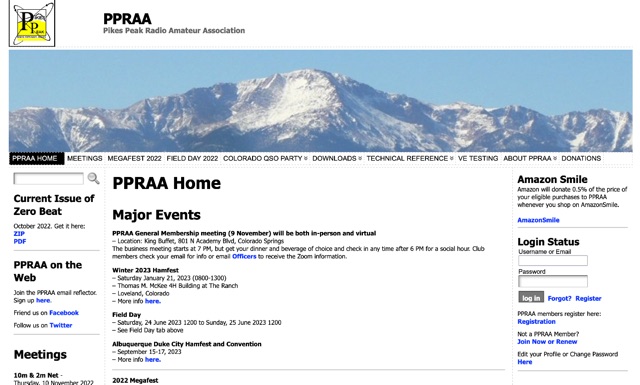 The Pikes Peak Radio Amateur Association (PPRAA) serves as an ARRL Special Service Club, providing a calendar of events and activities for its members and the wider amateur radio community. The resource details upcoming events such as the USS Pueblo Memorial Museum Ships Weekend activations, a Cubical Quad Antenna Workshop, LARCFest, and various hamfests including Dayton Hamvention and Duke City Hamfest. It also lists on-air activities like a FreeDV digital voice mode event on 10 meters, a Black Friday Simplex Event on 2M and 70cm, and a 10m event for Technician class operators, emphasizing SSB privileges from 28.300 to 28.500 MHz. The PPRAA's event schedule includes educational opportunities like a Technician Class and a Soldering Workshop, alongside social gatherings such as the PPRAA Picnic and Car Show. Past event summaries highlight successful activities like the 2024 Megafest Raffle, Winter Field Day, and multiple fox hunts utilizing frequencies like 147.420, 147.480, and 147.540 MHz. The club actively supports POTA activations, exemplified by their AF0S park activation at Cheyenne Mountain State Park, and participates in historical commemorations like the USS Pueblo Memorial operations, demonstrating a broad engagement across various amateur radio facets.
 -
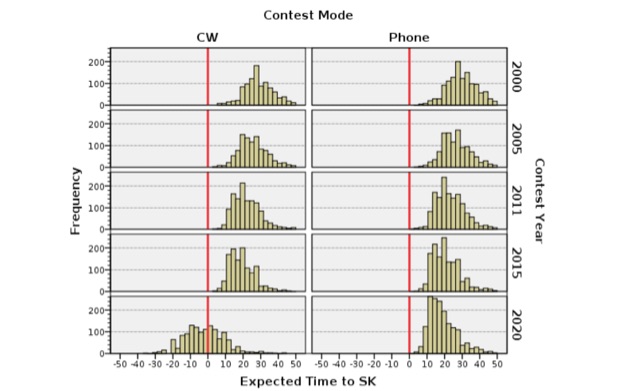 Examining the demographic shifts within amateur radio, particularly concerning **radiosport** participation, this resource analyzes survey data from the National Contest Journal (NCJ) and two regional ARRL surveys. It focuses on the relationship between age and engagement in contesting, presenting findings that suggest older amateur radio operators tend to participate in more contests annually. The author, a spatial demographer, details the methodology, including data consolidation, georeferencing, and statistical analysis performed in collaboration with Dr. Scott Wright K0MD, covering ARRL November Sweepstakes participants from 2000 to 2020. The analysis also addresses the limitations inherent in using voluntary response samples rather than random samples, which may influence the generalizability of the results. Furthermore, the resource investigates the preferred sources of contest information among different age groups, noting that older contesters frequently rely on traditional publications like the NCJ, while younger participants show a preference for online platforms. This demographic review provides insights into the evolving landscape of **amateur radio contesting** and the generational differences in information consumption.
 -
 QST is the monthly membership journal of ARRL. Each issue is your source for equipment reviews, technical tips, projects, and news.
 -
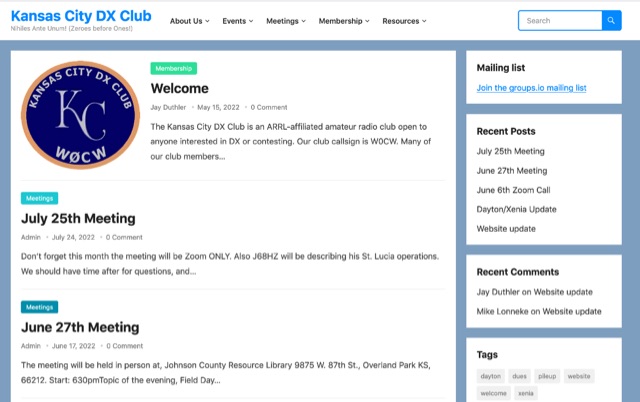 Established in the mid 1970's The Kansas City DX Club is an ARRL-affiliated amateur radio club open to anyone interested in DX or contesting. Our club callsign is W0CW. Many of our club members are from the Kansas City metropolitan area, on both sides of the Missouri/Kansas state line, but our roster also includes members from all over the United States.
 -
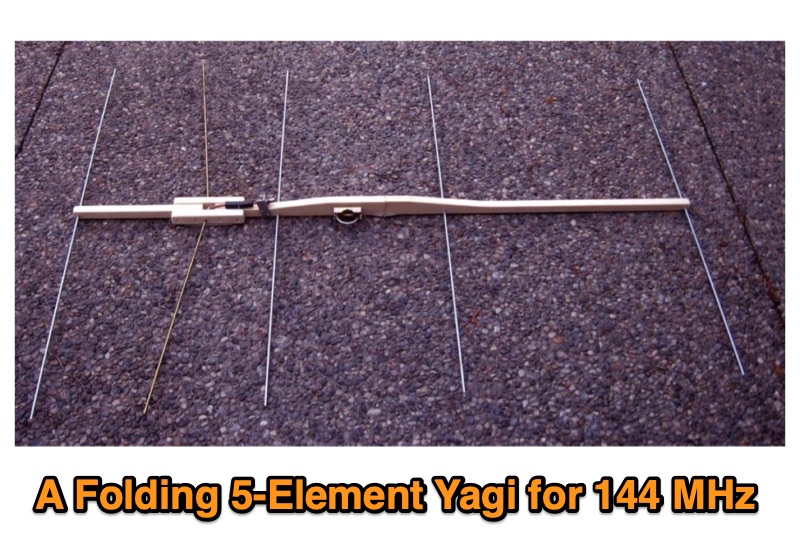 Presents the design and construction of a folding 5-element Yagi antenna specifically engineered for 144 MHz portable operation, particularly for VHF contest Rover categories. It details element dimensions, boom construction using ¾-inch pine, and a folding mechanism that reduces the 52-inch boom to 26 inches for transport. The document provides a table with precise element distances and lengths, including a 2.4 mm length correction for solid parasitic elements, and specifies the use of 3/16-inch solid aluminum for parasitic elements and brass tubing for the driven element. It also covers the bent dipole driven element design for impedance matching, balun implementation with Type 31 ferrite beads for common mode current suppression, and weatherproofing for the feed point. The resource includes predicted performance data from 4NEC2 modeling, showing SWR and return loss characteristics, as well as gain and front-to-back ratios at various frequencies across the 2-meter band. It reports a measured SWR of 1.2:1 at 144.2 MHz and 1.5:1 at 147 MHz, corrected for 25 feet of RG-8/M coaxial cable loss. The design offers approximately 1.5 dB more gain than a previous 4-element design, maintaining a decent SWR up to 147 MHz, and was successfully deployed in a winning June 2016 ARRL VHF Contest Rover entry.
 -
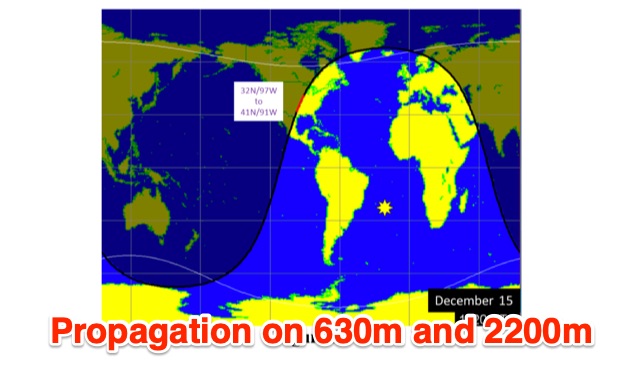 This is a theoretical look at propagation on 630-Meters and 2200-Meters using ray tracing software. It expands on the brief discussion in the ARRL Handbooks. The Earth's magnetic field affects 630-Meter and 2200-Meter band propagation. Lower ionization reduces absorption, aiding low-frequency propagation. Differences exist between bands, limited daytime sky-wave propagation. Sunrise/sunset show promise, yet mechanisms are unclear. Ducting possible at night in specific conditions. Negative ions enhance propagation. Inefficient antennas and high man-made noise are anticipated. Groundwave propagation is significant on 2200-Meters.
 -
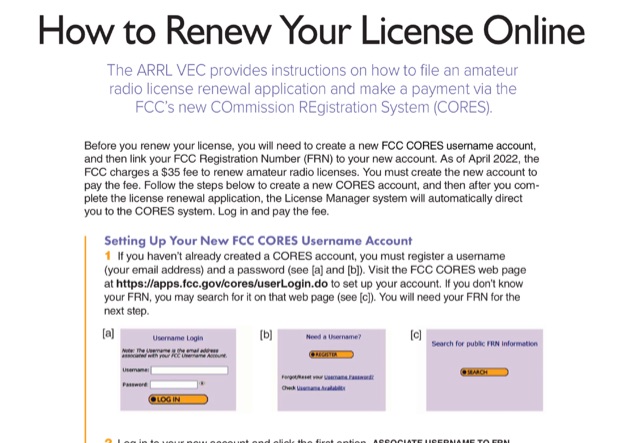 This document provides a comprehensive guide on renewing an US amateur radio license through the Federal Communications Commission (FCC) using the new COmmission REgistration System (CORES). Published on QST October 23, it outlines the necessary steps for creating a CORES account, associating it with a Federal Registration Number (FRN), and completing the renewal application. Key points include the requirement of a $35 fee for the renewal process, which must be paid online after the application is submitted. The guide emphasizes the importance of logging into the FCC License Manager system during the renewal window and provides instructions on how to navigate the renewal process, including obtaining confirmation and access to the renewed license. Additionally, it offers contact information for FCC support and links to further resources for assistance.
 -
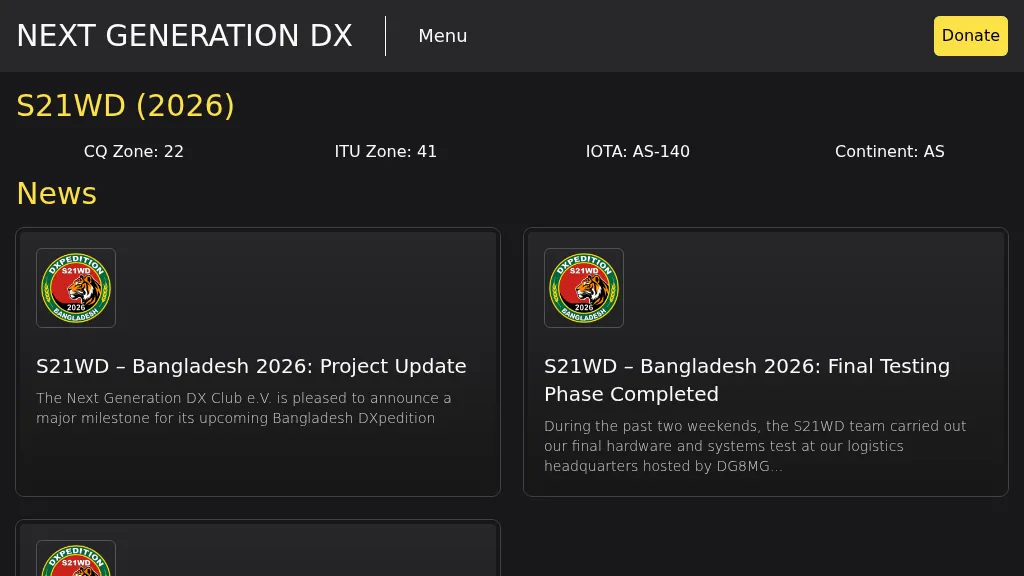 Presents the S21WD DXpedition to Bangladesh (IOTA **AS-140**) scheduled for 2026, organized by the Next Generation DX Club e.V. It outlines the project's progress, including final hardware and systems testing, and the team's successful arrival and activation from the target location. The resource provides a concise summary of Bangladesh, covering its geography, cultural aspects, and economic landscape. The page includes the Clublog Most Wanted ranking for Bangladesh, categorized by continent and mode, as of January 2026. The DXpedition aims to achieve over 70,000 QSOs across CW, SSB, RTTY, and FT8 modes, with a specific focus on RTTY (targeting over 2,000 QSOs) and **lowband** operations. The team plans a Multi-Single entry in the ARRL CW 2026 contest. QSO data will be uploaded to Clublog and LoTW, with Clublog livestream and daily free LoTW uploads anticipated, contingent on stable internet connectivity. The S21WD callsign corresponds to CQ Zone 22 and ITU Zone 41. Further details include a preliminary bandplan, FT8 operating guidelines using MSHV software, a VOACAP DX Prediction link, and an azimuthal map centered on Bangladesh. QSL services are managed by DJ4MX via Clublog OQRS, offering direct, bureau, and LoTW options, with daily LoTW uploads expected.
 -
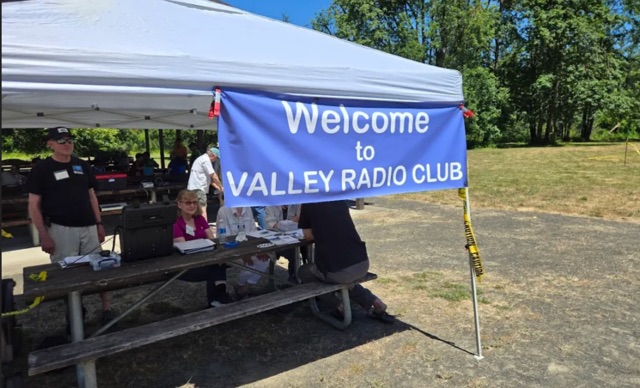 The Valley Radio Club of Oregon (formerly Valley Radio Club of Eugene), located in Eugene, Oregon, was chartered in 1929, and is one of the oldest continuously operated club stations in the United States. It has been affiliated with the American Radio Relay League (ARRL) since 1932, and associated with the American Red Cross since 1951.
 -
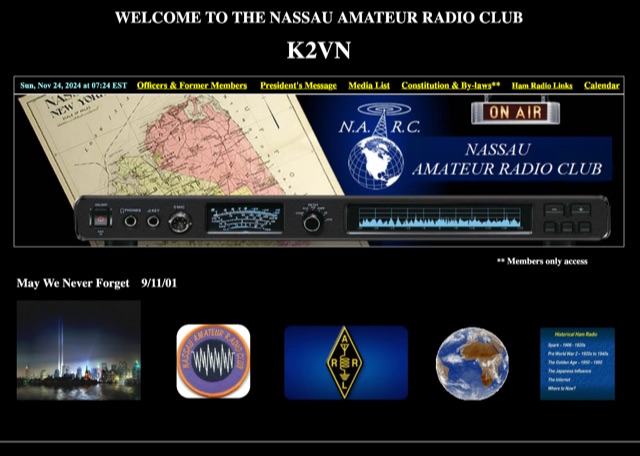 The Nassau Amateur Radio Club (NARC), a Special Service Club of the ARRL, focuses on Ham Radio education to train skilled radio operators for emergency communications, foster international goodwill, and advance the radio art. Based in Nassau County on Long Island, the club is affiliated with the New York City-Long Island Section of the ARRL Hudson Division.
 -
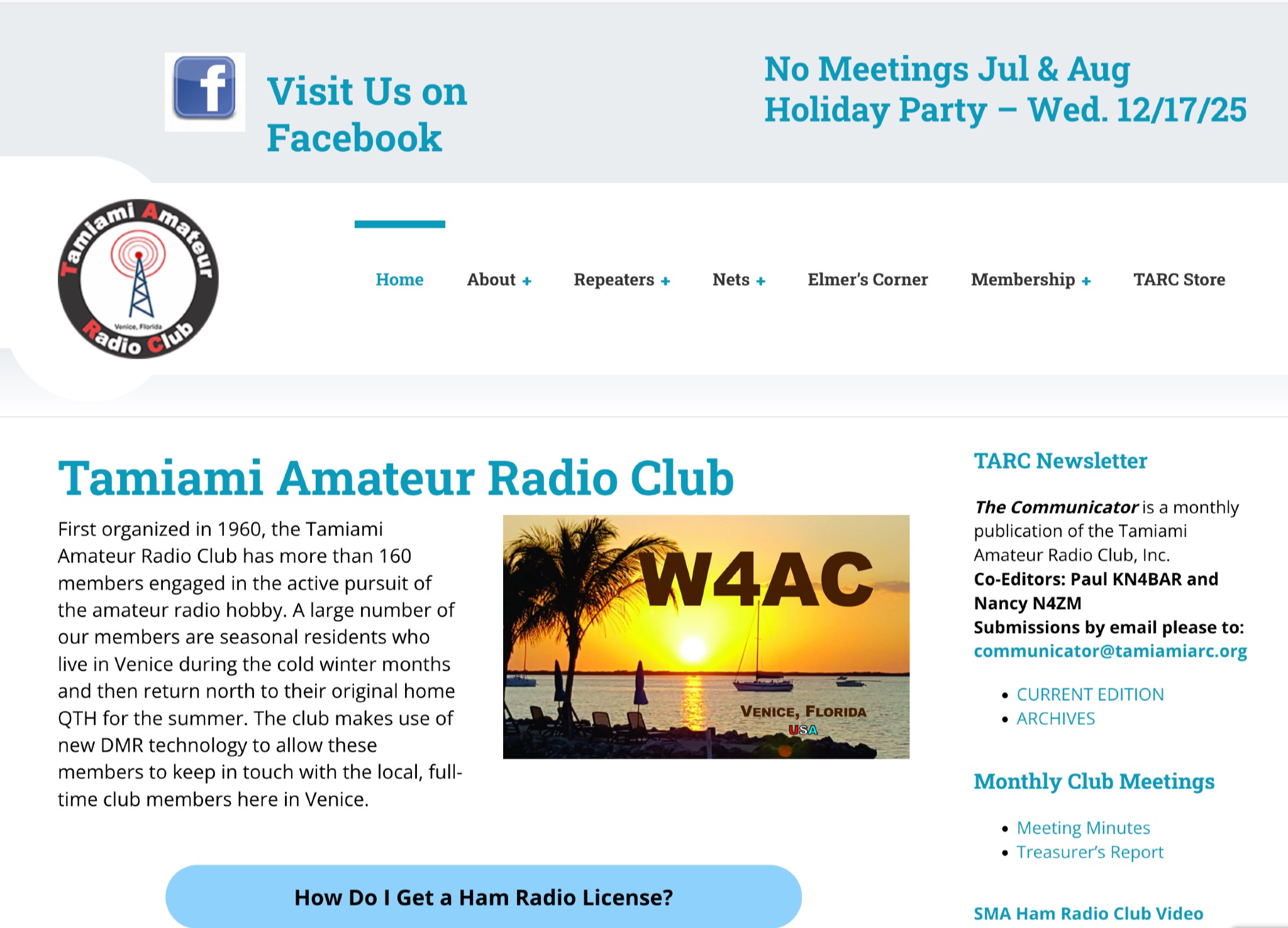 Tamiami Amateur Radio Club website provides information on club activities, membership, FCC license testing, special events, and participation in ARRL Field Day and Florida QSO Party. It also includes details on DMR technology and VE testing sessions. The club has been affiliated with ARRL since 1963 and operates a special event station at the Venice Shark's Tooth Festival annually.
 -
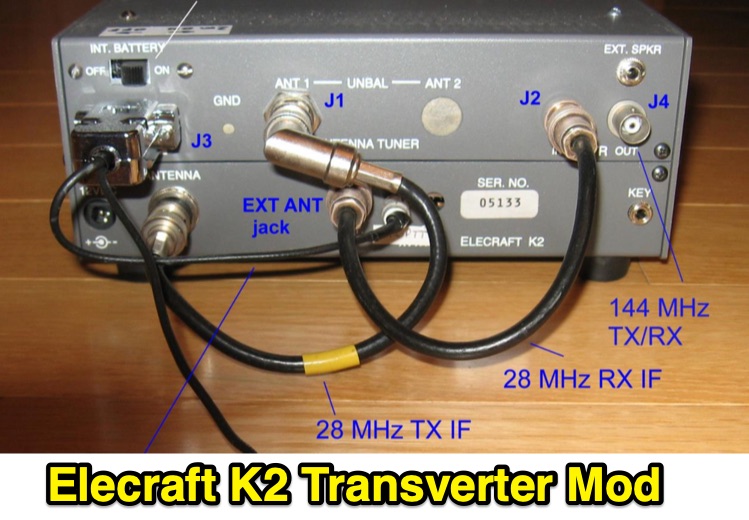 Demonstrates the conversion of an _Elecraft K2_ QRP HF transceiver to serve as a 2-meter Intermediate Frequency (IF) rig for microwave transverters, addressing the obsolescence of older _Yaesu FT-290R_ units. The project integrates a _DEMI 144-28DC_ transverter board, configured for a 28 MHz IF, and details the necessary modifications to the K2, including the installation of the K160M module for a separate receive-only antenna input and the KSB2 SSB module for voice operation. The modified K2 provides a stable 1-watt output for the 2m IF, utilizing the QRP antenna jack for transmit and the K160M input for receive, with a custom PTT control circuit. The article outlines the physical integration and electrical interfacing, including the design of an internal attenuator for the 28 MHz IF output and a control circuit for the 144 MHz interface. It also covers the construction of a medium power amplifier using an _MGA-31389 MMIC_ to boost the 2m output to 100 mW, matching the original FT-290R performance. Performance measurements for the amplifier, including output power versus input power and gain versus frequency, are presented. The project culminates in a fully integrated solution, with schematics and photos illustrating the internal wiring and external connectors. The modified K2, dubbed the "K290R," was successfully deployed in the 2017 _ARRL 10 GHz and Up Contest_ with a _Kuhne 10 GHz_ transverter, demonstrating reliable operation for CW and SSB modes.
 -
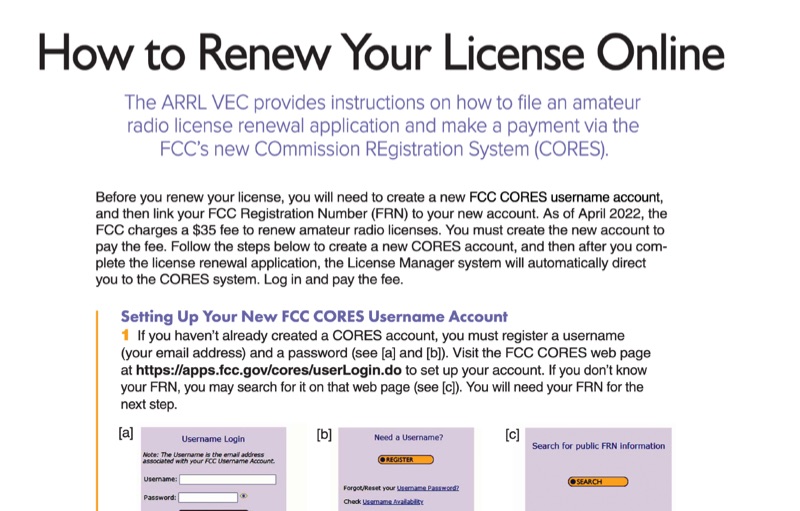 This resource provides a procedural guide for renewing an amateur radio license online through the FCC's COmmission REgistration System (CORES) and Universal Licensing System (ULS). It details the steps for creating a new FCC CORES username account, linking an FCC Registration Number (FRN) to the account, and managing FRN passwords. The document outlines the process for submitting a renewal application via the FCC ULS License Manager system, including payment of the **$35** renewal fee. Instructions cover license renewal eligibility within **90 days** before expiration and during the 2-year grace period post-expiration. The guide specifies the use of the FCC CORES web page at `https://apps.fcc.gov/cores/userLogin.do` for account setup and the FCC ULS License Manager system at `https://wireless2.fcc.gov/UlsEntry/licManager/login.jsp` for application submission. The process concludes with receiving an email from the FCC containing a link to the official license, valid for 30 days.
 -
 official website for DLARC. operates the W3OK repeater, offers license classes and tests, a net, assistance in ARES and RACES nets and activities, and participation in ARRL activities and competitions.
 -
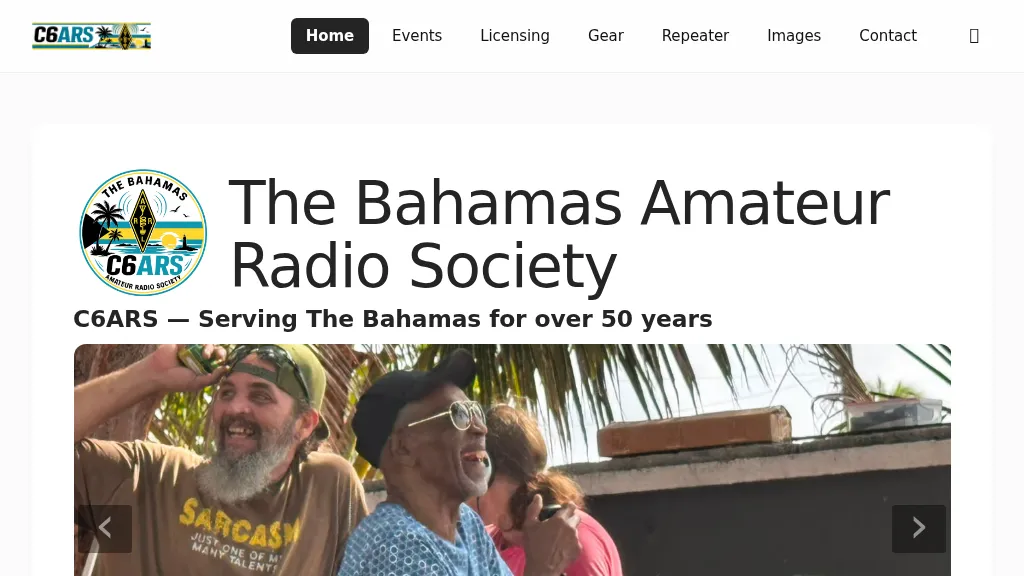 The Bahamas Amateur Radio Society (C6ARS) serves as the primary amateur radio club for the Bahamian archipelago, providing a hub for operators interested in DXing, portable operations, and emergency communications. The society actively participates in Parks on the Air (POTA) activations monthly, deploying portable stations to various parks and protected areas to put The Bahamas on the air for global hunters. Additionally, C6ARS engages in the annual ARRL Field Day, setting up off-grid stations powered by batteries, solar, and generators to practice emergency preparedness and operating skills. C6ARS also offers licensing assistance and mentorship for new operators, highlighting amateur radio's role as a STEM education platform through practical applications in physics, electronics, mathematics, and computing. The club emphasizes resilient emergency communication, particularly crucial for an island nation in the hurricane belt, demonstrating how trained operators can maintain vital communication links when conventional infrastructure fails. Their regular off-grid activations serve as rehearsals, ensuring readiness for disaster response.
 -
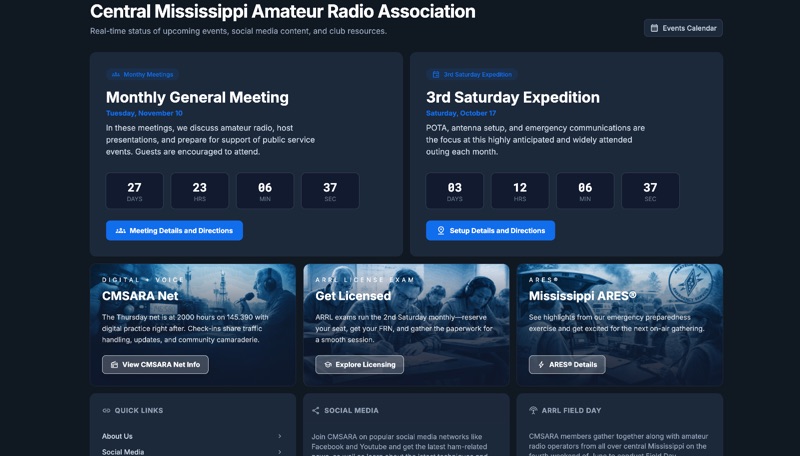 Illustrates the activities of the Central Mississippi Amateur Radio Association (CMARA), a vibrant club fostering amateur radio in central Mississippi. The organization regularly convenes for monthly general meetings, which feature discussions on various ham radio topics and presentations, alongside planning for public service support. A notable recurring event is the "3rd Saturday Expedition," focusing on _POTA_ (Parks On The Air) activations, antenna deployment, and practical emergency communications drills. CMARA maintains a consistent on-air presence with a weekly Thursday net at 2000 hours local time on 145.390 MHz, incorporating both voice and digital modes for traffic handling updates and community building. The club also facilitates _ARRL_ license examination sessions on the second Saturday of each month, providing essential guidance on reservations, obtaining an FRN, and required documentation. Furthermore, the resource highlights Mississippi _ARES_® (Amateur Radio Emergency Service) activities, showcasing emergency preparedness exercises and upcoming on-air gatherings. The site provides quick access to club information, including "About Us," "Social Media," and "Field Day" operations, specifically mentioning CMARA members' participation in _ARRL Field Day_ each June, making contacts across North America.